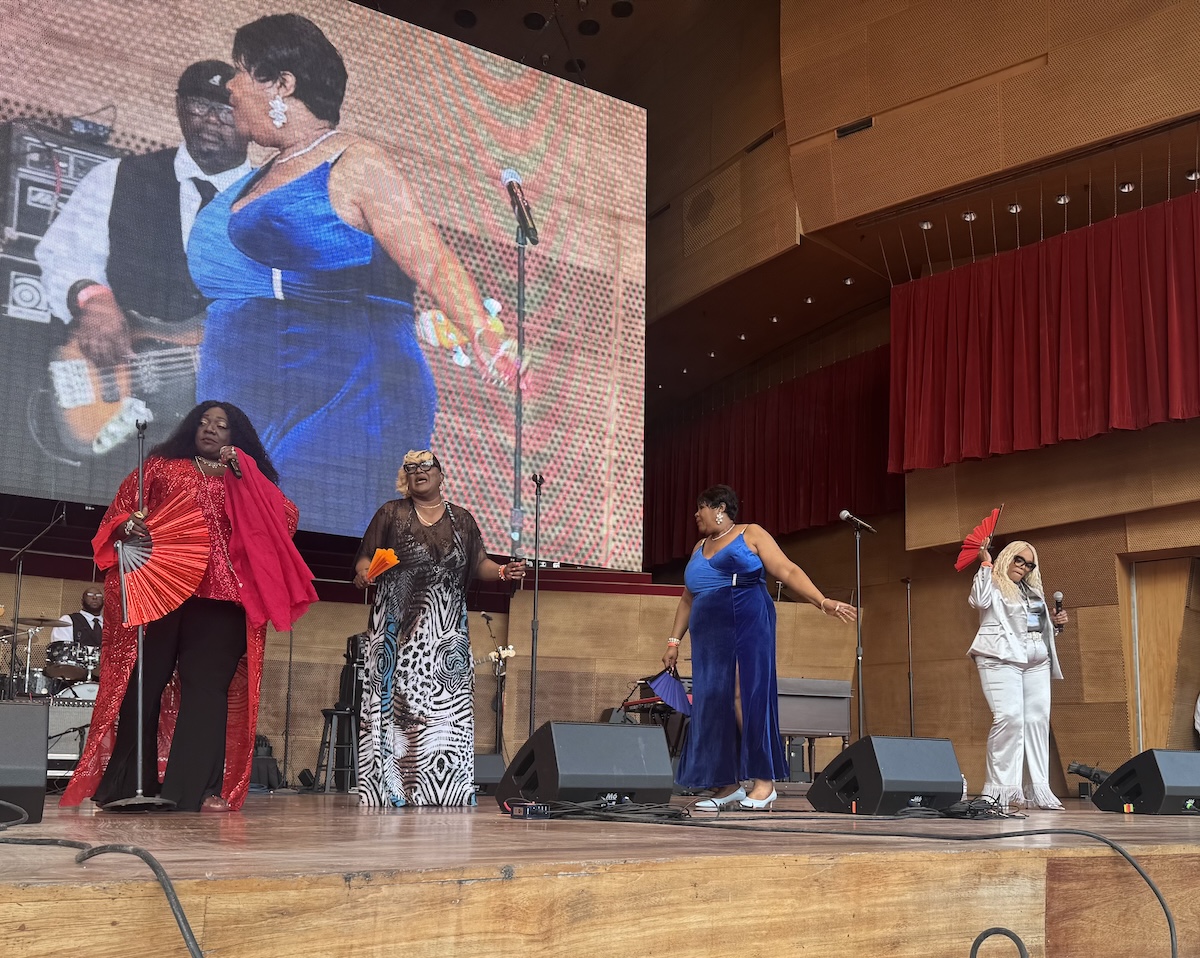
Chicago Blues Festival #41 is shaping up to be one of the best I've seen in years. The day three lineup was mainly out of the Mississippi Delta. The park was packed for the first performance at Pritzker Pavilion. Four blues divas took the stage to pay tribute to Denise LaSalle, who inherited the title "Queen of the Blues" when Koko Taylor died in 2009. Thornetta Davis, Nora Jean Wallace, Nellie "Tiger" Travis, and Mzz Reese took to the stage resplendent in sequins, satin, and primary colors.
Denise LaSalle was a singer known for assertive female sexuality and power. I remember "Trapped By a Thing Called Love" playing on WVON back in the '70s, and she burst onto the Black music scene. Many of her songs were played in the late hours on the radio. Davis, Travis, Wallace, and Reese brought the sass and grit to the double entendre and raunchy lyrics. "Ugly Man", "A Real Sad Story", and my personal favorite, "Don't Jump My Pony (If You Can't Ride)." The set ended with all four singers belting "Don't Mess With My Toot Toot." The gauntlet was thrown at men wanting a fling on the down low in many of LaSalle's songs. Women in the blues had to be tough, singing in lounges and jukes. LaSalle earned her crown as a singer-songwriter. The quartet paid a beautiful tribute to LaSalle, singing her songs for people who may not have been familiar with her back in the day.
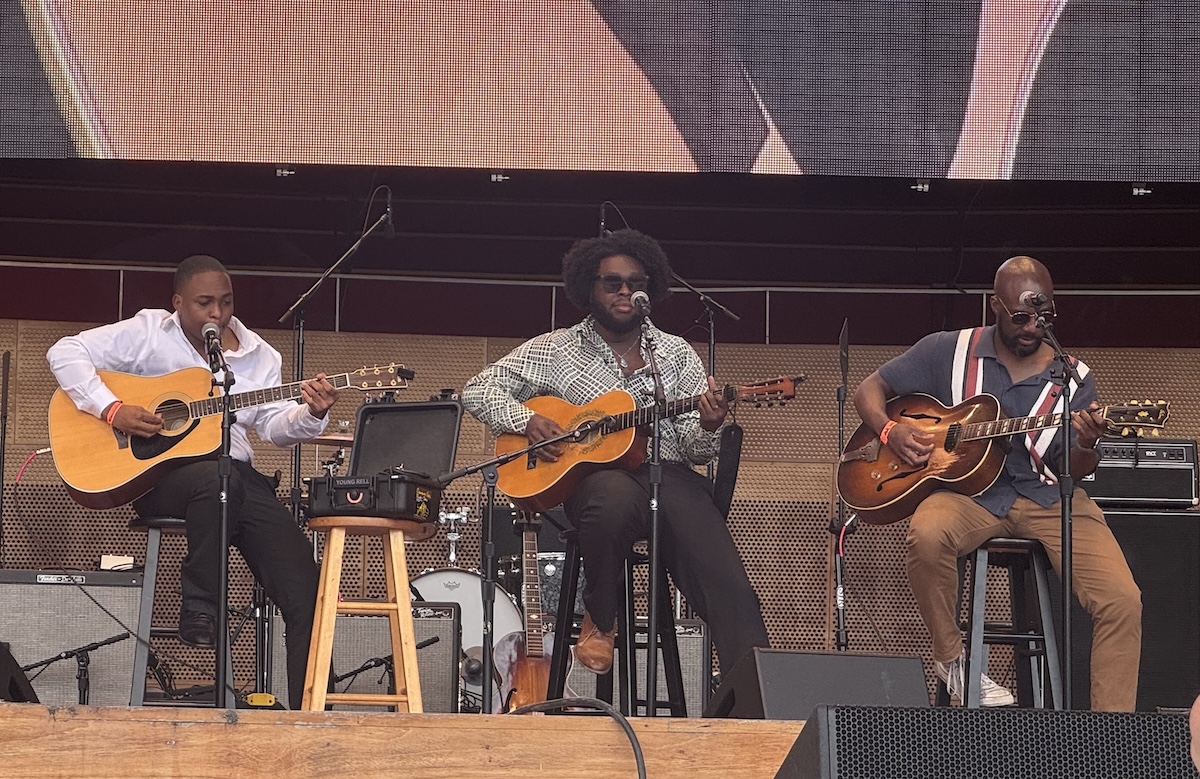
The trio of Joey J. Saye, Stephen Hull, and wunderkind Harrell "Young Rell" Davenport took the stage in an acoustic set of traditional music. These three young men sang of world-weary love and the hardships of life. All three played guitar in the picking and plucking style that gives the strings a percussive quality. Classics like "Crosscut Saw", "My Hen Won't Lay", and "Ain't Nobody's Business If I Do" had the sound of the Delta. Only "Little Rell" is from Mississippi, and he sings like he has spent time on the rails sleeping in boxcars. He is only 18, and in addition to the guitar, he has an arsenal of harmonicas. Where did he get the soul to sing, "I'm Gonna Leave You" and "Sittin' On Top of the World"? The blues live and will carry on thanks to young artists carrying the mantle of Robert Johnson, Elmore James, and Junior Wells.
When I saw the lineup for this year's festival, I was geeked to see that Latimore was on the roster. His version of "Stormy Monday" was especially popular in Chicago and got a lot of airplay. His other big hit is the seductive "Let's Straighten It Out". I have both songs on my playlist when I need a 'chill pill' and some music therapy. Latimore presented a sexy image back in the day, complete with long, processed hair and smoldering poses, on his album covers and publicity shots.
Latimore has a distinct voice with a break in it, particularly on emotional lyrics. He and Levi Stubbs from the Four Tops are two who perfected that sound in soul music. Latimore has a soulful baritone and is one of the great ballad singers from the '70s who still gets airplay today. He played up the sex symbol image with songs like "I'm an Old Dog ( But I Can Still Bury the Bone)." His songs have a good dose of humor. I couldn't help but chuckle when he sang, "My Give a Damn Gave Out a Long Time Ago."
The women in the audience were very appreciative of his professed love of plus-size ladies."I'm in Love With a Big Pretty Girl." The love of voluptuous women is a running theme in this year's festival. It's good to know that there are fans of the curvy girls who are built for comfort, not for speed. Latimore is a vital 85-year-old who shows no sign of slowing down. Harmonica master Billy Branch joined him on his finale, "Let's Straighten It Out." He was an excellent addition to the festival roster. He has a new fan in my daughter, who liked the groove of his songs.

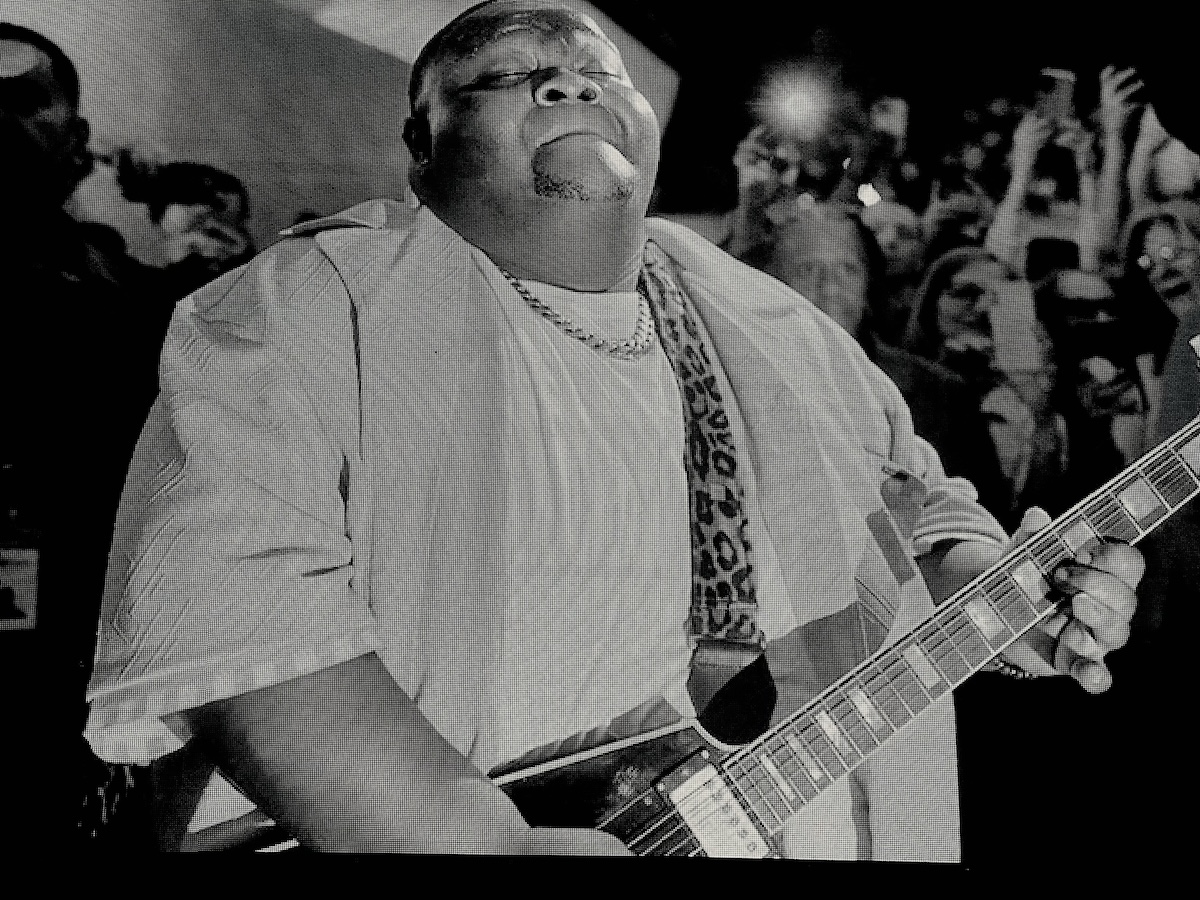
The headliner for day three was Christone "Kingfish" Ingram. He played in the B.B. King centennial tribute on day two and made quite an impression. When he hit the stage, the crowd was on its feet and never sat down for the rest of the evening. Ingram hit the scene with a blast. He is featured in the Marvel series Luke Cage and the hit film Sinners. Kingfish is that rare artist who seems to be one with the music and the instrument, in this case a Flying custom Banker guitar for the entire set.
His passion is not a gimmick. He seems to be in another consciousness when he jams on that guitar. He is also a terrific blues singer right out of Clarksdale, Mississippi. He started the set with a red-hot "Fresh Out." Kingfish's band is composed of extraordinary musicians who seem to finish each other's sentences, only with musical phrases. DeShawn "D'Vibe Alexander plays the Hammond B3 like a seasoned blues man. D'Vibe plays a church sound, adding what I call "spikes" to the music. The spikes punctuate the preacher's sermon as it intensifies, leading to passionate shouting and dancing in the aisles. Paul Rogers drove the bass line hard, and Christopher Black kept that backbeat steady.
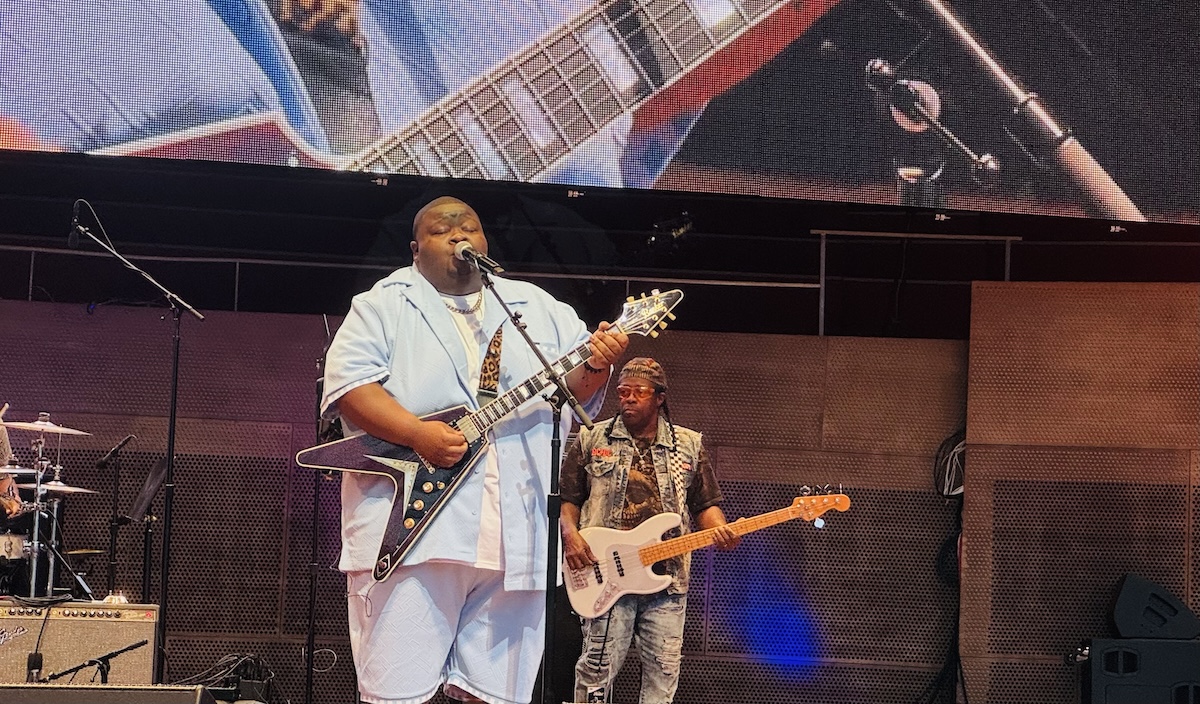
The set was like one steady jam. The setlist was not very long, but it was potent. "It's What You Do For the Blues", "Empty Promises", and a poignant "I'm Not Gonna Die." Ingram left the stage with the band carrying the groove, and suddenly, he was in the crowd, connecting and spreading that passion for the music. Here is a 26-year-old with the maturity and confidence of a veteran player. Last year, Buddy Guy gave security a run for its money strolling into the audience. I loved it. Blues is the music of the people. It's visceral and intimate. When he returned to the stage, he asked if the audience wanted to have a Clarksdale juke joint experience, and the cheers thundered into the clear night sky.
He asked for ten ladies to join him on the stage for the juke experience. Of course, about 60 climbed the stage, and some men included themselves. Kingfish thrived on the energy and kept playing and singing surrounded by Chitown love and joy. It was a juke joint indeed. Rump shakers and hands-in-the-air dancing were a delight to watch. I have never seen anything like that in my years of attending Chicago festivals. Kingfish kept playing and then slipped away from the crowd.
He may be from Clarksdale, Mississippi, but now, I think he has some Chicago in his system. Several performers have mentioned that Chicago and Mississippi are connected, and I believe that is true. Both migrations brought thousands of people from the Magnolia State to Chicago. Some of those performers cut their teeth in the music industry here and passed the torch back to the South. We are witnessing a renaissance of the blues, with veterans and the new generation coming together. Bring it on!
If you enjoyed this post, please consider supporting Third Coast Review’s arts and culture coverage by making a donation. Choose the amount that works best for you, and know how much we appreciate your support!
