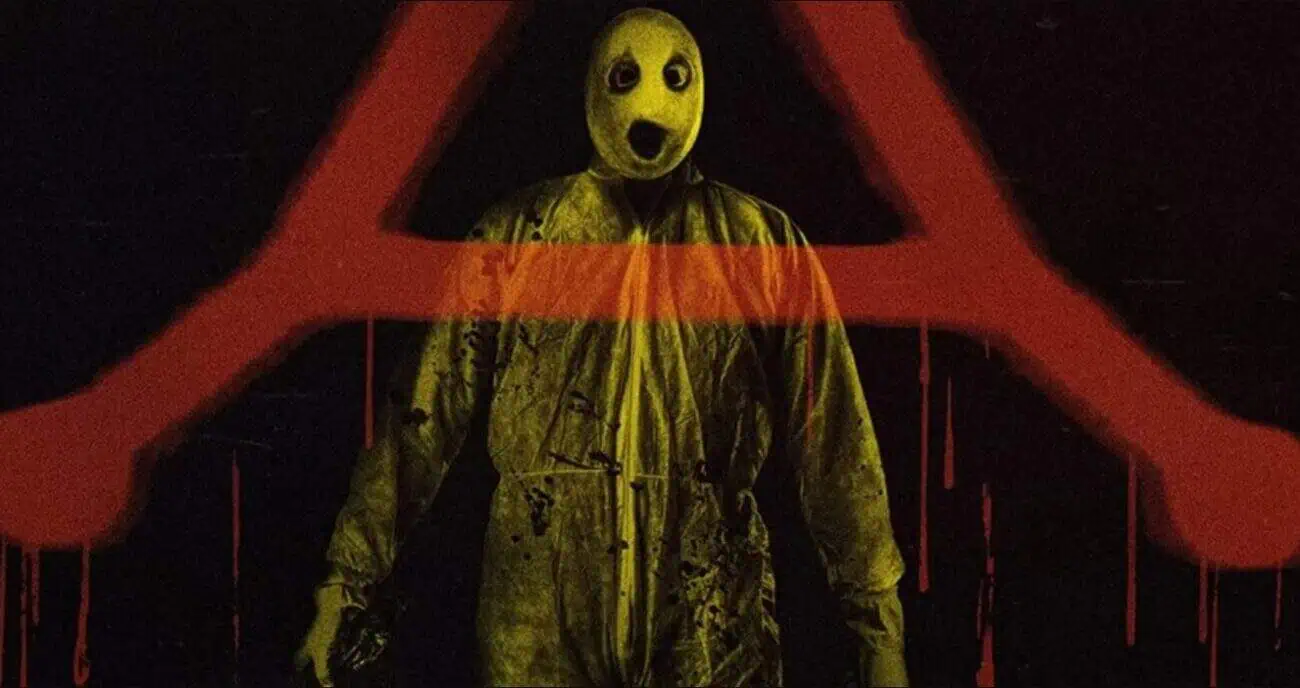

Told in the framework of a somewhat convincing faux true-crime documentary, writer-director Stuart Ortiz’s (Grave Encounters), Strange Harvest tells the story of a pair of detectives—Joe Kirby (Peter Zizzo) and Alexis Taylor (Terri Apple)—who have devoted their entire careers to hunting down a serial killer known as Mr. Shiny (real name Leslie Sykes, played by Jesse J. Clarkson) for his a series of ritualistic murders over many years. Pieced together primarily from interviews, crime scene photos, and television news footage (all fake but most very believable), the movie traces the killer’s beginnings from fifteen years earlier, until he resurfaces in the early 2000s.
If nothing else, the filmmaker has seen enough of documentaries on serial killers to reconstruct something fairly convincing using unknown actors and gore-heavy practical makeup effects. Strange Harvest even has tinges of science fiction throughout, and that might have given me my first clue that something wasn’t quite real about this story of a killer who has tied his murders to an astrological occurrence that only happens once every 800 years.
Once you’ve figured out that the movie is only using the tropes of a crime doc, it becomes less interesting, and I’m convinced the filmmakers knew this would be the case, so they deliberately ramp up the blood and guts to distract us from the increasingly unlikely storytelling—which is still pretty entertaining. There’s something pleasantly self-assured in the way the plot unfolds, even if the visuals are somewhat limited by the format.
Strange Harvest wisely leaves certain questions unanswered, as it ramps up to a climax that is far more chaotic and out there than anything hinted at in the rest of the film (this is a good thing). While I’d consider this a slight film in the fake documentary sub-genre within horror, I still found parts of this movie haunting, memorable, and even a bit grotesque.
The film is now playing in theaters.
If you enjoyed this post, please consider supporting Third Coast Review’s arts and culture coverage by making a donation. Choose the amount that works best for you, and know it goes directly to support our writers and contributors.
