
On the subject of Internet scammers, I can only echo the words of Karen Hill’s mom in Goodfellas: “What kind of people are these?!” Faulty late fees, undeliverable packages, supposedly expired licenses—I do not care for these schemes, and I struggle to picture the characters who concoct them. If Kiyoshi Kurosawa’s Cloud is to be believed, the best of these tricksters are savvy and remorseless—unsurprisingly—but they may well also be sad, dull boys addicted to screens. We all know this person. Many of us are this person.
Yoshii (Masaka Suda) is an online reseller. He pinpoints products, gauges their value on intuition, and lowballs sellers to maximize his margins. Among his wares are handbags, limited-run dolls, and “miracle” therapy devices. He doesn’t care about authenticity; once an item is sold, it’s nothing but an invoice. By day, he works at a laundry. His manager sees leadership potential in him. Thus, Yoshii quits, dedicating himself to his side project. Each time he lists a batch of products for sale, he stares at the screen until it sells out. He's a spider waiting for flies to catch in his web. The rub: he doesn't have to see their faces when they suffer.
Here is a story for 2025, where blue light casts its glow on everything and everyone. Each in-person encounter marks a detour from the monitor. Our devices have so accelerated our lives that the natural rhythms of existence bore us. This phenomenon has also sped up our expectations for success. Young people are encouraged to work indefinitely, burnout be damned. Influencers call it the “grindset.” So Yoshii represents the dream for much of Gen Z: quick cash without care for oneself or loved ones. Computer screens make it easy—they pound emotions into submission.
Kurosawa's Fincheresque color palette and restrained camera convey these concepts well, but Cloud starts to drift in its tone management. The film begins sharply with a procedural depiction of Yoshii’s solitary work and life. The coldness continues as he moves with his girlfriend Akiko (Kotone Furukawa) into a countryside home with industrial shelves for decor and barbed wire outside. His business picks up steam, but the film feels static and emotionless. The story beats aren’t all predictable, but they’re not particularly thrilling.
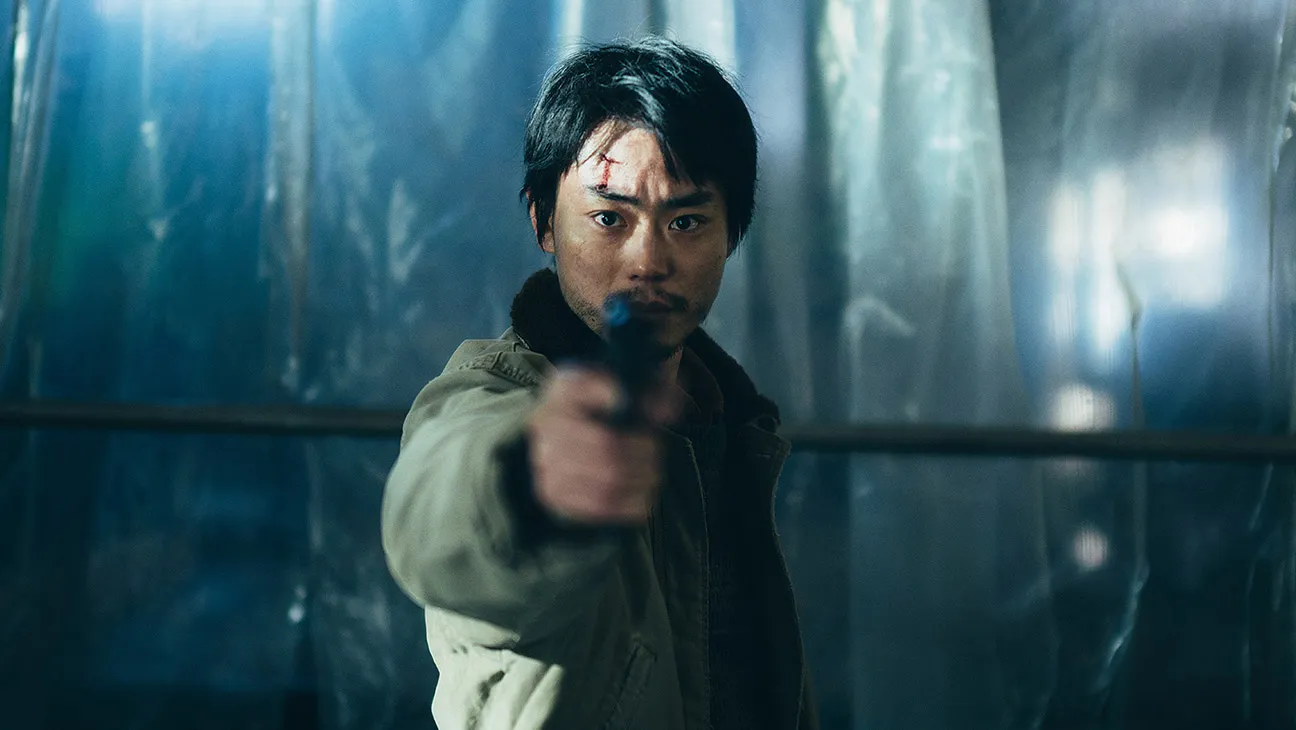
Cloud’s second half fishtails into violence, and I found myself gripping my forehead rather than my chair arms. The adversaries’ motivations feel too rote, too screenwritten, and their plan feels silly. It takes a pulpy script to wring flavor from such a turn, but there’s no juice in this mixture. The actors attempt to devour the material, but there’s no sustenance to these scraps. The gunplay is carefully staged but does not satisfy our urges for emotion or entertainment. It’s brutal, repetitive, and uninvolving.
The first section dunks us into a calculating world, and then the second pours on gobs of malice and sadism. Neither element works well enough on its own, and together they cause dissonance. A shadowy organization does introduce a strain of intrigue, which leads to a suitably despairing climax. But the film cannot fold its thoughts and tones into a gripping statement.
As humanity slips down the funnel of AI, Cloud may soon look quaint. I find it perversely comforting to see humans behind it all, hunters of veins and thoughts rather than wires and algorithms. At least a person has the capacity for compassion. But I digress.
Cloud is currently showing at the Gene Siskel Film Center.
If you enjoyed this post, please consider supporting Third Coast Review’s arts and culture coverage by making a donation. Choose the amount that works best for you, and know it goes directly to support our writers and contributors.
