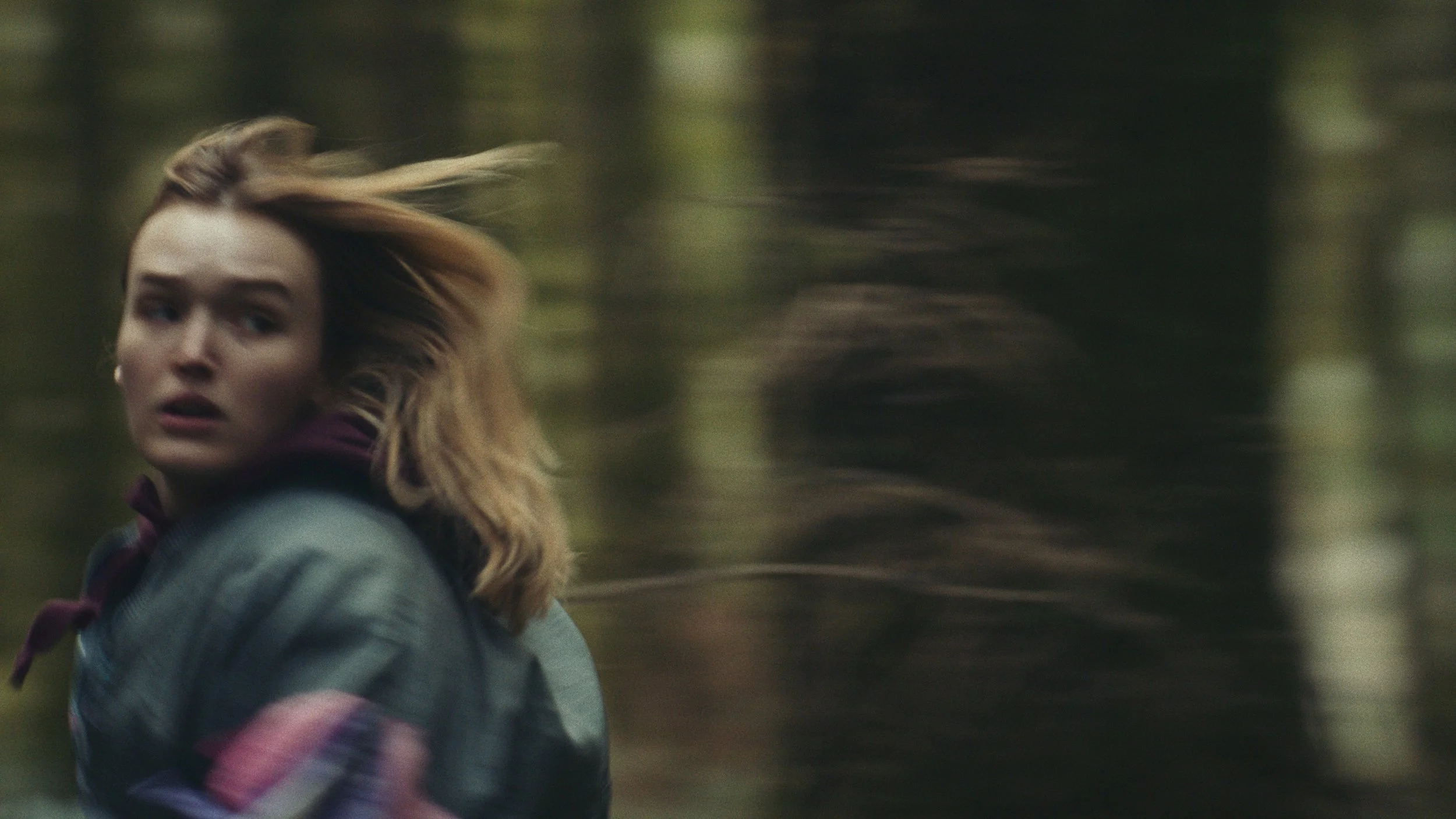

In this clever and modest retelling of “Little Red Riding Hood,” writer-director Kelsey Taylor’s To Kill A Wolf tells the story of a reclusive Oregon woodsman (known only as the Woodsman and played as something of a second-tier Nick Offerman by Ivan Martin) whose main objective in life seems to be setting off wolf traps on his property set by people who rent from him so that no wolves get trapped in them. He’s also got a prosthetic leg and a host of unanswered questions about how he ended up there and why he chooses to be alone.
On one of his daily walks through the woods, he stumbles upon a teenage runaway named Dani (Australian actor/model Maddison Brown), nearly frozen from the cold and dipping in and out of consciousness. He nurses her back to health but doesn’t want her to stay too long, so she begrudgingly agrees to let him take her back to his grandmother’s house on the other side of the state. But between the time they spend in his cabin and their long drive, the two actually start to bond, and they even start to reveal things about their pasts and what led them to the wilderness.
The film does something interesting at the midway point by jumping back a few days in time and showing us 17-year-old Dani’s life just before she meets the Woodsman. She’d been living with her grandmother, since her mother left the scene, never to be seen again. But now grandma has died, and Dani’s aunt Jolene (her mother’s sister, played by Kaitlin Doubleday) and uncle Carey (Michael Esper) have come to take her to live with them. They seem like good people, although it’s clear Jolene did not have a happy childhood growing up because of her recently departed mother, and Dani understands that her grandmother’s strict rules were oppressive and would traumatize anyone. But Dani’s real demons begin to take hold on the night before she leaves the house, when her uncle attempts to comfort her in her time of grief and ends up taking advantage of the situation.
The next day, they both agree it was a mistake and to forget about it, but on the drive, Carey makes it clear he’s very interested in continuing the indiscretion. Dani never tells the Woodsman this story, but he can see she’s in genuine anguish and is driven to protect her from the wolves in her life. He has his own backstory involving a brutal car accident that resulted in the loss of part of his leg, and the film becomes a meeting of the minds. They trust each other because pain recognizes pain, and they see in each other the chance to start again. Dani jumpstarts a second upheaval in her life and calls on her new friend, hoping he has room in his life for one more person.
To Kill A Wolf is confidently made by filmmaker Taylor (marking her first feature after getting her start as a cinematographer and camera assistant) and beautifully shot by cinematographer Adam Lee, who bathes everything in an eerie glow that makes the work feel not quite of this earth but still grounded in reality. The scenes with Brown and Martin are quiet but still communicate so much with body language and cautious looks, and by the end, we have no trouble believing they have become dependent on each other to a certain degree. There aren’t many surprises in this film, but sometimes just compellingly executing the story is enough.
The film is now playing in Chicago.
If you enjoyed this post, please consider supporting Third Coast Review’s arts and culture coverage by making a donation. Choose the amount that works best for you, and know it goes directly to support our writers and contributors.
