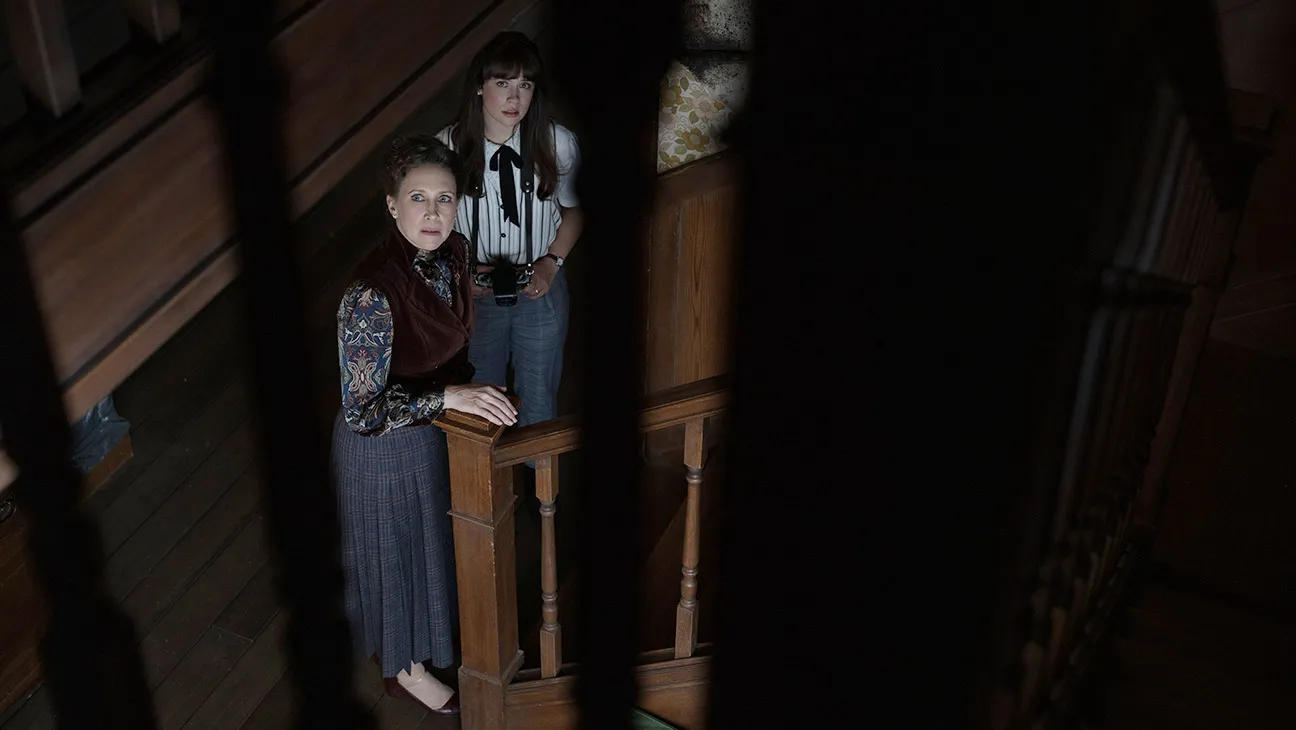

The first two Conjuring films (both directed by James Wan) are two of the finest examples of a certain type of reality-based horror that the last couple of decades have produced. By focusing on real-life paranormal investigators Ed and Lorraine Warren (expertly played by Patrick Wilson and Vera Farmiga) and pulling storylines from their collection of case files, they have given us characters we actually care about and a level of scariness that feels based in the real world and therefore more terrifying.
But Wan stepped away from the franchise with the third film, subtitled The Devil Made Me Do It, and the series has suffered as a result. Director Michael Chaves helmed three and the current chapter, Last Rites (as well as spinoff entries like The Nun II and The Curse of La Llorona, neither of which consist of anything but cheap scares and half-baked plots), said to be the final entry on The Conjuring universe, and the results have ranged from so-so to outright horrible.
Once again, we have a family in danger, the Smurls, a large family who take possession of a cursed mirror. Even though they dispose of it almost as soon as it arrives in their Pennsylvania home, something about it is tormenting their home and might even want the family dead. But since Last Rites is also a farewell to the Warrens, the filmmakers (Wan does have a story credit here, so that’s something, I guess) decide to put them in danger as well, taking us back to the birth of their now-grown daughter Judy (played as an adult Mia Tomlinson), who almost died at birth after Lorraine also had an interaction with this same mirror in one of their first cases. Even Judy is still haunted by the Annabelle doll, which began tormenting her in 2019’s Annabelle Comes Home, but Judy is now beginning to show signs of clairvoyance, like her mother, so she’s prepared to fight back against Annabelle and whatever lies waiting in the Smurl household.
When we meet the Warrnes again, we are well into the mid-1980s. The world has moved past their brand of ghost hunting, and their lectures are ill-attended and openly mocked in some cases. Since Ed’s heart attack in the last film, they have also retired from actual investigations and are trying to pull a book together that highlights some of their cases of the past (why this franchise never tackled their most famous case, the Amityville haunting, is beyond me but probably has to do with rights issues). But that doesn’t mean their lives are stress free—daughter Judy gets engaged to a nice young man named Tony (Ben Hardy), around the same time she’s starting to feel the psychic pull of the spirit world.
The Warrens are approached about the Smurls by Conjuring staple Father Gordon (Steve Coulter), who frequently fed the couple cases, but they initially say no to the offer. But when Gordon turns up dead under mysterious circumstances, the Warrens decide to look into the case. Judy makes the first move and her parents come to the Smurl house to retrieve her, but when they get a sense of how bad the situation is, they take the case.
During the movie’s end credits, we are shown photos and film of the real family and the Warrens during this period, and that somehow was scarier than anything else in this movie. There is just something about the way Chaves directs that sucks any potential fear or tension out of every situation. It’s not the fault of the actors or even the screenplay; it’s like he’s afraid to let a moment linger and let us bask in the silence and elevate the anticipation levels. The spirits/demons in this household are aggressive for sure, but that doesn’t mean the filmmaking has to be. Rebecca Calder and Elliot Cowan are fantastic as parents Janet and Jack Smurl, but the film rushes through what happens to the family, and they are portrayed as dense for not accepting various things that clearly happen to them in their own house. The dad actually levitates at one point, and it’s never brought up again.
Last Rites can’t figure out which story is more important: the Warrens’ last cinematic outing or the one of this poor family they’re attempting to help. For the record, the Smurl’s story was actually made in to a TV movie in 1991, and not surprisingly, the Warrens were a part of that telling as well. I’d be curious to find out if that version is any better, since I’m guessing at the very least it knows who should be the real focal point of its plot. I wish the Warrens’s cinematic adventures could have gone out on a high note; instead, we get this whimper of a horror movie.
The film is now playing in theaters.
If you enjoyed this post, please consider supporting Third Coast Review’s arts and culture coverage by making a donation. Choose the amount that works best for you, and know it goes directly to support our writers and contributors.
