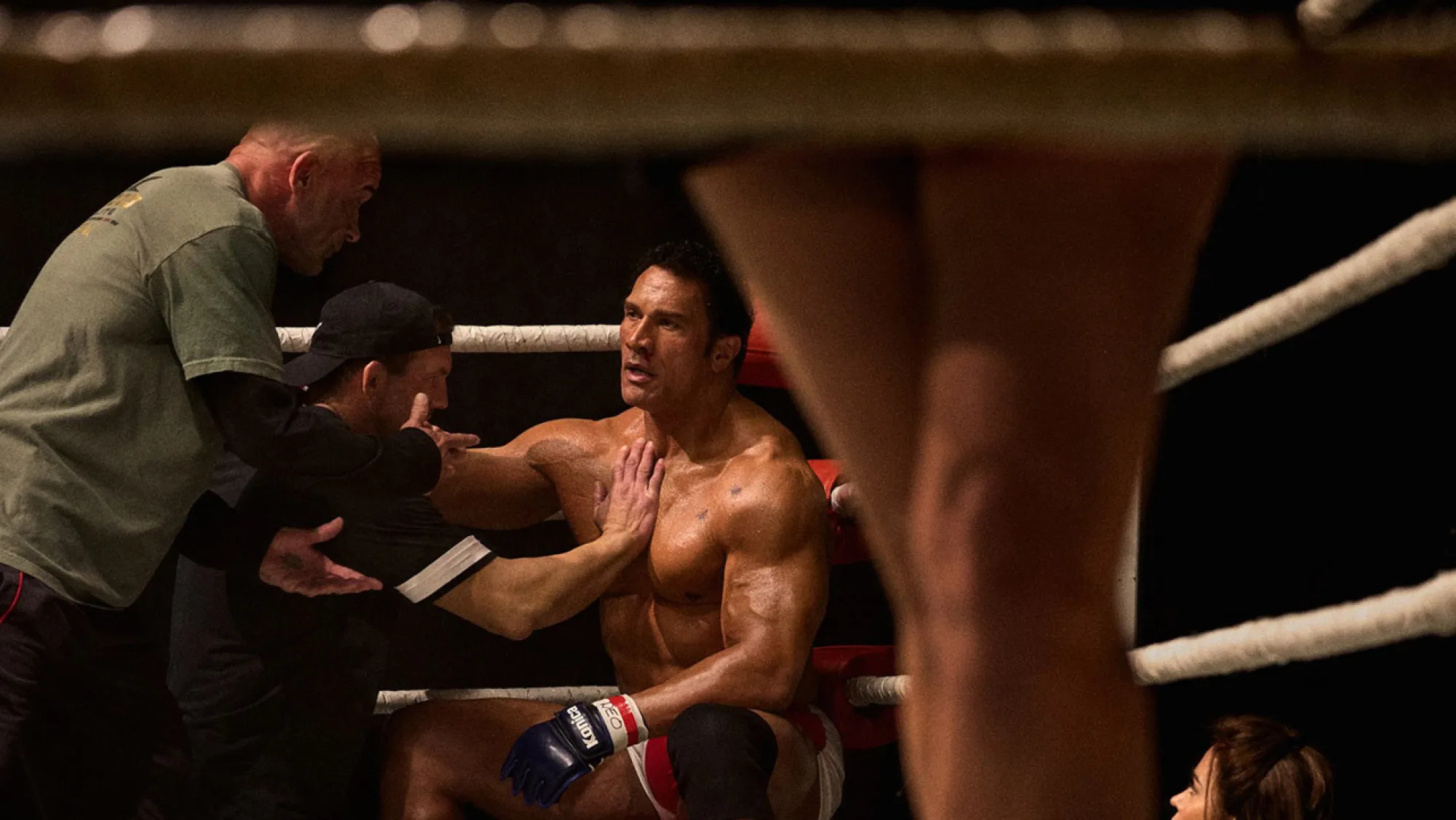

Based on the 2002 documentary of the same name, The Smashing Machine does something different in the sports-movie genre by simply dropping us in the middle of the life of legendary mixed martial arts and UFC fighter Mark Kerr (Dwayne Johnson). With no backstory or a clear explanation of what separates MMA and UFC fighting from wrestling, boxing, or other types of combat sports, writer/director/editor/co-producer Benny Safdie simply begins Kerr’s story during his transition from wrestling to MMA. He’s already addicted to the strongest pain meds available, but he’s never lost a match and he fights like an absolute demon.
With subtle but effective facial prosthetic work by makeup master Kazu Hiro, Johnson absolutely embodies Kerr, who has a volatile but loving relationship with his eventual wife, Dawn Staples (Emily Blunt), and a long-term friendship with fellow fighter Mark Coleman (Ryan Bader). These two partnerships form the foundation of Kerr’s existence, but his addiction and age combine to deliver Kerr his first loss in a crucial match in Japan. The film mentions that UFC fighting is still not allowed in many parts of the U.S., but Kerr’s success and popularity eventually break down those barriers, both for public matches and eventually having them televised.
Using a great deal of hand-held, almost documentary-style filmmaking, The Smashing Machine has a more naturalistic and less exaggerated, heightened approach to telling this athlete’s story. Kerr seems like a decent guy, but the portrayal of Staples is incredibly harsh, with her picking fights with Kerr right before matches and essentially blaming her for his losing focus during fights. Even though the film only covers the period in his career from 1997-2000, there are huge gaps in Kerr’s life that seem more like editing choices than storytelling devices. Characters enter his life who seem important but then vanish for huge portions of the film, including Staples. I especially like the relationship Kerr has with trainer and former fighter Bas Rutten (who plays himself), as well as the friendly rivalry he has with fellow fighter Igor Vovchanchyn (Oleksandr Usyk).
There are so many places the film could have gone deeper into the sport and the mindset of these fighters, and it simply doesn’t. And while that approach does give the film a more naturalistic tone, it also leaves people who have never watched a UFC fight out in the cold to a degree. But at the core of The Smashing Machine, Johnson is giving one of his greatest performances, and not just because he seems to have been born to play this part. In the scenes out of the ring, he’s giving us a person who is fundamentally different than The Rock that I simply sat there in awe of who he was embodying. But his elevated acting work is buried in a film that, while admirably avoiding sports clichés, also seems to want to keep its audience at a distance in the service of Safdie’s more experimental vision for what a sports movie can be.
The film will be in theaters on Friday.
If you enjoyed this post, please consider supporting Third Coast Review’s arts and culture coverage by making a donation. Choose the amount that works best for you, and know it goes directly to support our writers and contributors.
