Editor's Note: the following may contain small spoilers for the film Roofman.
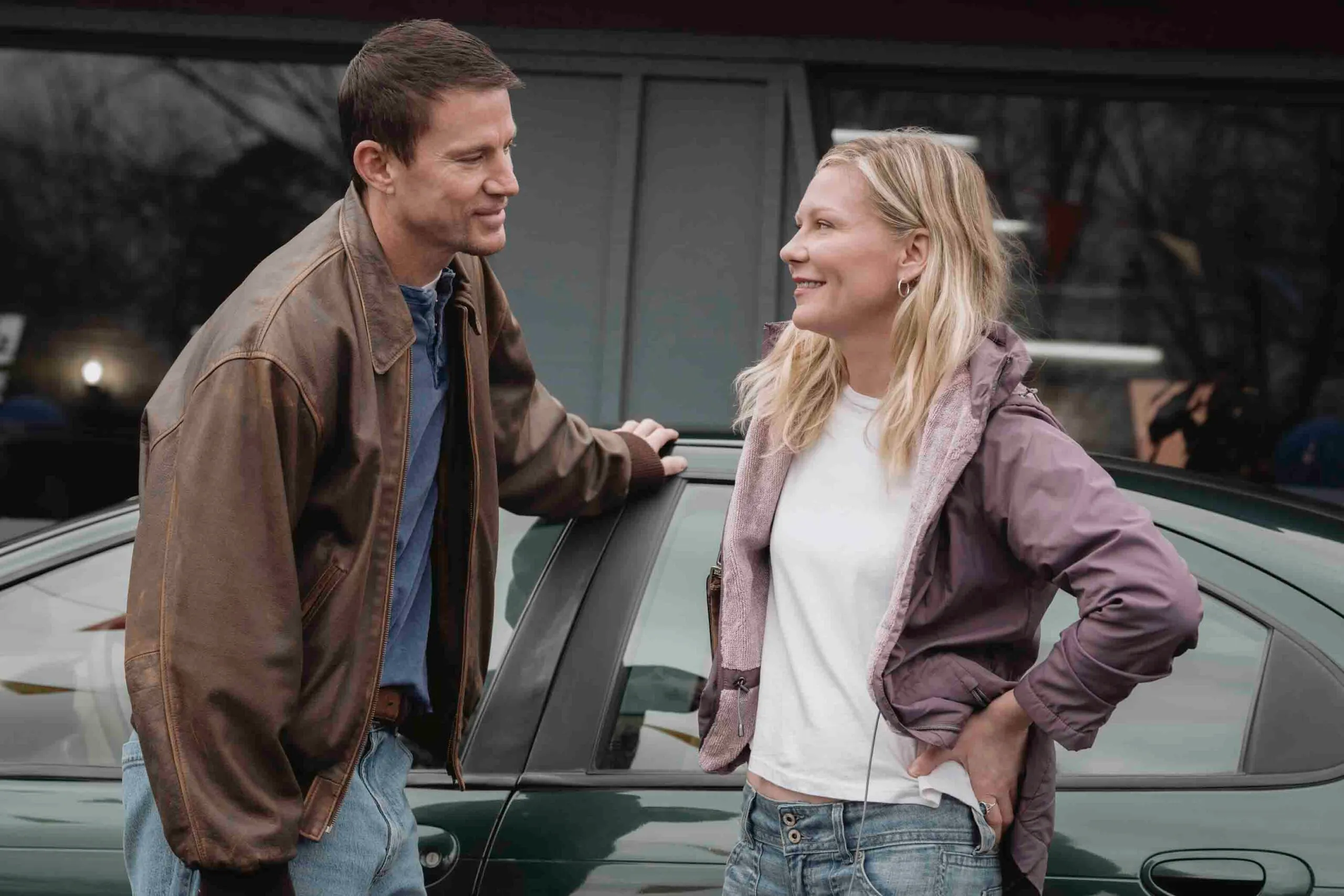
Filmmaker Derek Cianfrance is best known for a string of very serious, very grown-up films that explore the darker side of human connections, including such stunning films as Blue Valentine, The Place Beyond the Pines, and The Light Between Oceans. More recently, he directed all six episodes of the celebrated HBO drama I Know This Much Is True, starring Mark Ruffalo as twin brothers, but it’s been nine years since he’s helmed a feature film. He's returned with something so splashy, accessible, and dare I say funny, the new film Roofman, which Cianfrance directed and co-wrote. Starring Channing Tatum as charismatic criminal Jeffrey Manchester, he makes the news after robbing 45 McDonald's by sneaking in through their roofs, then getting sent to prison for a ridiculous amount of time, and finally escaping and hiding out in hidden corners of a Toys “R” Us in Charlotte, North Carolina. While in hiding, he falls in love with a woman who works there, Leigh (Kirsten Dunst), and starts to build a life for himself—albeit a mostly fake one—while he patiently awaits a new identity from an former military buddy (LaKeith Stanfield).
Roofman features an all-star cast in supporting parts (including Peter Dinklage, Ben Mendelsohn, Uzo Aduba, Emory Cohen, Melonie Diaz, and Tony Revolori), but it’s Tatum’s career-best work as Jeffrey that shocked me. This is a character we’re meant to love and completely not trust; the closer he gets to Leigh and her two daughters, the more we start to resent him because we know he’s going to take off at some point, probably without explanation. It’s a vibrant work about second chances, taking risks, leaning into your “superpower,” and always knowing that your past will eventually catch up to you. But the attention to detail in this story set in the timeframe 1998 to 2000 (including a fully stocked, built from scratch Toys “R” Us with only period-accurate merchandise) is impressive. Read my full review here.
I sat down recently with Cianfrance (my second time interviewing him) to talk about what made Manchester’s story so captivating, how he fact checked everything after collecting details from the subject (who remains in prison) over the course of more than four years of 15-minutes phone calls, and his dedication to sticking to the true story because it felt completely made up. Please enjoy our conversation…
The very first thing we see in this movie is a title card that says “This is a true story,” which is different than some of the other possible variations on that sentiment. You didn’t say “Based on a true story” or “Inspired by true events.” I knew immediately you chose those words specifically. What did you phrase it that way?
Because this story is so crazy and over the top that you wouldn’t believe it if it weren’t true. I would be a terrible screenwriter if it wasn’t true. This is a true story: it puts you in the place of believing in something that is unbelievable. There was a moment when I had it say “This is a true story as told by a liar.” But I started thinking to myself “Who’s the liar? Is it Jeff or is it me?” What ended up happening is that when I put that in the movie, you would go down the wrong path, and everything Jeff did, you were thinking about where he was lying, so it didn’t work. So we just decided to simplify it, get straight to the point and say “This is a true story”—not beating around the bush.
I know this wasn’t based on a book or article about him, so I’m assuming this is based on conversations with him. Did you fact-check what he told you, as much as you could?
Oh, for sure. Jeff is in a maximum security prison, and I’ve spoken with him for more than 400 hours at 15-minute increments over four-and-a-half years. There was as moment a couple years in where I said, “This is crazy. I have to talk to other people; I have to validate what he’s saying.” I was afraid he was telling me tall tales. So I talked to his mom, his brother, the sergeant who led the task force that arrested him, other SWAT team members, the judge who sentenced him to prison, people who worked at McDonald's that he put in freezers, his girlfriend Leigh, the pastor of his church, the prison truck driver, the dentist whose place he blew up. I shot the movie in Charlotte, so I could be in the spots where it happened. The key to movies is suspension of disbelief, and so I needed to suspend my own disbelief in order to make this movie because it was so wild. There are things in this story that people don’t believe happened, but they did and it’s backed up by police reports and Jeff’s accounting of it.
Then there are other things that were too crazy that I couldn’t put in the movie, that if you show it in a movie, you can’t believe it’s true. There are also adaptations. Jeff told me at one point, “Derek, this is my story, but it’s your movie. I want you to tell it in a way you see fit.” So I was very aware that I wasn’t making a documentary here, I’m not a journalist, I’m not telling the truth exactly the way it happened; sometimes I’m making it the cinematic truth, so that the themes that were true to Jeff as a person would be more accessible or readable in the film.
In my written review, I mentioned that the film feels lived in, very authentic. And the reason I feel that way is because of the scene of their first date in the park. In any other romantic movie, there would be a pop song playing over that moment where we just see them having fun on a date. But you let us hear their smalltalk and getting-to-know-you conversation, and it not only endears them to each other, but it also endears them to us. It makes a huge difference, and it seems so simple, but so many filmmakers don’t understand it. Was that important to you?
It’s the connection between two people. Channing and Kirsten are great actors, and that scene, Leigh was married to a guy named Jeff, and that park is the park where they went on their real first date. And at the end of that first date, Leigh put the moves on Jeff. There’s so much chemistry built for this love story that starts there, and there’s also character being built because you’re understanding who Leigh is and who Jeff is, and there’s this desire for Jeff that all he ever wants is love, and he’s always trying to do too much to get love. He’s trying to provide everything. I’ve always said that if Jeff wants to kill an ant, he uses a sledgehammer—he just overdoes things. And that moment shows us how easy it could be if he was just less eager. And John Zorn , that’s the true version of Jeff if Jeff never met Roofman.
How did you first hear about this guy, and what was it about his story that intrigued you so such a degree?
The thing that intrigued me were the contradictions in his character. Here was a guy who robbed all of these McDonald's and put people in freezers, but he gave them a jacket. He escaped from prison but didn’t hide in the wood and eat grubs and drink rainwater, like you think an ex-Army guy might; he went into a toy store and ate peanut M&Ms and baby food. He had a plane ticket to his freedom in the car seat next to him as he was sitting on the offramp to the airport, and he decides to turn around because his girlfriend called him and he didn’t want to ditch her and wanted to say goodbye to her in person. I was thinking, here’s a guy whose humanity makes him a less effective criminal, and that if he was less human and more cold-hearted, we would never know his story; he’d be on a beach somewhere, he would have gotten away with it. But his humanity made it impossible, and I related to that, because I think in movies, we’re told there are heroes and villains, and in my regular life, I’ve never met a hero or villain.
I was going to say, there’s no villain in this story. There’s no Tommy Lee Jones chasing him down in the background. At the same time, the closer he gets to Leigh and her girls, the more I started to resent him because I knew that things would be terrible when the inevitable happens. Are you prepared for some people not to like him, even though he’s a very likable guy?
Yeah, but my job as a filmmaker, I never saw it as having to tell everyone in the audience exactly what to think or feel. What I try to do is present characters and let people deal with them themselves. The people who don’t like Jeff, I can understand that because they’re looking at his actions, and those actions are big and huge mistakes and he hurt a lot of people. The way I saw him, though, is I took the lead of Leigh and Pastor Ron , and both of those people I would expect to hate Jeff, but when I spoke to the real people, they spoke about him with such grace and that he was the greatest adventure of their lives. So I decided to let the film take their point of view. I’m not moralizing in this movie; this movie isn’t about virtuousness, it’s about being a human and a person who makes big mistakes, but the people that greet those mistakes with even bigger empathy.
In a way, Jeff’s story is still being told.
For sure.
And you have this coda at the end that emphasizes that. He’s going to be out of prison in a little more than 10 years. Is there more story to be told?
Oh, for sure. It’s actually happening as we speak. Some people in his life that didn’t want to talk to me before I made the movie, who have since seen the movie. His sister said the movie made her laugh, made her cry, and somehow made her closer to her brother. And then Jeff called me last week and said, “Derek, I have to thank you. If I could give you a big hug, I would. I just got off the phone with my sister; she answered my call, and we spoke for 30 minutes, and it was like we were in high school again. There was nothing in between us.” So that’s part of the story that’s being written now, and there’s some real healing happening.
I have to ask to ask about the toys in the store. I’ve read all of these accounts of how you built this entire Toys “R” Us, but you only had period toys. Was there anything that people found to put in there that shocked you. Did you say, “How the hell did they find that, or so many of that?”
I mean, they found old Gambit dolls, which Channing was psyched about. They found old Mary Jane dolls from Spider-Man.
Raimi’s Spider-Man, which starred Kirsten Dunst, is a factor on this movie.
And people think that's creative license, but Jeff did sleep in Spider-Man bedsheets.
And it was her Spider-Man that was popular at the time, it’s insane.
I know!
Thank you so much. Best of luck with this.
Great to see you again. Thank you.
