Across its first weekend (Saturday, October 18, and Sunday, October 19) the Chicago International Film Festival features several highly anticipated films with some of the year's best performances; here are the highlights our film critics recommend. Follow along for all our latest coverage of the festival, which runs through October 26.
Hedda

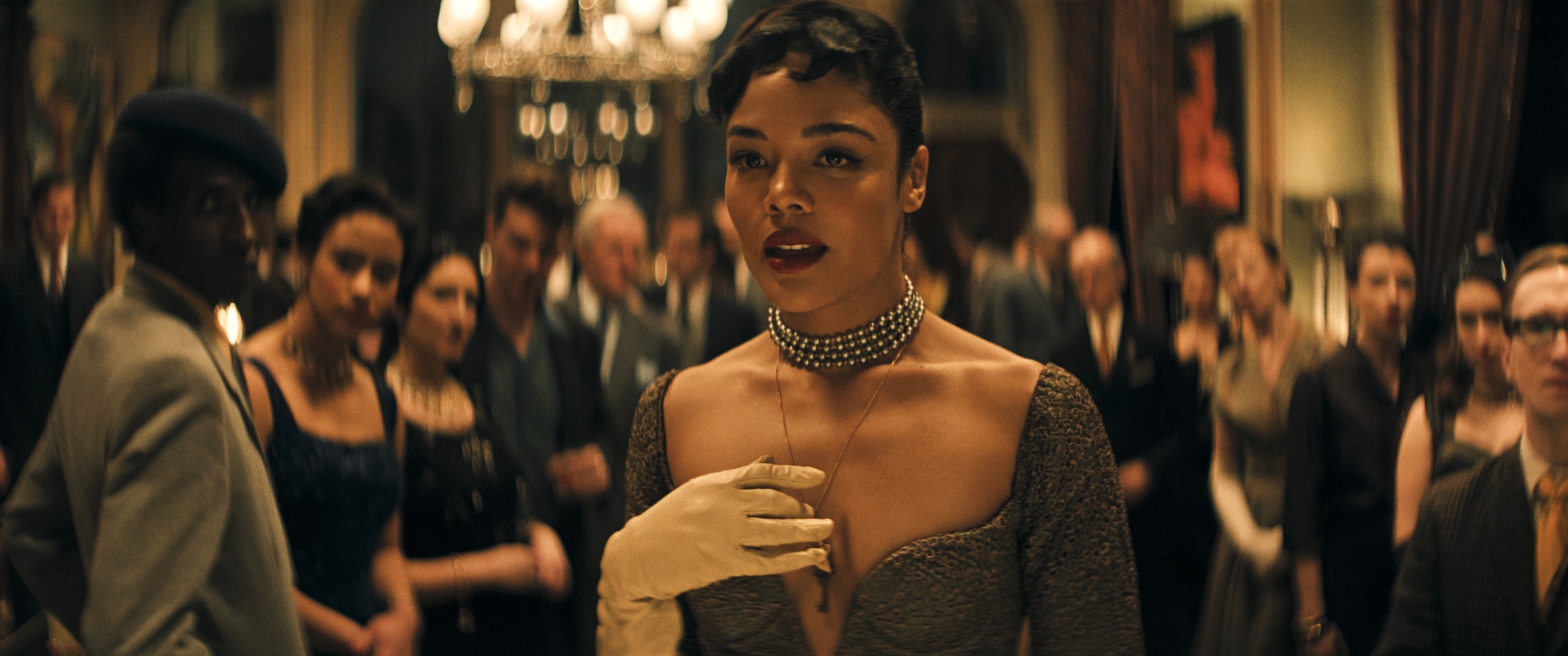
Filmmaker Nia DaCosta is not one to shy away from taking risks. She broke into the mainstream with her updated take on the horror classic Candyman, before quickly being elevated to superhero status with 2023’s The Marvels. Serving as writer and director on both of those films, she again takes on dual roles for Hedda, an adaptation of Hedda Gabler, the late-19th century play by Henrik Ibsen about a free-spirited woman confronting an isolating future. DaCosta does not just transfer the work from stage to screen, she quite literally reinvents it with inventive casting and gender-swapped roles, creating something fresh and unexpected out of something otherwise quite familiar.
Tessa Thompson stars as Hedda Tesman (née Gabler), the daughter of a respectable general recently married to George (Tom Bateman), a man she doesn’t love. They're hosting a party at their lush country estate, an unlikely mix of George's scholarly elite and the bohemian types Hedda typically runs with. Into this mix comes Eileen Lovborg (Nina Hoss), a colleague of George’s and someone with whom Hedda has a history. It’s the biggest update DaCosta makes to Ibsen’s original play, and this change upends many of the original dynamics.
As the night progresses, secrets are revealed, tempers flare and everyone’s true selves become more and more apparent. Eileen’s current love interest, Thea (Imogen Poots) arrives in a frenzy, desperate to keep Eileen sober and away from Hedda. As the drama increases, DaCosta and cinematographer Sean Bobbitt (The Marvels, 12 Years a Slave) evoke it all through frenetic camera work and moody tableaus in rich, deep colors. Thompson loses herself in Hedda’s chaotic emotional state; in the character’s perceived selfishness and self-assuredness, we find what’s most intriguing about how she interacts with the world around her. Despite the character's less-than-virtuous motivations, Hedda, at least in DaCosta’s 21st century adaptation, is a story of self-reliance, unrequited love and finding ways to move forward through it all. (Lisa Trifone)
Hedda screens Sunday, October 19, at 5pm at the Music Box Theatre. Filmmaker Nia DaCosta is scheduled to attend and receive the festival's Black Perspectives Artistic Achievement Award.
The Helsinki Effect
Perhaps sarcastically, Finnish documentarian Arthur Franck (The Hypnotist) constantly prods his audience that his film, The Helsinki Effect, or its subject are boring and might even put people to sleep. When in fact, what he has done is taken the often dry process of diplomacy and made it digestible and interesting. Focusing on the 1973 Conference on Security and Cooperation in Europe (CSCE) and resulting document—which many at the time thought was toothless (including President Ford’s Secretary of State Henry Kissinger) in its enforcement of the principles it lays out—Franck brings the conference to life in quirky and fascinating ways by pouring through hundreds of hours of archival footage and recently declassified documents to reveal how Soviet Bloc countries used the conference as a launchpad for revolution against Russian rule.
Franck relies perhaps too heavily on AI-generated “interviews” with the likes of Kissinger and then-Soviet leader Leonid Brezhnev (he uses their actual words from transcripts of actual conversations they had that have no audio recordings) to make his various points about how badly the Soviets wanted this agreement, thinking it would have no impact on their country (though boy, were they wrong). What is revealed in The Helsinki Effect is that these conferences (and the many meetings that lead up to them) are complicated, if boring, high-stakes chess games that often hinge on the most unlikely of details. These types of conferences still happen today because world leaders understand that these face-to-face discussions cut through so many layers of middlemen/women, and things might actually get accomplished. The film also makes us wonder a little too much about how the lessons learned from this conference can be applied (or aren’t being applied) to the current state of global politics. But that line of thinking might be more than some people can handle. (Steve Prokopy)
The film screens Saturday, October 18, at 8pm, and on Monday, October 20, at 2:30pm; both screenings are at AMC Newcity, with director Arthur Franck attending.
Nouvelle Vague

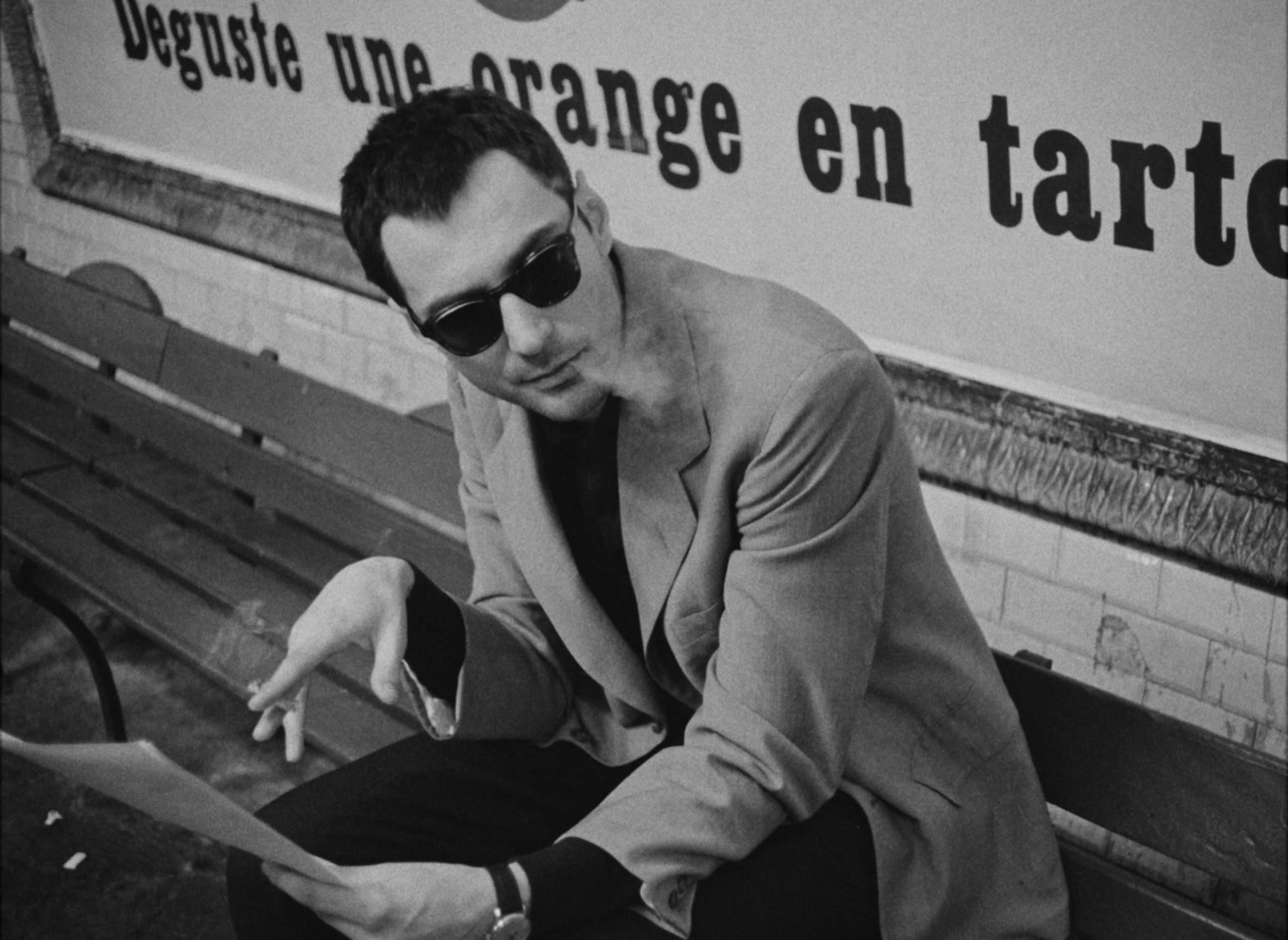
With Nouvelle Vague, Linklater (and the four (!) people the screenplay is attributed to, Holly Gent, Vincent Palmo Jr., Michèle Halberstadt and Laetitia Masson) pays beautiful and moving homage to one of cinema’s greatest filmmakers, to a generation and, it could be argued, the art form itself. Jean-Luc Godard wasn’t yet 30 years old when he convinced Georges de Beauregard to finance Breathless, a film about a small-time crook on the run and falling fast for a young American journalist. The film was to be shot entirely on location on the streets of Paris and without much of anything resembling a script, let alone a shooting schedule or budget. What Godard had was a vision.
In Nouvelle Vague, Godard is played by Guillaume Marbeck, a relative newcomer and an absolute revelation as a young man who is at once the most confident man in the room and the most insecure. He casts unknown boxer Jean-Paul Belmondo (Aubry Dullin) as his leading man, but de Beauregard (Bruno Dreyfürst) insists he cast starlet Jean Seberg (Zoey Deutch) as the love interest to give the film a fighting chance. Deutch as Seberg is a remarkable and worthy sparring partner for Godard, juggling her own career ambitions and creative impulses alongside a new marriage and her own fledgling French skills.
Though not a documentary, the film has a deeply historical feel to it, not just because of its mid-century setting but because it evokes a sense of watching cinema history unfold on screen. We are getting a peek into a process that changed lives (Belmondo went on to become a bona fide star in his own right), changed an industry (forever altering the way we understand films can be made), and—it’s not an overstatement to say—changed cinema as an art form. Whether you’re familiar with the French New Wave style of filmmaking or not (and I admit, I deeply am—the last time I was in Paris I made sure to visit Agnes Varda’s grave), Nouvelle Vague offers an endearing chronicle of a significant moment in moviemaking lore bolstered by an impressive central performance not to be missed. (Lisa Trifone)
Nouvelle Vague screens Sunday, October 19, at 2:30pm and Sunday, October 26, at 7:45pm at Gene Siskel Film Center.
The Secret Agent

Tapping into the very specific politics of Brazil circa 1977 while also examining loose, modern concepts of what it’s like to have a government force you to lose your identity because you are being hunted, the latest from director Kleber Mendonça Filho (Bacurau, Pictures of Ghosts), The Secret Agent is the extraordinary story of a university researcher named Marcello (the always great Wagner Moura) in hiding in the seaside town of Recife. His wife has recently died under suspicious circumstances and he fears he’ll be next, so he’s attempting to get new passports for himself and his young son, currently being looked after by his father-in-law (Carlos Francisco), who owns the local movie theater. He feels things closing in even though he’s done nothing wrong, while all around the city, people are looking for him, including a local police chief,played with a charming menace by Roberio Diogenes.
As if to further drive home the point about identity, Marcello gets a job at a government office where ID cards are made, where he decides to kill time looking for any scrap of paper that proves his mother was a real person. The film takes on several genres, but it ultimately turns into a hide-and-seek exercise complete with misdirects, mistaken identities, and loads of period intrigue while also feeling remarkably current. Winner of both the Best Actor (Moura) and Best Director prizes at this year’s Cannes Film Festival, The Secret Agent is a colorful, hard-hitting, and deeply moving story about how families can be destroyed by political corruption, with Moura giving one of the year’s best performances. (Steve Prokopy)
The film screens on at AMC NewCity on Saturday, October 18, at 8:15pm and opens theatrically in Chicago on December 19.
If you enjoyed this post, please consider supporting Third Coast Review’s arts and culture coverage by making a donation. Choose the amount that works best for you, and know it goes directly to support our writers and contributors.
