
The Chicago International Film Festival begins its full week of screenings on Monday, October 20; here are the highlights our film critics recommend in the coming days. Follow along for all our latest coverage of the festival, which runs through October 26.
Mother of Flies

Collectively written, directed, acted, shot, edited and scored by life and artistic partners Toby Poser and John Adams, along with daughter Zelda Adams, the films made by “The Adams Family” are a collection of folk horror wonders (The Deeper You Dig, Hellbender, Where the Devil Roams) that feel intimate and ethereal, even as they’re grossing us out beyond belief. Mother of Flies is the latest work from this familial collective (which often includes second daughter Zulu), and it involves college-age Mickey (Zelda), who has been diagnosed with uterine cancer and asks her father (John) to accompany her on an unusual journey into unconventional medicine when traditional health care has failed her. The two meet with a seemingly kindly witch named Solveig (Poser), who invites them into her home in the woods where she will guide Mickey through a series of dark-magic rituals and self-discovery, free of charge (which does not mean there won’t be a price to pay).
As they always do so well, the Adams Family combine a sublime appreciation for the inherent mystery and transformative qualities of nature while always bringing the film back around to the grotesque and bloody. But Mother of Flies works because it gives us an unflinching look at horror magic and forces this family (and us) to realize that the only way to defeat death is to look it unflinchingly in the eyes. I don’t think it’s spoiling anything to say that Solveig has ulterior motives and is hiding a great deal from her guests, especially the always-skeptical father. But the film is front-loaded with genuine emotion, with much of it coming from unusual sources. It also confirms that the Adams artistic collective are among the most consistently strong creators of horror working today. (Steve Prokopy)
The film will screen at AMC NewCity on Monday, Oct. 20, at 10:30pm and on Tuesday, Oct. 21, at 2:30pm; directors John Adams and Toby Poser are scheduled to attend both screenings.
Palestine 36

There is no shortage of headlines and historical context surrounding the people of Palestine and their country's very existence, especially over the last two years (and particularly in the last two weeks). It's a complicated and multi-faceted story of colonization, occupation, conflict and a persistent call for independence, and Annemarie Jacir's Palestine 36 goes all the way back to the beginning. Built around chapters anchored with archival newsreel footage, Jacir's historical drama—recently named Palestine's official submission to the Academy Awards—recounts the many threads woven together in the 1936 conflict known as the Arab Revolt. Working from her own script, Jacir follows the British players exerting political and economic influence over the region; the liberal lifestyles and political leanings of the elites (including a newspaper publisher who is more entwined with the British than he'd care to admit), and the trials and struggles of those in the villages most impacted by circumstances they have the least amount of control over.
Despite its many moving pieces, Palestine 36 is a coherent and compelling recounting of a pivotal time in the region's history that we're still grappling with today. Though an ensemble cast at its best, the film stars longtime Jacir collaborator Salid Bakri as an ambitious young man eager to find his footing in the city amongst the turmoil and Jeremy Irons as British High Commissioner for Palestine Arthur Wauchope, a man desperate to keep the peace as violence and tensions rise. What the film does best is humanize a people often reliant on others telling their story to the world, especially right now; as the future of Palestine remains as uncertain as ever, Jacir's film is a moving and well-crafted chronicle of, in many ways, how we got to here. (Lisa Trifone)
Palestine 36 screens Tuesday, Oct. 21, at 8pm at AMC New City and Thursday, Oct. 23, at 8pm at the Gene Siskel Film Center. Filmmaker Annemarie Jacir is expected to attend both screenings for post-film Q&As.
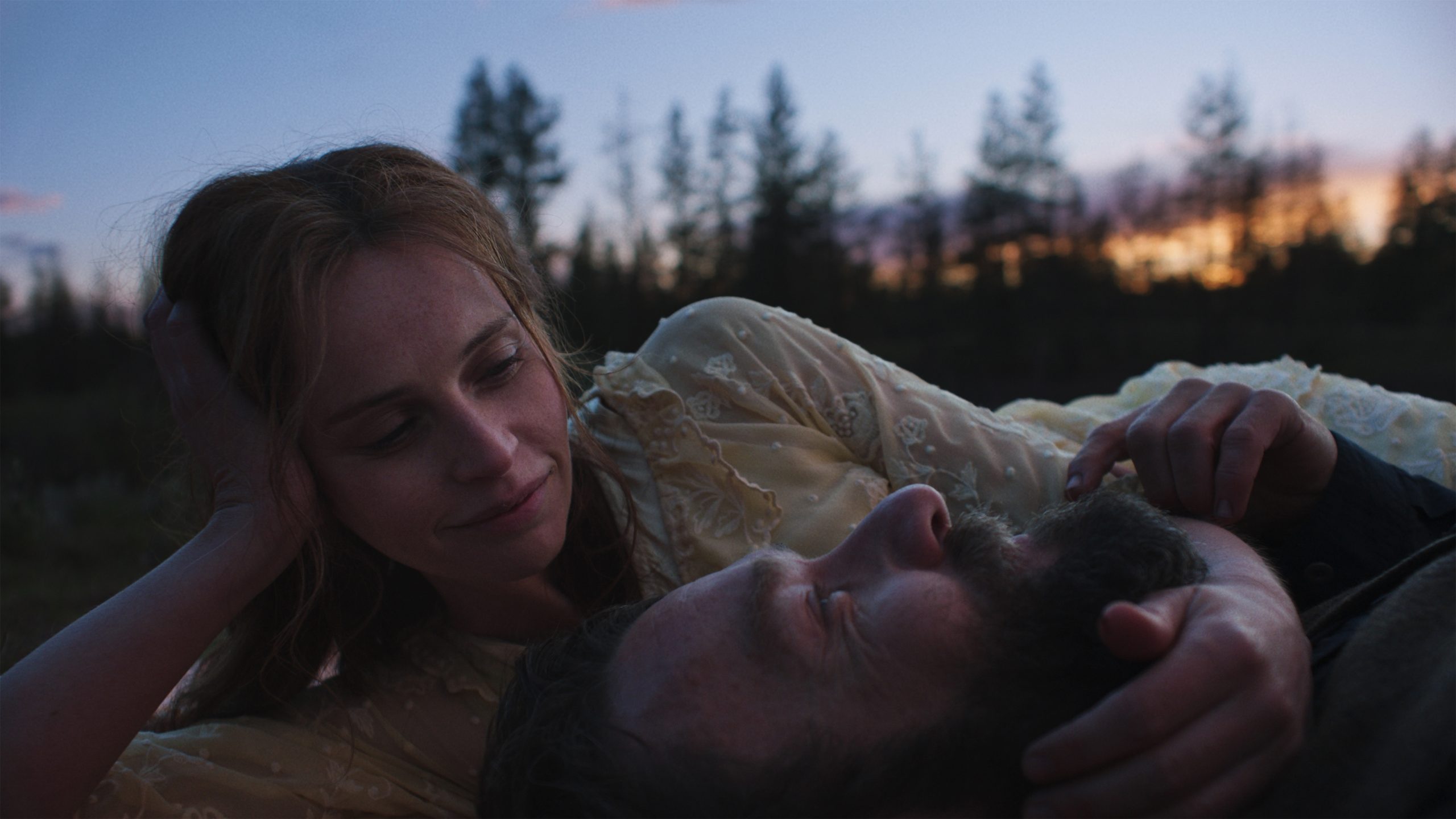
Train Dreams

Filmmakers Clint Bentley and Greg Kwedar have a really unusual creative partnership that always seems to work. That's never more true than in Train Dreams, Bentley’s second directing effort after his moving debut, Jockey (both of which he co-wrote with Kwedar; the two also wrote last year’s triumphant Sing Sing, which Kwedar directed).
Based on the 2011 Denis Johnson novella of the same name, Train Dreams is a quiet, often devastating portrait of Robert Grainier (Joel Edgerton), who seems to have a front-row seat to a period of unprecedented change in early 20th century America when the nation’s new railroads stretched at an incredible pace across the country, thanks to laborers like Grainier who were as expendable and forgettable as the lands they tore through for various rail empires.
Taking up residence in the Pacific Northwest, Grainier marries Gladys (Felicity Jones), and they build a home and family together, although he is frequently gone for long stretches while he works. During one of the these absences, his life takes an unexpectedly tragic turn, but partly because of that, he redefines his relationship with the land and trees he’s worked on for years. The film is poetic in its portrayal of time and place, of loss and possibility, and particularly in the way it builds a bridge between the past and present.
Along his sometimes brutal journey, Grainier crosses paths with supporting characters played by Clifton Collins Jr. William H. Macy (in a true return to form), and Kerry Condon as Claire, a kind forestry services worker who appears in Grainier’s life at exactly the right time. Train Dreams is an extraordinary visual and emotional experience, and the two things are so closely tied together, you almost hate to mention them separately. (Steve Prokopy)
The film will screen in 35mm at the Music Box Theatre on Monday, Oct. 20, at 6:30pm. At this screening, director and co-writer Clint Bentley will receive the festival’s Artistic Achievement Award in Directing, and actor Joel Edgerton will receive the festival’s Artistic Achievement Award in Acting. The film will also screen at the AMC NewCity on Thursday, Oct. 23, at 2pm.
Two Times João Liberada
Two ghosts haunt Portuguese filmmaker Paula Tomás Marques' experimental feature debut: that of the titular gender nonconforming character persecuted by the Inquisition in 18th century Portugal; and that of British filmmaker Derek Jarman. Shot in 16 mm, Marques, cinematographer Mafalda Fresco and editor Jorge Jácome would have made Jarman proud in their use of such devices as blue filters, light flashes, double and triple exposures, superimposed texts and historically accurate drawings, and even what looks like hand-painted film leader to tell this story about low-budget filmmaking, historical appropriation and representation.
João (co-writer June João), a transgender actor, has been cast as João Liberada by Diogo (André Tecedeiro), a cis filmmaker who prides himself in having hired a mostly LGBTQ+ crew for his film, while telling Liberada’s story from the point of view of her accusers. Her clashes with Diogo are constant but as a member of the crew reminds her, that fight could only have been won at the script stage and not halfway through filming. The ghost of João Liberada begins to haunt João’s dreams and Diogo soon falls into a mysterious coma giving João and the cast and crew the opportunity to properly tell Liberada’s story.
From a critique of the pitfalls of the traditional biopic to an exploration of the filmmaking process, it is quite remarkable how many themes, ideas and visual conceits Marques dexterously packs in a mere 70 minutes. For an avant-garde film, Two Times João Liberada is incredibly accessible, each technique deployed at the service of the film’s minimalist story. And while João Liberada, her actor namesake, and Diogo come out as more rhetorical tools than fully defined characters, Marques’ film makes for a worthwhile, thought-provoking experience, one that may not be seen for a while in Chicago’s art houses since the film has yet to secure a U.S. distributor.
Two Times Joáo Liberada is screening as part of the festival’s Outlook Competition on Wednesday, Oct. 22, at 8pm at the AMC New City and Thursday, Oct. 23, at 2:30pm at the Gene Siskel Film Center. Director Paula Tomás Marques is scheduled to attend both screenings.
If you enjoyed this post, please consider supporting Third Coast Review’s arts and culture coverage by making a donation. Choose the amount that works best for you, and know it goes directly to support our writers and contributors.
