
The 61st Chicago International Film Festival wrapped up on Sunday, October 26 with a Chicago premiere screening of Eternity starring Elizabeth Olsen, Miles Teller and Callum Turner. Ahead of the screening, fest organizers recounted memorable moments and shared a laundry list of thanks to those who help make the festival possible. Over the course of twelve days, Chicago played host to filmmakers from around the world as hundreds of films screened at several venues across the city.
Selected by juries of various film backgrounds, the festival's winners this year include Sirât (read our capsule review here) and more, many of which may or may not make their way back through Chicago in the coming months.
We're recapping some of the best films we saw at the 61st Chicago International Film Festival but didn't have a chance to review during the event's twelve-day run. Included in this recap are several films; use the links below to jump to a review of your choice.
Arco // The Condor Daughter // The Currents // Eternity // Jay Kelly // Marama // The Testament of Ann Lee // A Useful Ghost
Arco

This French animated production from noted illustrator, graphic novelist, and now animator and first-time feature filmmaker Ugo Bienvenu and producer Natalie Portman (who also lends her voice to the American dub, which is what’s playing during the festival), Arco is the dazzling time-travel story about impatient 10-year-old Arco (Juliano Krue Valdi) from the peaceful future of the year 3000 who is jealous of his older family members who get to carry out time-travel missions (this film has a marvelous redefinition of rainbows as evidence of time travel).
He inadvertently travels back to the year 2075 and meets a girl named Iris (Romy Fay), and together they band together with her robot caretaker Mikki and attempt to find a way to get Arco back to his own time. But during their adventure, Arco is stunned to discover that the planet is on the brink of environmental destruction, and he comes to realize that the two of them might also have to save the planet before he leaves.
Arco’s stunning animation style and storytelling is as strong and moving as just about anything from Japan’s Studio Ghibli, from which it clearly borrows inspiration as an artistic and creative endeavor. And while I’d normally prefer to see the original-language version of any film, the English dub features spirited voice work from the likes of Portman, Mark Ruffalo, America Ferrera, Will Ferrell, Andy Samberg, and even Flea (the latter three play a trio of adversaries who are also quite funny). The work has inspired messages about friendship, hope for a better future, and the healing power of a great adventure, and it works as fulfilling entertainment for younger audience and adults. (Steve Prokopy)
Arco screened in the festival's Snapshots program and is coming soon to theaters.
The Condor Daughter
Álvaro Olmos Torrico’s The Condor Daughter may share the DNA of such recent indigenous-themed South American films as Utama (2022) and Wiñaypacha (2017): communities abandoned by their youth in search of a better life in the city, imposing landscapes, the clash between tradition and modern cultures. But The Condor Daughter is also quite unique; like most of the Latin American films I saw at the Chicago International Film Festival this year, it subverts any expectations you may have when walking in.
Clara (Marisol Vallejos Montaños) aids her adoptive mother Ana (María Magdalena Sanizo) in her duties as the midwife of the community of Totorani, high in the Bolivian Andes. She discovers a new world of songs and sounds when a radio is given to her as payment for helping Ana out in one of these births. Torn between leaving the community to pursue a potential career as a singer and the traditions that she respects and honors, Clara opts for the former.
While most films of this kind would follow Clara’s adventures in the big city and their corrupting influence on one so young and naive, Olmos Torrico takes another path. Clara’s departure has brought a number of calamities to the community and Ana accepts the responsibility of going after Clara and bringing her back. What Ana discovers in Cochabamba is a thriving quechua community that still holds tight to a sense of identity and solidarity.
Shot by Nicolás Wong Díaz, (DP for Jayro Bustamante’s La Llorona), The Condor Daughter tends to contrast the smallness of its characters with the imposing landscapes of the region. Even Cochabamba, with its loud noises, hectic lifestyle and bright, fluorescent colors, can seem as overwhelming as those mountains. There is a magnificent shot of Ana standing in front of a gaudy night club, her small body dwarfed by the ludicrous vastness of the building. But not even the building’s size can match María Magdalena Sanizo’s stoic, weather-beaten face nor her character’s determination in completing her mission. (Alejandro Riera)
The Condor Daughter received its U.S. Premiere at the Festival as part of its New Directors Competition.
The Currents
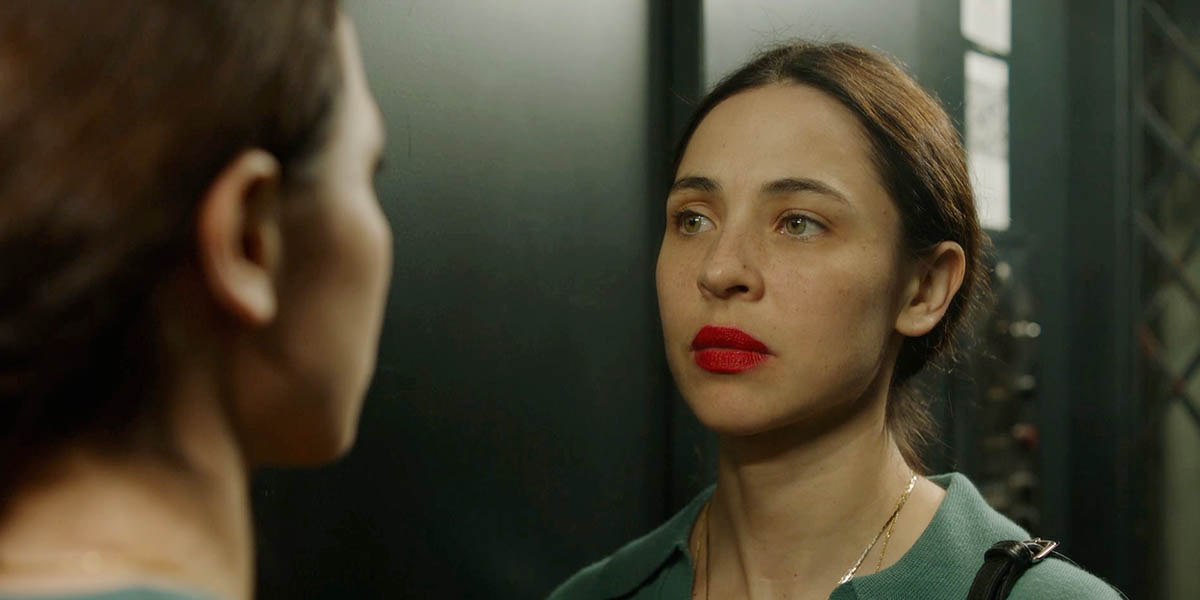
Festival selections Milagros Mumenthaler’s The Currents and Mary Bronstein’s If I Had Legs I’d Kick You would make for quite an interesting double feature: both revolve around women who are at an emotional and even mental crossroad, where the pressure of trying to find the perfect balance between their professional lives and their role as parents and wives takes them close to the brink of collapse. While Bronstein puts the audience through the wringer by staying close to its protagonist and makes you feel what she is feeling, Mumenthaler opts for a more observational, almost clinical but in the end compassionate approach.
Argentinians often joke that almost everyone in Buenos Aires is in therapy, although at no moment in Mumenthaler’s film does its protagonist, fashion designer Lina (Isabel Aimé González-Sola), seek the help of an actual therapist. Her therapy instead consists of going to a hair stylist to have her hair taken care off while under sedation because of her sudden fear of water. A fear resulting from an impulsive act: after accepting an award in Geneva and dumping said award in the trash, Lina goes for a walk and ends up at a bridge where she decides to jump into the water, the act shot at a distance.
Back in Buenos Aires, she goes on with her routine, taking care of her inquisitive and curious 5-year-old daughter Sofía (a marvelous Emma Fayo Duarte) while playing the role of dutiful, loving wife to her well-connected husband (Esteban Bigliardi) and working on her next project. Her routine helps her deal with her malaise, whatever it may be. Mumenthaler does not believe in easy psychologizing; there is no one single reason for this approaching breakdown. Her fear of water, of bathing, is just the most recent manifestation. Not even Lina’s visit to her mother, who’s battling her own mental illness, is the aha! moment one would expect in such an intimate study.
I wish I had seen The Currents on the big screen instead of on a laptop. Mumenthaler and her sound designers envelop Lina with an overwhelming soundtrack of noises and sounds, isolating her, disorienting her. Then there’s the use of Holst’s The Planets in a lovely montage, towards the end, of Lina’s acquaintances going on with their own lives, one of The Currents many highlights. I really hope it gets picked up for distribution in the United States. (Alejandro Riera)
The Currents screened as part of the Festival’s International Competition.
Eternity
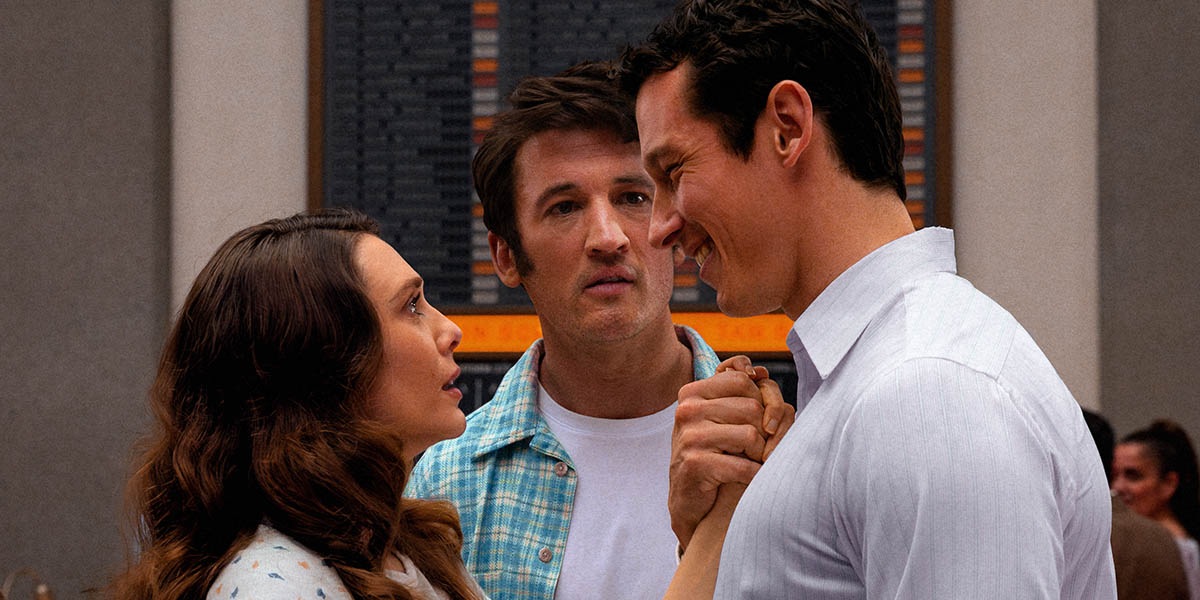
In a welcome sign that the movie business is going to be OK after all, Eternity proves to be that rare gem of original storytelling that might just break through to the masses thanks to a winning script, endearing lead performances and enough tugs at the heartstrings to make it a memorable journey through this thing called life. From the jump, the film is a charmer (if a bit clunky with its set-up) that asks us to go along with a premise that sees the dead arriving by train to a cement-and-carpeted holding pen, part hotel, part doctor’s waiting room and part convention center where every type of eternity has a booth set up vying to get souls to join them.
Although Joan and her husband, Larry, both died as senior citizens, they meet in the processing center as young adults played by Elizabeth Olsen and Miles Teller. Also in the mix is Joan’s first husband who died young; Luke (Callum Turner) has been working as a bartender for the newly dead and waiting for his beloved Joan to show up. And thus the crux of Eternity: what’s a woman to do when she shows up in the after life and has to choose between spending eternity with her first or second husband, two men she truly loved, if differently?
At just under two hours, Eternity possesses a few more plot twists and turns than are necessary, but if that’s in exchange for what could’ve been some narrative shortcuts that ultimately would have deprived us from getting to know these three better, all is forgiven. Freyne and Cunnane do a commendable job world-building here, from the Archives tunnel each eternity features where the deceased can revisit key moments in their lives (good or bad) to the small, clever details snuck into the background of various scenes at the processing center. With plenty of heart and more than a good dose of comedy, Eternity is the kind of relationship movie for grown-ups I wish there were more of in cinemas, an exploration of life and love and the stories we build together. Remember to bring your pretzels. (Lisa Trifone)
Eternity screened as the Chicago International Film Festival's Closing Night selection; the film opens in theaters this Thanksgiving.
Jay Kelly
In many ways, the latest from director and co-writer Noah Baumbach (who penned the screenplay with actress Emily Mortimer), Jay Kelly, is an unconventional biopic about a fictional actor whose career and life choices in some ways are a funhouse mirror reflection of its star, George Clooney. In other ways, Kelly’s life is nothing like Clooney’s, but we get a sense that the actor inhabits this megastar like few other characters he’s played in his long career, and that recognition lives on Clooney’s face in a way that only the spectrum between regrets and fame can.
Kelly takes this journey of self-discovery (or perhaps rediscovery) with his best friend and devoted manager Ron (Adam Sandler) as they finish up one project and prepare for a trip to Europe where Kelly is slated to received a career tribute award. Combined with news of the death of the director who gave him his first big break (Jim Broadbent), the occasion gives Kelly the chance to reflect on how his life has progressed. A run-in with an old acting buddy (Billy Crudup), whose big break Kelly basically stole, enhances thoughts of self-discovery and who was left in his wake as his star rose.
Among Kelly’s regrets is not spending more time with his daughters. The oldest, Jessica (Riley Keough), has already carved out a life for herself with little input or influence from her father; but the younger, Daisy (Grace Edwards), still lives at home and is about to take a European trip with friends for the summer before going off to college. Kelly wishes they could spend the summer together, but he manages to shift his plans (much to his team’s dismay) to follow Daisy on at least part of her trip. Kelly is surrounded by people (including Ron; his publicist, played by Laura Dern; Mortimer is part of the team as well) but he rarely takes their advice the way he should, especially about this trip. He’s also slated to start a new movie with a talented young director, which he now seems to not want to do, making Ron insane with frustration.
Taking a major cue from the films of Federico Fellini, Jay Kelly is always full-tilt, moving forward with occasional drifts into magical realism as Kelly merges the past and the present walking through doors in exotic locations (shot exquisitely by Linus Sandgren). The film feels intimate and personal despite the large, impressive cast, which also includes Baumbach’s significant other Greta Gerwig, Stacy Keach as Kelly’s father, Eve Hewson, Patrick Wilson as another actor managed by Ron, and Isla Fisher. But the story eventually zeroes in on the relationship between Kelly and Ron, who sees them as friends, which Kelly isn’t sure about, since he pays him 15 percent of his income. Ron is dejected by this revelation and the fact that Kelly seem ready to walk away from this new film seemingly on a whim. The film finds time to be exceedingly funny, while blending in moments of poignancy throughout. With Clooney doing career-best work, Jay Kelly isn’t asking anyone to feel sorry for its title character, but it would like you to understand him a bit better than you do when you first meet him. (Steve Prokopy)
Jay Kelly screened as part of the festival's Special Presentations; the film will be in theaters November 14 and on Netflix December 5.
Mārama

Set during the mid-1800s, Mārama is a fully Gothic costume drama following a young Māori woman named Mary Stevens (Ariāna Osborne), who is forced to make the long journey from Aotearoa, New Zealand, to North Yorkshire, England, in order to find answers about her nearly forgotten Māori birth family. When she arrives at the estate of a wealthy whaler and Māori wannabe Sir Nathanial Cole (Toby Stephens), he promises to help her find her lost sister after she discovers that the original man who wrote her about her dead parents has himself died. Stranded in this unwelcoming manor, she agrees to become nanny to Cole’s daughter, all the while brushing off inappropriate advances from Cole, both physically and culturally.
Mārama fully embraces its dark corridors and lush, flowing costumes, becoming a moving revenge tale and portrait of the British Empire moving at double speed to erase and absorb people unlike themselves. Mary begins to feel like window dressing to the Brits, and she soon sets her sights on heading back to New Zealand, but naturally the cultural appropriator Cole won’t allow it, resulting in a sequence in which she performs a ferocious Haka. Here, the film turns into a blood-soaked retribution story with Osborne at the fiery center of it all. With his debut feature, director Taratoa Stappard manifests a film that is equal parts colonialism condemnation and a modern Gothic horror masterpiece. (Steve Prokopy)
Mārama screened as part of the festival's After Dark program; it will be release in theaters in early 2026.
The Testament of Ann Lee
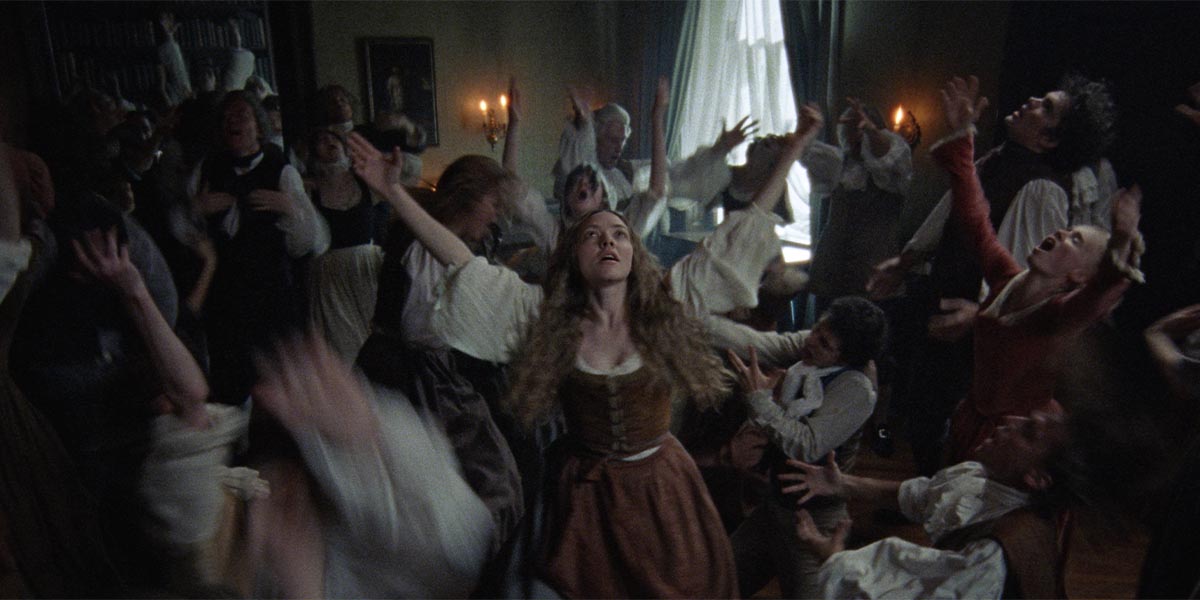
Writer/director Mona Fastvold has divided her time between making her own films (The World To Come) and co-writing works with her husband, filmmaker Brady Corbet (The Brutalist, Vox Lux). But her latest work, The Testament of Ann Lee, is an entirely different animal: the fully immersive, speculative retelling (based on years of research) of the founding of the Shaker religious sect by Ann Lee (a wholly committed Amanda Seyfried), who was seen by her followers as the female incarnation of Christ. Lee was married to a brute of a man (Abraham Standerin), and while he continued to stay married to her for a time, her belief in celibacy among all her followers eventually drove him away in spectacular fashion.
With the invaluable assistance of Oscar-winning composer Daniel Blumberg (who also has a role in the film) and choreographer Celia Rowlson-Hall, the movie profiles the Shakers belief that impassioned singing and ecstatic dancing makes one closer to God, and at times, Testament feels like a spiritually based musical that manages to give us glimpses of the utopian world Lee envisioned for her followers. With strong supporting work from Lewis Pullman (as Lee’s devoted brother, William), Thomasin McKenzie (who also acts as our narrator), Stacy Martin, and Tim Blake Nelson, Testament also reminds us just how terrified colonial America was of a religion run by a woman in a time when the rest of the country was celebrating newfound religious freedoms. (Steve Prokopy)
The Testament of Ann Lee screened as part of the festival's Special Presentations; the film opens in theaters December 25.
A Useful Ghost
In one of the strangest, funniest, and most surprisingly tragic stories you will see all year, first-time writer/director Ratchapoom Boonbunchachoke’s A Useful Ghost concerns a Thai vacuum factory that falls under pressure when a series of fatal workplace accidents leads to an unexpected consequence (aside from being shutdown): all of the workers who have died start possessing the machines and wreaking further havoc in the facility. The film opens with a character named “Academic Ladyboy” (Wisarut Homhuan) at home having issues with his newly purchased vacuum, but when a strikingly handsome repairman (Wanlop Rungkumjad) arrives, it becomes clear that the issue with the machine is nothing a simple service technician can fix, because it’s inhabited the ghost of a worker who died from lung issues.
Those characters factor into the main story involving a grieving husband named March (Witsarut Himmarat) whose young wife, Nat (Davika Hoorne), was killed by dust poisoning. She comes back to him in the form of a polite, handy ghost inhabiting a vacuum, proving that love knows no boundaries or attachments. Eventually, she even agrees to help the mortals running the factory get rid of the other, angrier ghosts, and before long an outright revolution begins between the ghosts who have a genuine grievance and the humans who just want to open up their factory once again.
The film is a pure deadpan, genre-defying endeavor that sees this conflict escalate in unexpected ways. But it’s the love story between March and Nat (who we also see in human form most of the time, but mostly to represent what her husband sees; she’s still very much a full-time vacuum cleaner). A top prize winner at this year’s Cannes Critics’ Week, A Useful Ghost gets dark and even absurd at times—as a film with so much death and so many ghosts should—but it remains poignant and witty throughout. (Steve Prokopy)
A Useful Ghost screened as part of the festival's Outlook program; the film will open in theaters in 2026.
If you enjoyed this post, please consider supporting Third Coast Review’s arts and culture coverage by making a donation. Choose the amount that works best for you, and know it goes directly to support our writers and contributors.
