
Winner of the 2025 Palme d’Or, Cannes Film Festival’s top honor, It Was Just an Accident is the latest from Iranian writer/director Jafar Panahi (who previously won the award for 2018’s 3 Faces), a filmmaker known for his deeply humanistic and unflinching takes on life in his home country. Working under a repressive regime, he’s been the subject of as many headlines as his films have, from being detained at airports during routine film festival travel to his activism at home and on festival juries. He’s technically still currently under a ban from working in his chosen field, meaning his latest, the story of a ragtag group of survivors unexpectedly confronted by their traumatic shared past, was produced in secret and without film permits.
The story begins at night, as a couple and their young daughter drive home on a dark, secluded road; after hitting a dog, the car’s engine is damaged badly enough that they’re forced to stop at a nearby garage for repairs. While Eghbal (Ebrahim Azizi) works with the mechanic, his pregnant wife and daughter look for a bathroom; elsewhere in the garage is Vahid (Vahid Mobasseri), who’s on the phone with his mom when he realizes exactly why Eghbal seems so familiar. We’ll come to learn that Vahid believes him to be one of the officers who tortured him to the point of long-term injuries while he was imprisoned for protesting for workers’ rights.
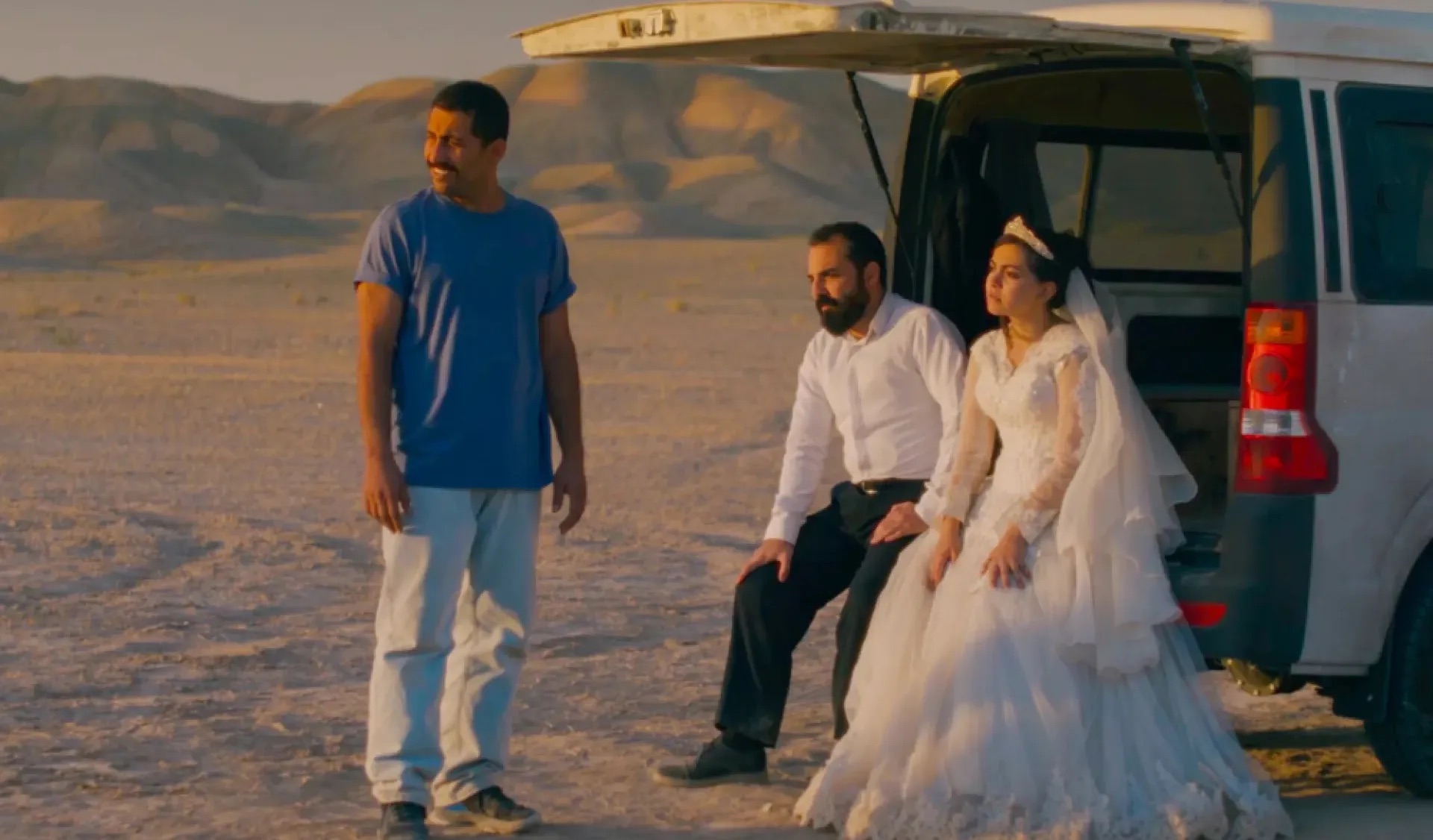
All of this unfolds in the film’s first 20 minutes or so, including Vahid’s attempt to enact revenge on his tormentor until he begins to second guess himself about Eghbal’s identity, having been blindfolded during his imprisonment. With Eghbal restrained in his van’s cargo hold, he goes to see a fellow prisoner, now a bookseller, who is too spooked to try identifying Eghbal himself; instead, he points Vahid to photographer Shiva (Mariam Afshari), who may be able to help. Soon, it’s revealed that the bride of the couple she’s photographing, Goli (Hadis Pakbaten), who’s marrying Ali (Majid Panahi), was also a victim of Peg Leg, as they called him given his prosthetic leg and subsequent limp. Shiva leads them to Hamid (Mohamad Ali Elyasmehr), yet another victim and generally an unpredictable hothead all around.
This unlikely group spends the bulk of the film navigating what to do with the man in the trunk and what each of their consciences says is right or wrong, something that often changes as the day goes on. Panahi’s sharp skill here is his ability to layer the group's pain and trauma alongside the undeniable absurdity of it all; there’s an unexpected comic relief to the proceedings, from the visuals of a couple in their wedding garb traipsing around the desert to the random pickles they all find themselves in along the way (a moment with unsuspecting security guards is particularly giggle-inducing).
But the comedic moments never take away from the heft of what Panahi is exploring here, what is ultimately the darkest and scariest time in all of their lives. The question of whether Eghbal is who they think he is is at the center of everything—can they trust their own memories? If he is their torturer, does exacting revenge bring them closure or make them more like him? If he’s not, are they risking their own souls for nothing? These are complicated and intense questions that Panahi and his talented cast grapple with in nuanced, authentic ways. Yet again, the Iranian filmmaker puts a mirror to modern society and asks us to investigate how we treat each other, what impact our collective choices have on each other and how we are meant to live together in the wake of it all.
It Was Just An Accident is now playing in select theaters.
If you enjoyed this post, please consider supporting Third Coast Review’s arts and culture coverage by making a donation. Choose the amount that works best for you, and know it goes directly to support our writers and contributors.
