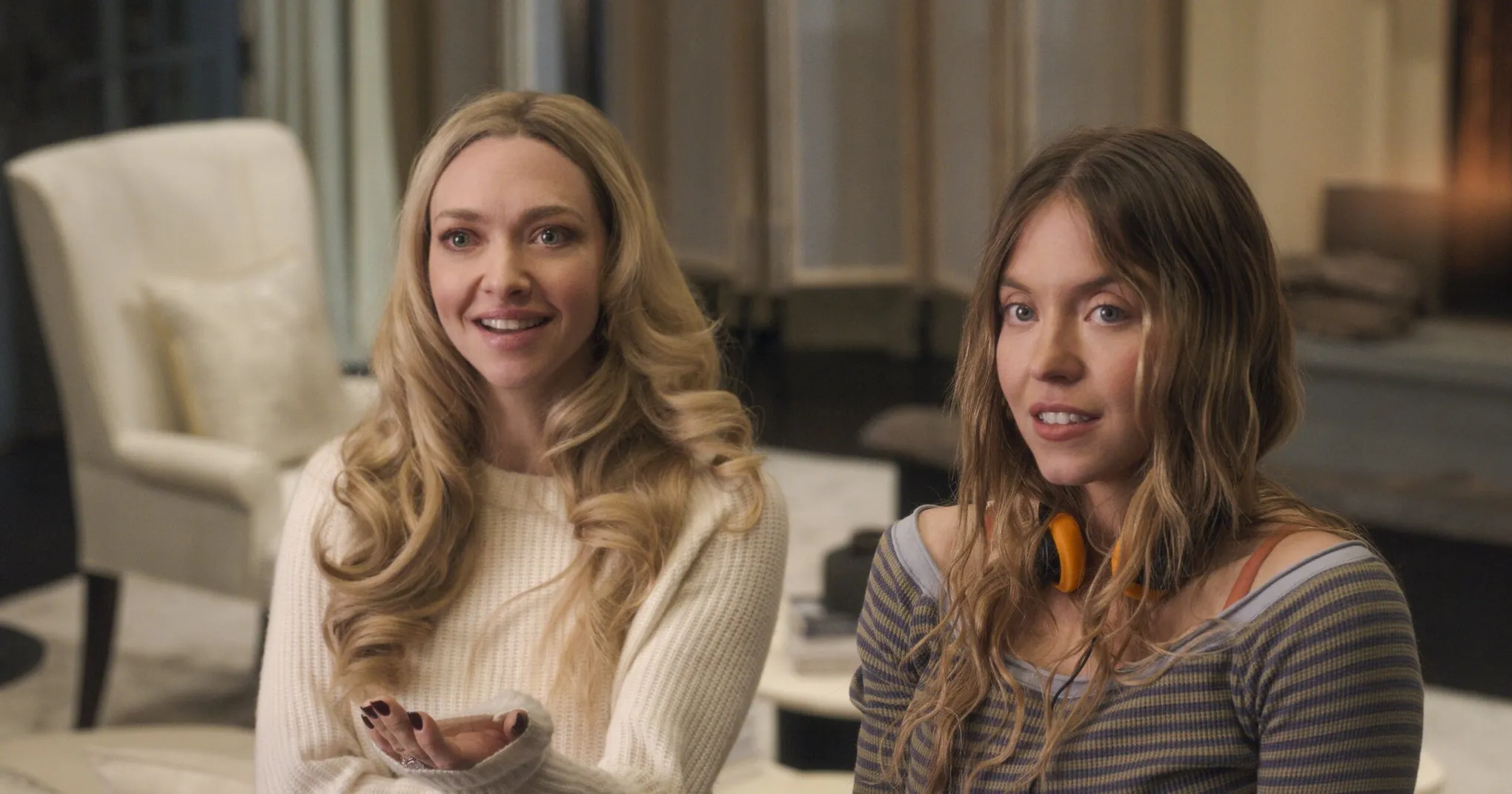

Based on the best-selling 2022 book by Freida McFadden and adapted by Rebecca Sonnenshine, The Housemaid is something of a wild-ride thriller about Millie (Sydney Sweeney), a young woman with a criminal past (she still has to make regular visits to her parole officer) who takes a job as a live-in maid for the wealthy Winchester family. She first meets wife Nina (Amanda Seyfried), who takes to Millie almost too readily; but it doesn’t take long for Nina to accuse the new hire of losing things, throwing things away that she shouldn’t have, and even firing her only to reverse her decision almost instantaneously. Still, the film initially makes us believe that Millie is going to be the real problem in this film and makes us fear for Nina and her young daughter’s well-being.
Then Millie meets Nina's husband Andrew (Brandon Sklenar), handsome and charming in the most generic ways possible, although he still seems like more of a friend to Millie than Nina is. He’s even protective of her to a certain degree when his wife rages against her. Millie and Andrew start to spend more time together and even start a fairly illicit affair when Nina and their daughter leave town for a few days. But there are things about this family and this house that Millie doesn’t trust, beginning with her attic bedroom and its lock on the outside. Also stirring unease is Andrew’s overly attentive, entitled mother (Elizabeth Perkins), who visits way too often and has a lot of opinions about the family’s privilege and her son’s perfect smile.
Then at around the halfway mark, the film reverses things back in time a few weeks, and we’re shown certain key moments again from a different point of view—Nina’s point of view. The film even switches narrators from Millie to Nina. And this is where the film starts to reveal certain twists and truths about the entire situation. Was Nina an awful person and trying to fire Millie for no reason, or was she trying to get her out of the house, as far away from this situation as possible? Or was she simply trying to not get replaced? The story’s power dynamic shifts, and everything we thought we understood about this arrangement unravels in a series of sometimes explosively violent episodes.
And if I told you that Paul Feig (Bridesmaids, The Heat, Spy) directed this little excursion, would you be surprised? This is clearly the version of Feig who also made A Simple Favor and its sequel (I should mention at this point that The Housemaid novel had two sequels), and those films proved he has a flair for portraying scandal combined with sexy games filled with frequently dangerous secrets. And while I found Seyfried quite enjoyable as the rich socialite with anger-management issues, Sklenar is unbearably bland, and Sweeney, while easy on the eyes, continues to confound me as an actor.
I will admit, I liked how this film ended, which includes Millie and a job interview for her next gig, only this time, there’s more of an understanding. I think The Housemaid struggles because not enough of its tricky pieces quite work or come together satisfyingly when all is said and done—but that doesn’t mean some things don’t have the intended effect. I’ll fully admit, I didn’t see all of the twists coming, but some of them seem silly and unbelievable, especially the way law enforcement handles some of what happens. Feig has a solid track record, but you can’t be good at everything all the time.
The film is now playing in theaters.
Now through December 31, Third Coast Review is raising money to support the diverse roster of writers you know and appreciate for their thoughtful, insightful arts and culture coverage in Chicago and beyond. Everything raised during this time will go directly to paying these writers a well-deserved year-end stipend; you can make a contribution here. Thank you!
