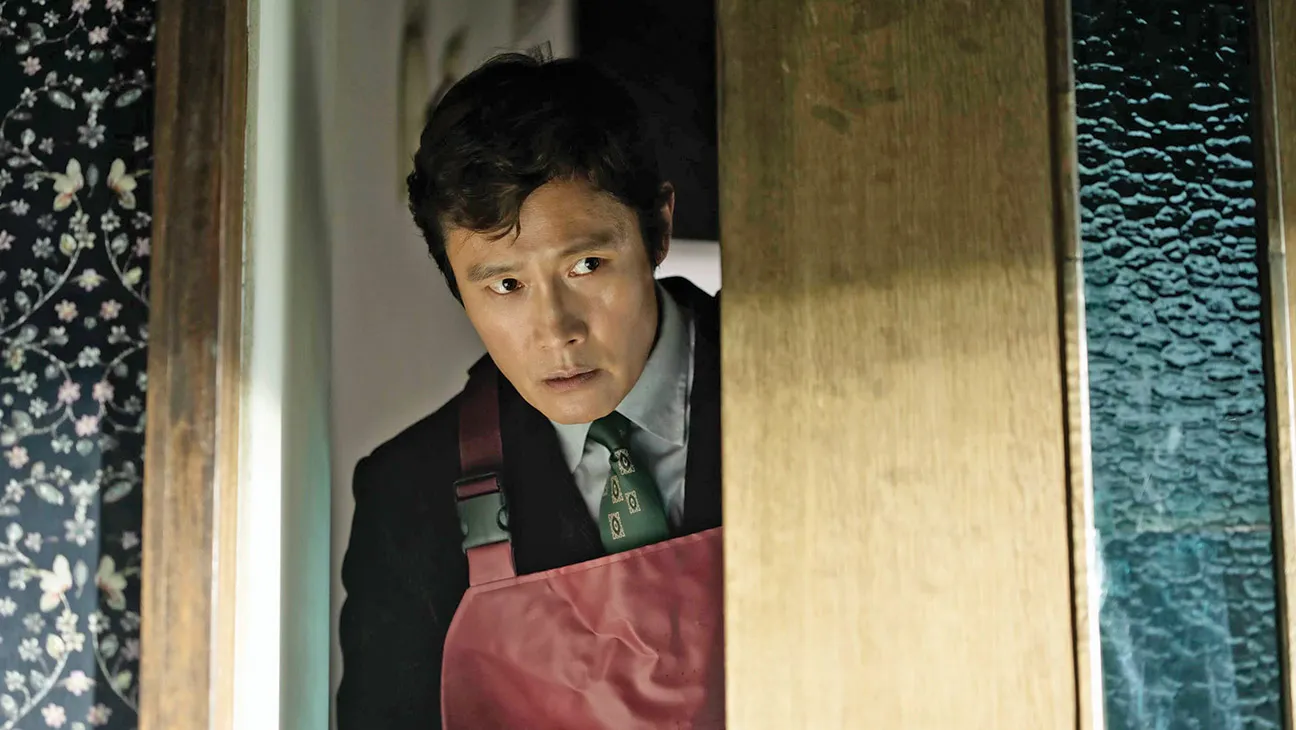

It's a shame that more American audiences don't seek out international cinema when it makes its way to US movie theaters; it was always a struggle for films with subtitles to break through pre-pandemic, but it seems to be harder than ever since then. Which in the end just means audiences are shortchanging themselves on some of the most impressive cinema of the year.
Case in point: Park Chan-wook's ambitious and whip-smart No Other Choice, a satire with so much bite you'll be forgiven for looking for bruises by the time the credits roll. The writer/director continues a winning streak of top-notch filmmaking, following 2016's The Handmaiden and 2022's Decision to Leave, both films with rich character development and nuanced emotional journeys despite being set in different eras and following very different narratives.
For No Other Choice, based on a novel by Donald E. Westlake, Park turns his attention to the modern dilemma of committing oneself entirely to their job only to learn that the industry, company and job are not nearly as committed to them. Lee Byung-hun is Man-su, a dedicated employee at an esteemed paper-making company, but when Solar Paper is bought out by an American company, his job is sent to the shredder. Which is bad news for a lot of reasons, but mainly because he and his beautiful family—wife Mi-ri (Son Ye-jin), step-son Si-one (Woo Seung Kim) and daughter Ri-one (So Yul Choi)—have built a beautiful life for themselves and their two doting dogs in Man-su's spacious childhood home. With no job, he's at the risk of losing the home and the life they've come to enjoy.
What starts as a promise to find a new job in the paper industry within a few months ultimately turns into over a year unemployed, the family dynamic changing and Man-su more and more desperate to find a solution to his problem. It's clear from the jump that finding a new job is about much more than a paycheck; Man-su's very identity is at stake here, both how he thinks of himself and how he's perceived by his wife, his children, his neighbors and his colleagues.
As in his other films, Park does well to interweave several different stories, sometimes sending us off blindly into a new direction before revealing how these latest characters are connected to the central narrative. In No Other Choice, these come in the form of Man-su's main competition in the apparently very limited pool of applicants for paper-making plant supervisor roles, as the man's desperation turns into a plot to get each of them out of his way. It's how all of this unfolds, absurdly and hilariously and sometimes heartbreakingly, that makes No Other Choice so watchable.
There are mistaken identities and raucous encounters; there's plenty of drama and action as lives are on the line once Man-su sets his plans in motion. And though he's got the most desperate motive of them all, none of the players in Park's satire are entirely innocent; infidelities are revealed, greed and class judgments rear their ugly heads and it's all somehow so dark and sharp that it circles back around to honest and clear.
Though it was his compatriot Bong Joon-ho who won the Best Picture Oscar with Parasite a few years ago, Park Chan-wook yet again confirms that Korean cinema is a rich and worthy well of story, craft and entertainment. No Other Choice may take place half way around the world, but its themes and the struggles and worries of its characters are universal. What's more, Park strikes an enviable balance of humor and heart in a film that, without either, would be quite difficult to stomach. Instead, the film is one of the year's best.
No Other Choice is now in theaters.
Now through December 31, Third Coast Review is raising money to support the diverse roster of writers you know and appreciate for their thoughtful, insightful arts and culture coverage in Chicago and beyond. Everything raised during this time will go directly to paying these writers a well-deserved year-end stipend; you can make a contribution here. Thank you!
