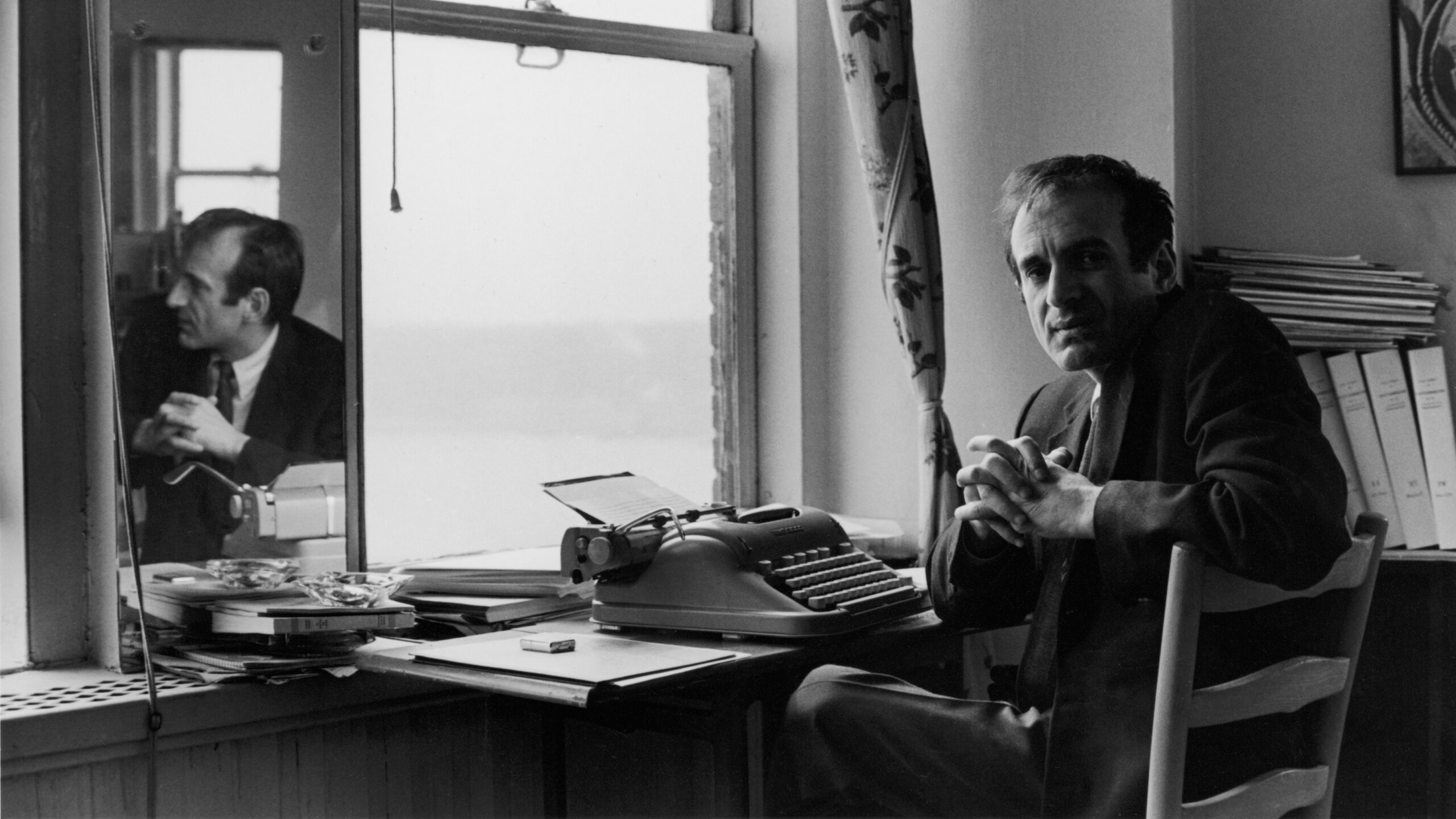

There have been a fair number of documentaries over the years about Romanian-born storyteller, professor, activist, Nobel laureate, and Holocaust survivor Elie Wiesel, who died in 2016, but director Oren (Joseph Pulitzer: Voice of the People) Rudavsky’s film Elie Wiesel: Soul on Fire attempts to dig a little deeper into Wiesel’s process (as both writer and speaker) and his objectives as a survivor, for both Jewish and non-Jewish citizens of the world. Using an immense amount of gripping archival footage, new interviews with his wife Marion and son Elisha, and stunning, hand-painted, black-and-white animation by Joel Orloff, the doc illuminates how Wiesel lived his life at various stages throughout the decades.
In the years immediately following the liberation of the concentration camps, he lived in relative isolation and poverty (some say he intentionally lived as a homeless person at times), never wanting to get married or bring children into the world. But as he got older, meeting Marion instantly changed his beliefs on both subjects. A great deal of the film’s running time is devoted to his writing and teaching his landmark book Night, in which he traces his time in the Auschwitz and Buchenwald camps as a boy. While writing the book didn’t erase the pain of his memories, it gave him a place to channel his feelings and provide record of the atrocities during the Holocaust that inspired other survivors to tell their stories.
But in his later years, he became not only an activist when it came to the Jewish experience but also in attempting to make sure similar genocides did not occur in the world. Specifically, there’s an incredible piece of footage of Wiesel publicly pleading with President Clinton to take action concerning the war in Bosnia. He also confronted President Reagan about visiting a German cemetery during a state visit because there were SS officers buried there. It was a public relations nightmare for Reagan, who took Wiesel’s words to heart and altered his travel plans.
But the film also examines what it must have been like living in the significant shadow of Wiesel’s prominence as a public figure. When he was still a boy, son Elisha was being held to a standard that he knew he could never live up to. And while it’s clear that Elie was a devoted father and grandfather, Elisha frequently pushed back on people comparing him to his father. The cumulative impact of Soul on Fire is exiting the film feeling as if we’ve spent time with the subject, in both personal and professional settings, making him seem less like a distant icon and more like a flesh-and-blood person.
The film is now playing in Chicago exclusively at the Gene Siskel Film Center and will air January 27 on PBS as part of the American Masters series. Producer/editor Michael Chomet is scheduled to be in attendance at the Siskel Film Center for Q&As following the Saturday, January 10, 8pm, and Sunday, January 11, 4:30pm, showtimes.
If you enjoyed this post, please consider supporting Third Coast Review’s arts and culture coverage by making a donation. Choose the amount that works best for you, and know it goes directly to support our writers and contributors.
