
Jim Jarmusch is more than a filmmaker. Jim Jarmusch is a vibe. His films, from Broken Flowers to Paterson to Only Lovers Left Alive and now Mother Father Sister Brother, are so uniquely heartbreaking, he almost makes it look cool. Even when his characters are struggling, even when they're really going through it...hell, even when they're vampires...I nevertheless always seem to find myself interested in one way or another in being them. Not being with them or being near them; being them. It's a unique talent and one I'm not necessarily sure I can ascribe to any other filmmaker, but there you have it.
In Father Mother Sister Brother, a feature film broken into four vignettes navigating familial relationships, I'm not entirely sure which of the players I'd want to be, but I certainly found plenty to identify with and even more to empathize with. The four segments reflect the film's title; one is Father, the next Mother and the third and final vignette is Brother Sister. Each is an independent story but each is closely related, too, as the experience of strained and complicated family ties is not an uncommon experience.
In "Father," Adam Driver (Paterson) and Mayim Bialik (nice to see her on the big screen after so much time on television) are siblings on their way to visit their father (Tom Waits), who lives essentially off the grid in a way neither of his accomplished, citified children can really understand. There's plenty of love among the three of them, but it's abundantly clear that none of them knows exactly where to put it, how to relate to either of the others. Their attempts to forge connection or even simply start a conversation fall flat and the visit, though well-intentioned, is difficult for everyone involved.
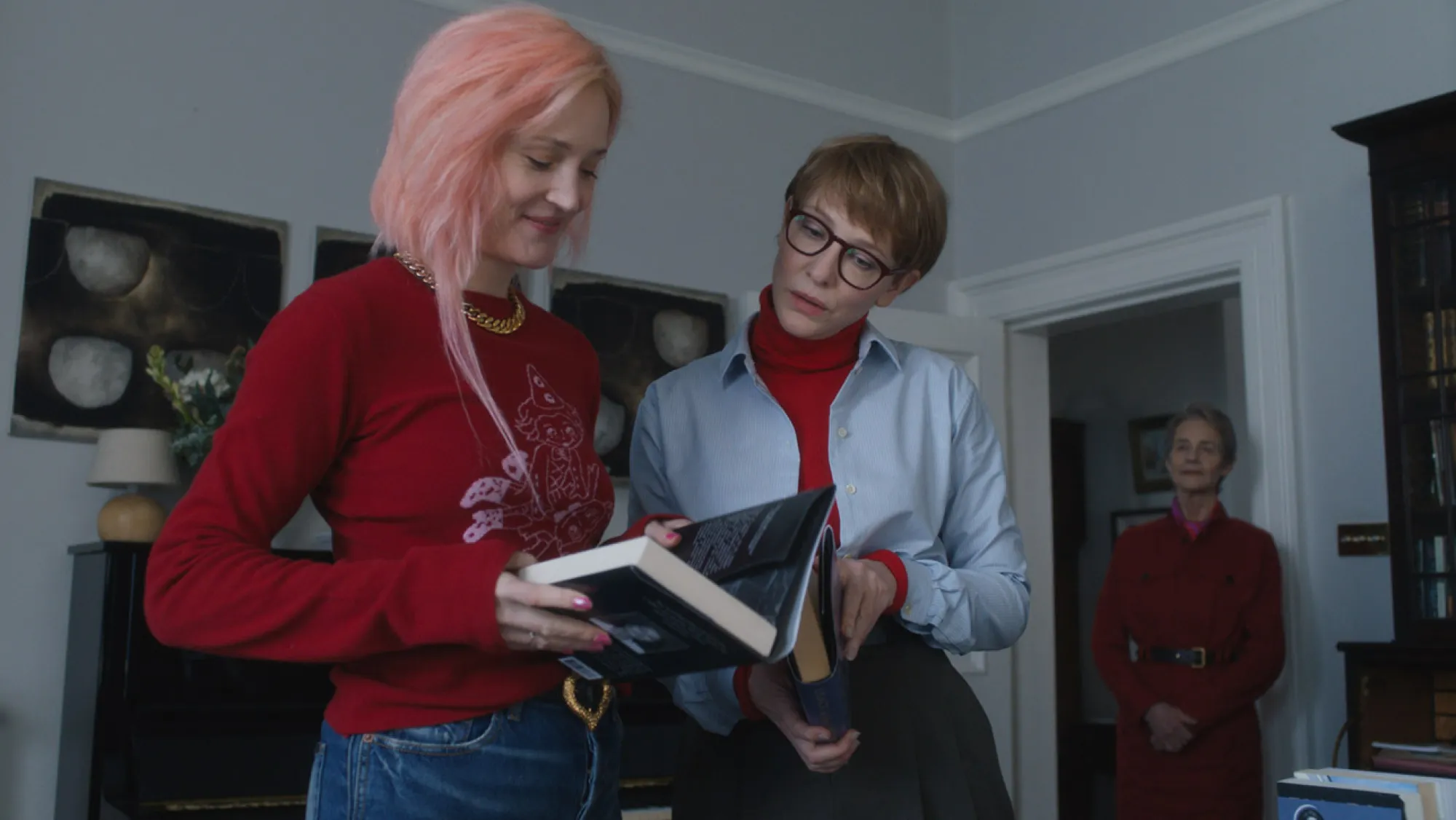
In "Mother," the most compelling of the three vignettes, the great Charlotte Rampling stars as a mother to two grown daughters, Timothea (Cate Blanchett) and Lilith (Vicky Krieps), who haven't quite lived up to her exacting standards. Though British, they all now live in Dublin, yet still don't see each other terribly often; when the daughters do arrive for tea, both are already several lies deep into how they arrived just to save face with a mother who wears judgment like a trench coat. Here again, the visit is stilted and awkward, but it's questionable if there's love underlying it all; Jarmusch's sharp and insightful script gives us depths of backstory without saying much at all, and it's fascinating to watch what are clearly old patterns among these women unfold again during this latest visit. Keep an eye out especially for their forced goodbye and the moment Lilith has to sort out how she's getting home; it's a seemingly simple interaction that, if you, too, have some complex family dynamics of your own, might resonate all too closely to home.
The final and longest segment of the film is "Sister Brother," featuring Billy (Luka Sabbat) and Skye (Indya Moore) as siblings in Paris closing their family apartment after losing their parents in a plane crash, using the time to revisit old, fond memories and rehash their shared experiences growing up together, a sort of bond only siblings can understand. Their conversations are unhurried but meaningful, and though they don't seem to be terribly close, it's easily the least awkward of all of the interactions. They clearly loved their parents and each are still grieving in their own way, and just spending time with them seems a bit like spying on something very personal.
Though the three vignettes visit upon three very different families, Jarmusch finds a small but clever way to tie them all together; in each segment, at some point, there's mention of a Rolex—someone is wearing one, that is. What's more, there's also always mention of it possibly (probably) being fake. It's a tiny thing, but it means so much. We are, after all, watching our own versions of "fake Rolexes" unfold over the course of the film. At first glance, these families seem fine, these connections seem real and genuine. But to the keen observer, to one who is trained to spot the flaws or who has experienced them firsthand, it's quite easy to see it's all fake. That fact in and of itself doesn't actually make it any less real, though, if you follow. These people are still here, trying; these bonds still exist—father, mother, sister, brother—whether what supports them is authentic or not.
Father Mother Sister Brother might not go down as one of Jarmusch's most acclaimed or mainstream films, but it's a gem nonetheless. And it does very well what he is so uniquely good at: observing our lived existence and reflecting it back to us in all its flaws, pains and reality.
Father Mother Sister Brother is now in theaters.
If you enjoyed this post, please consider supporting Third Coast Review’s arts and culture coverage by making a donation. Choose the amount that works best for you, and know it goes directly to support our writers and contributors.
