Enjoy our latest dispatch from the 2026 Sundance Film Festival….
Frank & Louis

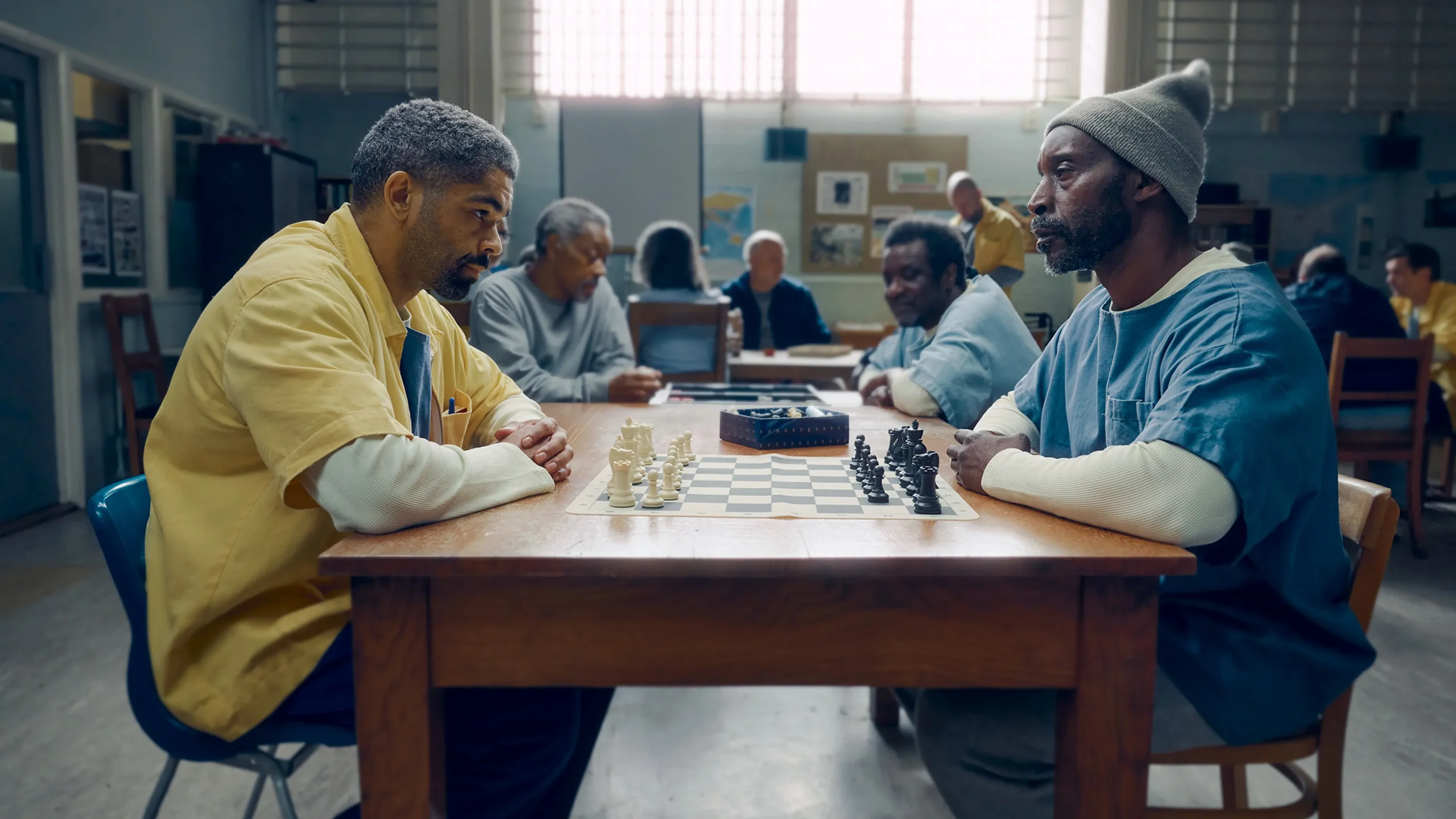
Swiss filmmaker Petra Volpe makes a poignant and impressive English-language debut with Frank & Louis, the story of a prison inmate who takes on a new job and discovers his day-to-day behind bars can be more unpredictable—and rewarding—than he ever expected. Co-written with Esther Bernstorff, Kingsley Ben-Adir (One Night in Miami…, Bob Marley: One Love) stars as Frank, a middle-aged man serving a life sentence for a crime we come to understand more as the film goes on.
Volpe’s past films cover a variety of topics, from 2017’s The Divine Order about women earning the right to vote in 1970s Switzerland to this year’s Late Shift, that country’s submission to this year's Oscars about one nurse’s intense and life-altering shift at work. Across her films, there’s a certain polish, a crispness that helps remove distractions and allow the audience to really focus in on the characters she’s introducing. There’s also a versatility evident across all her work, including in Frank & Louis, where she moves into English-language cinema with a primarily Black, male cast set in the American prison system, all descriptors one might not expect for this particular filmmaker.
But she rises to the occasion, bringing her European style to this decidedly American story; the film’s most moving moments are expressed in quiet, dialogue-free scenes where simply observing Ben-Adir with Rob Morgan as Louis tells us all we need to know about the moment they’re sharing. Both of their performances are moving in their own right, Ben-Adir as a man confronting the stark reality of his choices, even decades on, and Morgan as someone losing his sense of self and terrified of what it’s doing to his daily life.
In the end, Frank & Louis offers a glimpse into a world most don’t spend much time thinking about, those aging and unwell inmates living out their fate behind bars and the infrastructure (and support system) it takes to take care of them. If it relies a bit on cliches, all is forgiven for the emotional heft Volpe, Ben-Adir and Morgan infuse into the proceedings. (Lisa Trifone)
I Want Your Sex

One of the most featured directors in the history of Sundance, Gregg Araki (Mysterious Skin, The Living End), has been somewhat quiet in recent years. But he comes back swinging with his new sex comedy I Want Your Sex, about a drifting, dissatisfied Elliot (Cooper Hoffman), who lands what he believes is a dream job working as an underling for artist Erika Tracky (an absolutely electric Olivia Wilde). Erika’s work and philosophies all seem to revolve around sex, but more than that, her world is about not being ashamed of whatever sexual needs or requirements she might have. It doesn’t take long for her to set her sights on Elliot and take over his world, while teaching him new kinks and other sexual freedoms in her own dominating way. Elliot is both scared and willing, and that seems to be the thing Erika counts on the most in the film’s examination of modern and post-modern ideas about sexual freedom and the place sex has in the world of older and younger generations.
As funny, kinky, sexy and outrageous as I Want Your Sex can get, the best moments are when Wilde and Hoffman truly engage in conversations about how their respective generations don’t quite align when it comes to carnal needs and the role that sex plays in the modern landscape. The screenplay from Araki and Karley Sciortino is sharp, quick and mostly dead-on in its observations on obsession, power dynamics, autonomy, and the place of intimacy in a modern sexual relationship.
The supporting cast features an eclectic array of players, including Johnny Knoxville and Margaret Cho as investigators interrogating Elliot after Erika disappears, presumed dead; Charli XCX shows up occasionally as Elliot’s disinterested girlfriend who doesn’t seem to have the energy to have sex with him or break up; and Daveed Diggs as Erika’s overly attentive assistant, who is likely one of many men she is either sleeping with or did at one point. But the real standout here is the fearless Wilde, who elevates what could have been a subpar art-world mockery and makes it more of a knowing, worldly visual essay on being the ultimate provocateur, with a frankness that Araki excels in. (Steve Prokopy)
The Shitheads
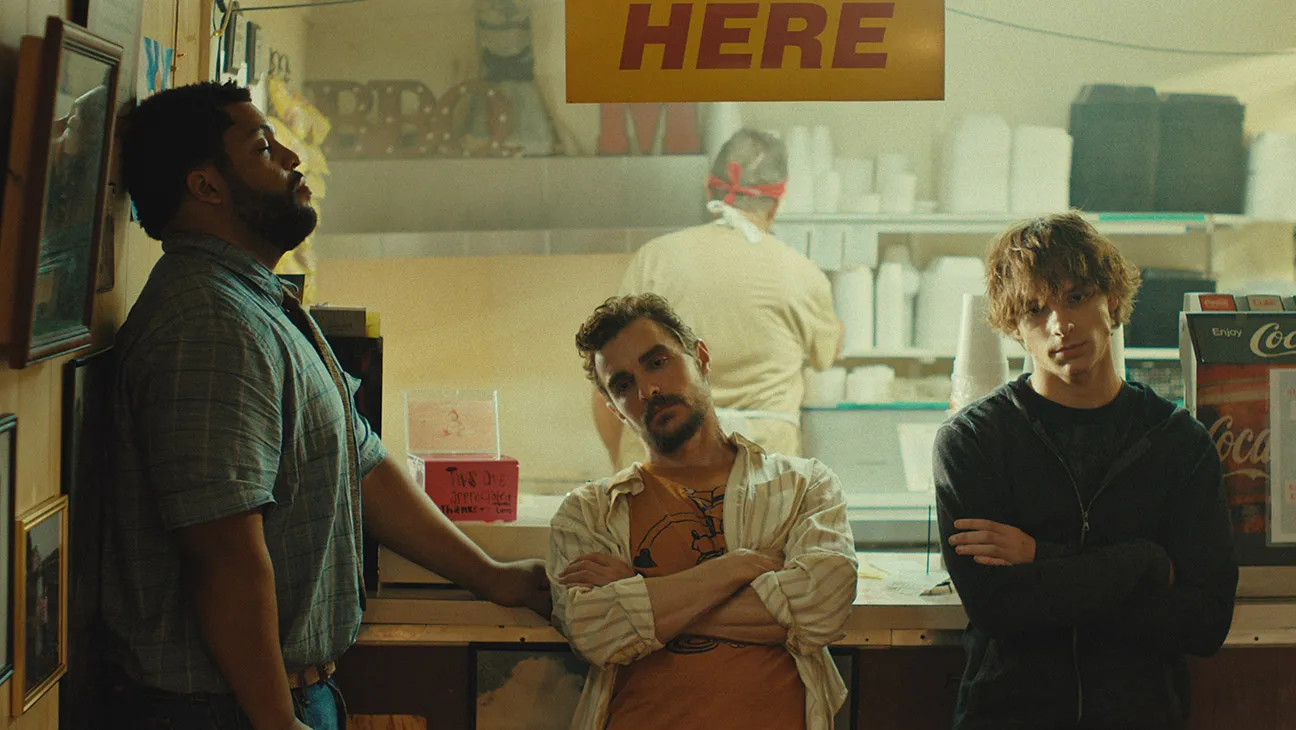
Writer/director/actor Macon Blair (I don’t feel at home in this world anymore, The Toxic Avenger remake) is back to familiar, seedy, darkly funny territory with The Shitheads (I’m going to guess this title may change before its official release, but I hope not) about two mismatched, unqualified jokers who are hired to transfer troubled teens to rehab facilities safely and without incident. Naturally, things don’t go as planned. O’Shea Jackson Jr. plays Davis, a well-intentioned but frequently clueless guy who has been doing this job a while, but never can get things right (the film opens with him being reprimanded for mistakingly showing Antichrist to a group of underage charges). Dave Franco is Mark, who’s essentially a criminal who probably identifies more with those they are escorting than he’s willing to admit.
On their first job together, they are tasked with transporting a young man named Sheridan (the wonderfully nasty Mason Thames), who seems like simply the product of filthy rich parents who don’t care about him. But as their journey continues, it becomes clear that he’s a full-on sociopath with millions of social media followers who see him as an anarchic hero. The trip begins with a flat tire but quickly escalates into complete insanity as Sheridan’s true nature and potential for destruction take hold, culminating in a showdown with a twisted family, led by Peter Dinklage and including an almost unrecognizable Nicholas Braun as a would-be rapper named Pricka Bush Da Werewoof (the film is almost worth the price of admission just to hear his song and see him perform it). The trip also includes visits with Irina, a stripper played by Kiernan Shipka, and Blair himself as a drug dealer friend of Mark who loads him up before the trip.
With The Shitheads, Blair’s perfectly bizarre sense of humor is on full display; it’s what I treasure most about him as a writer, and his actors clearly respond to his sensibilities and aren’t afraid to play with matches and run with scissors in his name. In particular, Franco truly goes places I’ve never seen him go in terms of absolute depravity. But I also loved the way Jackson’s sweetness and good intentions counter Franco’s worst moments, and the two end up caring about each other despite their best efforts. It’s a film that embraces its brashness while also daring to let a little warmth and good-heartedness shine through just when you’re ready to give up on humanity. (Steve Prokopy)
If you enjoyed this post, please consider supporting Third Coast Review’s arts and culture coverage by making a donation. Choose the amount that works best for you, and know it goes directly to support our writers and contributors.
