British filmmaker Bart Layton wrote, directed and produced the groundbreaking debut documentary The Imposter (2012) about Frederic Bourdin, a charismatic French con artist and serial identity thief who pretended to be the missing Texan boy Nicholas Barclay. The film went on to win and get nominated for numerous awards and was included in the Academy Awards shortlist for Best Documentary Feature. Layton followed up that film with his debut narrative feature American Animals in 2018, which featured rising stars Barry Keoghan, Evan Peters, Blake Jenner, as well as season veterans Ann Dowd and the late Udo Kier. Since then he’s worked as creator, director and producer on numerous television series and feature docs, including The Deepest Breath and Fear City.
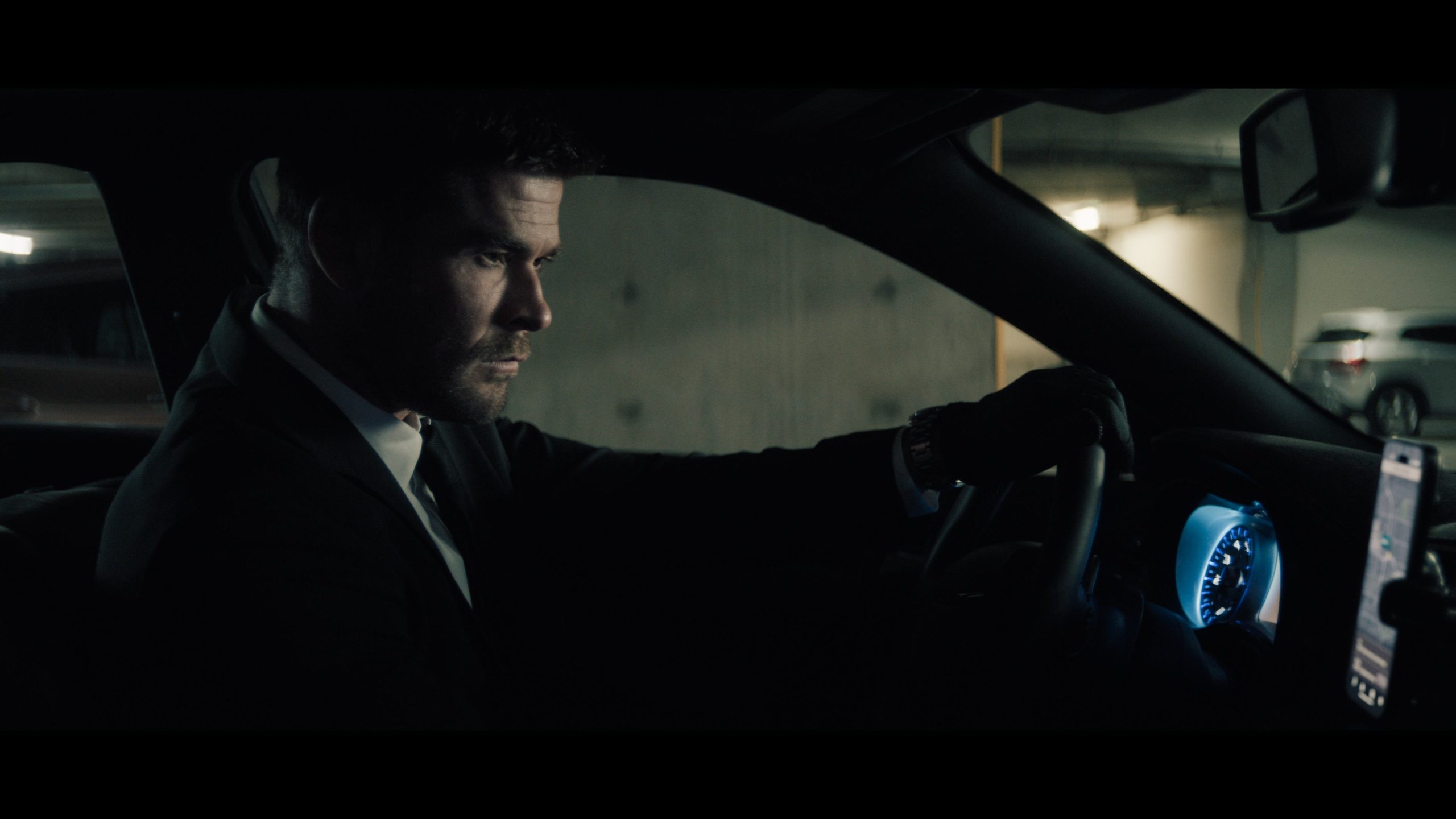
This week, Layton returns to narratives with the Los Angeles-set crime drama Crime 101, which weaves the story of a low-key, elusive jewel thief (Chris Hemsworth) with that of a disillusioned insurance broker (Halle Berry), a grizzled, relentless detective (Mark Ruffalo), and a young upstart criminal (Keoghan) set to steal from the more experienced thief. Adapted from Don Winslow’s novella of the same name, the film was adapted by Layton and features an all-star cast, rounded out by Monica Barbaro, Corey Hawkins, Jennifer Jason Leigh, and Nick Nolte.
I had a chance to sit down with Layton to discuss the challenges of juggling so many storylines that ultimately come crashing into each other, making Chris Hemsworth ordinary, and taking inspiration from the grown-up crime dramas of his youth. Please enjoy our conversation…
Going back to you finding the novella, what do you remember about it appealing to you, and did you see potential places where you could expand upon the existing story?
It’s like a 50-page short story, but it had a great foundation—a great beginning, middle, and end. Don Winslow is a very clever story-smith, and I thought if I was ever going to make a Hollywood movie of scale, it would be the kind of movie I’d want to go to and buy popcorn and go on a proper Friday or Saturday night at the cinema. And it would be reminiscent of the kind of movies that I remember watching as a young person and being so enamored by. I saw places where I could expand the characters and introduce new ones, expand the plot, change the ending, but I still had a great basis on which to build. I really wanted to make the kind of film that I didn’t think we were getting enough of in theaters any more.
This is a proper adult crime drama. You have a great ensemble, and I grew up in the 1980s and 1990s, so I remember exactly the type of films you’re talking about. Everybody is underplaying the kind of character you’d expect to see in an action movie, except for Barry, who is going big and brash, so of course we hate him the most.
Yeah, they feel like real people with real problems.
Especially Ruffalo’s character; he’s a mess. But there’s an emphasis on relationships and how they tend to bring out the best and worst in us. That’s where I like the chemistry between Davis and Maya, and what it brings out in him. Talk about emphasizing the relationship elements.
It’s gratifying to hear you say it feels like a proper grown-up movie, because what’s happened in recent times is there’s more of an emphasis placed on action intensity over emotional intensity. If you don’t care, you can have all the car chases and fights in the world, but you’re not really that invested. With Chris’s character, you have a guy who has tried to build an ivory tower of safety: “If I have all the trappings of a successful life, maybe I’ll feel like I have a successful life.” And that’s at the expense of not having any connections. One of the first movies I gave Chris to watch was American Gigolo; I think this character has something in common with Richard Gere’s character in that film. He looks like he has everything—looks, cars, girls, suits—but it’s empty.
He’s supposed to be kind of dull; he doesn’t want to stand out. How the hell do you make Chris Hemsworth dull?
I wouldn’t say dull, but I would say introverted. He’s an alpha guy but what you do is a lot of workshopping and research into the real people who do that job. There are real jewel thieves out there, and if you try hard enough, you can find them; some of them are in prison and you can speak to them. The more of their stories I gathered, the more commonality of foster families, absent fathers, drug-addicted mothers—all of the things these guys had in common. And then we would listen to testimonies of these people with difficult childhoods and would incorporate their behavior and posture and way of speaking into his performance. He holds himself in a different way, his voice is not the booming Thor voice—it’s something more caught in the chest. We did a lot of work on that, and he did a lot of work on his own with his dialog coach. If I ever saw him go too far into action-hero guy, I said, “No, we’re not doing that.”
Did you change his eye color? And I think his hair is darker too. You’re neutralizing all of the things we know about him.
All true. Very deliberate. He’s still sexy as fuck .
Well, you didn’t mess with his face, so yes. You’d worked with Barry before on American Animals. What do you like about working with him and his style of acting? Was this a character you created?
This character does exist in the short story, but I wrote it for him. I knew he’d do it. What I like about him is that I don’t think there’s anyone else like him out there. Most kids who grow up where he grew up, they don’t get to be actors. Most kids who come from the wrong side of the tracks in Dublin, in very difficult situations—he was in foster care himself—they don’t make it as actors, and they definitely don’t make it as Hollywood actors. He has an unmatchable danger, unpredictability, vulnerability, like a cornered child. It’s electric how unpredictable he is.
I also love characters with unearned confidence; this guy has that in spades.
Oh yeah. But normally when you meet those people for real, that unearned confidence belies a not too deeply hidden insecurity.
You could have made an entire movie about any of your lead characters.
That was the challenge.
There are four or five movies going on here, but the one that I was drawn to the most was Halle Berry’s portrayal of this woman in her 50s, and she’s just starting to realize the limitations the world is about to put on her. It feels like she’s playing a version of herself in a lot of ways. She has looks, talent, charm; did you two have conversations about this character hitting close to home for her?
Yeah, very much so. One of the first things she said to me the first time we sat down together was “I don’t just know how to play this character; I’ve been her.” She felt like she really understood where this woman was at and what she was going through. She’s so good.
When you have multiple storylines all converging like this, did you find it easier to give each character their own visual language in their scenes? Do you have to have a whiteboard with lines to keep everything straight and headed in the same direction?
A little bit, yeah. Crudely, Chris’s character starts off with a type of precision, so the camera moves in a very precise way. It’s Stedicam and dolly and tracks at the beginning of film; by the end, we’ve transitioned into something else, which is slightly more chaotic. Halle inhabits the upper-echelon of the social strata of LA; she’s with the wealthy in offices of glass and chrome, very clinical. Ruffalo’s character is more earthy. The color pallet for each character is different, the camera movement is different, so when they come together, they start to cross over. Ruffalo becomes more precise, Chris becomes more imprecise.
You also have Nick Nolte in this. Is it weird giving someone that iconic any type of direction?
The funny thing is, all of these people are just people at the end of the day. Even though they’re legends, they’re still ultimately people who need to know they’re on the right track. Nick does a lot of research; I was surprised how much he wanted to dig in. He wanted to know what I knew about the real characters who do the job of being a fence. There would be times where he might have played it a little too strong or aggressive, and I’d want to modulate that. You just have to try and not be intimidated by the fact that they’re a legend.
One of the films that came to mind while watching this was Nolte’s film with Sidney Lumet, Q&A?
Funnily enough, I just wrote that title down recently. Sidney Lumet is one of my all-time heroes, but I’ve never seen that one. I really loved Before the Devil Knows You're Dead.
I also love the character played by Monica Barbaro, coming off the Bob Dylan movie last year. Maya is the most normal person in the story, but she’s so critical to what’s going on with Davis; she gives him hope. Talk about the importance of Maya.
His problem is that he’s created a prison of his own making. All of the characters are pursuing something that is probably standing in the way of them being happy. In the end, maybe they don’t get what they want but they get what they need. And with Davis, what he thinks is going to get him safety is probably not, and she represents this thing that he needs—to be a real person with real connections and relationships in the real world, which is something he doesn’t have. It’s not that she just represents that but she’s this free spirit who is the thing that, if only he could let go of all of these things he’s convinced he needs, he might be able to see that there’s something more valuable than that. Even Chris and I talked about this. He didn’t grow up wealthy and now he’s richer than you can even think, he still has an anxiety about all of that.
The Imposter is an amazing film, and documentaries are my favorite types of films. Are there skills you learned making docs that you were able to transfer into a film like this?
Definitely. If you’re going to shoot a fucking balls-out car chase, you’re not ever going to do that in a documentary. But what you can do is think about if you want to have a sense of what this would really feel like, you could go back to what you would observe as a documentarian. Where would the camera be if you were making a documentary? How would it feel? What would be the sense of visceral unpredictability? And certainly, I brought that into a handful of scenes. There’s a scene where Barry does a robbery, and it’s very raw and ugly, and I would apply the exact same methodology of how you would shoot a documentary, whereby you’re not predicting the action and have the camera go to a place before the action gets there, which is what most movies would do. What if you are running to catch up with it and on the back foot as the camera? It gives you a very alive quality of it being dangerous and unpredictable, and you bring those tricks from documentary. The effect of that is that the audience feels right in it, rather than on the outside looking in.
Is Rogue Male still your next film?
Potentially, yeah.
Great to meet you, Bart. Best of luck with this one.
Great to meet you too. Thanks.
If you enjoyed this post, please consider supporting Third Coast Review’s arts and culture coverage by making a donation. Choose the amount that works best for you, and know it goes directly to support our writers and contributors.
