This article was written by Lauren Weiner.

Nothing is scarier than extreme fundamental religious groups. These groups are so unsettling that they've become a staple of the horror genre. Unlike slasher flicks and creature features, religious horror frightens because the basic ideas in these movies are not only plausible but very real.
Diabolic is a religious horror film about Elise (Elizabeth Cullen), a young woman who’s utterly traumatized from her upbringing in the Church of Latter Day Saints. After a series of disturbing, supernatural blackouts, Elise’s therapist forcefully suggests she visit her hometown as a form of twisted ‘exposure therapy’. While there, she is haunted by the ghosts of her past—literally.
Diabolic takes the disquieting aspects of religious horror and combines them with the occult. Religious extremism already creates a sense of iffy morality, but messing with malignant souls and using dark magic feels even more evil under the guise of believing in an all-loving God.
Elise is a girl who you want to root for, and at the same time, cower from. She punctuates her smiles with cutesy dimples. Her eyes are soft, like a wounded puppy. Underneath, though, she is a medium for an evil, murderous spirit. Elizabeth Cullen is superb in her role. Her body language is expressive; she’s emotive, but not over-the-top. Other noteworthy cast members include Robin Goldsworthy and Genevieve Mooy, as slow-talking, off-putting LDS church members.
The rest of the supporting cast does well, but comes across as novices compared to the standouts. It doesn’t help that the characters they play verge towards endearing but schlocky tropes. Elise’s boyfriend, Adam (John Kim), is a personality-void plot device, while her best friend, Gwen (Mia Challis), is a crystal-wearing hippie who didn’t bring flashlights because they’re not organic enough for her.
Dialogue-wise, these counterparts receive the largest chunk of the cheesy stuff. Elise’s lines are mostly intense, but every now and again, she, too, will say something cringe-inducing. The corny and simultaneously serious script makes the movie feel a little tonally jarring.
Diabolic’s director, Daniel J. Phillips, has only directed one other movie. With his surprisingly little directing experience, he does quite well. Dream sequences have the appropriate floaty camera movements. Close-ups with direct eye contact come amid the most stressful moments and feel fittingly cramped and inescapable. In eerie scenes, the subject stands naively in the foreground; behind them, the background is blurred, making you feel on edge and paranoid. The aerial shots are crisp, too. In general, Phillips manages to make the low budget indie film look far more expensive than it actually is. He doesn’t do anything extraordinary, but he does do a good job.
The color grading, on the other hand, fluctuates in quality. Most of the time, the scenes are swallowed by gritty greys and pale blues. It can feel drab and depressing. Yet, that’s the story’s tone too, so its melancholy effect can maybe pass as intentional. Every now and again, a scene is lit with warm, embracing yellows and oranges, and accented by ivory whites and bright reds. Sometimes these colors come unexpectedly, during pretty depressing or gruesome shots. It’s beautiful nonetheless, and makes the movie come alive.
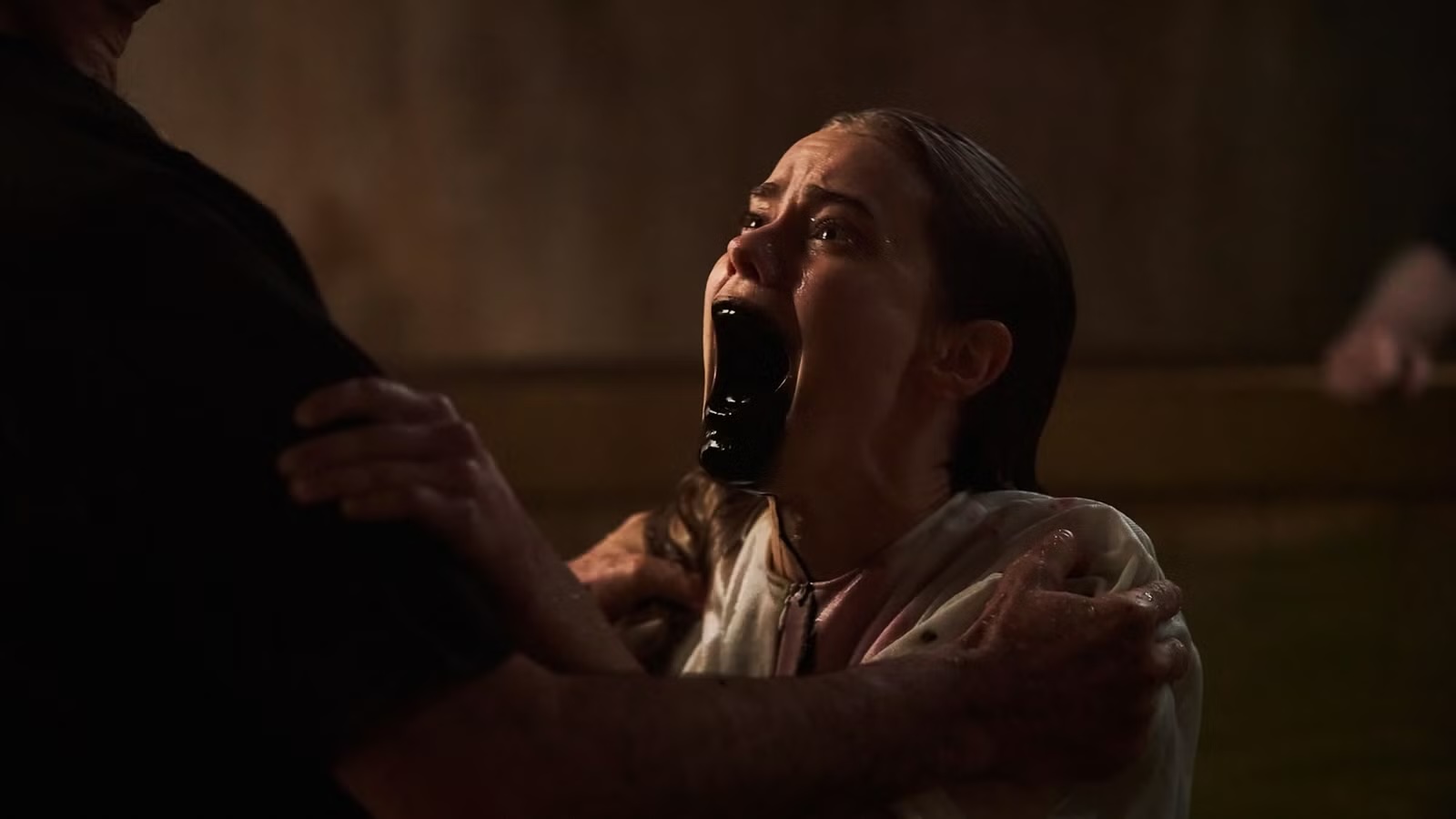
Diabolic is a horror movie, though. What really matters—arguably the only thing that does—is the fear factor. Luckily, the terror is palpable and strong. Jump scares are effective, and can, in fact, make you flinch here or there. The special effects are great. Blood looks rich and gooey. Black liquid, a staple to the genre, oozes with appropriate viscousness. The supernatural being that is central to the plot is made spooky by its patchy hair, strange irises and mottled, scaly gray skin. The score adds necessary pensiveness. A perfect balance is achieved between unnerving silence and immediate loud and abrasive sound effects.
Best of all, the film is unpredictable. This is one of the most necessary yet overlooked qualities of a good horror movie. Twists and turns that you can’t see coming not only make Diabolic scarier, but also strengthen the core of the narrative. You become hooked, waiting for what will be revealed next as the tension builds in your hunched shoulders. It inspires a ‘can’t-look-away’ feeling.
Diabolic is not a perfect film, nor is it competing for a spot among the classics. The script isn’t amazing. The sets and costumes are simply okay. There are more than a few contrived elements stolen from other works in the horror genre. E.g, at one point, there’s a hand that emerges from darkness, tip-tapping on walls with gangly fingers and grotesque fingernails, reminiscent of The Conjuring.
As a low budget indie film, these things are acceptable and always expected. What really matters is that the movie has an alluring story that’s brought to life by the haunting special effects, terrific lead and well-paced plot.
Diabolic releases in select theaters and on demand on February 20.
If you enjoyed this post, please consider supporting Third Coast Review’s arts and culture coverage by making a donation. Choose the amount that works best for you, and know it goes directly to support our writers and contributors.
