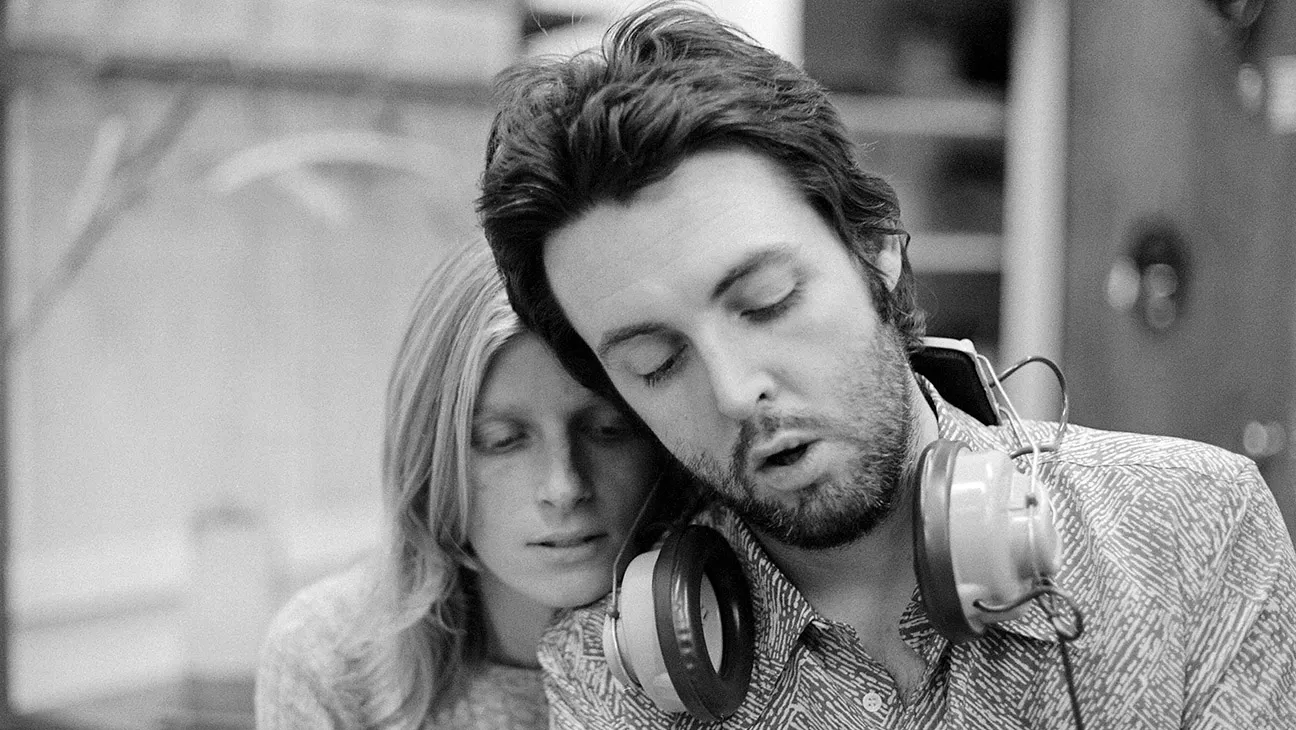

Considering how much the Beatles have been featured in documentaries lately—between Peter Jackson’s epic Get Back series about the band recording the Let It Be album, and the recent re-release and update of the 1995 Beatles Anthology series—the latest film from Oscar-winning documentarian Morgan Neville seems like a wholly appropriate follow-up to those projects—call it a sequel even. Paul McCartney: Man on the Run covers roughly the 10 years that followed the Beatles’ demise, through his period with his new band, Wings, and culminates with an event that shook the world, and perhaps McCartney most of all.
For the most part, Neville’s documentaries don’t resemble each other. He tailors them to his subjects in a way that feels as if the subject might have had a hand in selecting and assembling the footage, which of course they didn’t. Although the filmmaker tends to specialize in docs about music (including his Academy Award-winner 20 Feet from Stardom and his Lego-themed biography of Pharrell Williams, Piece By Piece), he’s also done incredible and heartbreaking works on Fred Rogers (Won’t You Be My Neighbor?), Anthony Bourdain (Roadrunner), and Steve Martin (STEVE). With Man on the Run, he gets to combine his love of music with the emotionally traumatic breakup of the most popular band in the world, the shaky but always loving relationship with McCartney's creative brother John Lennon, his idyllic marriage to Linda McCartney, and the shocking death of Lennon in 1980 that acts as something of a hard chapter stop for the movie.
Knowing that McCartney has a tendency to tell the same stories in interviews and on stage, Neville somehow got the most successful former Beatle to engage more conversationally than I’ve ever heard him. There was a period after the Beatles broke up that McCartney was painted as the bad guy, but we learn it was more about him being in full self-preservation mode and trying not to lose all of his money to shady managers that Lennon introduced into the band’s company. Put together magnificently by editor Alan Lowe, the film doesn’t spend an immense amount of time on Beatles-related business, but there are still plenty of archival interviews with Lennon, George Harrison, and Ringo Starr, all throwing in their two cents on how and why certain things went down, how feelings were hurt in the process, and even on the quality of McCartney’s solo/Wings work.
After a relatively intimate first solo album, which received a mixed reception, McCartney went on to form Wings and wasn’t afraid to get weird and experimental, beginning with the inclusion of Linda in the band on keyboards and vocals (she fully admits being not very good at either), and people—the public and the press—got nasty, which only seemed to fuel their determination to make her a key component of the group. I particularly like the interviews with guitarist Denny Laine, who admired McCartney’s desire to be part of a whole when it came to Wings, but also makes it clear that everyone in the band knew who was in charge. Neville makes the decision not to show any of those interviewed, instead allowing them all to serve as co-narrators, blending older interviews with new ones and supplementing them with never-before-seen home movies, in-the-studio films, and other rare footage pulling from various archives, giving viewers a far more accessible and vulnerable version of McCartney than I’ve ever seen or heard.
Throughout the Man on the Run, we begin to piece together the things that carried McCartney through this period, when he could no longer lean on the other Beatles for creative support. What emerges is a period marked by a growing family, risky music making, and a full reinvention until he and listening public were able to synch up again. Having recently seen McCartney in concert back in November (it happened to be the last show of his tour), it surprised me how reactive the audience was to the Wings material, almost as though it was a secret language between the artist and his audience. Obviously, Wings has massive hits, and their live shows were the stuff of legend, even when McCartney refused to play Beatles material. But there’s something about mid-period Paul that rouses the crowd in a specific, very special way.
The death of John Lennon happening in the same year that McCartney decided he was done with Wings and made his second solo album was a complete coincidence, but these two events serve the film perfectly as a way to wrap things up, while also opening up a world of hurt for the subject. But the moment also opens up a realm of new possibilities for the musician. Not surprisingly, there are places in the documentary that I wish had gone on longer (I could have watched the band in the studio for days), but Neville’s sense of pacing, emotional resonance, and capturing McCartney’s state of mind are so exact and true that I’m not sure I’d risk the wonderful balance he has struck with the material he presents. I’m hoping McCartney opens up future chapters of his life to Neville or another filmmaker somewhere down the road, because his collaborations through the 1980s are worthy of digging into. But this will do quite nicely for the time being.
The film is now streaming on Prime Video.
If you enjoyed this post, please consider supporting Third Coast Review’s arts and culture coverage by making a donation. Choose the amount that works best for you, and know it goes directly to support our writers and contributors.
