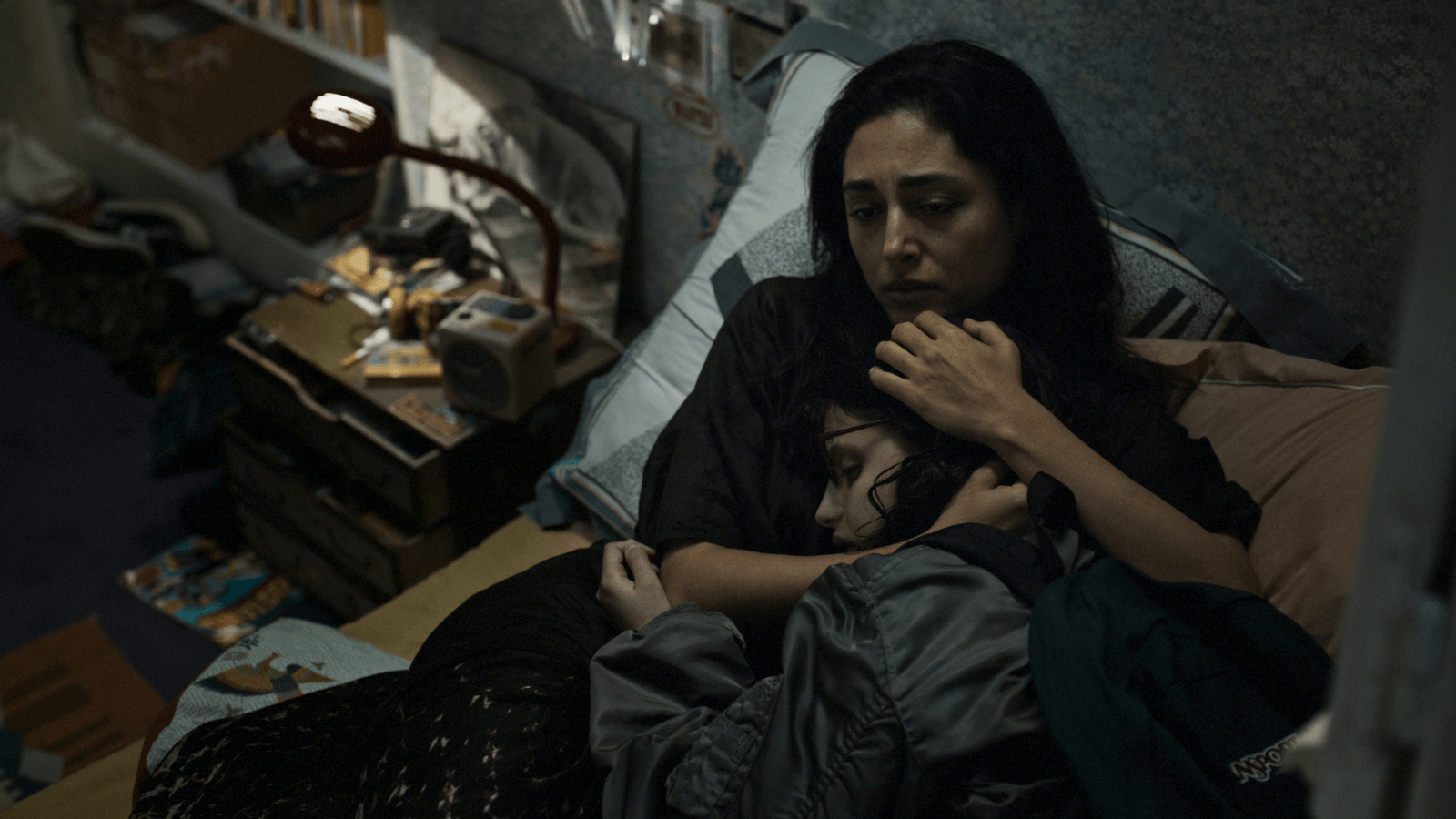

Alpha (Mélissa Boros) is a troubled 13-year-old girl living with her single mother (the great Iranian-French actress Golshifteh Farahani, Paterson) in coastal France as the earth is dealing with multiple calamities, including a disease that painfully turns people into marble. The film Alpha follows concurrent timelines in the title character’s life, including flashbacks that show a time when she and her drug-addicted uncle Amin (Tahar Rahim) were close and he first contracted the disease, as well as her in the present day, defying her mother and trying to cope with her uncle's return to their home after a long absence.
Alpha’s mother (who is never given a name) is a doctor, working in a hospital ward where patients with this strange new disease are housed. Much of the staff has abandoned the hospital, but she and a kindly nurse (Emma Mackey) are trying to bring some comfort to these doomed souls. The scenes of Farahani taking samples from patients (including her brother) and trying to keep them comfortable are quite graphic and shocking, and these moments make her especially paranoid when Alpha gets a tattoo at a party using a shared needle. Since the disease can’t be confirmed for a couple weeks after infection, things remain tense in their home until she can be tested.
But also, the world is collapsing, possibly from panic setting in about this disease, but also, things just seem terrible and mildly apocalyptic. Alpha tries to connect with a boy from school, but he has a girlfriend and he starts rejecting her when he realizes she might be infected. Her tattoo becomes infected and bleeds a lot, leading the other kids at her school to believe Alpha has the disease and is contagious, so they start to deliberately avoid her. In many ways, Alpha reminded me of the recent The Plague in the ways it illustrates a type of bullying that seems reserved for kids with any type of medical condition, contagious or not.
As the film goes on, Alpha’s relationship with her uncle starts to deepen, since they are both now outcasts. He’s still using heroin and dying of his disease, and she is starting to have panic attacks, waiting for her test results. There are curious side stories that never really amount to much, including one about Alpha’s English teacher, who the kids think is gay. When she runs into him and his boyfriend (who is infected) at a testing clinic, they seem to bond over what could be looked at as a shared fate.
Soon, the two timelines start to synch up in terms of what past and current Alpha and her mother are dealing with, and it becomes clear that Amir isn’t all that he seems, but he’s a source of inspiration to Alpha in the present day. Alpha is a type of melodrama set in a vaguely apocalyptic future that feels dangerously similar to the AIDS crisis, as well as something more current when it comes to people taking care of each other during a health crisis. The metaphor isn’t hard to follow, but it’s also not handled with any real grace, which is surprising considering that the writer/director is Julia Ducournau (Raw, Titane), who excels in taking the brutal and grotesque parts of humanity and somehow making them beautiful.
At its core, Alpha is about a young girl coping with death—both her own possible demise and that of her beloved uncle. There’s a final image and realization that takes place in a dust storm that hits fairly hard, but the rest of the film doesn’t always hit the same emotional peaks. This one is a bit of a step down for Ducournau, but it’s still perfectly acted, with a few visual stabs that got a gasp or two out of me.
The film is now in theaters.
If you enjoyed this post, please consider supporting Third Coast Review’s arts and culture coverage by making a donation. Choose the amount that works best for you, and know it goes directly to support our writers and contributors.
