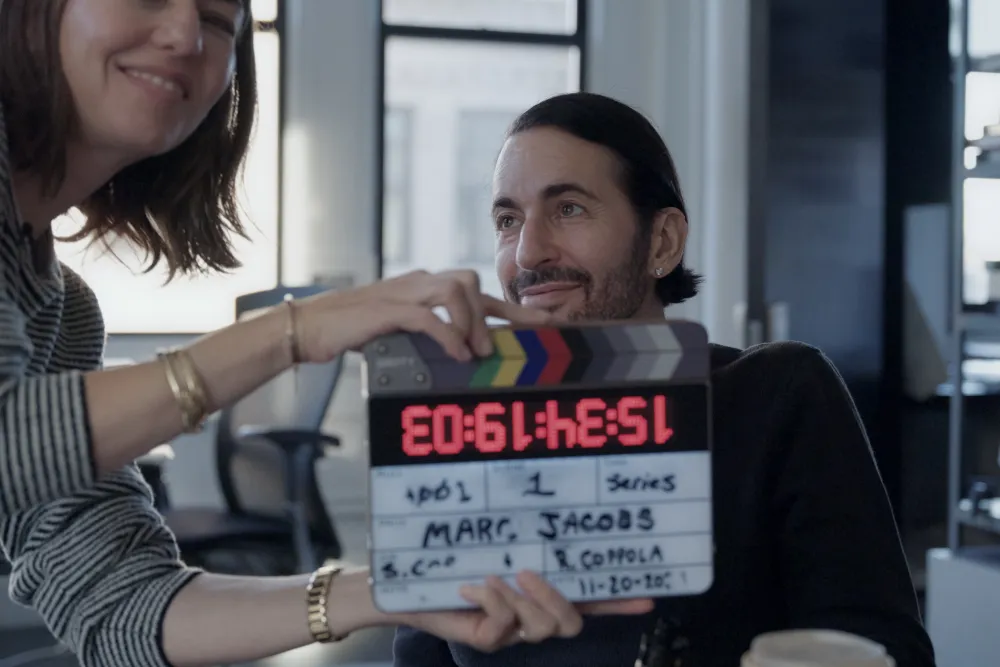

I’ll fully admit: I have a soft spot for fashion-related documentaries, probably typified by The September Issue, which admittedly is more of a doc about publishing...but still. And while I have zero interest in fashion in my life, documentaries about the industry are fascinating because it is a form of art—they teach fashion in art and design schools for a reason. And designers are almost, without fail, great at talking us through their various collections and inspirations. So I was fully expecting to love director Sofia Coppola’s profile of Marc Jacobs, Marc by Sofia (her first documentary), partly because I actually know Jacobs’ work (not always for good reasons) and I tend to enjoy the hell out of Coppola’s movies. So imagine my shock and horror to discover that either Jacobs isn’t that interesting as far as talking about his art or Coppola is too close to her subject to make him interesting.
The bulk of the film centers on the universe surrounding Jacobs as he’s putting together his spring 2025 show, beginning about three months before the event. And as we get closer to the show date, Coppola takes us back through a host of archival footage of Jacobs' decades-long history, from his time at Parsons School of Design in the 1980s to the various collections that made him famous and infamous, including his disastrous 1993 “grunge” line for Perry Ellis, which got him fired and tarnished his reputation for years. But most of his history is far more successful, and Coppola was there for a great deal of it, as we see in the footage and hear about in more recent interviews about their history as friends.
The most interesting sections of the film should be watching the detail-oriented Jacobs scrutinize fabrics, patterns, colors, accessories, shoes, etc. But the problem with the film is that Jacobs has assembled a crack team around him that gets things done with almost no drama. Things get done on time, last-minute changes get completed without much stress, and the models he uses are good at their jobs of not tripping as their strut down the runway. The collection itself feels pretty inspired, so there aren’t even concerns about how the fashion press will review his work. Jacobs’ personal history turns out to be more worthy of his abilities, from his being influenced by Yves Saint Laurent and the films of Bob Fosse to his meeting his idol, Vivienne Westwood, at a dinner and bonding over their mutual love of certain designers.
The brief section of the film that deals with him designing dresses for various celebrities to wear during their various legal trials (Winona Ryder, Courtney Love, Lil Kim) is quite funny, but again, Coppola doesn’t press Jacobs about why he thinks he became the go-to designer for these women possibly looking at jail time. Undeniably looking great on camera and on a big screen, Jacobs' personality never pops, which could also be said for his stories about the collections we’re watching come together for much of the movie. I think the problem goes back to Coppola being too close to her subject. She clearly sees something in him all the time, so she doesn’t bother to dig too deep so that the rest of us can share in this knowledge. It’s almost as if she doesn’t want to share him with the rest of the world, which is a shame because I was ready to learn and experience who this great artist is.
The film is now playing in theaters.
If you enjoyed this post, please consider supporting Third Coast Review’s arts and culture coverage by making a donation. Choose the amount that works best for you, and know it goes directly to support our writers and contributors.
