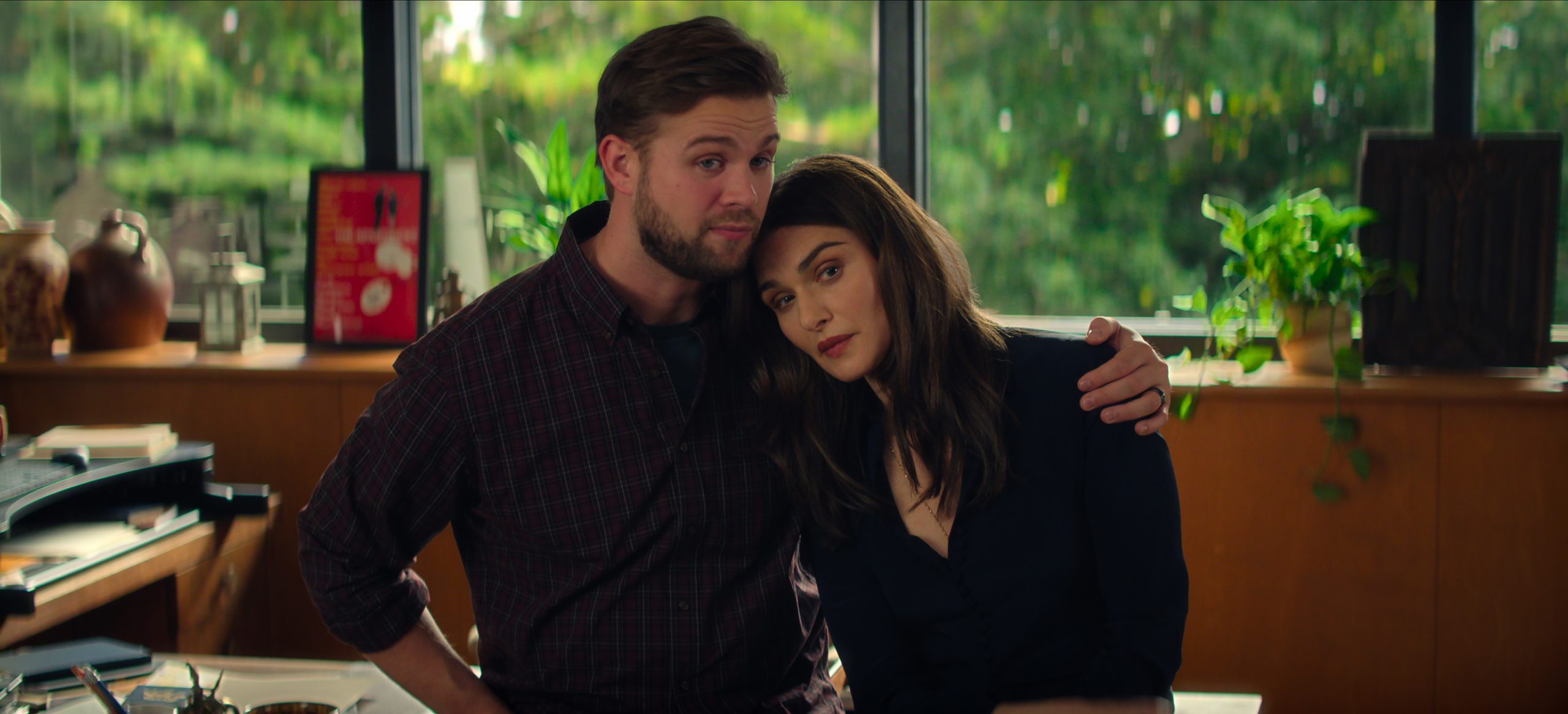

The older-woman-with-a-younger-man trope is having a moment. With films like Babygirl, The Idea of You, and May December released in recent years, it’s not surprising to see a series like Vladimir come along. Rachel Weisz plays a long-tenured professor at a university, with new hire Leo Woodall as the titular character and her love interest. (Coincidentally, Woodall also played the younger love interest of Renee Zellweger’s character in Bridget Jones: Mad About the Boy.)
While this trope feeds into a popular dynamic that largely appeals to older women, Vladimir does offer something that sets it apart: its focus on desire. The series explores this theme throughout the episodes, bringing an extra level of texture to the story. That being said, Vladimir’s strong cast and meditation on desire aren’t enough to redeem its banal, lethargic plot.
Let’s start with the concept of desire. M (Weisz) longingly pines over Vladimir (Woodall) throughout the series, and she enjoys that feeling immensely. In fact, realizing her desire is never as satisfying for her as sustaining her feelings of lust. The show makes this reality believable. We understand that M, an intelligent, accomplished university professor, is still just a human being, with needs and wants that can co-exist with her professional acumen. She often behaves irrationally, but it still works, because we understand the emotional logic behind what she’s doing.
However, it's often hard to defend M’s actions. She acts erratically, immaturely, and selfishly throughout the series, hiding behind the facade she’s created of the respected professor. The university setting creates a microcosm for contradictions like this. It turns out that many of her colleagues cheat on their spouses and justify bad behavior with intellectual superiority. In a place that supposedly values honesty and integrity, the focus shifts to deception and reputation management. Almost every character we meet working at the university is hiding some dark secret. This hypocritical system breaks down when M’s husband, John (John Slattery), also a professor, is accused of having multiple inappropriate relationships with students.
This should be an exciting plot! There are many layers and complications and characters who have dirt on each other and compromised interests. Yet somehow, the story develops so slowly and dispassionately that it’s hard to care what happens.
Overall, the cast makes this show. Weisz and Woodall play their meek, unsure characters effectively. Weisz especially captures M’s intelligence and vulnerability. Woodall’s Vladimir personifies ambiguity, which is maddening for us, but also gives us empathy for M as she tries to decode his actions. Slattery somehow plays John as a nice, yet philandering husband in a way that feels plausible. Ellen Robertson, who plays M and John’s adult daughter Sid, also authentically balances the nuance of playing an adult child, dealing with her parents’ failing morals. These characters hold so much tension and contradiction in a way that’s necessary for the story to make sense.
While M portrays a necessary level of emotional immaturity, one tactic the show uses to demonstrate this is to have M consistently break the fourth wall. She’ll be in a meeting with a colleague, in conversation with her husband, or drooling over Vladimir at work, and she’ll look into the camera and give us a little outburst of something that is too inappropriate for her to say in real life. While this tactic does let us in on her inner thoughts and helps us to understand the disparity between her public self and her thoughts, the whole thing feels a bit sloppy and unnecessary. The creators could have trusted the audience more and kept the fourth wall closed.
Thankfully, the creators did artfully trust the audience with the ending. It’s ambiguous and feels emotionally empty. There is no real resolution. We don’t know if M and Vladimir will continue their affair, or if the desire is gone. We're not sure if John and M will get back together. But we do know that their daughter is disgusted with both of them, especially her dad.
This submission to desire that all of the main characters partake in doesn’t lead to clarity. It creates a mess. As an audience, we can construct a narrative to imagine what their futures will be, but we don’t really know. This is one of the most genius parts of the show. So much of the show up until this point has been theoretical fantasy. But in the end, the characters must face the consequences of their decisions, and we don’t know how it will end for them.
Overall, Vladimir is a mediocre show with extra niche appeal for certain viewers. It is sexy, pedantic in a good way, and well-performed. The show elegantly explores the concept of desire and all the contradictory, hypocritical ways we deal with it. It contains stellar performances across the board, especially by its star, Rachel Weisz. The series loses me with some of its storytelling devices, especially the fourth wall break and its slow, windy plot. Vladimir is far from perfect, but tells a complex story.
Vladmir is now streaming on Netflix.
If you enjoyed this post, please consider supporting Third Coast Review’s arts and culture coverage by making a donation. Choose the amount that works best for you, and know it goes directly to support our writers and contributors.
