This article was written by Lauren Weiner.
The late ‘60s were a glorious time for music. A big force in that gloriousness was the UK. Said nation produced dozens of household names: The Beatles, The Rolling Stones, Led Zeppelin, Pink Floyd, etc., as a few examples. This was a time when ground-breaking musicians were in their prime, forever changing the definition of music and music-making and, in turn, culture across the world. The Who was another revolutionary group, but in comparison to other British innovators, the band is chronically under-loved.
The Who’s album, Tommy, is the fourth release in their discography and arguably the most influential piece they've ever made. The album is widely considered the first rock opera. It gave way to the idea that LPs could have a narrative expand across every song. It also created a new genre of film. Musicals had been a thing, but never before had rock music taken a front seat in the movie-viewing experiences. That release marked a turning point for the band, and it influenced their later narrative experimentation (in both the album and the following movie) in Quadrophenia, which has a sturdy cult following but never grew as big as Tommy did.
IMAX’s 4K re-release of Tommy—the film adaptation of their hit album—is bringing some necessary appreciation to The Who’s artistry. This theatrical run comes right after 2025’s 4K UHD Blu-Ray release of the film for its 50th anniversary. The 4K disc has deeper and richer colorization, less grain, and superior sound mixing to the standard 2010 Blu-Ray release. Experiencing the crisper scan on an IMAX screen is unbeatable.
Tommy’s Revolutionary Power
It’s strange to think about how such a timeless movie came out half a century ago. The quality of director Ken Russell’s filmmaking is excellent, and rarely does the film come off as dated. Tommy, much like Russell’s other work, is a surrealist piece; the filmmaker plays around with color, set design, and shots to create something really fresh and unconventional for the time.
The fact that the album is composed of an entire story is impressive by itself, but the content of said story makes Tommy all the more striking. The album captured the zeitgeist of the time by discussing religious idolatry and the wider spirituality and faith movements that swept multiple nations in the late ‘60s. It criticizes that dominant culture, telling its audience that enlightenment is an individual journey, one that can’t be standardized or shaped into an effective organization.
Not only was it poignantly honest about organized religion and spirituality, but it also covered topics that were very ‘hush-hush’— stuff like drug abuse, child abuse, and unspoken familial tensions. At the time, it wasn’t taken seriously. Now, though, concepts like childhood trauma, dissociation, and soul-searching are mainstream. If Tommy came out today, its reception would be beyond positive, and that’s obvious by how public opinion has shifted over the years, as it commonly does within the world of art.
The album was a musical feat, too. To craft such a vast array of compositions with just a few instruments— namely, guitar, bass, piano, drums, and horns— and a handful of sound effects was incredibly ambitious. The movie soundtrack adapted from Tommy, the album, was one of the first modern-sounding uses of synthesizers. While most songs and artists of the time used synths for textural effect or basic rhythmic addition (think Strawberry Letter 23), Tommy’s soundtrack used said devices to mimic a fully fleshed out orchestra— and they did a spectacular job at it.
The Movie’s Visual Allure
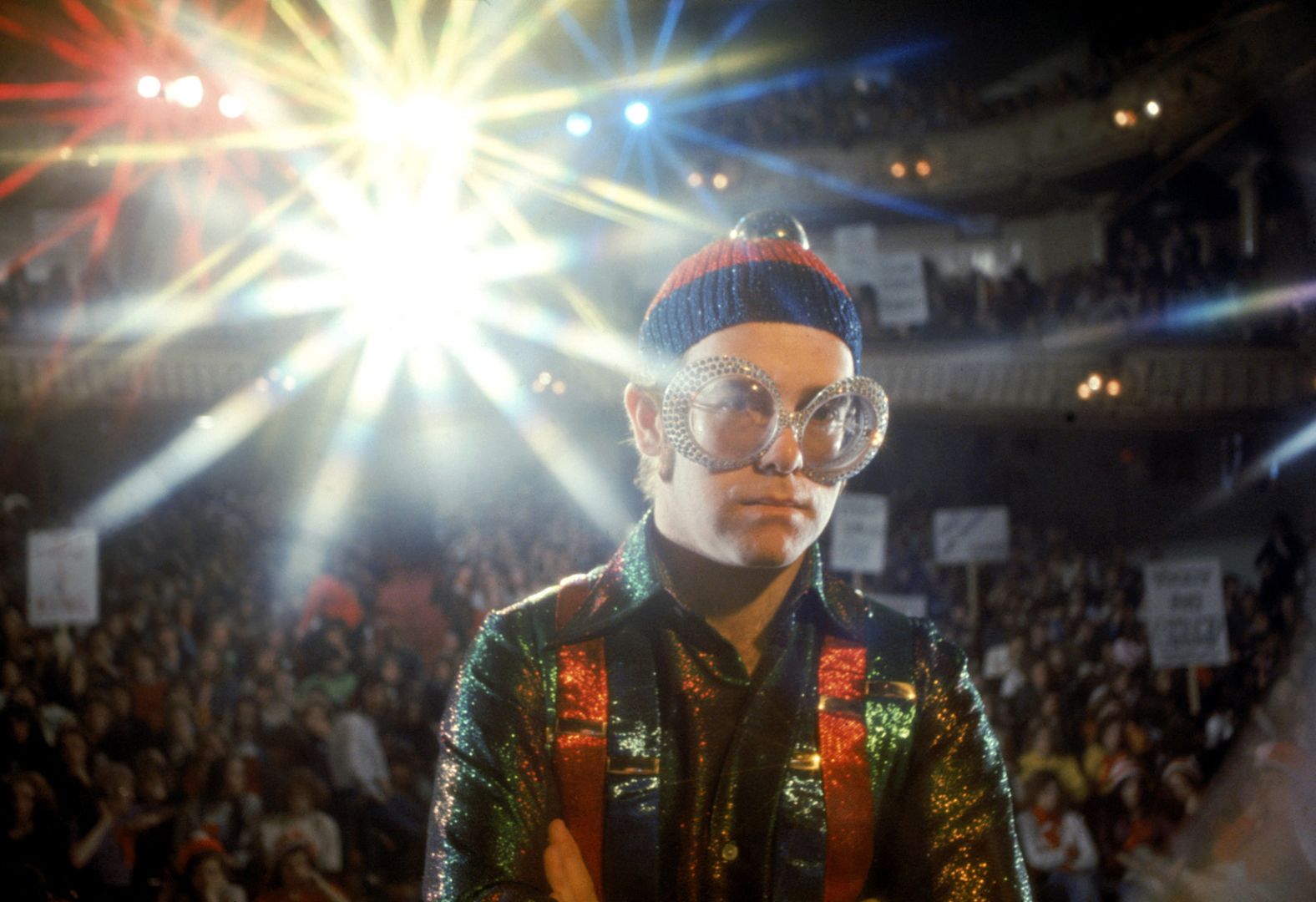
What really ties together the film, though, is the visual enchantment. There’s a beautiful use of action in both the foreground and background, making nearly every shot multi-faceted and creating a fantastical world that truly comes alive. There are extremely long shots, and one takes, and dynamic angles that are reflective of filming today. Somehow, The Who managed to link together a well-paced plot with each song’s tempo, something that seems near impossible. Unlike a traditional movie, there’s no spoken dialogue, yet Tommy tells a fluid story through song lyricism.
Each scene is a spectacle; one moment flows to the next in a buttery movement with seamless transitions. Tommy’s transitions are essentially the predecessor to whip-panning, a style used today by many directors, where the camera pans sideways, creates blur, and enters the next scene through that motion. The Who’s film has Ken Russell using “zoom-through transitions” where small objects act as a kick starter for the next scene.
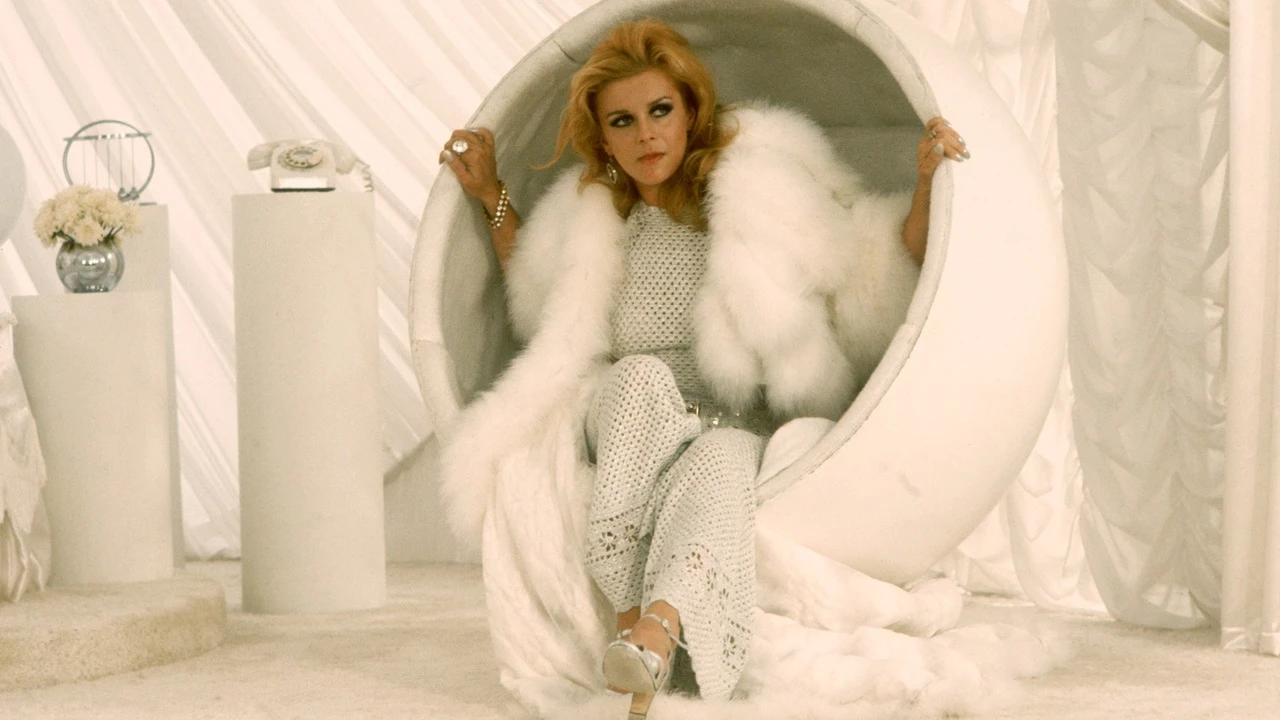
A common “zoom through” that ends up as an important motif is a large, white, glowing circle. Sometimes that circle starts off as a lightbulb or reflective mirror. As the camera moves closer, the circle becomes bigger, shifting the audience's attention to what’s next. For a movie whose focus is on auditory elements, the optical stuff gives the piece a lot of value, both at the time and looking back.
Additional Context
Tommy tells the tale of a young boy who witnesses an atrocious act committed by his mother and stepfather. Afterwards, he dissociates from the world; everyone outside of his mind believes him to be deaf, dumb, and blind. He snaps out of his disillusionment and becomes a pinball champion. Due to his success with pinball, Tommy starts a spiritual movement to help others find their way as he did.
It’s easy to miss that intricate story within the album. The musical tale is like a vignette: fragmented moments that give way to something bigger. The songs are so rhythmically catchy that it’s easy to forget that one must listen to the story that lies within the lyrics. The LP, though musically astounding, always felt more like a first draft in terms of story. The movie hones in on the narrative concept that emerged in the auditory Tommy, yet keeps the album’s dreaminess. In turn, the movie version feels whimsical with its crazy plot. It’s far from a traditional piece of cinema, that much is obvious.
One important note: the preliminary knowledge of the album and its story is helpful for following the movie, especially for those used to conventional filmmaking. Without that background context, it can be easy to get swept away in the theatrics; to get lost in the mesmerizing visuals.
The Album Versus The Soundtrack
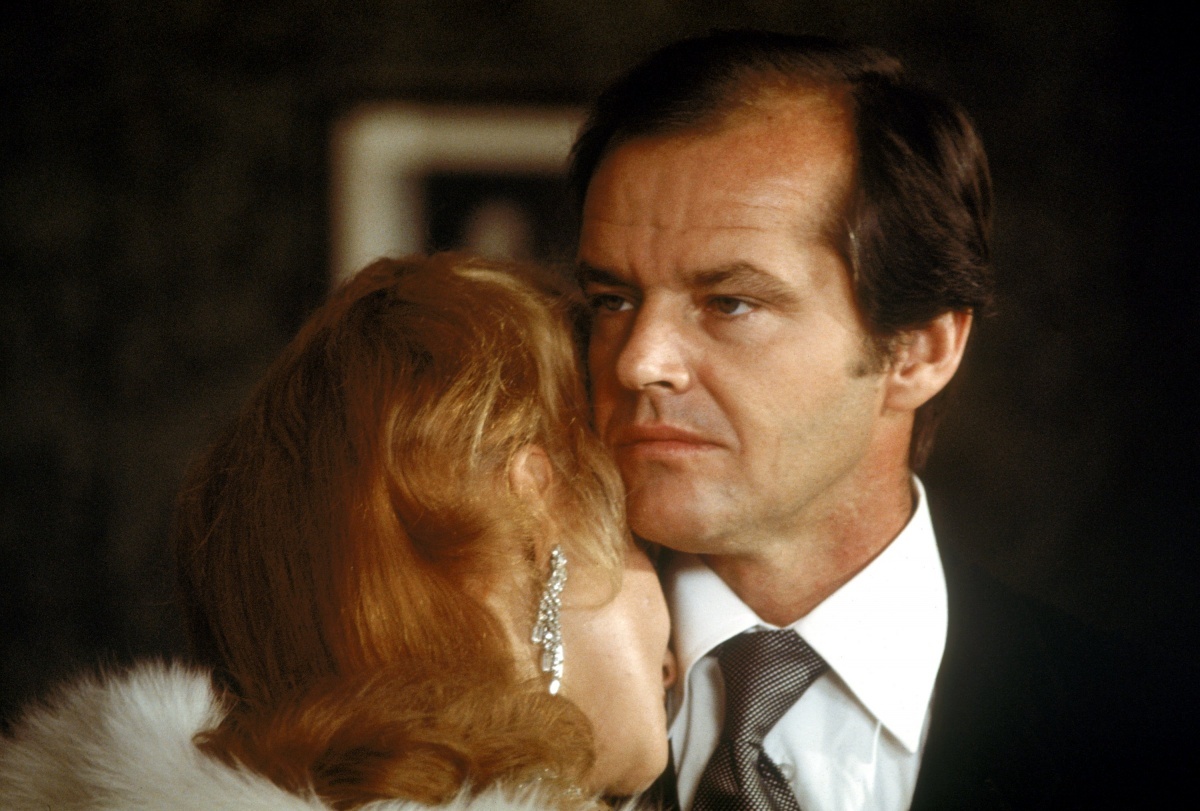
The Who re-recorded the album specifically for the movie. Some songs sound nearly the same; others are completely different. The addition of synths is one of the most notable changes. The lead vocals aren’t just sung by The Who’s lead and second vocalist, Roger Daltrey and Pete Townsend, but involve artists like Eric Clapton, Elton John, and Tina Turner. At one point, Jack Nicholson sings a number, and he does surprisingly well. The most notable of these vocalists is Anne Margaret, though; she absolutely nails it the whole way through. Least notable is Oliver Reed, who consistently sings off-key. It wouldn’t be that noticeable, but next to Anne Margaret, their talents have a serious contrast.
There are many new songs not featured in the album that pop up in the film. Some of these songs are transitional and only last thirty or so seconds, like “Miracle Cure”. Others— “Mother and Son” for example— capture entire scenes and run between three and four minutes long.
Opening Songs
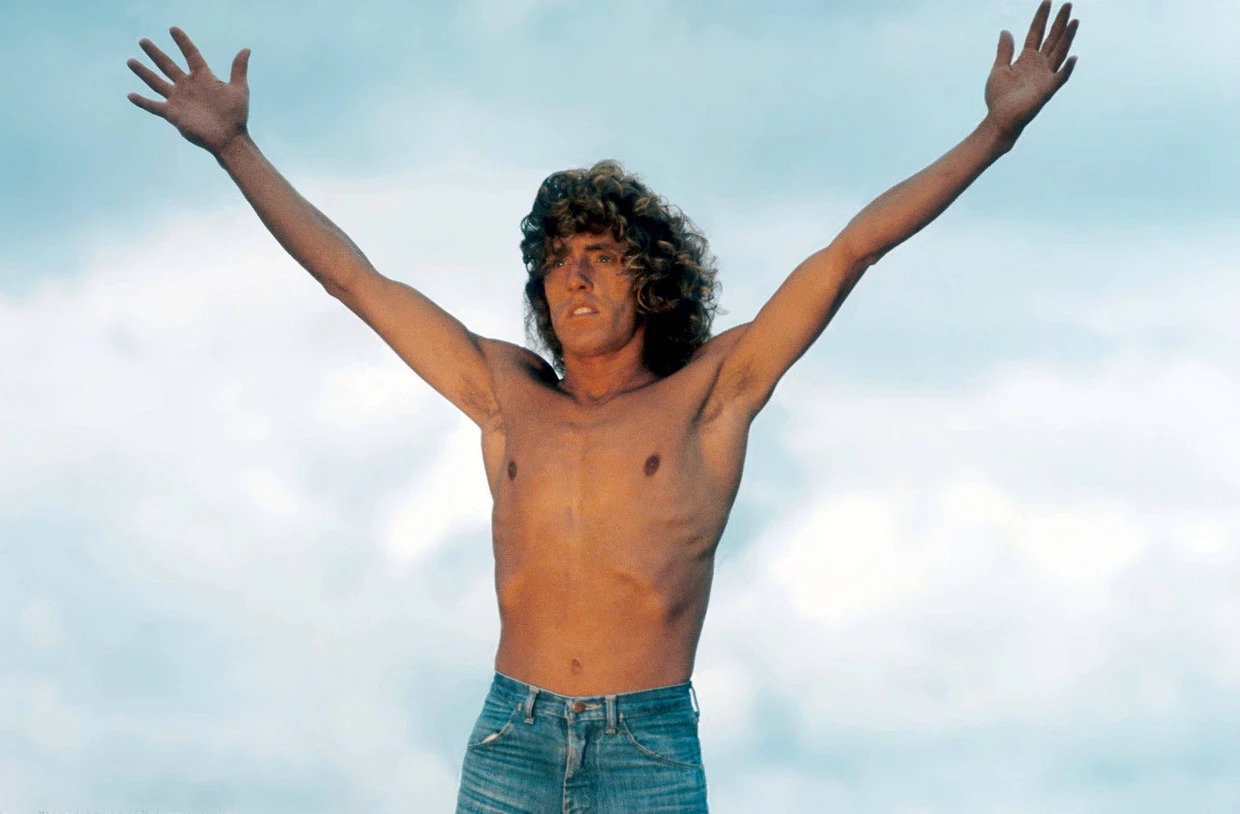
The film opens with “Overture”. The camera focuses on a silhouetted figure standing on a mountain peak. A deep, rich sunrise hangs in the background. “Overture” is intense and cinematic, and starts the movie with a big boom. Many of the sound effects are made musically rather than through traditional means. A train chugging noise is created by repeatedly playing a one-note on a synth. Bombs dropping are created through whistling sounds on more synthesizers.
“Overture” ends, and immediately following is “Prologue–1945” a song that isn’t featured in the original album. It’s during this number that one can see just how big the budget for Tommy was. The set for this song is expansive as Tommy’s young mother and father run through city streets covered in rubble and fire and half-demolished homes. At one point, there’s an impressive one-take that follows the couple through a house in a view that’s similar to an open dollhouse.
Those two songs, totaling only eight minutes of screen time, give the audience a solid context and background to Tommy’s story. It’s the starting point for Tommy’s analysis of the long-term effects of WWII, particularly on the younger generation. It’s one of the only themes that’s dated to a specific point in time and doesn’t have much crossover with discourse today.
“It’s a Boy” comes next, marking the birth of Tommy and the beginning of his narrative. The movie’s version is nearly identical to the album one, except for the singing, which is done by Anne Margaret. Tommy’s mother looks tired and sweaty after delivery, making his birth feel raw and real. She hugs her newborn and smiles at him endearingly. Outside of the window, the city is celebrating the end of World War II with balloons, flags, and confetti. It’s a happy scene, one that has a lot of hope and heartfelt feelings. The joyous tone is very ironic when compared to the rest of the film’s and album’s depressing content.
A Look Into “Bernie’s Holiday Camp”
“Bernie's Holiday Camp” is the fourth song in the film, and it follows Tommy and his mother upon meeting Frank Hobbs, his soon-to-be stepfather. The song is a new addition with the melody adapted from “Tommy’s Holiday Camp” off the album, which comes later within the movie. In this number, guards are jogging at the gate whilst letting newcomers in; all of the holiday camp hosts are doing jumping jacks in front of tiny identical vacation homes. The first of many moments where everything’s strange but everyone acts as though it’s all very normal.
Even though Tommy makes the place seem outlandish, late 40s holiday camps were a very real place in Britain. The flat, barren landscape Bernie’s camp is on isn’t too different from the real thing. Looking back, the movie does a good job of capturing the weirdness of the British tradition that, at the time, wasn’t seen as strange at all. There’s also a bit of humor thrown in here: the foreground hosts the camp’s lush green lawns and happy campers while the background shows a town that’s been burnt to rubble and ash.
Here is where the restoration is a bit more obvious than anywhere else, too. The sky in the Blu-Ray is a pale white; the sky in the new release is a pastel blue. The water in the 4K has some tiny splotches that hint at restorative colorization.
Tommy’s Narrative Really Takes Flight
“Bernie’s Holiday Camp” leads into “1951/What About The Boy”, which is reworked from the album’s “1921”. Unlike the Broadway musical or the album, the roles of who murders whom are changed, which improves the story, both in plot and theme. Oliver Reed and Anne Margaret have plenty of close-ups here. It’s an uncomfortable song near the end. The pair is drenched in sweat and shouts with wrought emotions at little Tommy. The tension that’s there in small bits in the original song really comes through in this version.
“Amazing Journey” visualizes Tommy’s dissociative state after the murder. The unsettling family sports matching outfits. Shots of Tommy’s empty eyes are overlaid with carnival rides and lights. “Amazing Journey” features some animation unlike any other song within the film, and is one of the first on-screen depictions of a young child’s mental and emotional turmoil.
“Christmas” is done superbly, too, of course. The background vocals on the album are swell, but it’s one of the songs on Tommy where Roger Daltrey is struggling to hit those high notes. Comparatively, Anne Margaret is perfect, and her voice ebbs and flows with the song’s melodic changes. Margaret also adds much-needed rawness and honesty that the album lacks in terms of the story. Little Tommy singing the “See me / Feel me / Touch me / Heal me” is a nice emotional touch. The soundtrack version’s arrangement is chaotic, and the visuals follow suit. At one point, Russell quickly zooms in and out, aligned with trumpets being blown rapidly by a gaggle of kids surrounding Tommy.
“Eyesight to the Blind’s” album version is full-on rock. The drums are heavy; the guitar riff takes the lead. The vocals are nice and raspy. The soundtrack’s “Eyesight to the Blind” instead starts off as funky and proceeds to bluesy. There’s a different guitar intonation. The vocals are softer and more mellow. Overall, the movie’s “Eyesight to the Blind” feels like Eric Clapton's version with tinges of The Who in there. This is one of those songs that the album does better with. It’s good to note that this song is a cover–the only one on the album–so the film’s rendition might be more faithful to the original blues song. Visually, “Eyesight to the Blind” depicts some twisted religious idolatry. Tommy’s mother takes him to a church to heal his deafness, dumbness, and blindness. The church's prophet is Marilyn Monroe. Everyone is wearing strange grey get-ups. There’s a gigantic statue of Monroe in her most famous pose: holding her skirt down from the street vent. A group of handicapped individuals in wheelchairs is brought up to the statue to touch it.
Finishing “Act One”
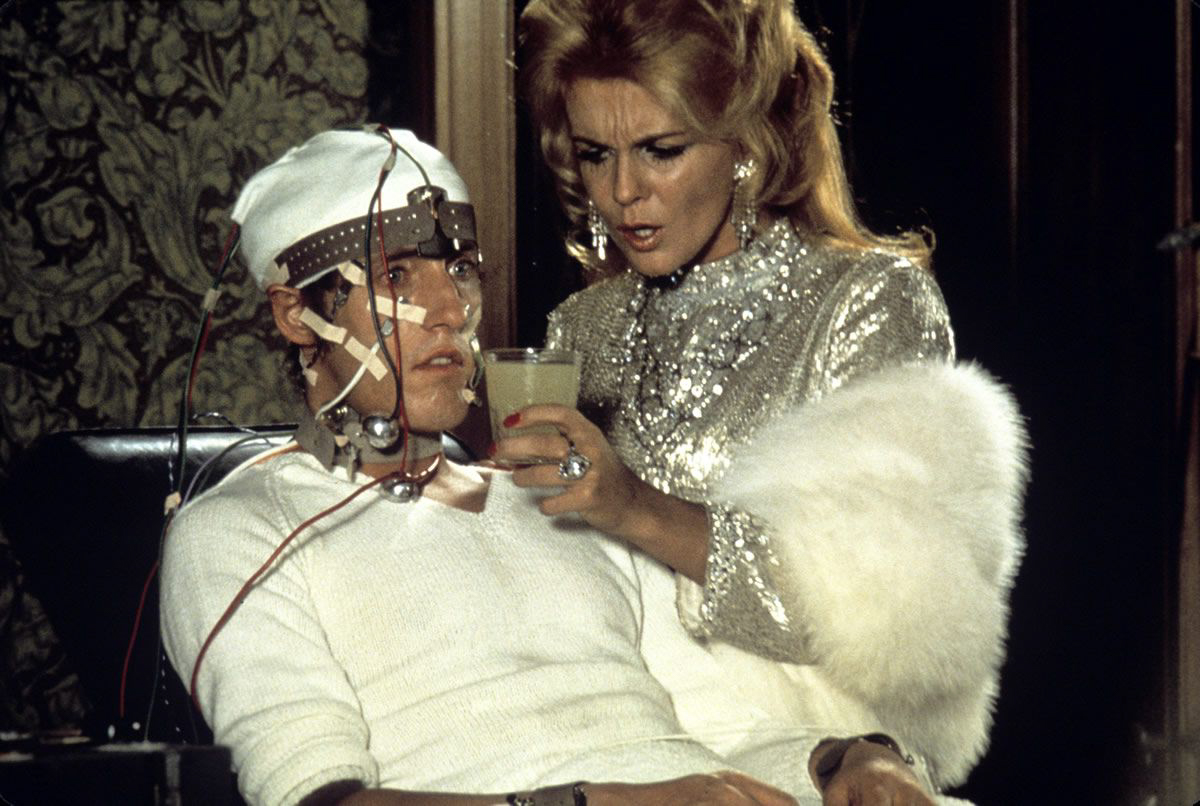
Since Marilyn Monroe doesn’t cure Tommy of his problems, Frank determines that sex and/or drugs might. “Acid Queen”, performed by Tina Turner, beats the version that Townsend sings. The woman’s voice adds immense range; her manic expressions make the song feel more on edge than The Who’s original creation.
“Acid Queen’s” specialty here is moving shots that double as one-takes. Turner flips her hair wildly, and the camera trails her as she dances around the room. The audience can feel the set’s griminess through visible ceiling insulation and a sink that’s splattered in blood and rust. The main set piece in this scene is a large metal casket-shaped object reminiscent of the Iron Maiden, but with psychedelic flair. When Tommy emerges from the device after being force-fed hallucinogens, he looks awfully similar to Jesus on the cross, subtly foreshadowing the “Pinball Wizard’s” transformation into a prophetic figure.
One of the most memorable parts of the film lies within “Do You Think It’s Alright”. Within the film, there are three separate renditions that add pleasant variation and change tone based on the darkening plot. The first version is lighter with blithsome synths; the second version starts with heavy strumming and clashing cymbals, and takes a nose-dive into a minor key. Each time the song plays, it becomes clearer how unloving Tommy’s mother and her husband are.
“Cousin Kevin” comes after the first “Do You Think It’s Alright," and the movie version adds some serious and necessary aggression to the song’s tone. Paul Nicholas, the singer for this number, creates a showtune slash Broadway style sound. He adopts a whistling voice during the chorus, particularly in “school bully”, and it makes for some incredibly unique vocals. There is a welcoming amount of synths, and like many songs throughout Tommy— both in the album and film— there’s a touch of British whimsy, something that makes the music sound circus-adjacent.
“Pinball Wizard”, performed by Elton John, marks the movie’s midway point. Tommy becomes an international sensation after excelling at pinball, and this hit graces the screen.
“Act Two” Begins
“Champagne” is one of the longer songs in the movie that’s not on the original album. It’s a fun song, made so by Anne Margaret’s Broadway-style overacting. The set is crisp and clean and all white, which contrasts nicely with the brown filth that surprises the audience and explodes onto the set out of the television. It’s not the best song, but it’s one that rounds out the story and fleshes out Tommy’s mother as a character.
“Smash the Mirror!” comes soon after, and is another Anne Margaret show-stopper. The backing vocals are very late 60s on the album, but within the film, the backing is a bit of a let down. On the other hand, the album had no horns, and the horns in the movie version add a lot of flare. It’s the only song where the synths are over the top and a bit silly. Tommy’s mother dances manically around the room, her red dress a frightening blur amongst the soft ivory furniture and carpet. She prances from one side of the room to another, eventually shoving her son into the mirror, smashing it. Tommy falls through it, and the next scene begins. It’s a beautiful, seamless transition. The 4K scan emphasizes how well done the underwater filming was.
Immediately after Tommy splashes into the water, “I’m Free” starts. The song has a more rambunctious, high-energy feel to it within the film. The riff in this version is unbeatable. There are larger chunks of pure instrumentals that allow the visual elements to take the lead.
In “Smash the Mirror” Tommy is essentially trapped in this suffocating room with his overbearing mother, staring at the mirror in a desperate attempt to escape. When he falls through it, he lands in a vast body of water. He truly does feel free. The rest of the song involves Tommy running and running on the beach; sprinting through fields, hilariously unbothered by the pesticides that are being sprayed on all of the pretty little flowers. There are clips of Tommy running underwater, in volcanic lava, and over ocean waves. The use of these green screens actually looks quite good for the ‘70s, even if looking back, it’s definitely silly. The song is a nice break from the overbearing, sad storyline. “I’m Free” might be the most different rendition of a song from the LP, yet both versions are great, making them incomparable.
Closing Songs
“We’re Not Gonna Take It”, like “I’m Free”, is one of the most well-known numbers in Tommy. The chanting from Tommy’s holiday camp followers absolutely makes the movie’s version of the song and, at the same time, drives home the religious and spiritual themes. The set design is amazing. Giant pinballs are everywhere, littering the hilly field and making the place feel like it’s part of Alice in Wonderland. “We’re Not Going to Take It” is rightfully separated from “See Me, Feel Me/Listening to You” in the film, and both songs build a strong essence of a finale.
“See Me, Feel Me/Listening to You” has one of the best riffs within Tommy. Fun fact about this number: during filming, the white building that Tommy runs in front of while making his way to the docks was not intentionally set on fire. During a shoot for an earlier song, the building happened to catch fire, and director Ken Russell took the opportunity to shoot it in the background. After walking past the burning building, Tommy jumps into a murky blue body of water. He emerges and climbs up a mountainside. The final shot is nearly identical to the very first shot in the movie. Thus, the movie is brought back full circle, almost in reference to the circle of life.
It’s difficult to describe all there is about Tommy. There’s just so much there; so much uniqueness. From pertinent messages to symbolic visuals, to the jumpin’ soundtrack, it’s a movie that packs a lot for its quick hour and thirty-minute run time. To sum up Tommy, the word “revolutionary” will have to do, but it’s also deeply emotional, and at times full of blitheful fun.
All photos are press stills/courtesy of The Robert Stigwood Organisation Ltd./Hemdale Film Corporation.
If you enjoyed this post, please consider supporting Third Coast Review’s arts and culture coverage by making a donation. Choose the amount that works best for you, and know it goes directly to support our writers and contributors.
