
One of the things you should know going into Lee Cronin’s The Mummy is that it’s not really a mummy movie at all. It’s certainly not anything like the 1932 Universal Horror version starring Boris Karloff; it’s definitely not the 1999 and 2001 films that starred Brendan Fraser; and it’s nowhere near the 2017 version with Tom Cruise that was meant to kick off a new era of Universal monster movies. Rather than archeologists discovering wrapped bodies in ancient tombs, writer/director Cronin is interested in something much closer in tone to his previous film, the much-needed jolt to the Evil Dead franchise, 2023’s Evil Dead Rise, which was built on pure, nasty, sticky, stinky evil—and all the better for it. With very few tweaks, this Mummy could have been set in the Evil Dead universe (Egypt Dead?), with a few big nods to the original Exorcist for good measure.
The film opens with the American Cannon family living in Cairo because dad Charlie (Jack Reymor, Midsommar) is a television reporter, with mom Larissa (Laia Costa, Victoria) working as a nurse while they live there. Just when Charlie gets a call from his network that they’re giving him a coveted morning news position back in New York, the couple’s daughter Katie (played young by Emily Mitchell) gets kidnapped by a mysterious woman she believes lives next door. They contact the local police, who want to put the blame on the parents; but one newer detective, Dalia Zaki (Mary Calamawy, Moon Knight), takes an interest in the case and stays in touch with the parents for years after the incident.
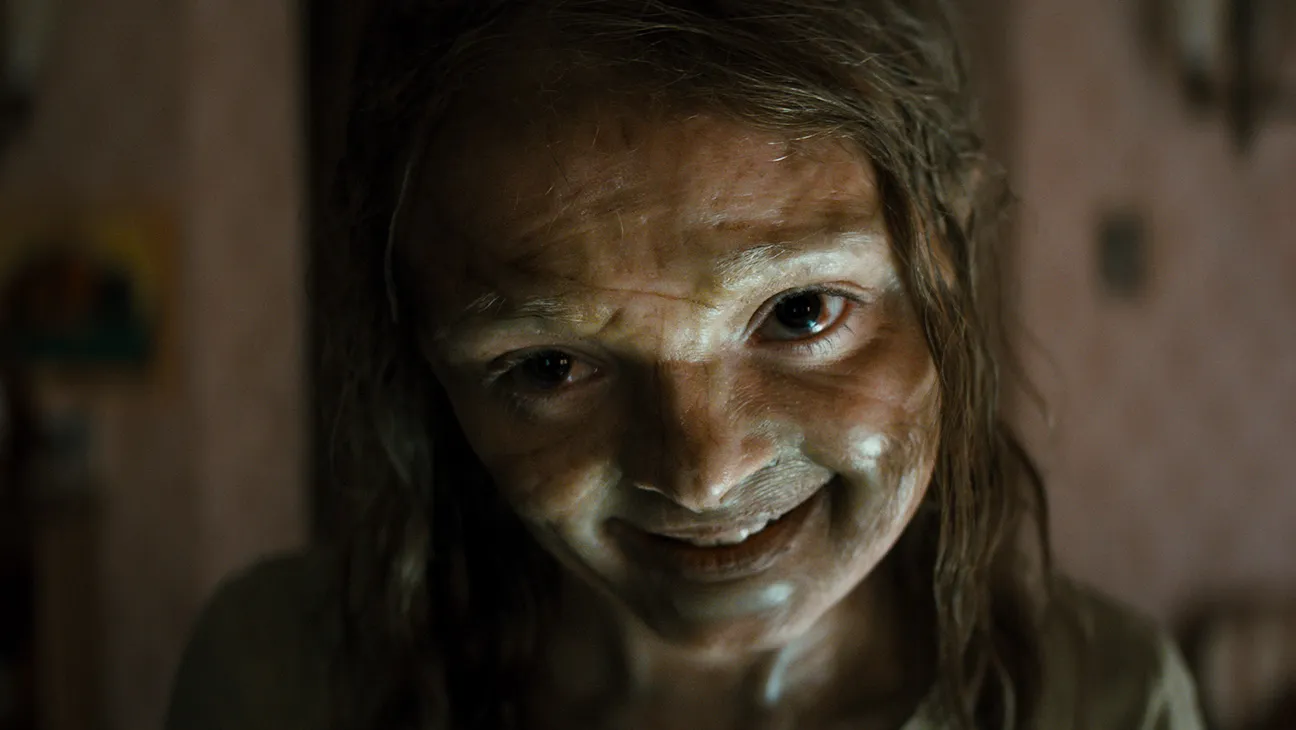
The film jumps ahead eight years, and now the Cannons live with Larissa’s mother (Verónica Falcón) in New Mexico, along with their son Sebastian (Shylo Molina) and new daughter Maud (Billie Roy), who was born after Katie’s disappearance. The couple gets a call that Katie has been found under strange circumstances, and her lack of sunlight, movement, and any social contact has turned her into a malnourished, twitching, gray-skinned, feral child. They’re told by doctors that she’ll eventually return to normal after being with her parents again. But this being a horror movie by Lee Cronin has me thinking otherwise... Her teeth grind and crack, she’s partially misshapen, she can’t speak and her breathing is labored; but it’s the wild look in her eyes that tells you something isn’t right. Newcomer Natalie Grace plays the older Katie, and her performance is astonishing and effectively disturbing, even if the movie itself isn’t especially scary.
Director of photography Dave Garbett gives the film a musty, lived-in, thick, choking atmosphere. The production design on the grandmother’s house is so time specific that I often forgot I wasn’t watching a period movie. And Cronin is less interested in jump scares and more fascinated with watching this family go from happy reunion to startling realization that Katie has fully transformed into something possibly monstrous—that element of The Mummy works. But this family seems wholly incapable of dealing with what is happening with their daughter. Her skin seems to be peeling off, and she seems like she wants to bite everything that gets near her mouth. Meanwhile, her parents seem paralyzed with either fear or just cluelessness about what to do with her. Charlie’s mere (very reasonable) suggestion that they put her in a full-time care facility so she can be looked after properly is met with fierce hostility by Larissa. Meanwhile, the detective back in Cairo is still trying to find out who initially kidnapped Katie, and she discovers a truth that she not only must share with the Cannons but also might require her to believe in supernatural powers that she’d never even considered.
Lee Cronin’s The Mummy can get quite extreme at times, both in terms of the level of identifiable violence (a nail-clipping sequence sent my stomach for a loop) and the emotional trauma this entire family experiences. It’s not always an easy watch, partially because of the gore, but also because it’s slow and over-long by a good 10-20 minutes. I appreciate the commitment to the bit, but the execution is overly indulgent. Performances are across-the-board solid, especially young Grace and Calamawy, with Reynor and Costa maybe overplaying their emotional moments to the point of becoming paralyzed and seriously slowing the film down.
Cronin’s screenplay overlaps a bit too frequently with The Exorcist by having children spout vulgar and otherwise inappropriate language, levitate, vomit up goo, and just generally mirror Linda Blair’s work in that iconic feature. It’s an unexpected touch that I didn’t hate, but it feels derivative at times, as do the thinly veiled references to the older Evil Dead movies. I frequently enjoy it when filmmakers wear their inspirations on their sleeves, but I know Cronin is an original thinker and doesn’t need to lean on the homages quite this much. It should come as no surprise that the film is produced by the likes of James Wan and Jason Blum, and they’ve given Cronin the resources and freedom to cut loose in interesting ways, and for that, I’m grateful. Horror fans will have reasons to get excited about The Mummy, but don’t expect your heart to race too often.
The film is now playing in theaters.
If you enjoyed this post, please consider supporting Third Coast Review’s arts and culture coverage by making a donation. Choose the amount that works best for you, and know it goes directly to support our writers and contributors.
