This article was written by Thomas Hodgkins
The Doc10 Film Festival screened new and unreleased documentaries in Chicago from April 24 to May 3. Accompanied by panels with filmmakers and famous icons, the films explored the past but resonated with the present. Through stories of hardships, grief, and perseverance, Doc10 served as a reminder of why our histories have a lasting impact on today.
Give Me the Ball!

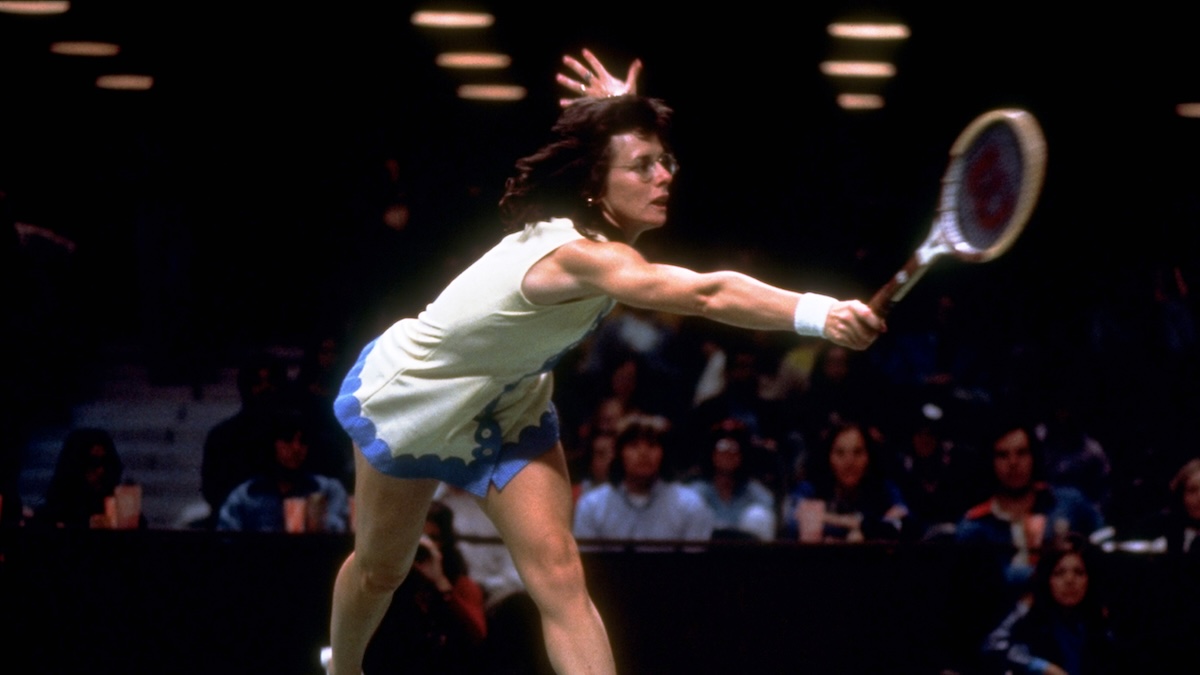
Give Me the Ball!, directed by Liz Garbus and Elizabeth Wolff, documents the life of Billie Jean King. The film follows a typical biographical documentary structure, but King’s personality and candor give it so much life. She narrates the pivotal moments of her life through an intimate interview. King’s firsthand recounting, combined with illuminating archival footage, makes the viewer feel as if they are there for all these moments. As King discusses her strategy against Bobby Riggs during the famous “Battle of the Sexes,” it’s hard not to feel the tension and anxiety of this momentous match.
The film also features King reflecting on her personal life, such as her abortion and grappling with her sexuality. Give Me the Ball! feels like a comprehensive and definitive biography of King, and her fight for equal prize money between men and women in tennis is a key throughline of her life and the film. King also emphasizes that this fight for equality is not over and that every generation must take up this cause.
King attended the screening with her wife, Ilana Kloss, and reacted to her past tennis matches as if she were watching them live. In the Q&A after the screening, she confirmed she had never watched the matches featured in the film before. Sitting with Garbus and Wolff, King joked around and told stories during the Q&A before launching signed tennis balls into the crowd with a racket. All in all, her bubbly yet resolute personality shone through in both the film and the Q&A, giving the audience an unforgettable experience.
Soul Patrol

J.M. Harper’s Soul Patrol recounts an all-Black special operations team sent overseas during the Vietnam War. The reunion of these men and the retelling of their stories anchor this film. A roundtable conversation between the veterans is compelling, while also providing levity with the banter that can only happen between people who have known each other for decades. Moreover, Harper incorporates Super 8 film footage captured by the soldiers while they were in Vietnam, adding a fascinating firsthand documentation of their experiences.
Despite the strong firsthand material that Harper has available, he also uses filmed recreations of the stories (Harper called them “adaptations”), which ends up stripping some of these stories’ power rather than bolstering it. A recurring “adaptation” showed real-life veteran Ed Emanuel in a grocery store seeing his fellow spec-ops members, portrayed by actors in full military camouflage. These scenes feel gratuitous, and the film generally relies too heavily on these recreations. Overall, the depiction of these men reclaiming their story and reuniting is very moving, but the recreations undercut much of the film’s emotion.

Remake

Ross McElwee is perhaps most known for his 1986 film Sherman’s March, an introspective documentary where he chronicles and meditates on his romantic and personal life. He employs similar filmmaking techniques in his newest documentary, Remake, using footage he has from the past to tell the story of Adrian, his late son.
The film is a self-reflexive documentary about making self-reflexive documentaries. McElwee grapples with whether the footage he has allows Adrian to live on or simply turns him into a movie character. He watches over the last few clips he captured of Adrian while also dealing with Hollywood filmmakers asking to remake Sherman’s March as a fiction film.
Remake is a thoughtful, powerful, and tragic film, and one that feels so personal. McElwee explores complicated ideas and complex emotions in a raw, meditative way. He is an essential documentarian—a man who can’t help but pick up a camera to explore his own life.
The Baddest Speechwriter of All
Co-directed by two-time Academy Award winner Ben Proudfoot and NBA superstar Steph Curry, The Baddest Speechwriter of All is stylistically reminiscent of Proudfoot’s first Oscar winner, The Queen of Basketball. In the short film, Clarence Jones, a lawyer and Martin Luther King Jr.’s speechwriter, remembers and reflects on his life. Jones is an energetic and entertaining subject, and his colorful storytelling brings a liveliness to the film. Some of his stories are portrayed through animation, crafted from beautiful watercolor paintings. The animation adds a fun, unique aspect to the film.
Baddest Speechwriter also incorporates music very well, with a delightful jazz score. Jones compares speechwriting to music, with rhythm and pace being of utmost importance, and also refers to King’s “I have a dream” speech as the greatest jazz riff of all time. Music played an important part in Jones’ childhood—he played the clarinet—so music’s importance in the film feels integral to how the story is told. With the watercolor animation, the music, and the quick and engaging editing, Proudfoot and Curry do justice to the life of the 95-year-old Jones.
If you enjoyed this post, please consider supporting Third Coast Review’s arts and culture coverage by making a donation. Choose the amount that works best for you, and know it goes directly to support our writers and contributors.
