
I’ve often said that someone being disappointed by a film because it doesn't meet the expectations you had of it going in isn’t the fault of the film; it’s your fault for walking in with anything other than an open mind and as few expectations as possible. Every time I walk into a new movie, I attempt to adhere to this golden rule of film criticism and simply allow myself the opportunity to discover the work being presented to me.
It sounds simple, but the number of times I hear, read, or watch a reaction to a film be something along the lines of “It wasn’t what I was expecting,” or “It wasn’t what I wanted it to be” is immeasurable and frustrating. That being said, when a filmmaker says in countless interviews that his current work is going to blow the lid off a particular subject matter, and it doesn’t, I’m going to allow myself to feel a little cheated even if I enjoyed the overall work. Case in point: Steven Spielberg’s Disclosure Day, a movie that attempts to envision a world in which long-held government secrets about alien encounters on Earth are in danger of being revealed to the entire planet all at once.
It should go without saying that the concept is beyond intriguing, especially when told by the filmmaker who brought us Close Encounters of the Third Kind, E.T., War of the Worlds, and, sure, I’ll throw in Indiana Jones and the Kingdom of the Crystal Skull, all of which are films about different approaches to the idea that we are not alone in the universe. Once again working with screenwriter David Koepp (who wrote War of the Worlds, as well as the first two Jurassic Park movies for Spielberg), working from a story idea by the director, Disclosure Day tackles everything from government conspiracies and shadow agencies with big secrets to bigger-picture ideas about faith, organized religion, humans’ place and importance in the universe, nature, and even how such a revelation might either level the global playing field or send the world into complete chaos and despair. And I’ll say upfront (with no spoilers, obviously) that my biggest disappointment with Disclosure Day is that it ends right as things start to get really interesting and those questions about the fate of the world might actually be answered.
The film has multiple storylines, all destined to converge, but the two primary characters are Kansas City weathercaster Margaret Fairchild (Emily Blunt), a former on-air reporter who moved to a bigger market but never lost the curiosity of a reporter. She’s living with her longtime partner (Wyatt Russell), a musician who is supportive but also seems to be encouraging her to take a job elsewhere while he stays behind. Just as she’s on the verge of realizing her life is about to take a turn, her mind is hijacked on-air and she begins to speak in eerie sounds. The clip of this event goes viral, and is eventually seen by Daniel Killner (Josh O’Connor), a whistleblower who worked for the Wardex Corp.—keeper of many big secrets including the truth about alien visitors coming to Earth for decades. Daniel is on the run, and a team from Wardex, led by Colin Firth’s Noah Scanlon, is out to stop him by any means. Noah is one of the only people on the planet capable of using the alien technology to find this man on the run, while anyone else who so much as touches it is vaporized.
Daniel and his girlfriend Jane (Eve Hewson) attempt to meet up with other Wardex defectors, led by Hugo Wakefield (Colman Domingo). The group’s mission is fuzzy at first, but it becomes clear that releasing this hidden information to the world at large all at once is the ultimate goal. How they achieve that goal eventually comes into focus, and it seems weirdly obvious and easier to stop than the film would have us believe. Scanlon believes that the world’s religions would collapse because people would believe in a different (and very tangible) higher power due to this disclosure, but his argument isn’t fleshed out enough to truly hold any weight, especially when it’s put face to face with Wakefield’s more informed and thought-out belief that the world could only benefit from this knowledge and a deeper connection with and understanding of these visitors.
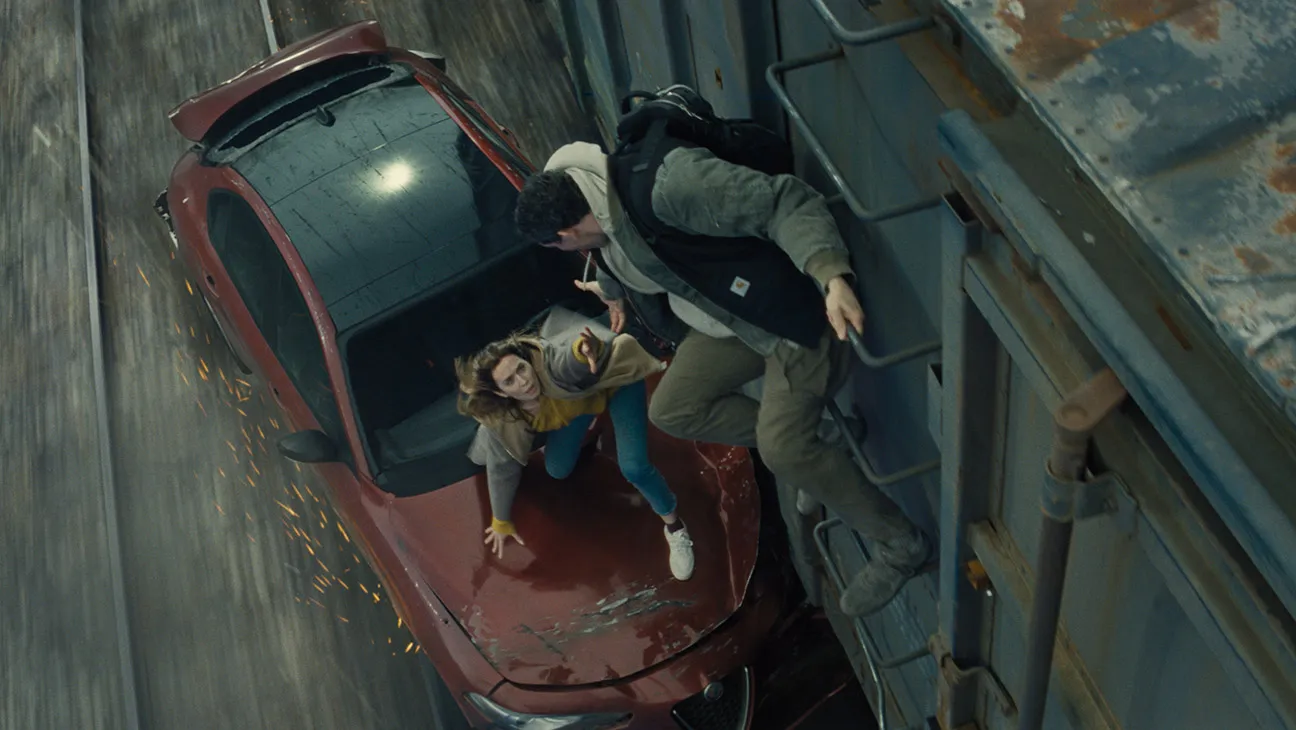
Disclosure Day is a think piece that seems afraid to really dive into the pieces to its central puzzle. As a result, the film ends up resorting to party tricks like car chases and other action set pieces, as well as getting too bogged down in scenes about what the aliens look like and how they’ve been mistreated over the years, which admittedly is quite shocking and some of the movie’s most memorable and haunting scenes. Anyone hoping that Spielberg is going to blow the lid off every secret we may or may not have about aliens with this film is in for a rude awakening.
So let’s go back to my original comments about judging the movie for what it is and not what I may have wanted it to be. There’s a great deal to like here, including the lead performances. Blunt is always reliable and goes above and beyond as one of the only people on Earth who seems fully tapped into what the aliens are up to. And in the vaguest terms, there are even questions about whether the abilities she seems to possess after being “touched by an alien” would have seemed god-like 2000 years ago (yet another reason religions might be nervous if this info got out on a grand scale). While O’Connor plays a man possessed by his self-appointed mission, and he sells it in the least selfish terms as he attempts to protect those he cares about the most while also completing the task at hand. I also really liked seeing Firth in villain mode; his soft-spoken demeanor somehow makes him seem more menacing, and I got nervous any time he made a move on either of our protagonists.
We know where Disclosure Day is headed and can even likely guess exactly where it will land. Spielberg doesn’t like to keep secrets as a rule, and he’s not a big fan of surprises either. His strengths rest in his story-telling abilities, even if the story is familiar and predictable, which this one largely is. That’s not a good or bad thing; it simply is. Few among us can weave a tale as effectively as he can, even if we know where our feet will finally hit the ground. And I’m good with that; I mostly enjoyed this movie, even if I think it’s about 20 minutes too long and isn’t nearly the earth-shattering experience some might want it to be. It’s too well made to be worthy of hate, but it’s also too middling to be praised to the skies, even if those skies are filled with flying saucers.
The film is now playing in theaters.
If you enjoyed this post, please consider supporting Third Coast Review’s arts and culture coverage by making a donation. Choose the amount that works best for you, and know it goes directly to support our writers and contributors.
