This article was written by Nick Glover.

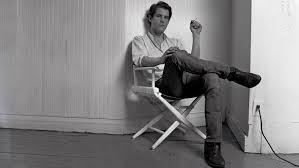
“Who cares about his painting?” an actual quote from Make Me Famous, seems to be the question at the center of this documentary examining the life of Edward Brezinski, an East Village-based Neo-Expressionist painter in the 1980s.
Make Me Famous is the debut film from Brian Vincent, director, editor, and producer of the documentary. It sustained an original self-distributed theatrical run in 2023 after a screening at the 2021 New York Lesbian, Gay, Bisexual, & Transgender Film Festival. The film has its Chicago theatrical premiere this week.
For those outside of the art world, don’t fret at not knowing Brezinski’s name; he was not and is not famous, nor does his work merit acclaim similar to that of his contemporaries, namely Keith Haring, Jean-Michel Basquiat, David Wojnarowicz. If he was remembered at all, Brezinski was remembered as someone who desperately wanted to ‘make it.’
The most repeated memory of Brezinski shared by the talking heads in Make Me Famous is of him attending others’ gallery openings and exhibitions and shilling his smaller and smaller, grimier and grimier DIY exhibitions. He would muscle out Xeroxed pamphlets and get drunk on gallery-provided cheap wine, almost exclusively to the dismay of the artists being shown.
The documentary features all sorts of mid-level figures from the New York scene, including small gallery owners, almost-famous artists, friends of friends of Brezinski; it’s a crowd of who isn’t who in the art scene.
The major conundrum at the core of the documentary is unfortunately one of the most important questions any artist must ask of any of their art works: why does this exist?
Certainly, there’s a case to be made that the documentary can be understood as a parable of the artist who wants fame more than anything. That case, however, doesn’t hold up to scrutiny. The documentary calls out—or more accurately documents Brezinski’s detestation of—the figures who ‘commercialized’ the movement of which he was a part. Basquiat and Haring are chastised, sometimes by name, for selling out and buying into the monetary side of the art world; artists like Damien Hirst and Jeff Koons are rampantly disparaged as figures that are closer to the world of MBAs than MFAs.
The problem with this denigration is that the entire point of the film is centered around how much Brezinski wanted to “make it.” Of course, this builds in depth to the documentary’s depiction of Brezinski, unveiling the multi-layered questions that Brezinski seemed to struggle with just the same as the documentary does: What does success as an artist look like? Is expensive art expensive because of its artistic merit or because it has the signature of whoever the tastemakers (read: those with the money to buy) feel deserves propping up?
Reduced all the way down, the documentary is a Gordian knot of money, art, and fame. A perceptive viewer will have to answer whether monetary success and artistic success are inextricably linked, and in turn, how can we define Brezinski’s career, his life? His obituary in artnet was small, only a quaint paragraph, but he did have an obituary in artnet. Thus, there must have been some level of success.
Upon his death, he was unsung, living in squalor in Europe, dying in a cheap French hotel and all information about him and his death was promptly lost by the French government. Rumors of his death being faked spiraled through the New York underground. While the documentary answers any factual questions of Brezinski’s death (his grave is eventually found) the viewer still needs to parse out whether Brezinski’s life or career can be considered successes.
The simple fact of the matter is that almost two decades after his death, there are still pockets of the artistic world talking about him, inspired by him. Is the point of an artist’s life to spend the entirety of it creating as much good work as the proverbial muses send your way, or is it to have conversations with gallery owners and MOMA exhibitors about why you chose specific pigments in a specific composition? Is the artist’s life still successful if their art wasn’t a monetary benefit to themself or others? It’s hard to tell where the documentary ends up.
Make Me Famous ends with the lines, “There’s always another Edward Brezinski. There will always be a young artist that’s struggling that has something to say.” A cut. A candle being extinguished. “That’s all.” There are no answers to these questions, the questions at the core of Brezinski’s figure and the documentary. There isn’t a line in the sand, a clear statement, or a point to jump off from. The only thing the audience can say is that we now know about a figure, a life, and that in a very small way, we helped make it famous. I ask, does that sound successful?
Make Me Famous opens August 22 at the Highland Park Wayfarer Theater. Following the 6pm screening, the Wayfarer will host a Q&A with the film’s director Brian Vincent and producer Heather Spore.
If you enjoyed this post, please consider supporting Third Coast Review’s arts and culture coverage by making a donation. Choose the amount that works best for you, and know it goes directly to support our writers and contributors.
