This is the second in our series of articles on The Art of Survival, in which we explore how small Chicago arts organizations are surviving post-COVID and weathering the anti-humanist and anti-diversity actions of our federal government. Our preview article described the project. Watch for our next article later this month.
Illinois Governor JB Pritzker and Chicago Mayor Brandon Johnson have been standing up to authoritarian threats from the Trump kleptocracy this week and seemingly forever. Chicago theaters have been fighting anti-intellectualism by telling difficult but vital stories since the Windy City became a haven and a hub for groundbreaking and boundary-pushing narratives. Speaking up and out is in the DNA of Windy City creatives, especially now, after weathering the COVID pandemic shutdowns and tackling a fascist federal government intent on yanking funds and silencing diverse voices.

With a grant from the Chicago Independent Media Alliance and help from the League of Chicago Theatres, Third Coast Review surveyed some local theater makers to take the community temperature during this liminal period between COVID and kakistocracy, our current national government led by the least suitable and competent people.
The League of Chicago Theatres observed that some funders shifted or reduced arts contributions to support more immediate community and health response needs. Director of Programming Tony Bondoc said that the League organized a program called “Navigating the Sector” in March 2025 to speak directly to theater management to help them better understand how to advocate for membership needs, including programs such as “Shuttle to the Show,” which drives audience members to harder-to-reach venues.
The Fight for Funding
Funding for the arts is difficult at any time during late-stage capitalism, but COVID certainly infected the cash stream further, and the federal government is pointlessly slashing any remaining dollars right now. TUTA Co-Artistic Director Aileen McGroddy said that her company has seen at least a 50% decline in government and foundation grants. Lifeline “Big Stories, Up Close” Theatre’s marketing committee chair Frances Limoncelli reports funding losses of at least 30%.
Artistic Director Kirsten Fitzgerald said that Old Town’s A Red Orchid Theatre doesn’t receive federal funds directly, but knows the effects will be felt when they trickle down to city and state levels. “I imagine that individual giving will get tighter too as this administration’s economic policies squeeze everyone,” Fitzgerald said.
“Chicago has not recovered from COVID,” said Dustin Rothbart, Co-Artistic Director of Blank Theatre Company, founded in 2017 and based in Lincoln Park. “The cost of rental space and rights is exorbitant. Storefront theater is not meant to pay people’s bills. The higher the cost, the harder it is to produce.” Post-pandemic, there is even more competition for grants.
“I fear for the future viability of Chicago as a theatrical market due to what COVID did to our city,” Rothbart continued. “The storefront theater landscape will continue to shrink if more funding and affordable spaces are not made available.”
Founded in 2016, Theatre Above the Law (TATL) strives to mentor future artists with only a five-figure budget. “We went back to pinching every penny during the coronavirus outbreak,” said Artistic Director Tony Lawry. But all the supposed extra grant money and funding that was allocated seemed to be given to the bigger budget companies that didn’t really need an extra $5,000. “That amount could fund the artists for an entire production for us,” Lawry added.
But TATL did receive some local and federal lifelines between 2020 and 2022. None were more than $10,000 each, but still helped the company stay open and produce. “But we have had a 100% decline since, meaning zero outside funding now,” Lawry said. “Just like in corporate America, rich theaters keep getting richer while the ones who need assistance are left to fend for themselves, like Darwinism for the arts.”
The Chicago Department of Cultural Affairs and Special Events Arts Relief Fund recently offered one-time grants of $10,000-$25,000 to eligible nonprofit arts and culture groups that were affected by federal funding cuts (the application closed on August 20).
“We are continually told that the midsized nonprofit business model is broken, so we wrote a business plan that borrows from other business models,” said Limoncelli, also one of Lifeline’s prolific page-to-the-stage adapters and actors. “From the co-op business model, we are embracing ‘sweat equity.’ We used to feel we needed to professionalize all aspects to be successful, but under current circumstances, that doesn’t seem realistic, so our board and ensemble are volunteering more.”
“From the asset-sharing model, we are exploring how to share the physical building we own with other Rogers Park community organizations for mutual benefit,” Limoncelli continued. “Recently, we provided space to two local nonprofits, hosted a children’s activity tent at the Glenwood Avenue Arts Festival, and welcomed S&C Electric employees.”
Lakeview’s Theater Wit just received a $600,000 grant from the Paul M. Angell Family Foundation and the Richard H. Driehaus Foundation for a “Shared Spaces” program. This three-year initiative offers access to Wit’s trio of performance spaces at reduced rates ($1,000 per week, rather than $2,250), including marketing and administrative support plus accessibility services like touch tours and assistive audio descriptions, so that renters can produce longer runs, deepen audience connections, and develop ambitious seasons.
“Since the pandemic, 19 stages that fostered storefront theater have closed or become unsuitable, while production costs have skyrocketed,” said Theater Wit Artistic Director Jeremy Wechsler. “With only 51 theater companies now producing full seasons, compared to 127 in 2019, Chicago’s distinctive storefront community is clearly facing real challenges.” Wechsler hopes this initiative can model how Chicago can better leverage community spaces to benefit everyone now and into the future.
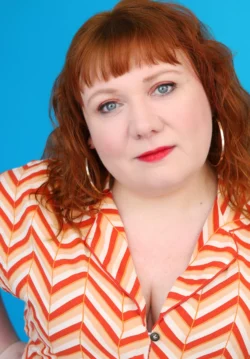
“We have to keep making art,” said Limoncelli. “If the funders flee, someone must work for free so art can still happen. If the Gestapo or Stasi start breaking down doors, some of us have to go underground and make art guerrilla-style. It requires sacrifice, but we can’t stop.”
Commitment to Diversity, Equity and Inclusion
All theater respondents are deeply committed to keeping diversity, equity and inclusion (DEI) initiatives alive in their staff and programming, despite the regressive, racist headwinds blasting out of DC.
“There is no Babes With Blades without DEI,” said Artistic Director Hayley Rice. Another piece of the 28-year-old company’s mission is to dismantle the patriarchy. But the pandemic made BWB take stock of certain policies and timelines in place since its inception. “Why do we do things this way, and is there a better way?” were some of the questions considered to move toward more inclusivity.
“I wish that certain accessibility policies that many theaters implemented during COVID, like streaming performances and mandatory masking for at-risk audience members, remained in place,” Rice said. Some of the larger theaters seemed to want to keep those pandemic changes, but now “a lot of them are back to making theater exactly how they did before, and it’s disappointing,” she added.

Blank Theatre’s Rothbart added that “DEI has changed how decisions are made in the industry and there is no going backwards.”
In addition to keeping and amplifying DEI initiatives, the responding theaters were also adamant about fighting any incoming censorship of artistic choices.
Blank Theatre just produced Tony Kushner’s A Bright Room Called Day, focusing on socialists’ response to the rise of fascism in 1930s Berlin. “This play was a big departure from the musical comedies we typically present,” said Artistic Director Danny Kapinos. “We were invigorated by this style of work and hope to program more. As a smaller company, we can afford to take more risks, so we feel it is our responsibility to program fearlessly.”
The north side’s Tin Drum Theatre Company plans to produce Craig Wright’s The Unseen this November, about people imprisoned by an authoritarian regime. In spring 2026, they will present Southern Rapture, which recounts the 1996 boycott of Kushner’s Angels in America by conservatives in Charlotte, NC. This “farce with teeth” is a reminder of “how quickly outrage can overwhelm dialogue, and how easily art itself can be placed on trial or silenced,” said Co-Artistic Director Jason Palmer. They hope to target play outreach to local LGBTQIA+ seniors, many of whom lived through the eras of Angels and Rapture, as well as high school and college students. “Creating intergenerational encounters between these groups promises fresh perspectives and continuity across generations,” added Palmer.
Last season, Lifeline produced War of the Worlds to explore life in chaos for adults, and Leaf for kids, which reflects on world changes and life disruptions. The theater is known for its KidSeries productions, and Limoncelli feels the best way to fight attacks on democracy is to reach young audiences to teach empathy, justice, kindness, self-knowledge, personal growth and more. Lifeline’s upcoming kids’ programming is three times what it’s been since the pandemic, and the company will produce LOKI-The End of the World Tour in spring 2026, which will highlight the toxic manipulations of power-hungry rulers.
Theater Is An Active Form of Resistance
Kapinos referenced Oskar Eustis’s “Why theater is essential to democracy?” TED Talk as a way to summarize the importance of plays in healthy societies. “Theater and democracy were invented at the same moment in the same place for a reason,” he said. “When the tradition of storytelling grew from one person sharing the truth to two people arguing, a seismic shift happened. The art of theater says there is no one singular reality, and our job as citizens is to wade through both sides of messy arguments and seek the truth for ourselves. That makes theater vital, engaging and compelling.”
“I think we are leaning harder into our core values of honesty, rigor and compassion,” said Fitzgerald. “Live theater is a place for both artists and audiences to practice empathy, to challenge expectations, to tell untold stories, to interrogate and celebrate humanity in all iterations, and to shine new light on the familiar. Life is messy and terrifying and gorgeous and grotesque, and, even though it is such a personal experience, community helps. The act of gathering people to recognize our shared humanity is always part of the plan and is an active form of resistance.”
As performing truth-tellers are being canceled by fearful and cowardly autocrats, Chicago’s creative artists remain steadfast. Rothbart proclaimed: “Theater is forever; it’s not going away.”
Support arts and culture journalism today. This work doesn't happen without your support. Contribute today and ensure we can continue to share the latest reviews, essays, and previews of the most anticipated arts and culture events across the city.
