I’m a sucker for metroidvanias, and I’ve been a fan since Super Metroid way back on the SNES, so it’s nice to see the genre still around and kicking. While Clockwork Ambrosia hasn’t been met with overwhelming hype, it’s been a game I’ve had my eye on for a while now. But little did I know that its release is the end of a 14 year journey for developer Realmsoft.
Clockwork Ambrosia is a 2D sidescroller that takes place in a steampunk inspired world. While it has the usual hallmarks of a metroidvania, like exploration and ability unlocks, it has a little bit more emphasis on weaponry. The player character Iris isn’t your usual action hero. Instead, she’s an airship captain, so she’s more used to engineering than fighting. When she finds herself stranded on an island and trying to solve a mystery that involves fighting legions of automatons, she puts that expertise to work on making her weapons do most of the job for her. I mean, work smarter not harder, right?
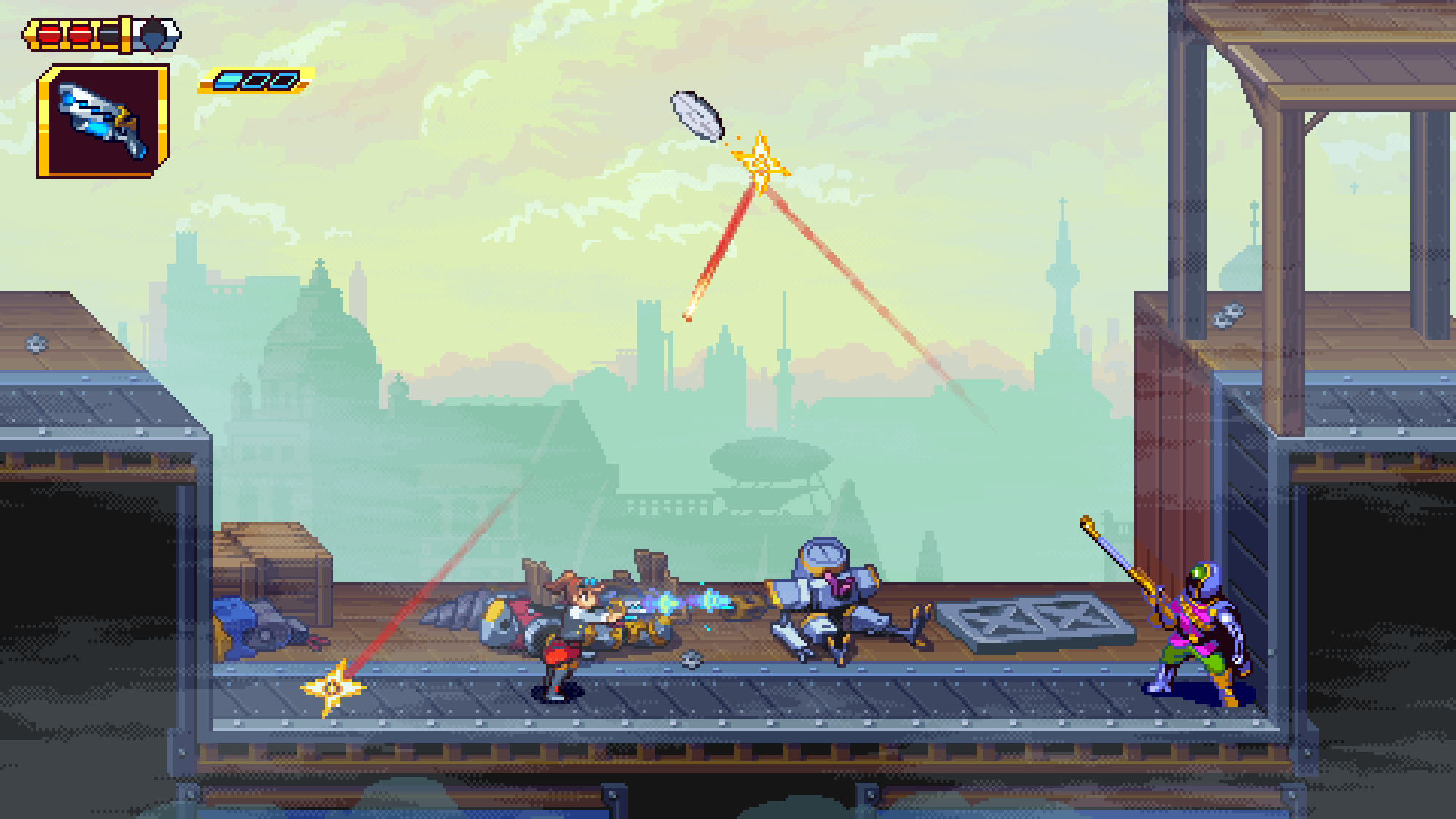
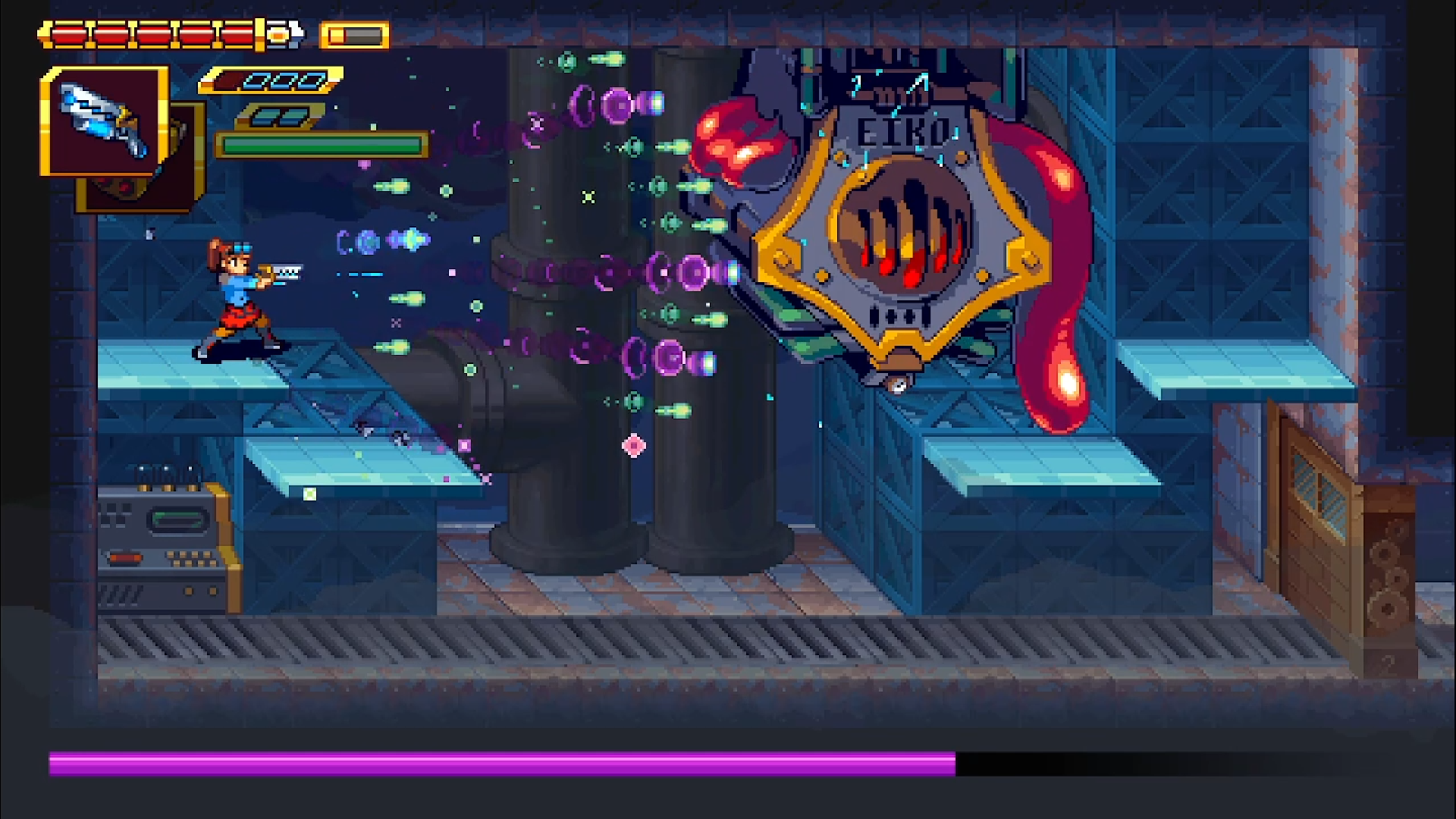
While Clockwork Ambrosia is a pretty standard metroidvania, it does have an interesting weapon system. The four main weapons you get through your playthrough can be customized and upgraded as you find mods and purchase others from various NPC vendors. These mods do everything from up the damage to change the behavior of weapons in pretty significant ways. You can rig screen-filling shot splitters, devastating missile strikes, or program bullets to trigger secondary actions (e.g., firing extra projectiles whenever a round is disabled).
Iris utilizes four primary weapons as the foundation for these builds: the versatile Pulse Breaker, the armor-shattering Missile Launcher, the rapid-fire Revolver, and the trick-shot Grenade Launcher. While I tend to lean pretty heavily on a certain weapon or two in similar games, I kept messing with different mods, making me swap between new favorites a half dozen times or so through my playthrough.
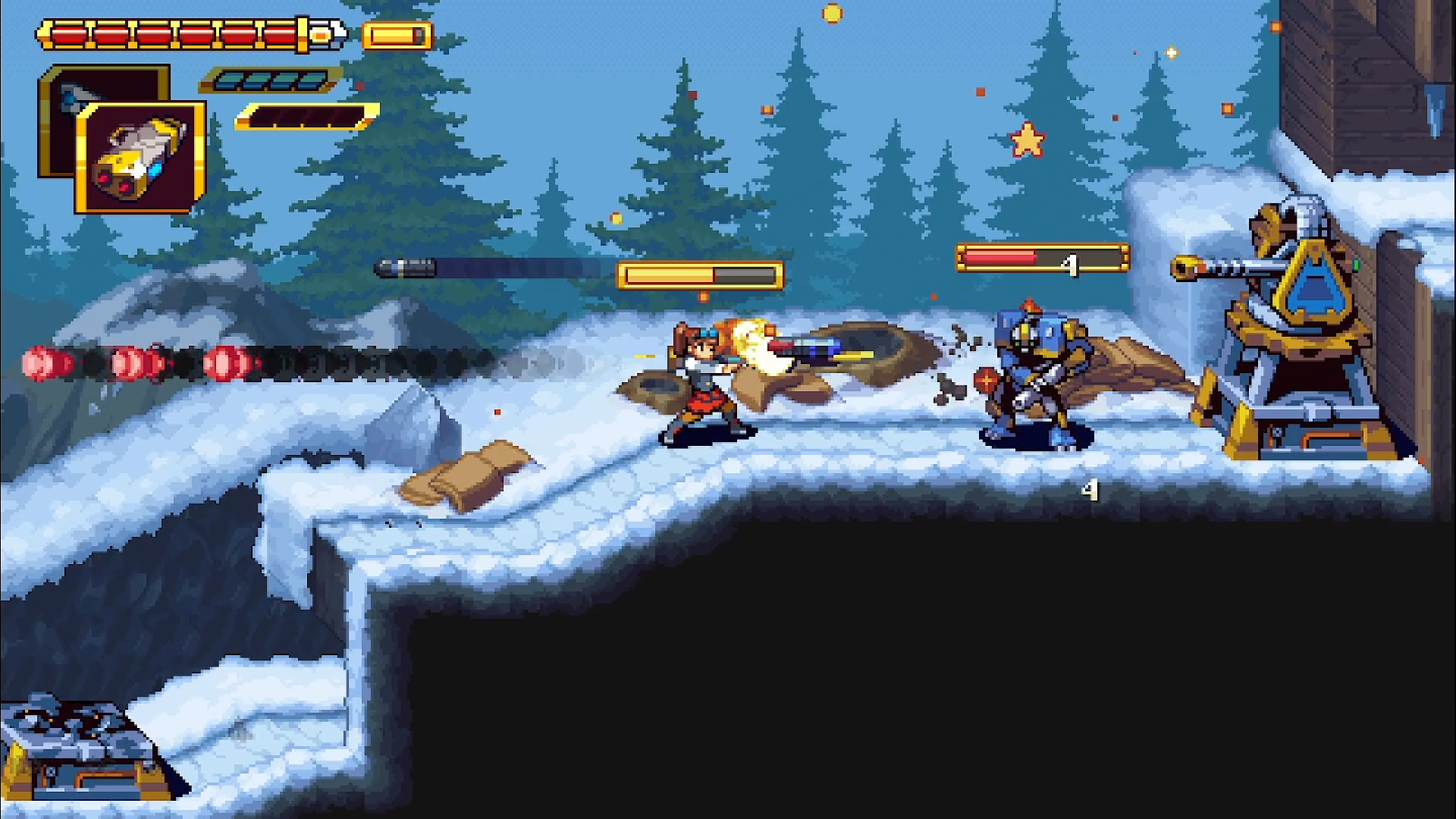
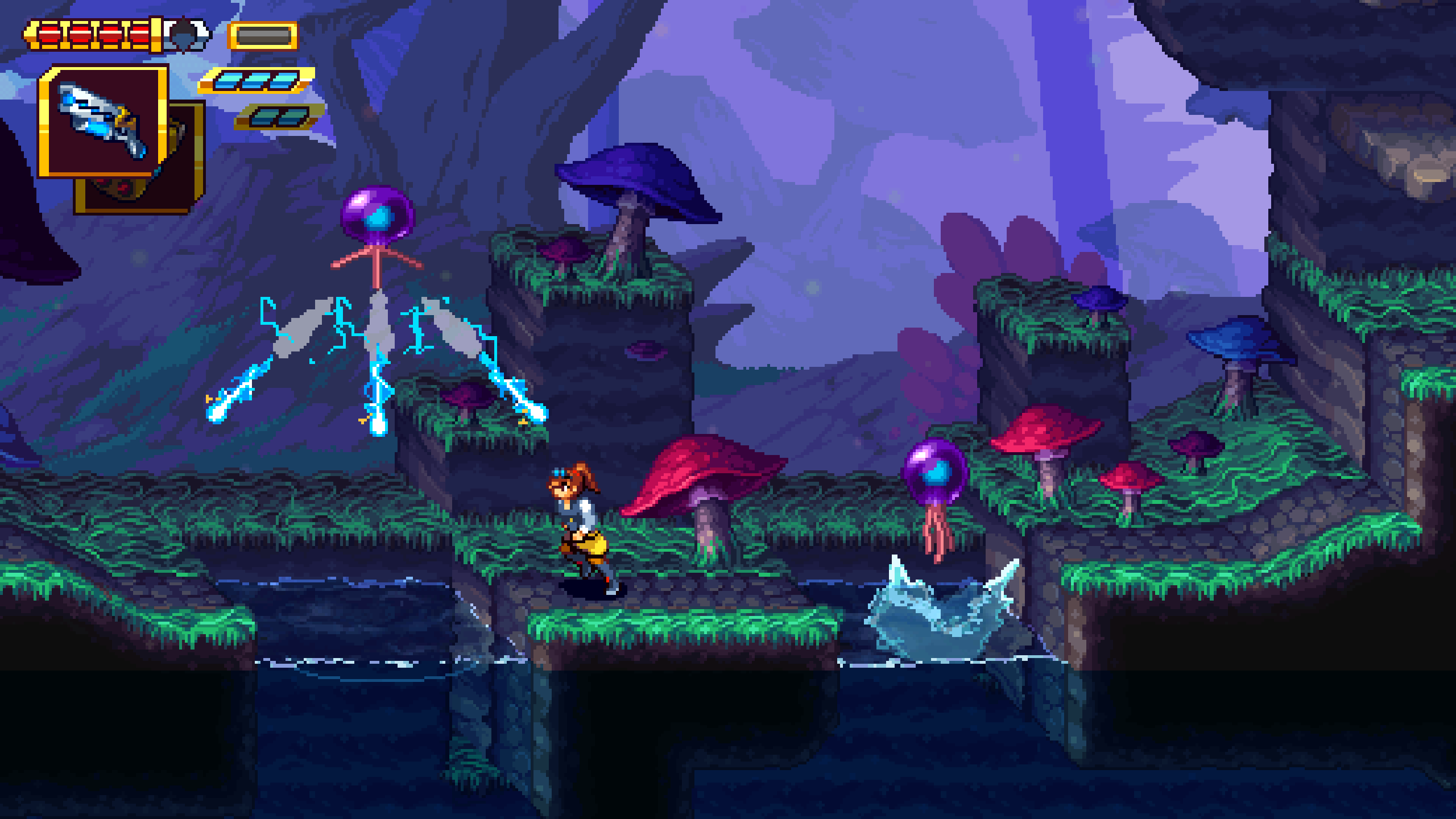
Clockwork Ambrosia is also a pretty game to look at. I dig its bright pixel art and smooth animations. Since pixel art is a valid art style, just because a game possesses it doesn’t necessarily make it “retro.” But something about Clockwork Ambrosia reminds me of playing Super Nintendo or Game Boy Advance era sidescrolling games. But retro is often synonymous with extremely difficult, and I would say that this game isn’t very difficult. In fact, I would put it near the easier scale when compared to other metroidvanias. This is partially because of the customizable weapon system. I never felt like I was without ample firepower to dispatch my foes. That’s not to say there aren’t difficult encounters–some boss fights gave me a hard time.
But unlike other games of its sort, you don’t go back to the last save point when you die. Instead, you will start back in whatever area you were in when you died until you run out of lives. This makes Clockwork Ambrosia more forgiving than other similar games, and that makes it a good entry point for those who are curious about the genre but are scared away by the notoriously difficult genre.
While I had fun playing Clockwork Amrbosia, I couldn’t help but feel like it was missing that certain something. I realized it wasn’t lacking majorly in any one area, but it instead falls short in many small ways. For instance: it has an interesting world with a few NPCs that are compelling, but it never does enough to make me care about that world nor does it get fleshed out enough to be fully immersive. Similarly, the graphics are beautiful, and the animations are great–but the art still manages to feel a bit lifeless and flat. And the weapon customization ends up trivializing combat, and even some boss encounters.
I don’t think Clockwork Ambrosia will be the next big thing, but it definitely deserves a fanbase. I wouldn’t be surprised if it gets a cult following. Developer Realmsoft deserves a payoff for the 14 years of work that went into this game. And I hope to see a sequel in the future. If you’re a fan of metroidvanias, you could play worse. If you’re curious about the genre and wanted a place to jump in: you found it.
