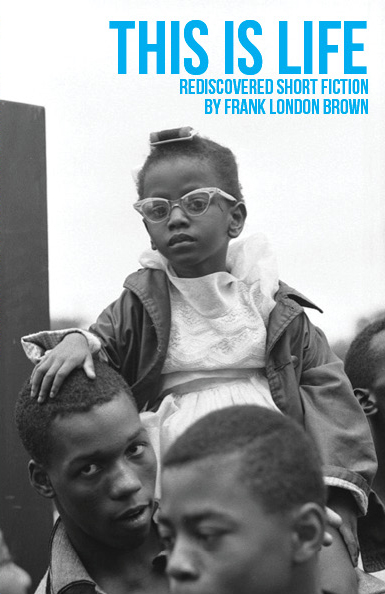
We mostly remember movements through supernaturally charismatic entities who said the right thing at the right time, sparking action, winning souls, and rewriting history. In reality, every movement is made of a thousand anonymous individuals, each doing their small part to create change. Inevitably, many of these people are omitted when the history books are written. A shame, since all those smaller tales worked together to achieve the greater good. Similarly, This Is Life, by Frank London Brown, shows how a lot of little stories construct and contribute to a larger narrative overall.

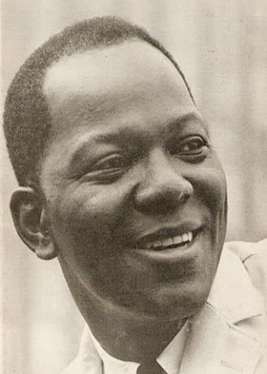
Writer, union organizer, singer, and more, Frank London Brown was a Chicago Renaissance man who played his part in the struggle for civil and workers' rights. Author Kathleen Rooney describes Brown’s Zelig-like presence as “a witness of and participant in many of the crucial incidents of the Civil Rights movement of the 1950s and 1960s,” receiving an FBI ‘index card,’ once Director J. Edgar Hoover decided he was a “threat.” Of particular note, Brown—who wrote for the Chicago Defender, Sun-Times, and Tribune—covered Emmett Till’s murder. Prolific, driven, and on the right side of history, Brown died of leukemia at the terribly young age of 35.
Brown may no longer be with us, but we still have his writings. His main literary accomplishment is a single novel, Trumbull Park, a fictional account of public housing, segregation, civil rights, and race riots in South Side Chicago in the 1950s. Now we have This Is Life (From Beyond Press), a posthumous collection of 133 brief but well-crafted stories. This Is Life’s contents might be what today’s lit kids call flash fiction, each tale lasting no more than a page or three. Editor Michael W. Phillips Jr. sifted through past issues of the Chicago Defender in search of these fictional snippets serving as fictional filler in the newspaper; sometimes under the This Is Life heading, sometimes attributed, sometimes not. Published over the course of a year (between 1959 and 1960), This Is Life’s filler is surprisingly filling.
In reading This Is Life, I remembered a favorite book from my teen years, 100 Great Science Fiction Short Short Stories, edited by Isaac Asimov, Martin H. Greenberg, and Joseph D. Olander. A collection of bite-sized mid-century sci-fi that gets you in and out of the plot quickly and ends with a twist. Best exemplified by The Twilight Zone, the '50s and '60s feel like the age of the surprise ending. Countless speculative fiction writers mastered setting up humdrum circumstances before a vigorous climactic rug-pull: the astronauts were actually aliens on Earth the entire time, the hotel manager was really Hitler (or Satan, as the case may be), and so on and so forth.
This Is Life also has its twists, though it lacks in fantastic circumstances and conclusions. As the title suggests, it is a collection of fictional vignettes—tales focused on everyday African-American life in 1960s Chicago. Street names, locations, and even a few establishments add a touch of veracity, but even without these markers the stories are recognizable and real. Here we find Black Chicagoans at work or play, struggling or succeeding, and sadly experiencing familiar problems and obstacles brought on by prejudice, inequality, discrimination, and bad faith. Most of Brown’s stories remain timely and timeless by echoing current events.
The stories aren’t perfect. This Is Life has moments of melodrama, and the tone and voice—a sometime blend of method acting and jazz writing—seems dated. The time period’s drive for realism often created an unreal hyperreality. To be fair, it was a new approach for a new time, and This Is Life still offers brief but compelling narratives. We have a limited acquaintance with a large cast of characters—none existing outside their respective stories—but Brown provides enough personality and motivation to make them familiar and indelible 65 years later. Archetypes, not stereotypes. Ordinary people getting by (or not) in a country that’s not always free and rarely truly brave. Focusing on lives lived humanizes people, revealing how similar we are—a truth certain folks are currently trying to obliterate. Perhaps the short, short story format is best suited for condensing, concentrating, and communicating such unlearned lessons before they disappear.
This Is Life is available at bookstores and through the From Beyond Press website.
If you enjoyed this post, please consider supporting Third Coast Review’s arts and culture coverage by making a donation. Choose the amount that works best for you, and know how much we appreciate your support!
