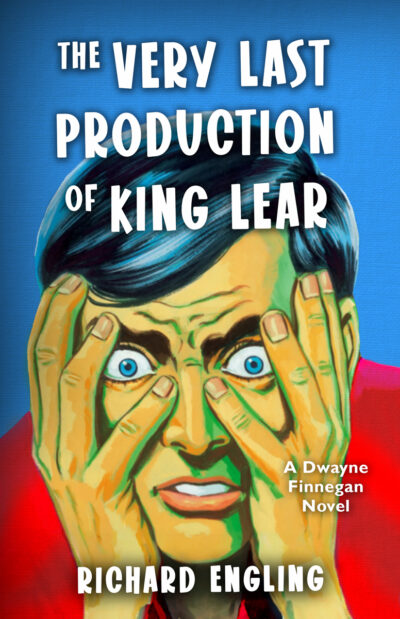

Richard Engling is a Chicago theater guy—actor, director, artistic director. He’s taken his years of experience as the raw material for a trilogy of novels about life in Chicago storefront theaters. His latest book—The Very Last Production of King Lear— is the story of how the director of a small theater company is invited to produce a play at Goodman Theatre. The director is Dwayne Finnegan, the protagonist in Engling’s trilogy.
Appropriately, the novel opens with a list of dramatic personae, listing the book’s cast of characters with brief descriptions and their initialized identities—SWF, SBM, etc.
Engling fills his book with so many local theater and Chicago references that it’s a treat for a Chicago theater lover to read. I particularly liked the scene where Dwayne is driving a decrepit old Pinto on Lower Wacker Drive, with unfortunate consequences. But I think the novel would be interesting for anyone who likes a good story. In short, The Very Last Production of King Lear is by no means literary fiction. But it is a damn good story.
My only caveat is that since each novel in the trilogy focuses on one Shakespearean play (Romeo and Juliet and Titus Andronicus in the two earlier novels) and its characters, it would be helpful if the reader had seen or read that play recently.

As the book opens, Dwayne Finnegan is at the Goodman Theatre, meeting with its artistic director Reg Camper, who regales him with Brian Dennehy stories. With Dwayne is his regular set designer, Ingrid Baardsen, whose creations will play an important role in the story. The Goodman has an open fall slot because a show by a visiting New York company fell through. After a bit of delay by Camper, Dwayne learns that he has been chosen to direct his dreamed-of production of King Lear in the Goodman’s smaller Owen Theatre in September—seven months away.
Dwayne is elated. Directing a play in the Owen Theatre is a dream come true for him—and maybe just what he needs to move his directing career up a notch, so he can quit temping and working odd jobs to survive. His wife Angela is a fifth grade public school teacher and they live in a small apartment, barely making ends meet on both incomes. They’re both young—late 20s, early 30s, and hoping to start a family soon.
Dwayne’s very small company–the Psychedelic Dream Theatre—has recently produced critically acclaimed, rather experimental, productions of Romeo and Juliet and Titus Andronicus—presented with live contemporary music. That’s how Dwayne got the opportunity to fill the Goodman slot.
The novel is divided into short chapters, each one titled with the date of its events, as we follow Dwayne through the process of creating a theater production. The first step involves the personalities and politics of casting with his old friend and creative partner, dance choreographer Tom Collins, who wants to play Lear’s daughter Regan.
Who should play Lear? Dwayne wants to use as many of his previous actors as possible but the casting of Lear is especially important. Should he cast his old colleague, Wallace, or take Reg Camper’s advice on casting a well-known Chicago actor?
Set designer Ingrid, always resourceful as set designers for storefront theaters have to be, has a lot of plans in store for the Owen stage, some of them risky and prohibited by Goodman and city policy. But she persists, thinking the result will be so spectacular that everyone will exclaim about the design elements that enhance Shakespeare’s script.
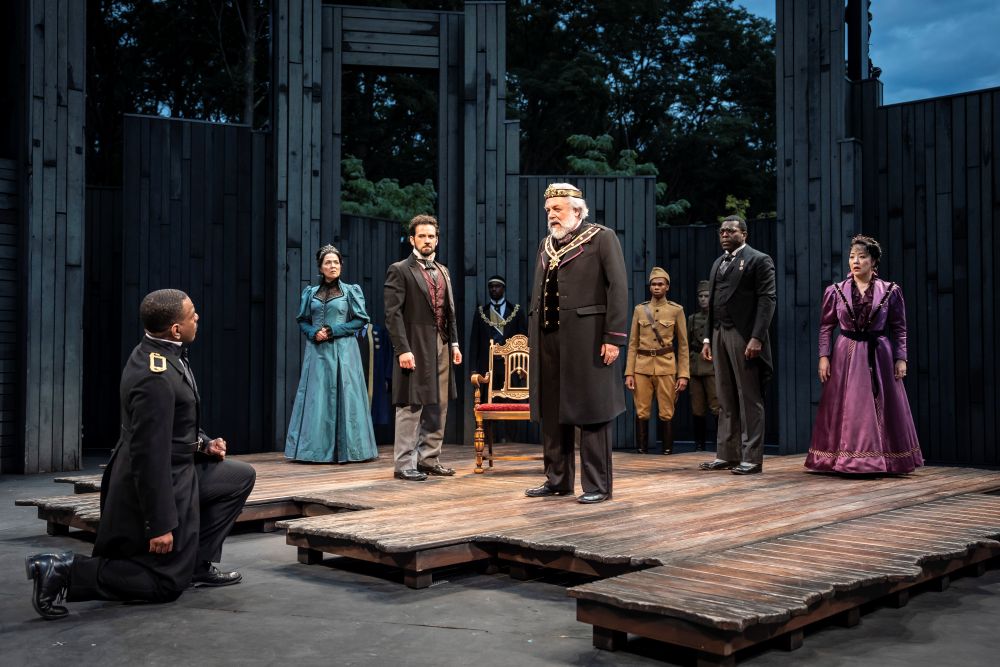
Before rehearsals can begin, we learn about the full behind-the-scenes process of staging a play. Debates over casting decisions, music choices and costume design go on and on. Bobby, a charismatic actor and Dwayne’s former co-producer at their former theater, returns from Hollywood after a failed attempt at a film career, ready to perform in Lear—and assuming everyone has forgotten that he absconded with the old theater’s treasury. Joan, stage manager and a board member of Psychedelic Dream Theatre, tries to help Dwayne hold things together during the process.
Engling’s plot blends the theater production story with Dwayne’s personal life. He’s working as a temp with various job titles at the personal injury law firm of Rockwell Nesbit III, a lawyer with a volatile personality who performs in King Lear. Dwayne’s wife Angela despairs at the leadership failings of the principal at her Chicago public school and begins a medical journey to get their family started. Another plot line follows Ingrid’s private life and her efforts to put that set design concept on stage. Ingrid turns out to be quite loony—to the point where you wonder why she was allowed access to theater funds or a stage set.
Engling’s other two books treat a similar process in staging a Shakespearean play, but at a storefront theater rather than on a major Chicago stage. Many of the same characters populate the dramatis personae of those books—Romeo and Juliet Keep Their Eyes on the Prize (Book 2, 2024) and Give My Regards to Nowhere (Book 1, 2023), the story of Dwayne’s production of Titus Andronicus, an unusual and rarely performed Shakespearean work.
The Very Last Production of King Lear and the other two novels in the trilogy are available from your favorite bookseller. The publisher, Polarity Ensemble Books, was formed in 2006 as the publishing arm of Engling’s Polarity Ensemble Theatre, which ceased operations in 2018.
Did you enjoy this review? Please consider supporting Third Coast Review’s arts and culture coverage by making a donation. Choose the amount that works best for you, and know how much we appreciate your support!
