Review by Tori Rego.
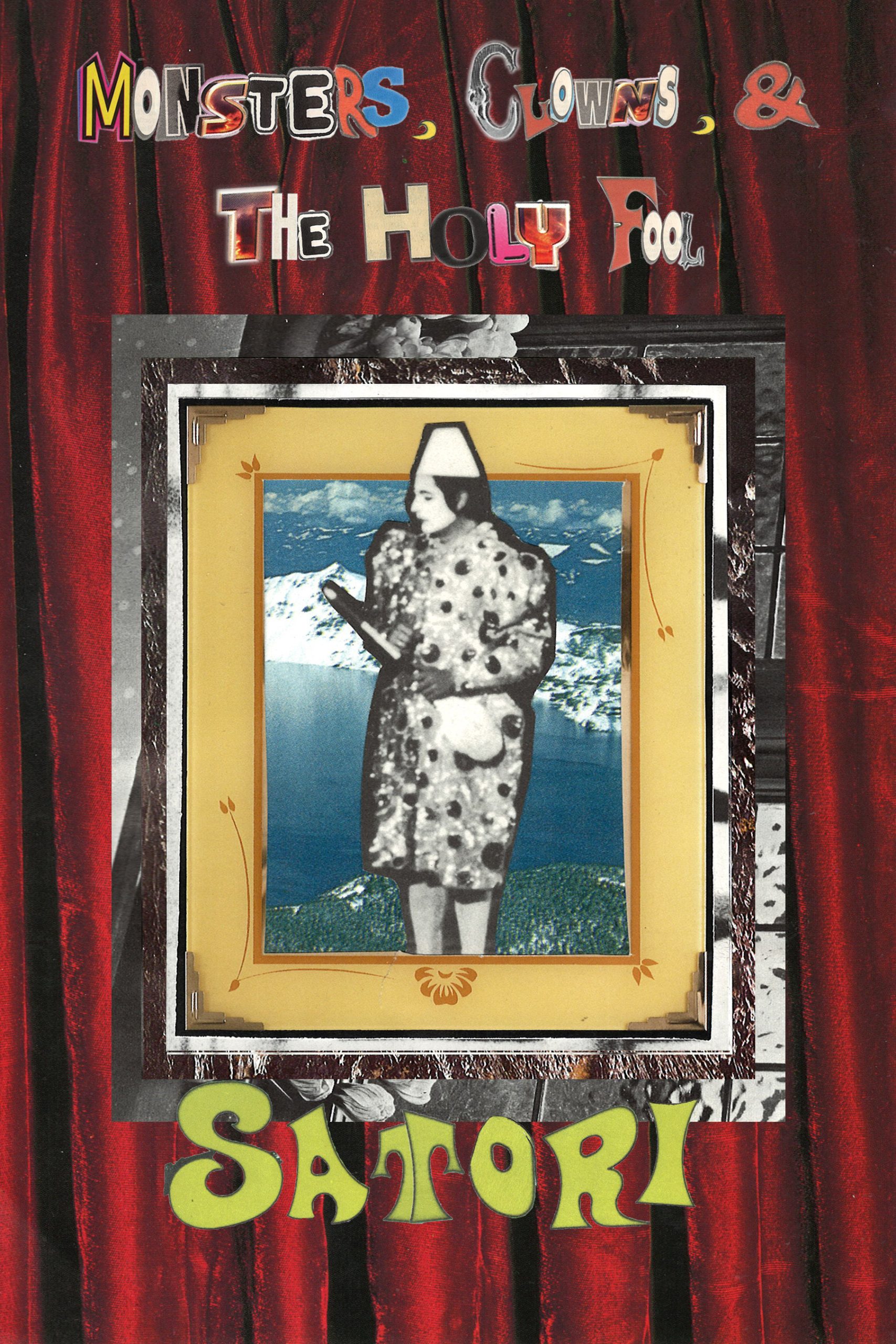
Since making their publishing debut in 2024, local independent arts magazine and press, Raging Opossum, has sought to distinguish itself through gathering emerging voices that share a tender-punk aesthetic and DIY sensibility. In late October the Opossum team will celebrate the release of their sixth full-length publication, Monsters, Clowns, and the Holy Fool, by emerging author Satori. This collection feels resonant with this emerging house style, while adding a fresh, fiercely feminine perspective to the subjects of family, trauma, embodiment, and contemporary spirituality.
The poems, stories, and occasional letters that comprise Satori’s first full-length collection gently press readers to consider the limits of compassion when faced with a world in which monsters and saints come wearing the same faces. Satori balances a voice wedged somewhere between the confessional poetry of Sylvia Plath and the mystic preoccupation of contemporary writers like Elissa Washuta (author of White Magic).
“Please forgive me for saying this, Daddy…but I want you to picture yourself dying young— / beer belly up in your casket” the speaker pleads in “Enigma.” The poet's voice is at its strongest when speaking directly to an absent beloved. Interrogating, relating to, and extending grace to those who haunt the skeletal narrative of the collection. Occasionally, the poet welcomes the concept of dialogue in the formal structure of poems such as “The Knife” and “Un Conversation Avec Mon Pere,” and in doing so, the lyrical possibilities of the poet’s voice are expanded.
Broken into three sections named for the collection’s titular characters, the poems rush to subvert their own categorizations. “Monsters” is filled with unexpected tenderness, while monstrous beings are intermingled amongst the tragicomic figures of the second section, “Clowns.” In welcoming these subversions, the poet expresses a playful use of the archetypes and narrative devices a young person uses to make sense of the tribulations of childhood.

The first few poems lean overly heavy and direct, perhaps weighing down the artistry with narratorial insistence. Despite this, over the course of the collection, the poet succeeds in complicating her own assumptions about family, love, and compassion, deftly inviting readers into the network of unloving and loving relationships that define a young person’s inner world.
At the heart of Monsters, Clowns, and the Holy Fool lies the question: how do I recover—how do I let go—of the loves that have made me? Satori offers moments of despair in near equal measure to moments of enlightened hope. This hope, more often than not, comes by way of the poet’s imaginative compassion for herself just as much as for others, such as in “Pin Cushion Daughter, ” in which she writes:
“yet I imagine—
someone might take me
into soft Cloth Mother hands,
hold me and see me for exactly what I am—
pin pricks, scars, and wear be damned”
It is with this hope that Monsters, Clowns, and the Holy Fool, brimming with grace for mothers, lost little girls, wayward fathers, and men down on their luck, offers a gentle way through the carnival of contemporary love.
Monsters, Clowns, and The Holy Fool will be available for purchase through the Raging Opossum Press website and at the official book launch event October 28, at the Whistler in Logan Square.
Tori Rego is a writer from Charleston, South Carolina. She currently lives in Chicago where she co-hosts the monthly reading series Written on a Napkin. Her poetry chapbook Briefly, Gently was a finalist for the Chicago Reader's award for Best New Poetry Book by a Chicagoan in 2024. A full list of her published work can be found on her website at torirego.com.
