
Karen Lewis was a teacher, labor leader, and president of the Chicago Teachers Union (CTU)—among many other things. Reading through I Didn't Come Here to Lie: My Life and Education (Haymarket Books), it’s hard to believe a person so lively, committed, and driven could ever die. Sadly, five years ago this past February, Lewis did indeed pass—but not before sharing her story with writer, historian, and professor Elizabeth Todd-Breland.
Todd-Breland is an educator herself, teaching US and urban history at the University of Illinois at Chicago. While performing research at the Chicago Teachers Union for her first book, A Political Education: Black Politics and Education Reform in Chicago since the 1960s.she was asked to host a lunch-and-learn session for the staff. She first met Lewis at the event. Shortly after, Todd-Breland interviewed Lewis and used part of their talk in A Political Education’s epilogue. Later, Lewis and a mutual friend, editor Jill Petty, approached and asked Todd-Breland if she could help Lewis with writing her memoir. She agreed. Todd-Breland recalls her first talk with Lewis and Petty was supposed to last a half hour—an hour at most.
“We blew past that,” she recalls. “The stories poured out of her, and each one was more profound than the previous. She was an amazing storyteller. Jill and I were like, ‘Oh, this book is going to write itself.’”
Lewis’ life was certainly storied. She grew up in Hyde Park and attended Kenwood High School, where she got her first taste of activism. In 1968, she joined the Black student movement demanding more educational resources, more Black teachers and administrators, and for Black history courses to be taught in Chicago’s schools.
“She’s 15, engaging in organizing that's taking her around the city, having her engage with the Black Panther Party at that time,” says Todd-Breland. “These were formative moments in her own personal and political development; to be a part of those struggles.”
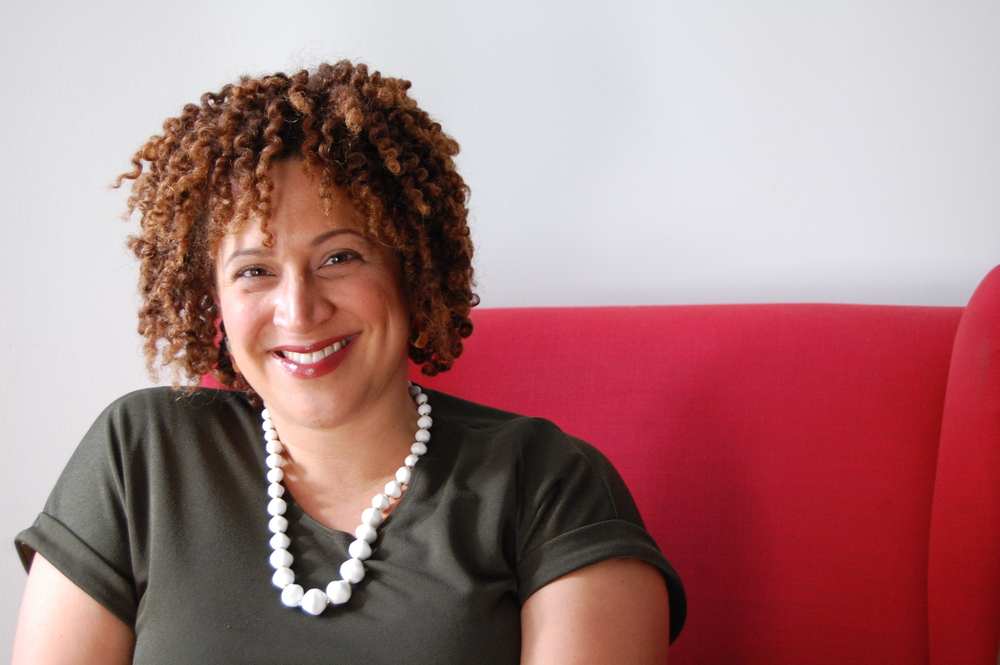
Lewis later attended Mount Holyoke College before transferring to Dartmouth. After graduation, she lived in moved around before choosing to pursue a teaching career. Returning to Chicago, Lewis taught chemistry for over 20 years, teaching at Sullivan and Lane Tech College Prep High Schools and King College Prep. She joined the CTU in 1988, and continued to organize, build coalitions, and become more politically active in support of her fellow educators and Chicago’s schools. Serving as CTU president from 2010 through 2018, she led the historic 2012 teachers strike, putting her on the national stage. Soon, others sought out her advice and counsel.
“People were reaching out from all over the world, asking, ‘How did you push back against privatization of the public sector?’” Todd-Breland says. “And you saw it take off from there, you know, Red for Ed strikes and this larger, militant, teacher organizing happening all over the country.”
While many respected Lewis, she had her adversaries. In particular, former Chicago Mayor Rahm Emanuel, with whom she frequently (at times, almost literally) butted heads. Lewis’ book mentions the ex-mayor’s propensity to curse out and bully anyone who opposed him. Not the best tactic to use on a long-time educator. Lewis refused to let such behavior slide. Asking Todd-Breland what Lewis really thought of Emanuel elicits a diplomatic response.
“In the book, she talks about understanding him as being, ultimately, a kind of transactional politician, and by understanding that you could figure out how to move forward or better understand him, at least.” She says. “But they did have a contentious relationship, and it started contentious early.”
Originally, Lewis planned to write the book herself, with Todd-Breland providing context, and “a historian’s perspective.” Plans changed in 2017, after Lewis suffered a major stroke. Lewis could no longer write, but could still talk, so Todd-Breland conducted long interviews with her.
“We did over a dozen of those between 2017 and 2020,” she explains, “ur last one was in person, actually, right before the pandemic shut things down.”
Lewis spent her final months in a skilled nursing facility, preventing in-person visits. Her condition made calls and other means of communication difficult as well. She died February 7, 2021. Even before then, Todd-Breland had fully assumed writing duties. Ultimately, while Todd-Breland is I Didn’t Come Here to Lie's author, every effort was made to keep the story in Lewis’ words and voice. Fortunately, the historian had much to work with .
“I was very grateful a lot of the content I had at that point was about her personal life. Things I couldn't have found out otherwise, there were some gaps, though, in the narrative, which were largely from her professional life and public-facing work as union president in those years.” She worked with resources like Lewis’ monthly CTU newsletter column, recordings of her speaking at events, and other materials.
Unsurprisingly, as an educator’s tale, Todd-Breland believes Lewis’ story has much to teach us.
“ asking three questions that led strategy. Does whatever we're about to do unite us? Does it build power? And does it make us stronger?” She continues. “And I think in this moment, the fight against authoritarianism in our country, the fight against fascism in our country, the need to stand up for those who have the least—those questions and her approach to creating multi-racial coalitions and building solidarity are really important.”
I Didn’t Come Here to Lie: My Life and Education is available at bookstores and through the Haymarket Books website.
