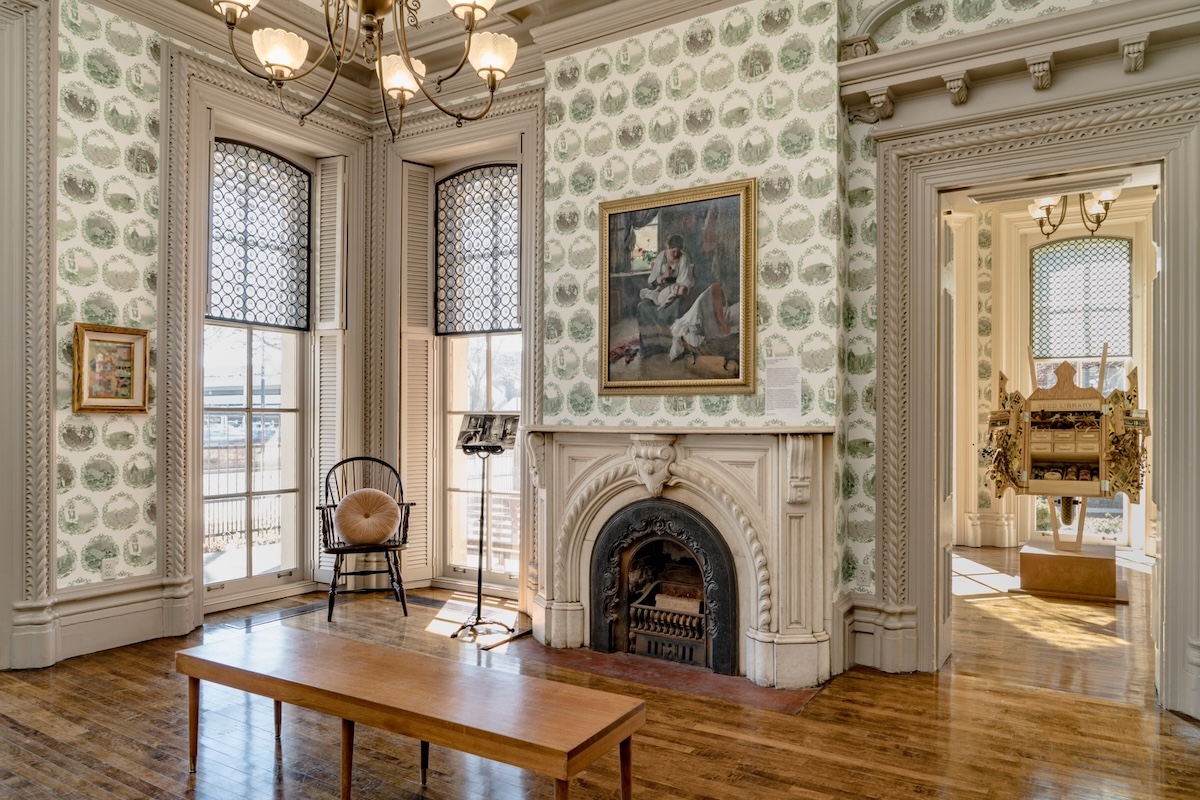
Hull House and its founder Jane Addams have long been recognized as pioneers in citizenship development and education for low-income and immigrant communities. A new book expands on that history with an emphasis on how arts and crafts work by Chicago immigrants was a key part of that story.
Radical Craft: Arts Education at Hull House 1889–1935, created by the Hull House Museum staff and distributed by the University of Illinois Press, presents that story in a large-format book that illustrates the exhibit of the same name that was on view at Hull House in 2024–25. The book acknowledges the importance of the work of Hull House’s co-founder, Ellen Gates Starr, who worked side by side with Addams. Gates, who was an arts educator as well as a bookbinder, was committed to the political and aesthetic ideals of the Arts and Crafts movement and had a vision of a “new society that would prioritize the creativity and humanity of workers.”
Addams and Starr, who met while students at the Rockford Female Seminary, toured Europe in 1988. While in London they were inspired by the success of the English settlement house movement; they decided to replicate it in Chicago. Both saw the arts as a tool for social reform for immigrants and immigrant artists.
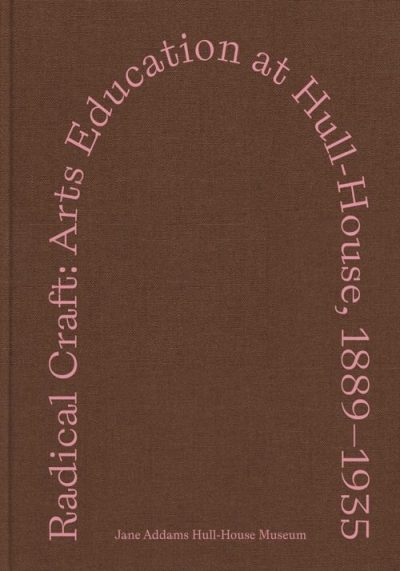
The book displays work created by these immigrant artists—paintings, textiles, ceramics, metalwork, and bookmaking. The book is illustrated with more than 90 photos—many of them large black-and-white vintage photos. Many color photos illustrate the craft work produced. The text comprises six essays and articles on the various arts and artists.
The opening essay by Annie V.F. Storr is “The Cause of Art Is the Cause of the People: Ellen Gates Starr and the Radical Legacy of Art Education at Hull-House.” The informative essay describes Starr’s education, early career and travels, and how Hull House enabled her to put into practice her belief in the importance of art for all people.
An essay by Liesl Olson describes Alice Kellogg Tyler, an artist known for her technical excellence, who was most often associated with Hull House during its early years. Tyler taught classes, contributed to exhibits, and painted portraits of Hull House reformers.
One of the longer chapters is by Fiona Maxwell, who writes on “The Old and the New: Immigrant Women and Intergenerational Connection at the Hull-House Labor Museum.” Her essay is followed by 22 pages of color photos of textile work from the weaving workshops.
One of the Labor Museum’s goals was lobbying for protective labor legislation to support workers in tenement factories. They also worked on increasing respect for immigrant artistry among the elites and American-born children of immigrant artisans, who often were not aware of the quality of their parents’ work.
As an example of intergenerational connection, Maxwell tells the story of Angelina, a young workingwoman, who did not want to be seen entering Hull House with her immigrant mother. She was shocked when she learned later that her mother was demonstrating Italian hand-spinning methods to an admiring group of women. Jane Addams advised her that she needed to appreciate the old-country talents of her mother, as well as helping the older woman learn the ways of the new world.
A seventh section, edited by Matthew Randle-Bent, is made up of three essays by Ellen Gates Starr. The first is titled “Art and Labor” in which she talks about her beliefs in the Arts and Crafts movement (“Art must be of the people if it is to be at all”). A 1917 essay is titled “Why I Am a Socialist.” In the third essay, Starr relates her experience learning the craft of bookbinding from an expert craftsman in England and using those skills to establish the Hull House Bookbindery, where she taught small classes. She was able to teach only three students at a time because the process was time-consuming and the materials were very expensive. Examples of the bookbindery work were included in the Hull House Museum exhibit and are pictured in the book.
The book is highly informative on the early years of Hull House as well as its emphasis on crafts and artisans. My main critique of the book is its design: Too many pages are printed with white text reversed out on black, which soon becomes hard to read. I know graphic designers like to create a dramatic look with white type on a black background, but they should restrain themselves from doing this for more than short passages of text.
Radical Crafts: Arts Education at Hull House: 1889–1935 is distributed by the University of Illinois Press and other booksellers. The Jane Addams Hull House Museum is located in a historic building on the campus of the University of Illinois at Chicago.
This video provides a five-minute overview of the Radical Crafts exhibit.
Support arts and culture journalism today. This work doesn't happen without your support. Contribute today and ensure we can continue to share the latest reviews, essays, and previews of the most anticipated arts and culture events across the city.
