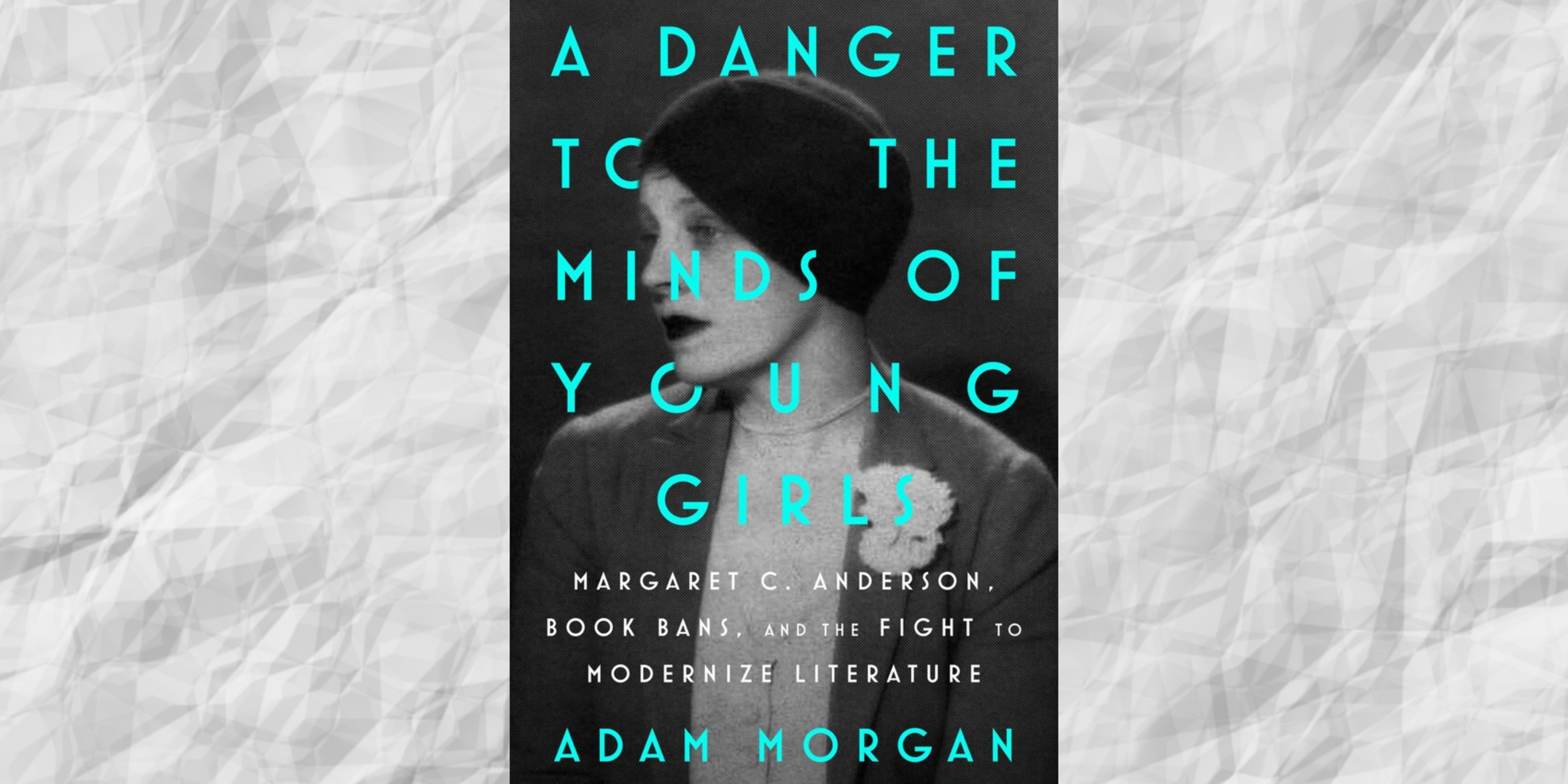

In the back of my mind, I thought someone would surely write about the inestimable Margaret Anderson: editor, bohemian extraordinaire, and LGBTQ+ icon. Some day. And now someone has, Adam Morgan.
Morgan is a journalist and cultural critic who lives in North Carolina. But for a decade he lived in Chicago. Inspired by Anderson’s influential The Little Review magazine, Morgan founded his own literary magazine, Chicago Review of Books and was a frequent contributor to Chicago magazine and the Chicago Reader.
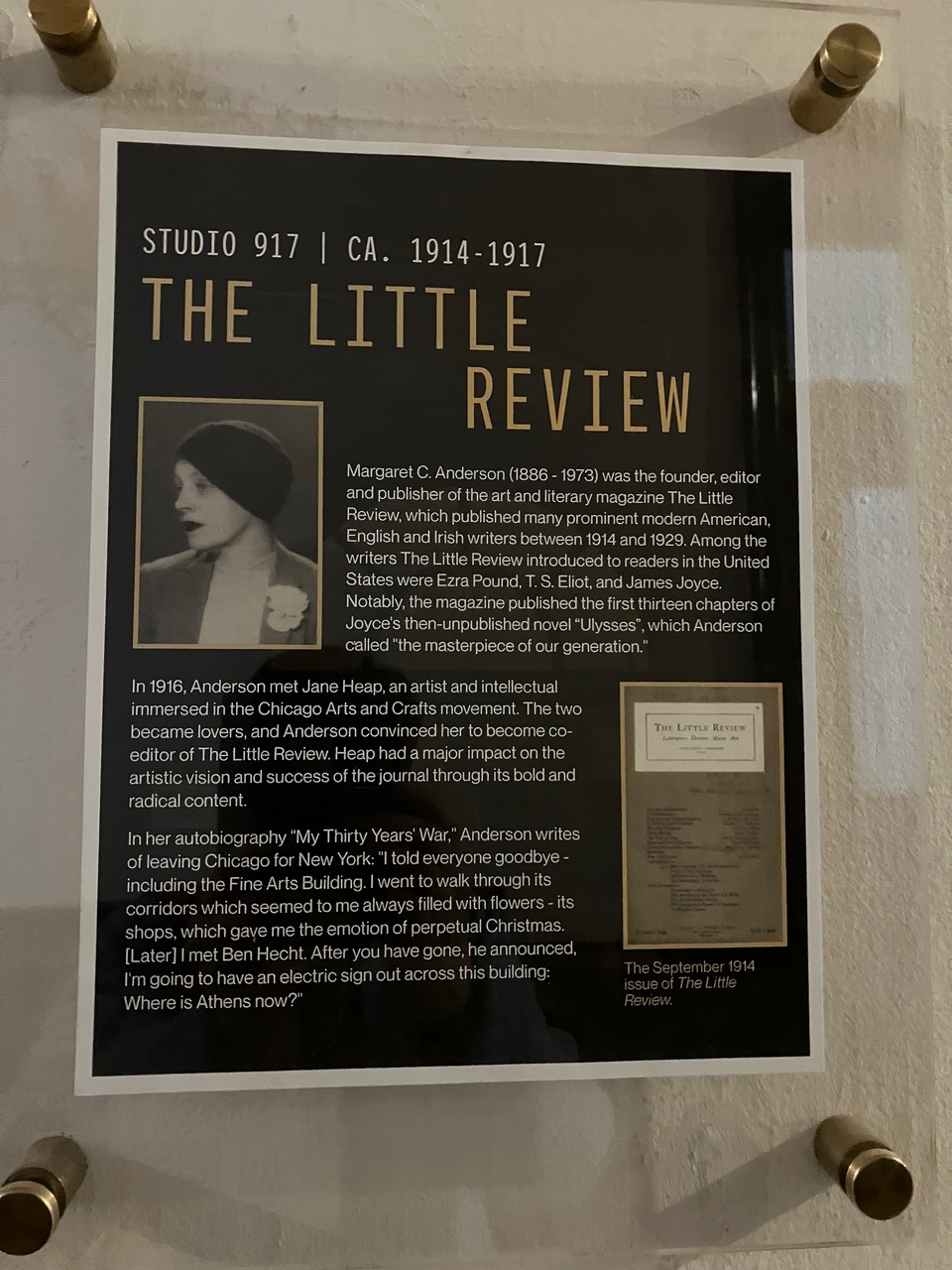
Who is Margaret Anderson? Even in Chicago she is not as well-known as she should be. Some would even say she has been forgotten. Anderson was the founder, editor, and publisher of the avant-garde little magazine, The Little Review. Most famously, The Little Review was the first publication to publish excerpts of James Joyce’s Ulysses. However, Anderson was more than an editor. She was a glittering figure in Chicago’s literary world during the period before World War I. Morgan captures her effervescent spirit here in his excellent, and strangely timely, biography.
Anderson was famous for her beauty and style as well as her fierce independent streak and idiosyncratic ways. She owned one suit: an eggshell blue georgette blouse she washed every other night by hand. She was, most everyone agreed, “irresistibly beautiful.”
Anderson was born in 1886 in Indianapolis, but she never expressed much joy toward her hometown. Instead, she looked to the city by the big lake. Chicago loomed large in her imagination. Anderson especially loved Chicago’s rich cultural scene, and Orchestra Hall, as it was then called, was one of her favorite places. With her sister Lois in tow, they stayed in a YWCA Hotel apartment, a short walk away. Their “hideous” room was made more livable by the presence of a Steinway piano, “extravagant” rugs, and luggage ordered from Marshall Field’s. Margaret may have been dirt poor—she and her sister survived on an allowance from their parents—but she certainly knew how to live.
She started her career in Chicago. One of Chicago’s many newspapers around at that time, the Chicago Evening Post, hired her as a freelance book critic. She became the assistant of Francis Fisher Browne, the owner of Browne’s Bookstore and the editor of the most influential literary magazine in the country at the time, The Dial. Both the bookstore and the magazine were in that magnificent 10-story edifice, the Fine Arts Building on Michigan Avenue. When she tired of Browne—he had attempted to kiss her—Anderson looked elsewhere for work. Clara Laughlin, a prominent literary figure in town, asked her to serve as the literary editor of another magazine, The Continent. But when Anderson praised Theodore Dreiser’s Sister Carrie, the magazine’s conservative Presbyterian readers complained. Laughlin was not pleased. As Morgan notes, she asked Anderson to stop editorializing but rather to just state the facts.
“What facts?” Anderson asked.
“Very simple,” replied Laughlin. “When a book is immoral, say so.”
Flummoxed, Anderson asked, “How will I know?”
“That’s the one thing that everyone knows.”
Instinctively, Anderson knew she couldn’t stay much longer. So, one morning, writes Morgan, “sometime between midnight and dawn…”, she came up with a solution. She would start her own magazine.
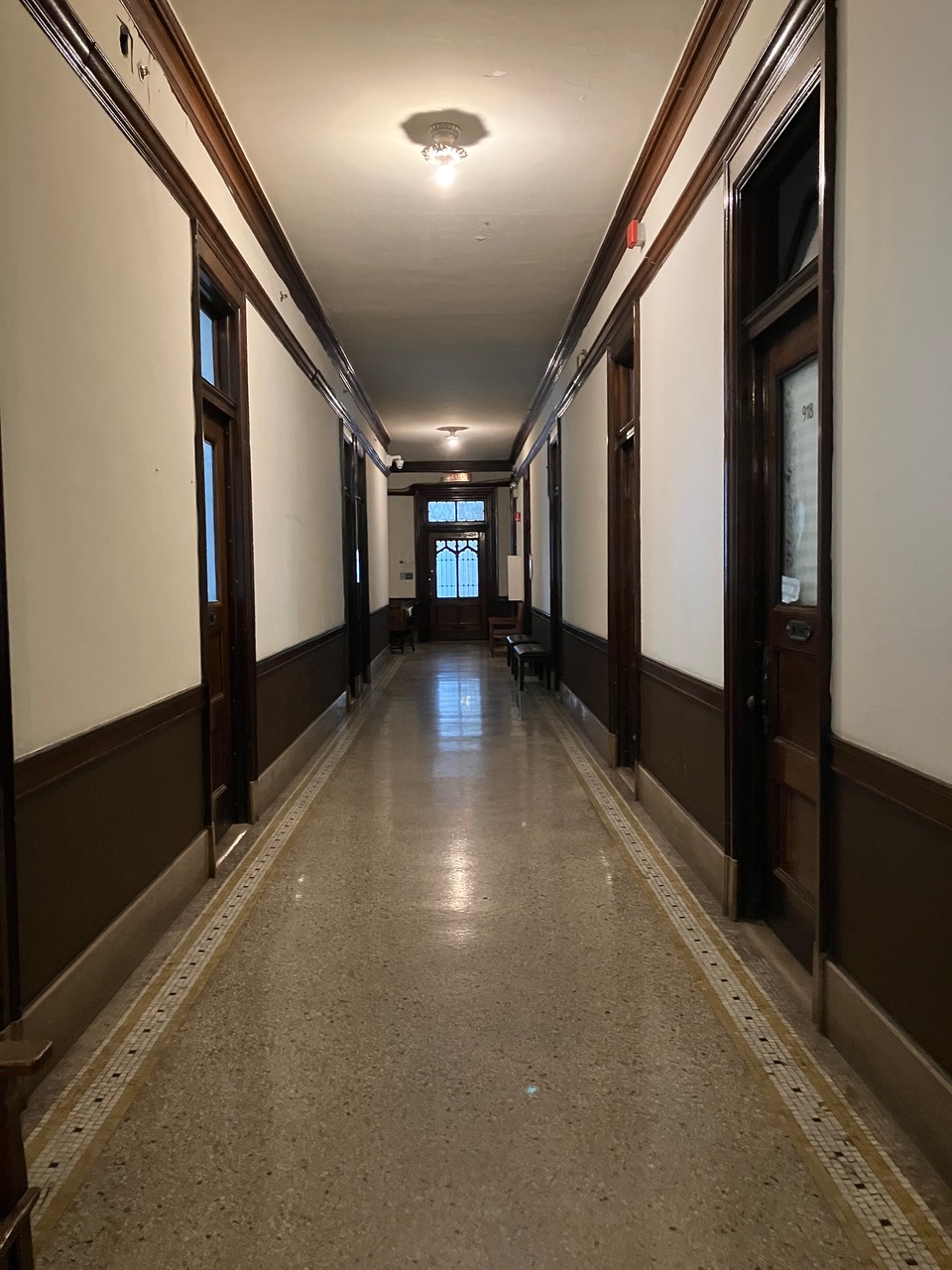
At first, she struggled to come up with a name. She considered calling it The Seagull before finally settling on The Little Review as a nod to the burgeoning little theater movement spreading across the country. She rented space in a studio on the ninth floor of the Fine Arts Building. Today a plaque honoring Anderson and her magazine hangs outside the door of Room 917.
The first issue of The Little Review appeared in March 1914. Morgan refers to it as a 68-page “who’s who of Margaret’s social circle in Chicago’s prewar bohemia,” including book reviews from her former Chicago Evening Post editor Floyd Dell; essays from Sherwood Anderson; and poems from Eunice Tietjens and Vachel Lindsay. She turned her Fine Arts studio into a literary salon. Carl Sandburg stopped by to read. Others came as well to chat and socialize: Edgar Lee Masters of Spoon River Anthology fame; the bohemian eccentric of bohemian eccentrics, poet Maxwell Bodenheim; and a young reporter by the name of Ben Hecht who was instantly smitten with the unattainable Anderson.
As Morgan points out, Anderson’s finances were precarious at best. (Much of the time, The Little Review was on the verge of bankruptcy.) Always partial toward the beauty of Lake Michigan, at one point she lived on Ainslie Street in Uptown where, she wrote, “the lake filled every window” of her apartment. She briefly lived in Lake Bluff, but when she was evicted because her landlord heard she was socializing with the likes of Emma Goldman and Margaret Sanger, Anderson had to make other living arrangements even if it meant making drastic changes. Between June and November 1915, she and her disparate crew—includeing her sister, her nephews, and an African American cook—occupied five canvas tents on the beach between Ravinia and Braeside in Highland Park. One of the tents served as her office, kitchen, and dining room. This is Margaret Anderson at her most unconventional and inventive—making the best of a bad situation and turning it into something just short of glorious. As she wrote, “We would roast corn over the camp fire, bake potatoes in the ashes and swim in the early morning, by moonlight….We dined under the evening sky and slept under the stars.”
Of course, their idyllic life on the beach couldn’t last forever—the cold Chicago winter was rapidly approaching—so she moved again with her staff and blended family, this time to a house on Indiana Avenue subsidized by “an affluent Chicago socialist named Wentworth,” says Morgan. She also rented a smaller, and thus cheaper, studio on the eighth floor of the Fine Arts Building.
Her Chicago days ended when she decided, for the future of the magazine, to move, with fellow editor and partner Jane Heap, to Greenwich Village, the capital of America’s bohemia. Here they found a studio on 14th Street in the basement of a Victorian mansion. In her new literary haunts, Ezra Pound became the magazine’s foreign editor. Her contributors included some of the best of the best: T. S. Eliot, Wyndham Lewis, Amy Lowell, H.D., Djuna Barnes, Malcolm Cowley, and a young Irishman, James Joyce.
It was the unassuming Joyce who changed the trajectory of Anderson’s life and career. The backstory behind the serialization of Joyce’s Ulysses forms the heart of Morgan’s New York segment. Along with the Chicago section, it is one of the highlights of the book. In July–August 1920, Anderson published an installment of the scandalous “Nausicaa” episode (the one with Gerty MacDowell and Leopold Bloom on the beach) during the height of the Red Scare and the so-called Palmer raids when federal agents arrested thousands of “radical” immigrants in cities across the country. Censorship was in the air.
In October 1920, Anderson was arrested and charged with a felony for publishing Joyce’s “filthy, indecent, and disgusting” work in her magazine and distributing copies of it through the US postal system. For their literary efforts, Anderson and Heap went to trial on Valentine’s Day 1921 and were found guilty of obscenity charges, each levied a fine of $50, “the equivalent of nearly $900 today,” writes Morgan. But with times changing, Anderson’s efforts would not be in vain. More than a decade later, in December 1933, a federal judge ruled Ulysses to be no longer obscene. Shortly thereafter, Random House published the authorized US edition in January 1934. (Sylvia Beach of Shakespeare and Company had already published the first edition in Paris in February 1922.)
The final section of the book takes place in Paris, where Anderson finally meets the reticent Joyce face to face in Pound’s garden studio. Her impression of the writer who wrote the most notorious book in modern literary history was, to say the least, anticlimactic. He appeared “gentle,” she recalled, with an air of “kindliness.” He didn’t speak much, prompting Morgan to observe that these most famous of literary figures “couldn’t find the words to become friends.”
Anderson died of emphysema in France, in October 1973. She was 86.
With A Danger to the Minds of Young Girls, Morgan has finally set the unparalleled Margaret Anderson in the literary firmament where she has always belonged.
A Danger to the Minds of Young Girls can be found at most bookstores and the Simon and Schuster website.
Support arts and culture journalism today. This work doesn't happen without your support. Contribute today and ensure we can continue to share the latest reviews, essays, and previews of the most anticipated arts and culture events across the city.
