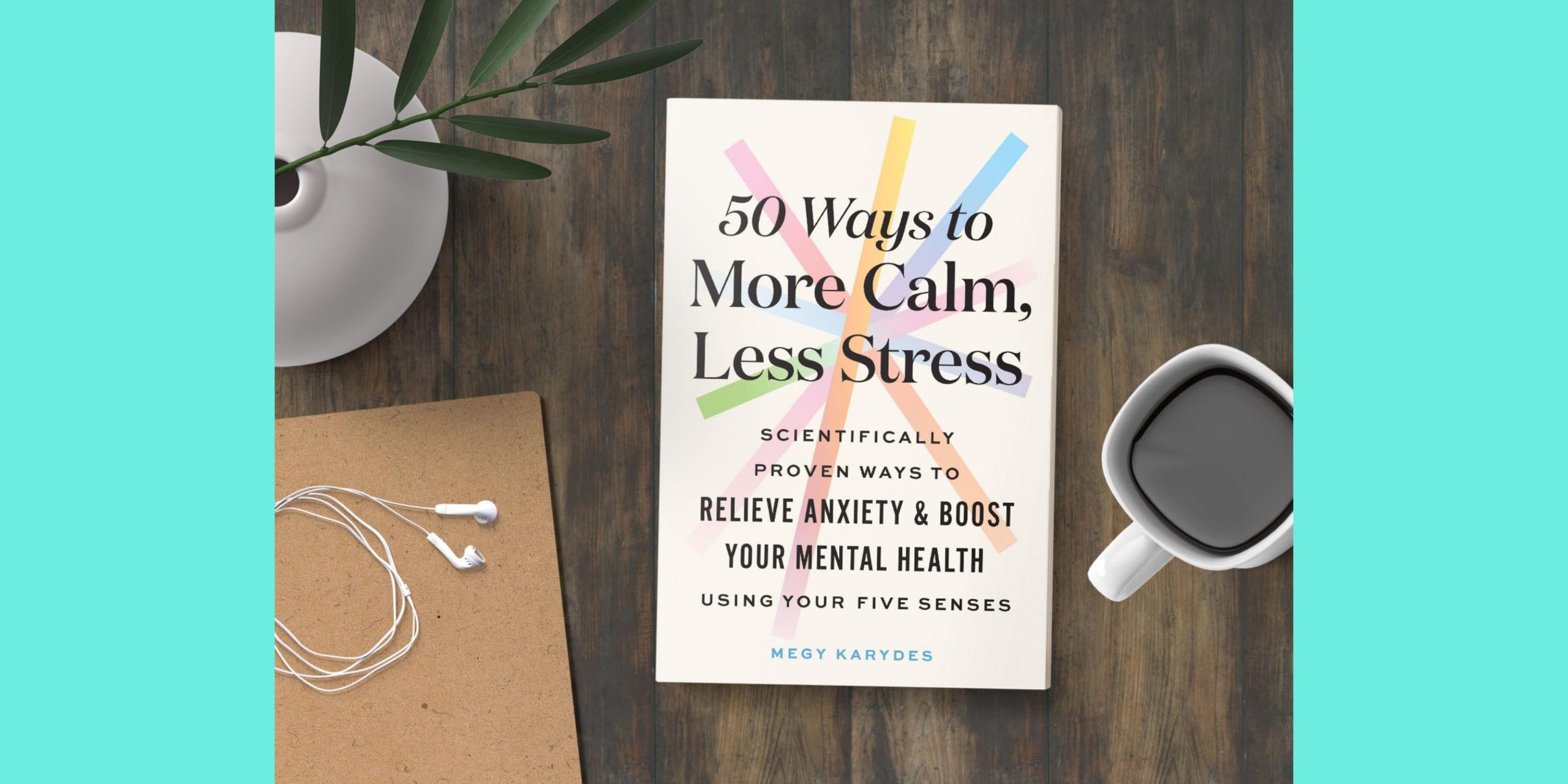
When Chicago-area author Megy Karydes first wrote the proposal for her book 50 Ways to More Calm, Less Stress, “doomscrolling” had yet to appear in the dictionary. It would soon become a commonplace activity. It was 2020, a global pandemic was raging, and during the lockdown we turned our collective focus online.
Were we searching for answers, human connection, and hope? Maybe so. But instead, most of us engaged in Merriam-Webster’s definition of doomscrolling to the letter, spent “excessive time scrolling through online content (especially news) that makes one feel sad, anxious, angry, etc.”
50 Ways to More Calm, Less Stress: Scientifically Proven Ways to Relieve Anxiety and Boost Your Mental Health Using Your Five Senses was published in December 2023. Considering recent events and the constant deluge of doomscroll-able content available to us on a daily basis, Karydes’ book feels even more relevant now. It offers an antidote to our stress- and rage-inducing times, like an encouraging nudge from a friend to spend less time on social media platforms and more time on activities like walking in nature, enjoying your morning coffee, writing in a journal, or listening to your favorite album on vinyl.
On Tuesday, May 5, Karydes partners with Read and Run Tours for an experiential evening of workshops themed around her book, including floral therapy with Vanessa Flowers of Flowers Girls Meet, bookbinding with Regin Igloria of North Branch Projects, and walking and nature therapy with Anthony Scott of Chicago Gents Who Stroll and nature educator Bonnie Tawse. I asked her about 50 Ways to More Calm, Less Stress leading up to this special evening.
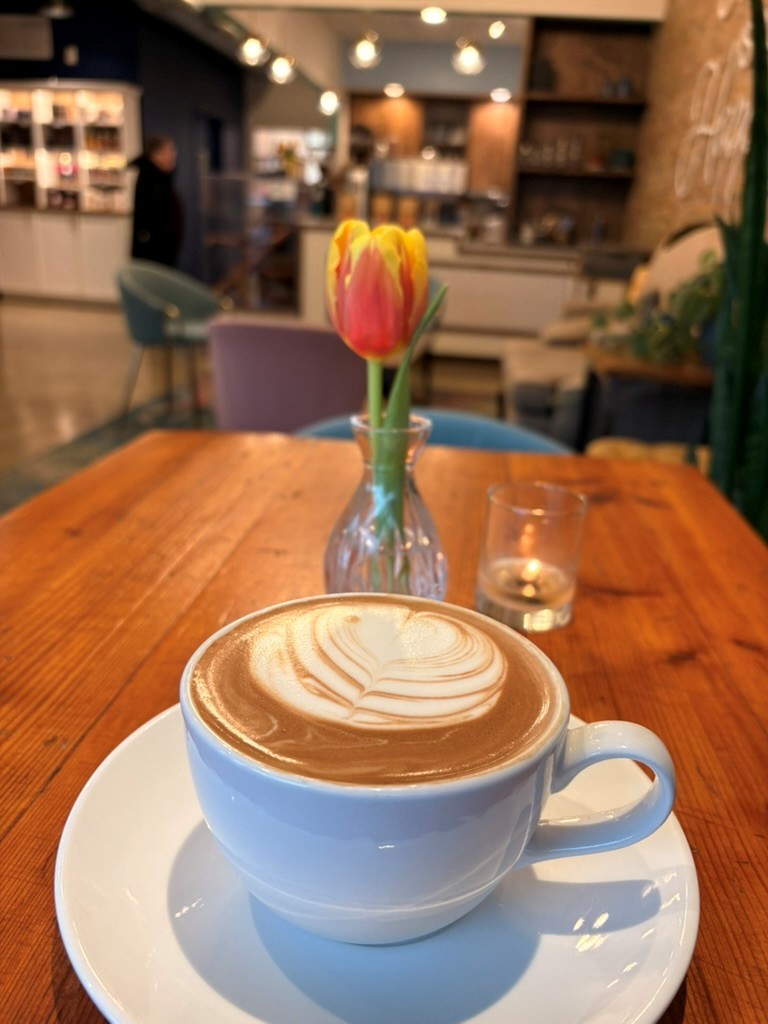
(right) Enjoying a morning coffee, photo by Megy Karydes.
Can you speak a bit about the experience at the Morton Arboretum that made you rethink the types of stress-reducing practices you (and all of us!) could incorporate into your life? How did that inform the direction of this book?
Prior to writing the proposal for 50 Ways to More Calm, Less Stress, I sought ways to add more calm into my daily life and I began researching methods. I had an opportunity to experience forest bathing at The Morton Arboretum and before then, I had never heard of this practice. Like many other activities in the book, I researched the activity to learn how and why it can help bring more calm or alleviate stress in our daily lives. Activities that were supported by research or science and cost-effective made the cut. It was important to me that the activities included in the book were as accessible as possible to readers.
I was surprised to learn I am already incorporating some of these practices (daily morning coffee, use of candles, finding the pleasure in a cleaning session) even though I don’t consider them to be part of my mindfulness or mental health routine. What was most surprising to you as you spoke with the experts cited throughout this book, in terms of what “counts” as a stress-reducing activity?
This is a great question and I think a lot of people don't realize they already do many of these things, but don't call it out as self-care or part of a mental health routine. Part of what I want people to take away from reading this book is the importance of being present. When I pour my morning cup of coffee, rather than gulp it down mindlessly because I'm in a rush (which many of us are the mornings!), why not just pause for five seconds—five seconds—take a deep breath to smell your coffee, let the warmth flow through your hands and just appreciate where you are at that moment? It doesn't need to be very long to have a long-term effect.
I never cared for washing dishes or folding laundry. But after writing the book, I approach both activities as an opportunity to take a beat, let the warm water wash over my hands as I wash dishes, enjoy the texture of my clean clothes as I fold them and put them away, that sort of thing. Does this sound hokey to some? Sure. I can see that. But I have found a way to make a chore more enjoyable and bring more calm into my life. The clothes have to be folded. The dishes have to be washed. Why not find ways to incorporate mindfulness in those activities rather than approach them with dread? That was one of the takeaways I learned from interviewing the experts.
There are so many ways we can incorporate pauses and deep breaths throughout our day. Even driving to and from work or errands can provide an opportunity to listen to an engaging podcast rather than scary news. One person I interviewed chooses to make grocery shopping more enjoyable by putting in her earbuds and listening to true crime podcasts!
Which of the activities in the book do you currently take part in on a daily or weekly basis, and why are they such an important part of your routine?
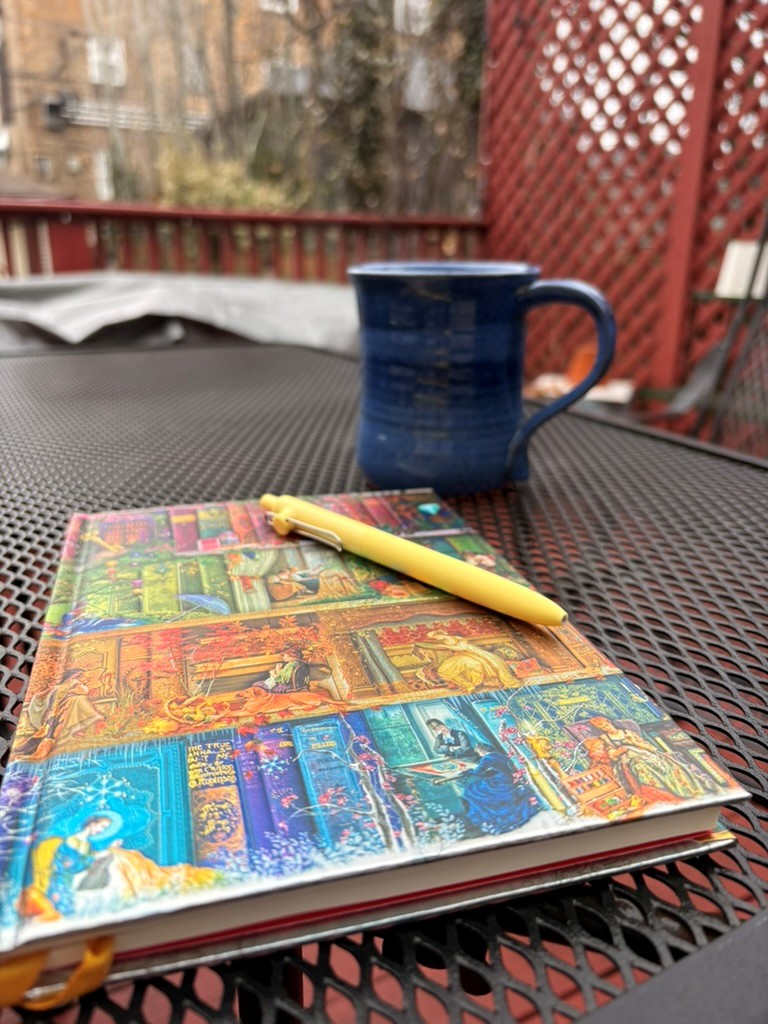
Every single morning, I begin my day with a hot cup of coffee and journal. Throughout the day, I make sure to get outside at least once, but usually twice or three times, to go for a walk. I also do strength training three times a week. In the winter, I turn on my light therapy lamp as soon as I wake up and I try to take warm baths at night. These are all nonnegotiables for me, daily and weekly. Part of the benefit, for me, is that all these activities have become habits, so it makes it easier to keep them going.
If someone truly wants to incorporate more calm into their daily life, connecting it to something regular and making it a habit will help. For example, maybe start journaling after you brush your teeth in the morning and go for a walk after you finish eating lunch. Brushing your teeth or post-lunch becomes the trigger to remind you to do the thing you want to do. After a few weeks, it will become the default.
If you could add one more activity to the book, perhaps something that you’ve come across in the past three years, what would it be?
Travel. There is something about leaving your comfort zone and exploring new territory, foods, people, and learning about a new area or culture. It also brings your life into perspective. The world is vast, and it's a gift to explore it. You don't even need to hop in a car or on an airplane. It could be as easy as visiting a new town nearby or trying a new cuisine. So much of our anxiety is based on fear and the unknown, and when we allow ourselves to be more open and learn about different cultures or experiences, we chip away at that fear.
What is your first piece of advice for someone who says they are too busy or stressed to make time for mindfulness or relaxation?
Everyone has one minute in a car or while taking a shower or waiting in line for their coffee to take in a deep breath, hold for four seconds and exhale for four seconds, and repeat this a few times. Turning on a light therapy lamp in the morning if you're prone to the winter blues takes no time. Taking a pause right before you gulp down your coffee or tea in the morning takes a few seconds.
More importantly, find that pocket of time that you can incorporate something that brings you calm. If you have a dog, focus on the plants or trees around you as you take your dog for a walk rather than listen to music or talk on the phone during your walk. If you have to drive regularly, perhaps you can add a calming app to your drive rather than listening to something that makes you anxious. Go to bed 10 minutes earlier than you normally do and enjoy a physical book rather than watch another show and lose precious sleep time.
It's all about making it a habit but it has to be something you'll want to do and look forward to doing—because if it feels like you are adding another item on your to-do list, it won't work.
50 Ways to More Calm, Less Stress: Scientifically Proven Ways to Relieve Anxiety and Boost Your Mental Health Using Your Five Senses is available at independent bookstores and through the Sourcebooks website. Tickets for the Read & Run Tours workshop event with Megy Karydes are available here and include a copy of the book.
Support arts and culture journalism today. This work doesn't happen without your support. Contribute today and ensure we can continue to share the latest reviews, essays, and previews of the most anticipated arts and culture events across the city.
