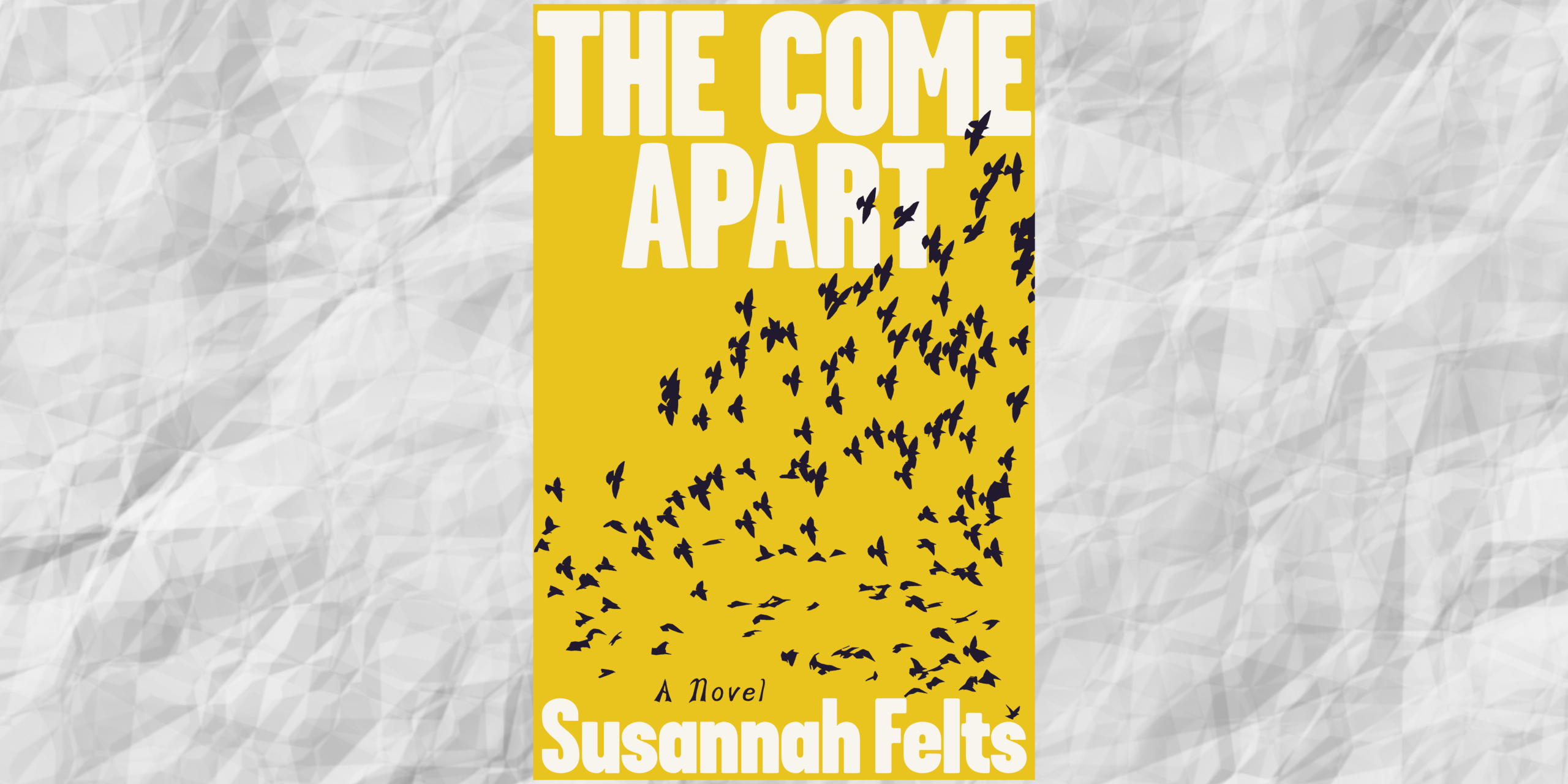

The Spinning Birds is a Chicago indie rock band, with a front-woman singer and songwriter. Susannah Felts’ new novel, The Come Apart, starts with the story of the band’s sophomore album, Murmuration, describing their effort to record and promote it by touring the Midwest in a beat up old van.
Maggie Corbin is the band’s front-woman, and she and her romantic partner, Matt Turkish, write the songs. They live in Ukrainian Village. The four band members have a tight relationship that Maggie values. She likes touring with “the boys”—Matt on lead guitar with Brian (Dogtreat, for reasons too complex to explain) on percussion and Clint on bass.
Susannah Felts is a writer who lived in Chicago for 10 years before moving back home to Nashville. Her book has several themes. It’s certainly a woman’s story (because how many rock bands have a female front-woman with three guys backing her?) although I wouldn’t exactly call it feminist. And it’s a story that compares Maggie’s newer life in Chicago with the old life in Nashville that she seems to cherish—and returns to. But “Chicago is in the rearview; always visible there,” as she says near the end.
It’s a story about career choices. Maggie loves her music and she thinks she has a talent for songwriting. But baking becomes another option. While she’s in Chicago, she works at a diner called Holfax, west of Western Avenue in U-Village. Owner Pete Holfax is a former musician and tolerant of his musician-employees’ schedules. Maggie does a little bit of everything at Holfax’s, like most employees do. She also sometimes helps Emily, the baker, an English woman who learned to bake by her nan’s side in Sussex, and was hired to bake splendid scones, cookies and bread. By working with Emily, Maggie begins to gain an understanding and love of the baking process and starts baking on her own at home.
Felts tells the story in short chapters that define her life back and forth between Chicago and Nashville in 2008 through 2010. Each chapter is titled with her location and the date but they’re not in chronological order. The first chapter is Chicago, March 2008, and the last one is Nashville, May 2010. Between those dates, we live through a lot of ups and downs in Maggie’s life.
Maggie thinks in lyrics. Many things she sees and responds to end up as scribbles in the notebook she always carries. The book has many fragments of lyrics, set in a font that suggests handwriting. Some of them turn into songs, usually written with Matt, until Maggie leaves the band and parts company with Matt. The lyrics always tell us what Maggie is thinking, what inspires her—the weather, the lakefront, birds, smells, sights and sounds of wherever she is.
Felts inserts partial transcripts of Maggie’s interview with a Chicago music journalist throughout the book, mainly highlighting her responses to the interviewer’s questions on her songwriting and her relationship with the band.
In February 2010, Maggie drives back to Nashville in her old Corolla with a loose bumper (duct tape works for a while). Her father, a former Nashville musician who had recently been working on a farm, died a few months ago. She’s still coming to grips with the loss. She’s advertised for a room on Craigslist and connects with an older guy, a musician named Frank, who has a room to rent and a kitchen where she can bake cakes and bread.
She begins to rebuild her life in Nashville. She bakes a cake for her mother Vanessa, a painter, and attends a showing of her new work. And she reunites with Jacob, a local musician she played with in their teenaged “baby band.” Jacob now has an organic farm where her father was working before his death.
The raingods dump a huge flood on Nashville in June 2010, about the time Maggie is beginning to feel settled. She bakes for a front-porch fundraiser for flood victims at Frank’s hose with music and neighborly food donations.
The book’s title becomes clear on one of the final pages. Sitting on his front porch with his beloved cat Mumbles, Frank tells Maggie he ”’bout had a come apart” when Mumbles went on a walkabout for four days. “I was worrying that you’d left us for good. You gotta stop doing that,” he tells the cat and Maggie.
Felts tells an interesting story and brings it alive with details from her two homes and her work. While she’s in Chicago, she adds local cred by noting bus routes, El platforms, windy street corners and lakefront views. Her baking is filled with details about scooping and leveling off flour, chunking up butter to make shortbread. “Butter wrappers loll about, sugar gritty beneath her feet, a scraped bowl in the sink, flour everywhere….”
Felts is better at those details than at creating lifelike characters. Maggie feels real and I can appreciate her constant interior monologue and flow of emotions about music, work and Matt. Frank also feels like a real person, with details on his music, his life and that cat. But most of the other characters are loosely sketched and barely become real.
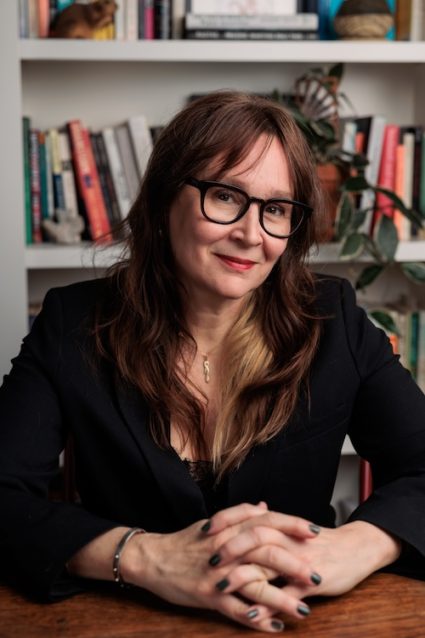
While living in Chicago, Felts earned an MFA in writing from the School of the Art Institute, where she taught creative writing in the undergraduate program. She’s the co-founder and co-director of The Porch, a Nashville literary arts organization for writers and readers that offers classes and literary events. Her first book, This Will Go Down on Your Permanent Record, a young adult novel, was published in 2008.
The Come Apart by Susannah Felts is available from the publisher or your favorite bookseller.
Did you enjoy this post? Please consider supporting Third Coast Review’s arts and culture coverage by making a donation. Choose the amount that works best for you, and know how much we appreciate your support!
