
Demystifying the significance of the old Chicago Reader for today’s young urbanites recalls illustrator Doogie Horner’s flowchart “How to Explain the Internet to a 19th Century British Street Urchin.” First, one must describe what an alternative weekly newspaper is, followed by an exposition on classified ads-based business models…as well as what the hell classified ads are. As for the concept of an off-line, hyperlocal, paper-based media entity with no connections to a hedge fund or thin-skinned billionaire…that may require a weekend seminar.
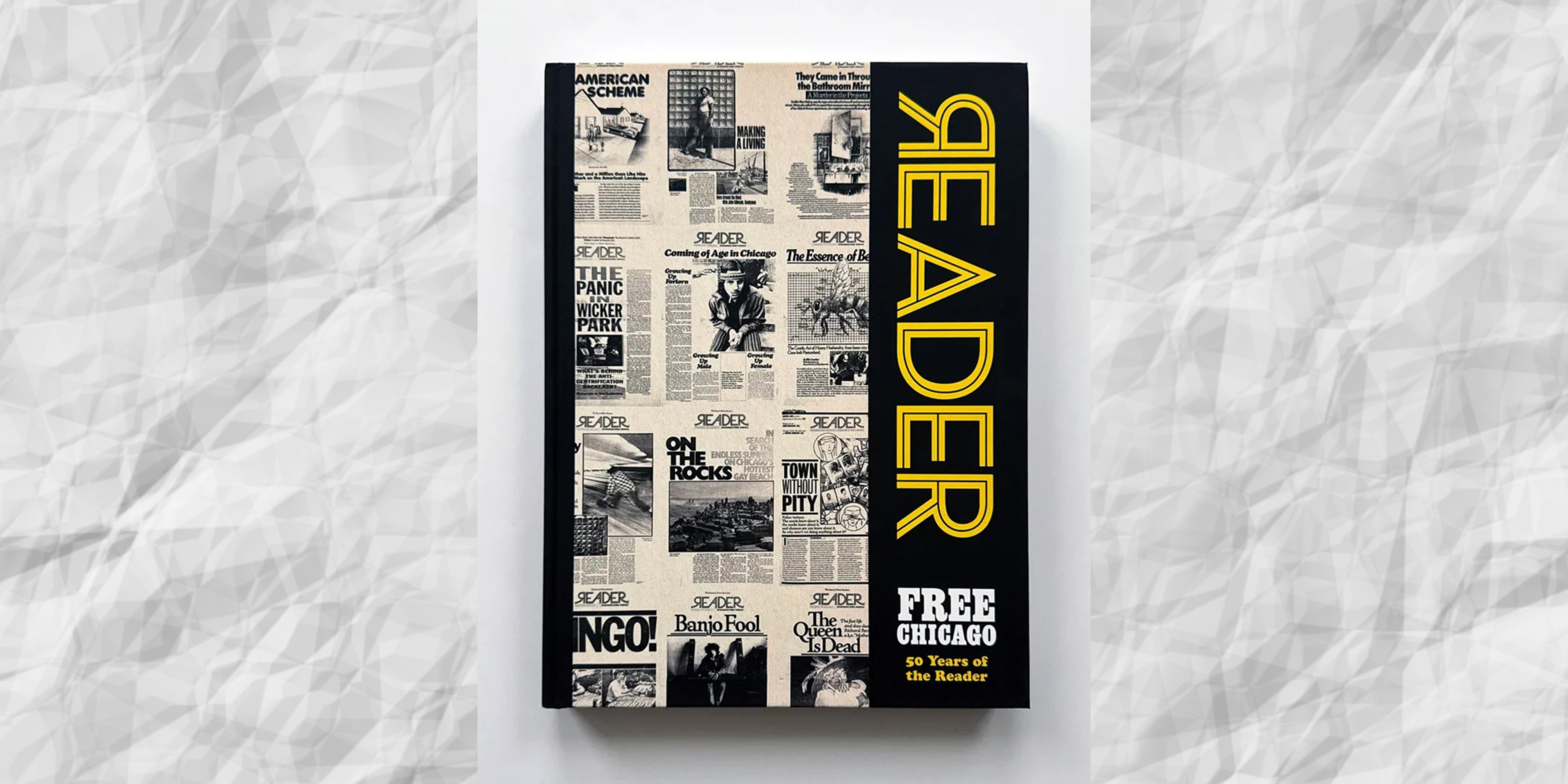
But the Reader exists and (mostly) persists. And now we have its first history and exegesis in Free Chicago: 50 Years of the Reader (Noisy Creek). But while un-young Chicagoans who once searched its pages for apartments and pre-Simpsons Matt Groening cartoons may gain an insight or two on a publication that figured heavily in their '90s/'00s hipster lifestyles, the book doesn't capture how the Reader managed to be both disposable and indispensable.
The Reader was in the right place at the right time. While other cities had and have similar local papers and magazines, the Reader was unique in that it was free from the beginning. First published on October 1, 1971, early issues were composed at the founders’ Kenwood and Rogers Park apartments. Known for its street-level-focus on Chicago, the Reader grew from a quasi-underground newspaper to a multi-sectional doorstop, dominating college commons, book store, and coffee shop foyers across town. A good chunk of the paper consisted of their bread and butter, classified ads: apartment listings, for sale ads, “matches,” adult services, and word salad from a cavalcade of kooks. The Reader had a staff and a few columnists, but was largely buoyed by fleets of freelancers covering the city’s politics, history, and wilder sides. (Full disclosure: I was one of them.) A fascinating story worth sharing, but Free Chicago falters in its presentation. I recall the advice repeatedly offered by a Reader editor as we quibbled over an article: “Show, don’t tell.”
For a book about the Reader, there’s little to read, per se. It opens with a tight history by one-time Chicago Tribune Metro editor Mark Jacob, and closes with a reflective rumination, “Epilogue: What Was the Alt-Weekly?,” by Christopher Hass, ex-executive publisher of In These Times (who also edited and designed the book). In-between are a few hundred images of past front covers and article first pages, accompanied by paragraphical memories of current and former Reader staff and contributors—musing, reminiscing, and otherwise telling the stories behind the stories.
But for a newspaper that prided itself on objectivity, an oral history doesn’t seem like the best approach. The book has a tendency to become the minutes of a mutual admiration society, offering hosannas for various authors, editors, and articles. Which is commendable. Camaraderie helped the Reader survive through tough times. But it gets repetitive. Sometimes the book feels like alternative grandma running a slideshow, recounting old stories that get bigger with every retelling. Some Reader pieces deserve to be recollected and feted, of course, like Jack Conroy’s grueling investigation of police torture and Ben Joravsky’s important if interminable “TIFs” columns. Just as much memorable fluff is talked about as well. Mince pies, anyone? And do you know the Reader once ran 20,000 words on bee-keeping? Bee-keeping! Can you believe it? You will after it’s mentioned several times.
The chatty format also creates weird tone shifts, going from the bitterness felt over the paper being bought and operated by a gauntlet of corporate squares, then suddenly switching to, say, jolly recollections of Mike Sula’s “I eat squirrels” article. (Relax, it won a James Beard award, and Ira Glass approves. It's not weird.) As a side note, the news and feature article memories dominate; in comparison, the paper's impressive history as an alternative comics showroom is sparse.
Talking…telling…about favorite articles and scruffy workspace memories creates a self-celebratory package. "Lissen here, kid, everyone worked their bones to the fingers to put out a weekly paper, see? Ink ran through our veins, we ate galley proofs for breakfast, and slept on newsprint rolls every night—and we never slept, see!?" But there’s little in the way of specifics. No inside baseball. No one disparages anyone (though various owners are lambasted for their corporate sins). You also get the sense the paper could do no wrong, with few spicy memories, controversies, or misfires. In this way Free Chicago runs a bit dry. And the material is there.
No one brings up the time the pre-Letters-to-Santa Steve Albini called Bill Wyman a “music-press stooge” for fanboying over “three pandering sluts” (his words) Urge Overkill, Smashing Pumpkins, and Liz Phair (though you will see not one but two cutesy photos of the Winnetkan chanteuse in the book). The Chicago Antisocial party column, a relic of early 2000s catty journalism, is only obliquely referred to by a Reader writer who appears unimpressed. For that matter, you won’t find the time they edgily titled my article about the Lucky Pierre art collective’s Swearline project “Dial M for Motherfucker.” It drew the wrong kind of attention at Libertyville’s public library, provoking both a town hall meeting and moral apoplexy in a town father. Alas, no one reached out and asked me to share my misty watercolor memories.
The book does one thing well. It recalls the period when even smaller local newspapers went from dominating the discourse to scrambling for relevance as the nascent World Wide Web gobbled up attention and income. Internet illiteracy may have dealt the biggest blow to the Reader. A few forward-thinkers in Free Chicago recall telling the old hands and higher-ups that maybe, possibly investment in this new Interconnected-Networks thing might be wise. Again, alas.
To be clear, the Reader was a very good thing for a very long time. It did right by me and legions of other freelancers. They were open to stories about anything and everything, covering the non-white, LGBTQ+, and freaky-deaky subjects the bigger local papers ignored. Most importantly, they paid well and on time—a quaint custom the forces of capitalism are trying to vanish along with independent journalism.
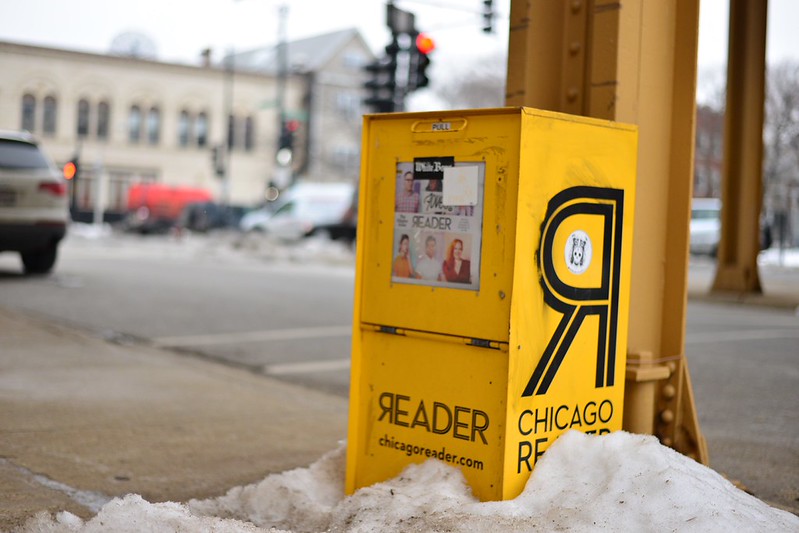
Free Chicago itself lacks punch in part because the Reader abides—albeit in a slick monthly format. The story hasn’t ended because grandma keeps mutating, and it's hard to miss something that’s not fully gone. No matter how hard you try to explain how the Reader was way-cool once, 21st-century street urchins will merely blink at you in befuddlement. Free Chicago, while a neat package, doesn't pull it off either.
Throughout the book we’re told what happened, the way the staff and their chums remember it happening, focusing on their favorite bits. You can’t begrudge people their nostalgia, but a better book might have avoided the coffee table format and anecdotes, offering (squirrel?) meat over memories. A Reader reader of all those legendary essays (though one wonders how well some have aged—see for yourself, many are online). Aside from an anthology, the Reader might be better served by a detailed, no-punches-pulled history. I imagine there are plenty of Chicago writers willing and able to write 20,000 words or more on the subject. Finding one unconnected with the Reader, however, might be downright paradoxical.
Free Chicago: 50 Years of the Reader is available at bookstores and through the Chicago Reader website.
