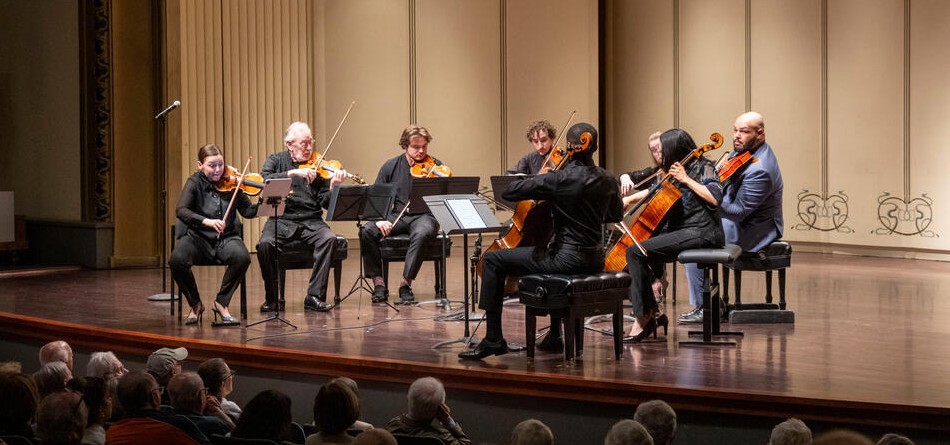

“Oh, the joy to being bathed in beautiful music,” I wrote while listening to Felix Mendelssohn’s Octet in E-flat Major in the Martin Theatre at Ravinia on Wednesday. At many times during this performance by the Juilliard String Quartet and the Isidore String Quartet, amazing sounds just washed over the audience, which was sitting in awe.
Originally the Juilliard Quartet was booked to be the sole performers. However, the Isidore Quartet was scheduled to perform at Ravinia on Sunday, and they agreed to stay a few more days to perform the Octet with the ensemble from whom they studied in New York. It’s also where they got their name: Isidore Cohen was an original violinist of the Juilliard String Quartet.
Written when he was just 16 years old, Mendelssohn’s Octet for strings is a towering work lasting over 30 minutes. As was the case Wednesday night, it’s a work that usually ends concerts. However, the piece that the Juilliard Quartet played to open the concert is an even bigger work that also typically ends concerts, Beethoven’s String Quartet No. 13 in B-flat Major, op. 130, from this master’s late period.
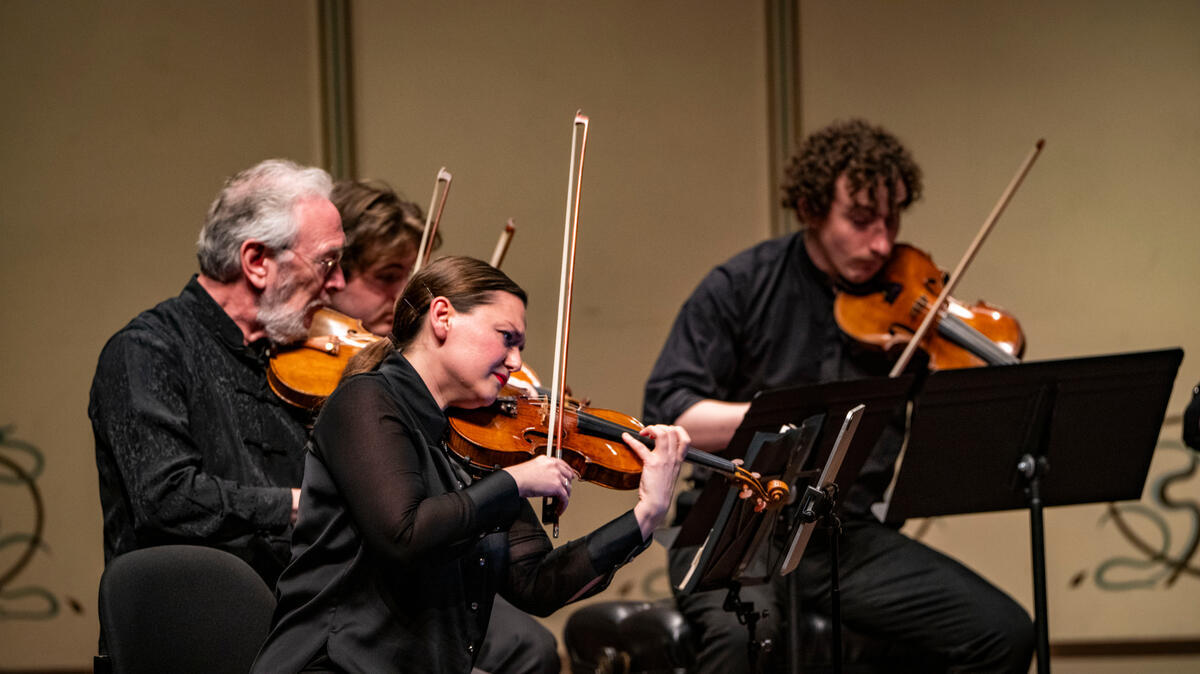
Before intermission, they followed it with a work the Juilliard Quartet commissioned, Jörg Widmann’s String Quartet No. 8, his third Beethoven Study. Here Widmann borrowed and cleverly expanded themes from Beethoven’s op. 130 and other works. Putting them on the same program was nice.
Unfortunately, to get all of this music into a single concert, they ignored most, if not all, of Beethoven’s repeats. It is easy to think that repeats are filler, but Beethoven’s use or omission of repeats was very deliberate. What was otherwise an excellent performance was missing something. This is an example of when less is not more. Two concerts would have been better. Having said all of that, this was still a very enjoyable evening. (Repeats in the Mendelssohn Octet were honored.)
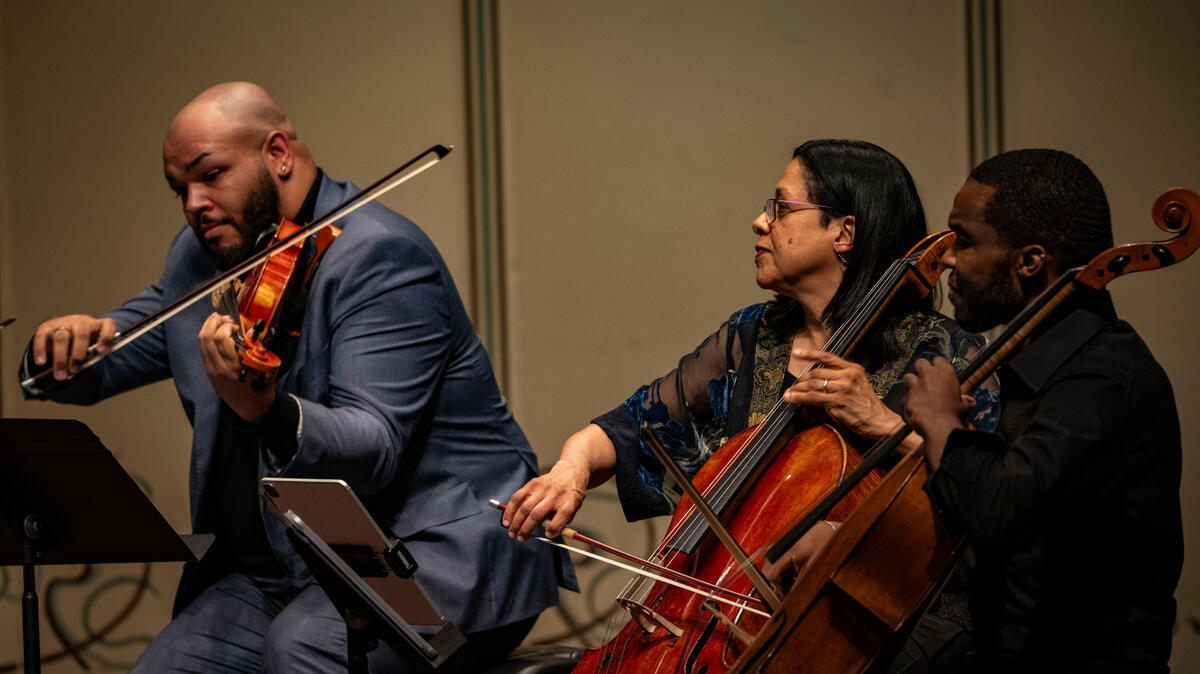
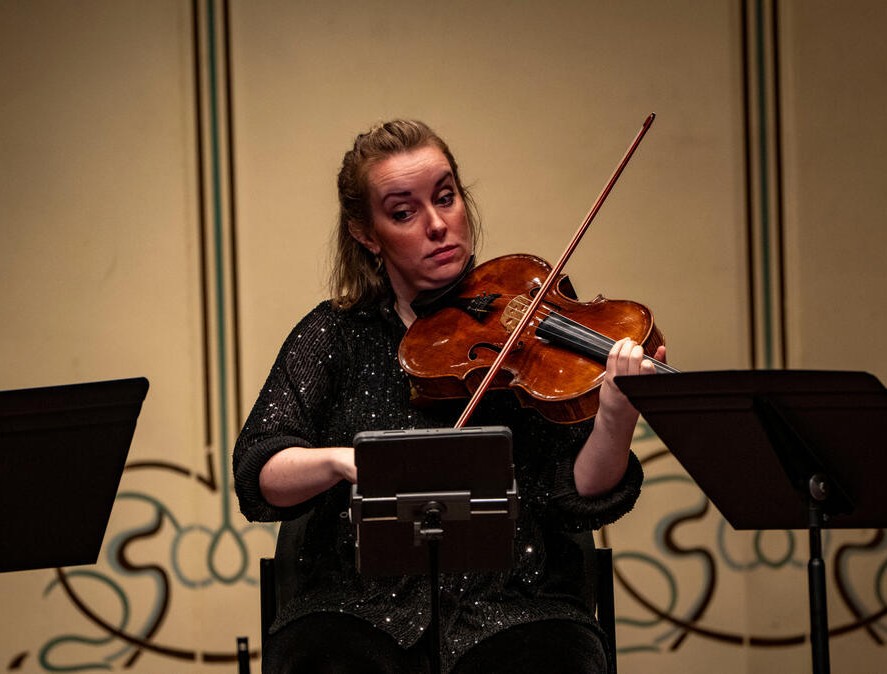
The Juilliard Quartet is currently composed of violinists Areta Zhulla and Ronald Copes, violist Molly Carr, and cellist Astrid Schween. In op. 130, Beethoven truly makes the string quartet an ensemble of equals. Often, the cello, viola, and second violin are sounding the action, while the first violin, played by Zhulla, is off doing something else. The Juilliard Quartet demonstrated mastery both individually and as an ensemble. Each contributed note-perfect sounds when called upon, and their intonation and ensemble play were impeccable.
Of particular note was the performance of what, in my humble opinion, is the most beautiful melody Beethoven ever wrote. The fifth of op. 130’s six movements, Cavatina, is composed of a longing, soulful, and introspective tune that just soothes the feelings and warms the heart. This was a close-my-eyes moment, and I took full advantage to bask in the aural soundscape.
The finale of op. 130 confronts performers with a big dilemma. Originally, Beethoven followed the Cavatina with a long and hugely intense fugue. While jarring, it’s wonderful. In a rare nod to public opinion, Beethoven agreed to write a substitute finale, and the original finale was published separately as the Grosse Fugue, op. 133. In its place, Beethoven wrote a fun and cheerful finale, the last music he ever composed. Most performances I’ve heard end with the Grosse Fugue. The Juilliard Quartet went with the published version, and, even in its abbreviated format, it was nice to hear.
Next was Jörg Widmann’s String Quartet No. 8, his third Beethoven Study. I am always skeptical of efforts to rewrite great composers, but this piece was fascinating and totally successful. In this three-movement, Beethoven Study, Widmann borrowed and cleverly expanded themes from Beethoven’s op. 130 Quartet and other works.
The biggest focus is the second movement, which offers fascinating variations on op. 130’s fourth movement, Alla danza tedesca. Applying modern tonalities and a wide variety of performance techniques to this dance piece actually elevated it in a very surprising way.
Following intermission, the Juilliard String Quartet and the Isidore String Quartet took the stage for some Mendelssohn magic. The added players were violinists Adrian Steele and Phoenix Avalon, violist Devin Moore, and cellist Joshua McClendon.
Areta Zhulla took the lead as first violin in what was essentially the role of a concertmaster in a chamber orchestra. Her chair was a little forward from the other violinists in the seating arc, allowing everyone to see her clearly. While playing she often sits and leans forward.
Mendelssohn used different groupings of instruments throughout. All four violins would play and the violas and cellos would respond. The third and fourth violins would join the violas in backing up Zhulla on first violin. However they were matched, the players blended well together, and they gelled marvelously.
Visually, I always enjoy the opening of the finale, when, starting with a cello, each instrument joins the aural mélange from bottom to top. The violins would then break into the main theme, which sounds hauntingly similar to the tune from the Hallelujah Chorus in Handel’s Messiah: “And he shall reign forever and ever….” This performance captured it well. It was an excellent end to an enjoyable evening.
There are a lot of great concerts at Ravinia this weekend. Tonight, the Roots are performing with Nai Palm in the Pavilion. Friday, June 27, 7:00 pm. Tomorrow afternoon, the Kids Concert Series continues with Opera for the Young’s The Magic Flute in the Martin Theatre, Saturday, June 28, 1:30 pm. Tomorrow night, Al Green performs with the O’Jays with Walter Williams in the Pavilion, Saturday, June 28, 7:00 pm. Sunday, “Weird Al” Yankovic and Puddles Pity Party perform in the Pavilion, Sunday, June 29, 7:00 pm. For more information, click here.
Support arts and culture journalism today. This work doesn't happen without your support. Contribute today and ensure we can continue to share the latest reviews, essays, and previews of the most anticipated arts and culture events across the city.
