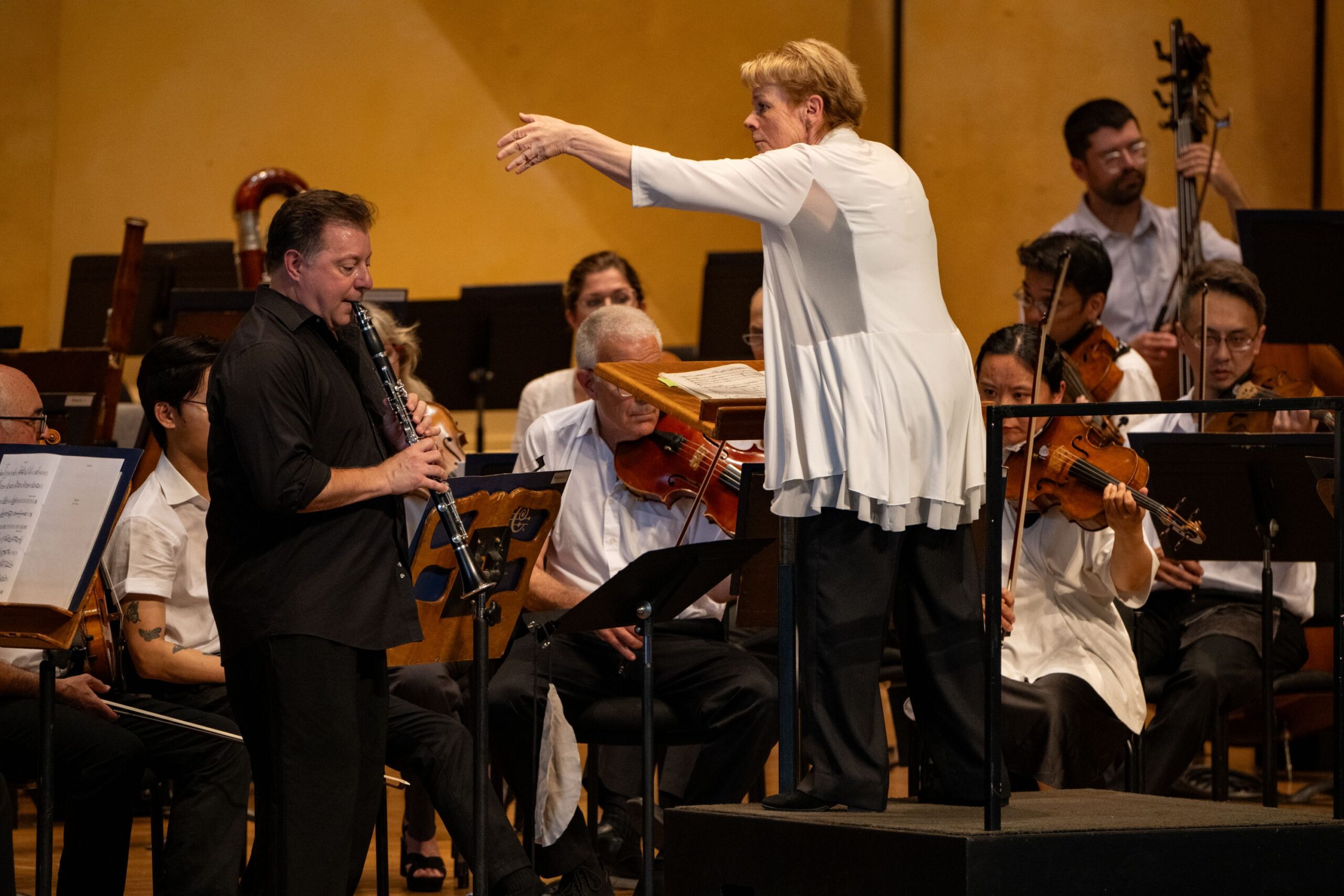

With Marin Alsop conducting, the Chicago Symphony Orchestra continued its summer residency at Ravinia late Sunday afternoon with a passionate performance of two classical chestnuts, Felix Mendelssohn’s Italian Symphony, No. 4 in A-Major, and Edward Elgar’s Enigma Variations. In between, the CSO’s principal clarinetist Stephen Williamson soloed for an enjoyable performance of Aaron Copeland’s Clarinet Concerto.
The setting was the outdoor pavilion, and the stage was full. The crickets in the surrounding trees were present, and birds chimed in. The other distractions came from the Metra train tracks that serve Ravinia. During the concert, two trains passed by. Even with those distractions, it was a delightful concert.
Mendelssohn was not fond of his Italian Symphony, but its brightness and verve are impossible to ignore. While the Allegro vivace’s opening melody in the strings is catchy, the frenetic rhythms in the woodwinds are what drive it. Under Alsop’s leadership, the CSO’s sections interacted well. The violins carry much of the melodic weight in this symphony, and they were precise. When the contrasting winds and brass came in, the balance was perfect.
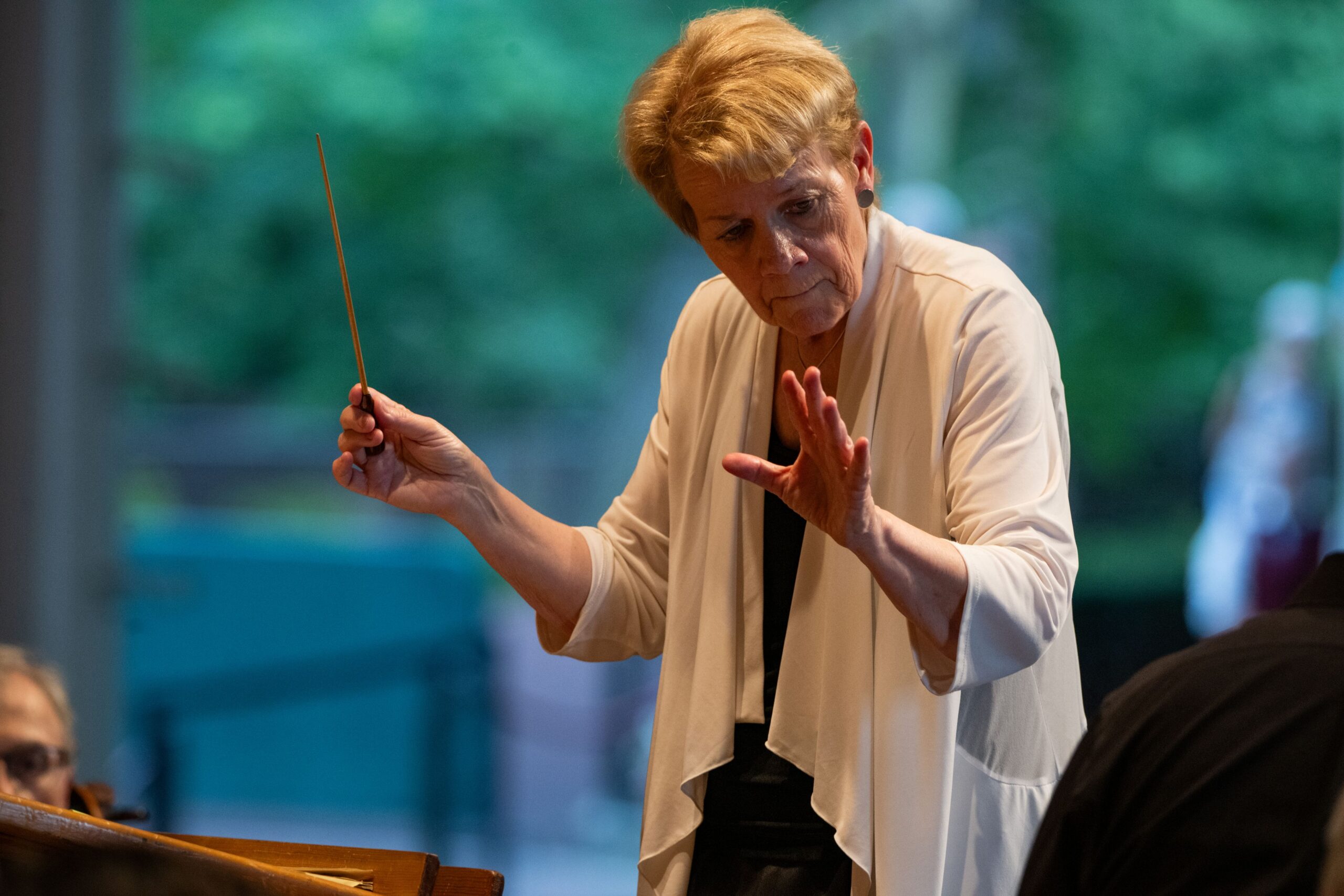
The middle movements have never appealed to me. While good, Sunday’s performance of the second movement did not increase my interest. However, the performance of the third movement Con moto moderato was very interesting. Part of this came from Alsop, whose smiling and gentle facial expressions were made visible by the video screens on the side of the stage. Mendelssohn gave the horns prominence in the middle of this movement, and the CSO’s horns produced very clear and even sounds.
Alsop’s demeanor changed with the finale, Saltarello presto, as it should have. Unusual for a symphony in A-Major, the finale is in a-minor, and Mendelssohn heaped a lot of dramatic intensity there. Alsop’s expressions and dramatic body movements reflected that. The finale is the one area of the Italian symphony that actually incorporates Italian melodies. It’s also a place where the woodwinds are in great prominence, and the CSO’s winds delivered on Sunday.
Up next was a classical clarinet concerto by Aaron Copeland commissioned by jazz bandleader Benny Goodman, the King of Swing. The excellent program notes described how Goodman sometimes veered into the realm of classical music and commissioned several America-based composers to write chamber and orchestral music for clarinet. Copeland was one of those composers, and he offered a clarinet concerto for string orchestra, harp, and piano.
The CSO strings stayed onstage and were joined by a piano and harp. Stephen Williamson entered the stage with Alsop, who conducted a lilting performance of the opening movement. This is quintessentially mood music, and Copeland even labeled it “Slowly and expressively.” Williamson’s clarinet provided the warmth, and he sounded great with the harp and piano as the piece started. He also had a very jolly demeanor, suggesting deep affection for the piece. Alsop brought the strings in very quietly at first and the result was a lovely aura. Following a clarinet cadenza, things sped up for the finale, settling on the “Rather fast” instruction from Copeland. It was a nice introduction to a piece that I had never previously heard.
After a quick set change without an intermission, the full orchestra returned to perform Elgar’s Enigma Variations, a favorite work that I know inside out. Performances of a familiar work like this come with apprehension. Will it be any good? How different will their interpretation be? Will the changes to the things I love affect my overall enjoyment? I felt great relief when Alsop and the CSO met all of my preferences and expectations.
Elgar was from England, and he wrote the word “Enigma” in the score. That has generated lots of questions, some of which have remained unanswered. While calling it “variations,” Elgar did not necessarily base the variations around a single musical idea. Instead, they were musical portraits of his friends and loved ones, who he identified with oblique initials.
Another part of the mystery is that there supposedly is a unifying musical theme spread across the 14 variations, but in the 125 years since its composition, nobody has conclusively identified that theme. The pensive tune that opens the work does reappear occasionally, but most of the variations are unrelated to it.
Whatever one thinks about the mystery, Elgar packed lots of great music into these variations. Alsop gave the opening an almost dreamy quality, which set the stage for a lot of drama and fun that followed. Contrast was immediately provided by violins and woodwinds scampering like mice in the Variation 2, which is followed by some majesty in Variation 3. The CSO adeptly shifted contrasts and tempos that Elgar required, sometimes within a single variation.
My attention is inevitably focused on the “Nimrod” Variation, No. 9, to which I have frequently meditated. Much to my dismay, a train came through toward the end of Variation No. 8. It had just passed when Alsop and the CSO gave “Nimrod” the solemnity and poise it demands. It’s a rare treat to meditate during a live concert.
Alsop gave wonderful interpretations to the Romanze, Variation 13, which provides a musical waystation to the Finale, Variation 14. Alsop added to the joy of the finale by adding subtle tempo changes in especially appropriate points. The performance could not possibly be more captivating. Kudos all around.
The CSO’s residency at Ravinia continues on Thursday, when pianist Lang Lang joins the CSO and conductor Edwin Outwater for The Disney Book. With invited soloists and guests, this performance seeks to explore Disney’s pairing of animation and classical music. July 31, 7pm.
Next Sunday, the annual Tchaikovsky Spectacular returns with Laura Jackson conducting and cellist Zlatomir Fung performing Variations on a Rococo Theme. Also on the program is Symphony No. 4 in f-minor and the 1812 Overture. August 3, 5pm. For more info, click here.
Support arts and culture journalism today. This work doesn't happen without your support. Contribute today and ensure we can continue to share the latest reviews, essays, and previews of the most anticipated arts and culture events across the city.
