
The Grant Park orchestra played an excellent concert at Jay Pritzker Pavillion on Wednesday evening. Unfortunately, the ambient noises were worse than ever, with several sirens blaring, motorcycles screaming, and a red helicopter repeatedly flying overhead. Over time, one gets used to these occasional sounds, but on Wednesday night they were frequent and lengthy. Even this excellent performance suffered.
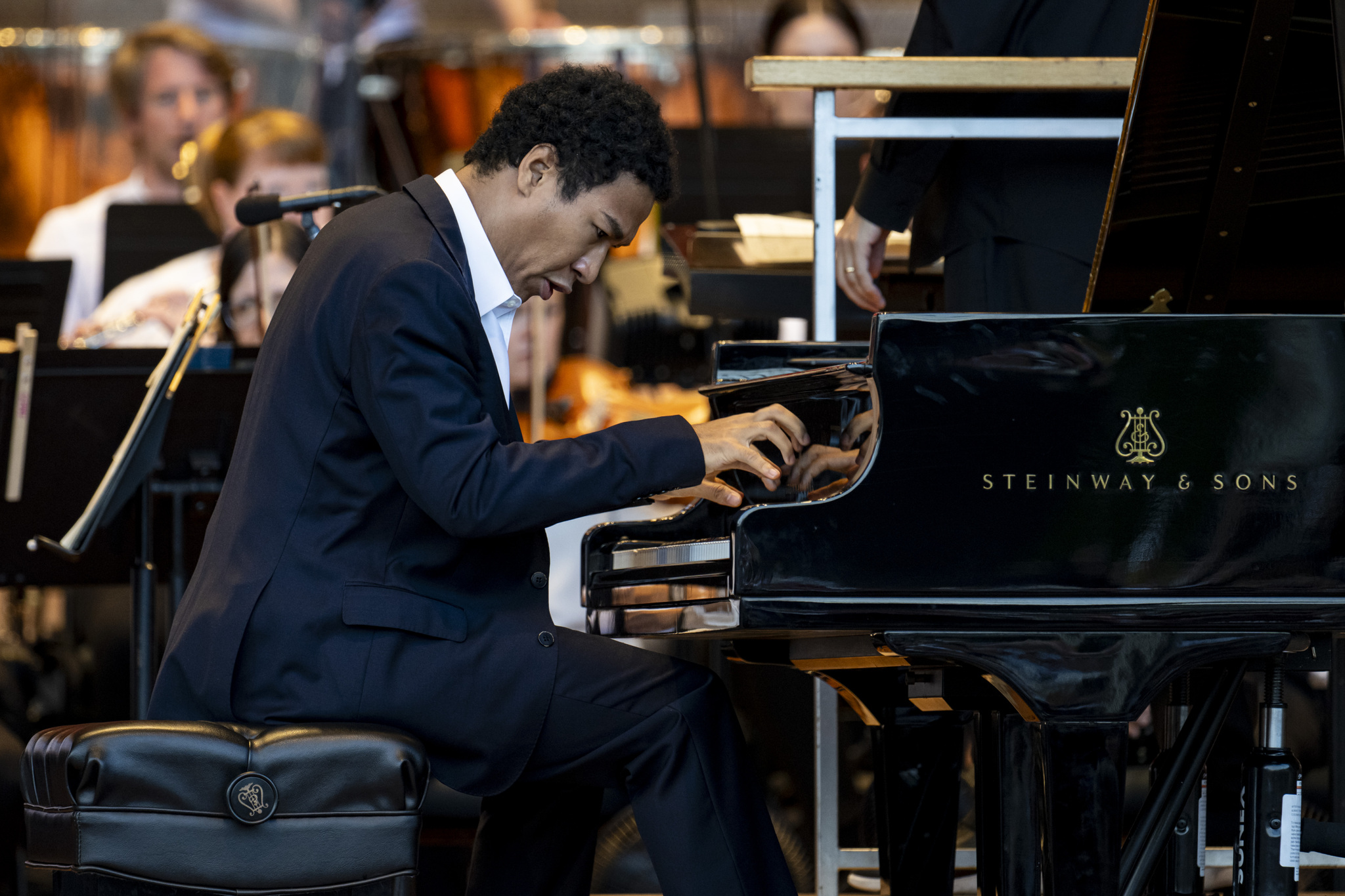
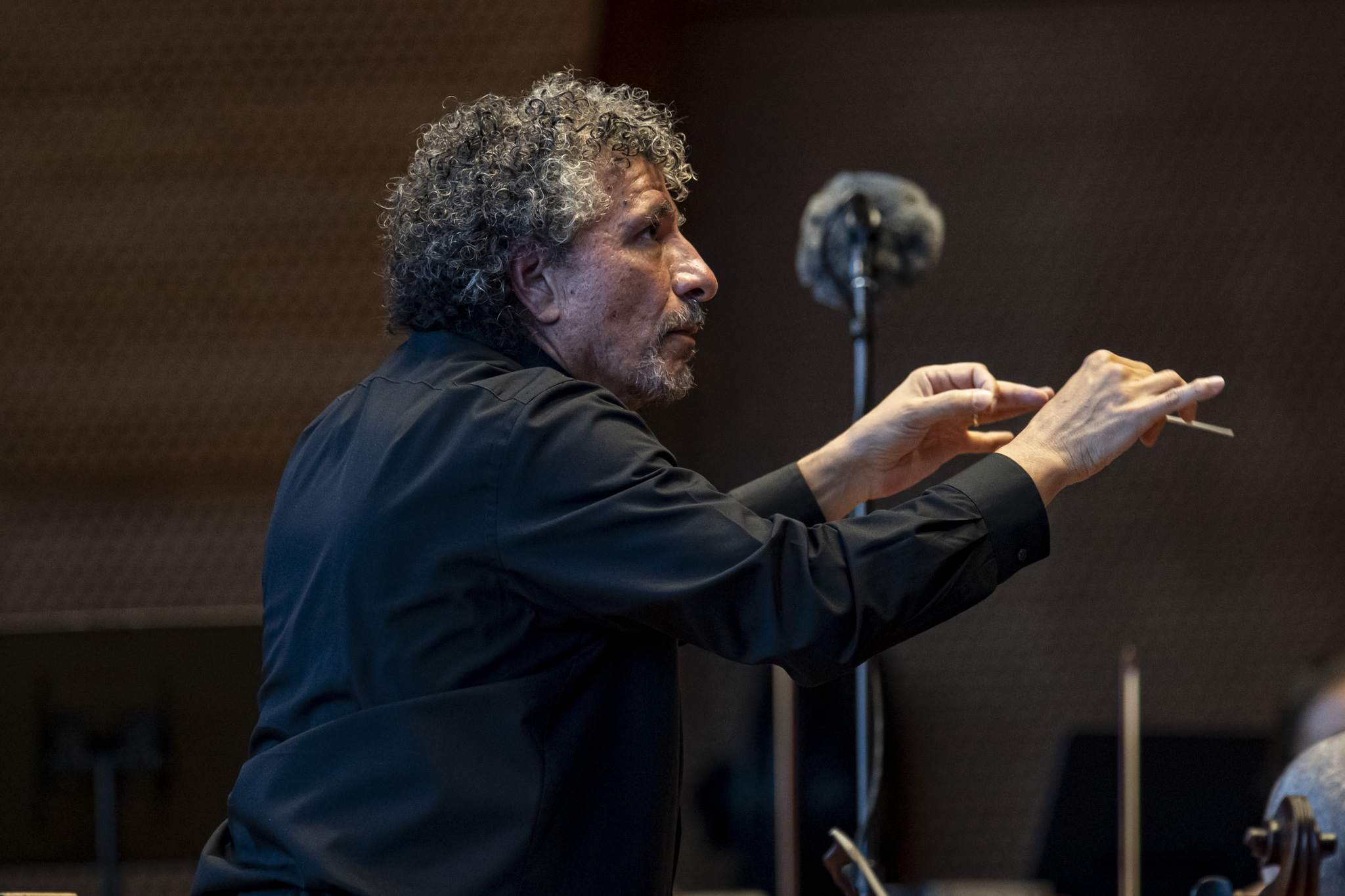
Giancarlo Guerrero was his typically perky self at the podium, and the orchestra’s prowess was on full display for two large classical standards. One was Clayton Stephenson’s stellar performance of Franz Liszt’s Piano Concerto No. 1. The second was a powerful performance of Camille Saint-Saëns’ Symphony No. 3 in c-minor, which has come to be known as the “Organ” symphony.
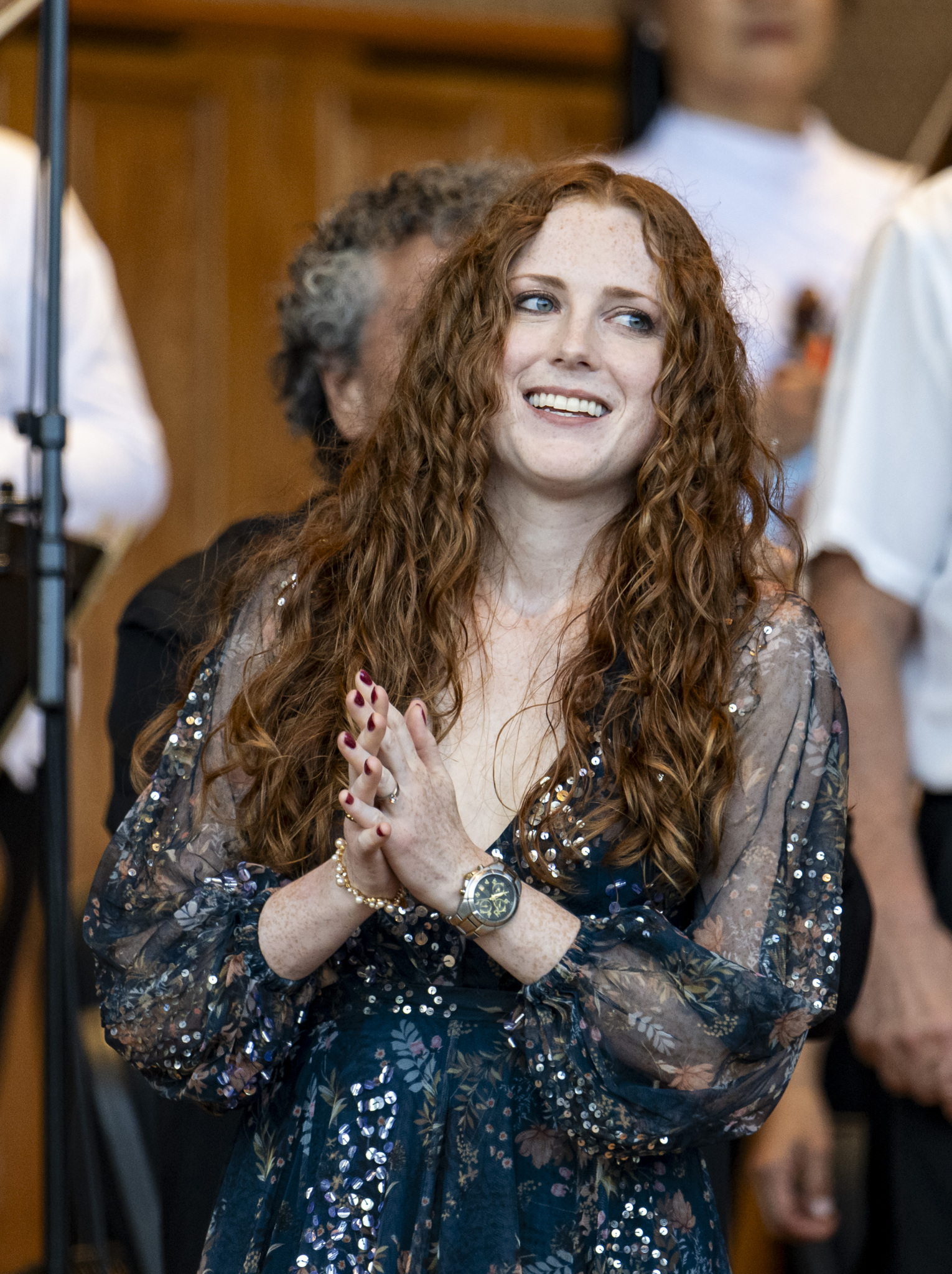
The concert started with a recent work that set to music a phenomenon found in nature. In opening remarks, composer Chelsea Komschlies explained the unusual fungal root structure of mushrooms, known as a mycelium. These fungal roots can spread great distances in the ground, forming an interconnected organism that connects trees and other plants. She likened the connectivity to a human brain, and imagined what it could sound like if the interconnected mushrooms and plants could communicate via the mycelium. In setting this concept to music, she used a large orchestra enhanced by electronica.
Unfortunately, just as Guerrero was about to start conducting Mycelialore, sirens began to sound in what was obviously a major incident that included ambulances, fire trucks, and police cars. Guerrero delayed the start for quite a while, but the sirens did not die down, so he started anyway with quiet, squeaky violin sounds backed up by harp and electronica. With a trombone and woodwinds joining, the effect that Komschlies created of mushrooms talking to each other was startling.
Eventually she added a very charming melody, later interspersed with moments of cacophony. Halfway through the conversations turned to the effects of humans on the natural scene, and actual words came through. With Mycelialore, Chelsea Komschlies was very effective in setting nature to music.
Following a standing ovation for Mycelialore, a piano was rolled onto the stage for Franz Liszt’s Piano Concerto No. 1 in E-flat Major. If one were to choose a composer who is best described by the word “flashy,” Liszt would be it. In tackling this work, Clayton Stephenson combined extraordinary piano technique with an absolutely beautiful smile and demeanor. This was as flashy of a performance of this concerto as one could ever want. Even the several distracting instances of sirenitis were overcome.
In the opening, after a majestic flourish on the strings and a quick response from the brass, Stephenson entered with rapid chords and octaves. In the quieter moments that followed, he was joined by Dario Brignoli on clarinet and violin duo Jeremy Black and Bonnie Terrysolo. He demonstrated subtly and control in a lengthy solo in the opening movement that was magical. Throughout the concerto, Stephenson excelled in the perfect runs, double and triple trills, and lots of flash.
Orchestra interaction was also excellent, with Guerrero ensuring that balance was correct. Recognizing that Stephenson had just performed wonderfully, Guerrero turned to him with a big, huge grin as the piece was wrapping up.
The audience reaction was huge. After a few ovations, Stephenson gave a lively encore performance of Art Tatum’s arrangement of Tea for Two. Very enjoyable.
Following an unusual set change, where the large piano was removed and a slightly smaller one was rolled in, Guerrero commented on the relationship between Camille Saint-Saëns and his mentor/champion Franz Liszt.
In discussing the third symphony, he noted that it is referred to as the Organ symphony, as it was in the concert’s program. However, since the organ actually only appears in two movements, he suggested that the symphony really should be referred to as “with” organ. It is also “with” piano, two and four hands, which appears only briefly in the third movement and finale. He noted that the piano passages were similar to what one would find in Liszt.
This symphony is characterized by a pulsating rhythm that appears in many places. While the strings sounded it really well, short puffs of breath into the woodwinds and brass really allowed it come out. There were many occasions when Guerrero was clearly having fun, such as during the joyous second theme of the opening movement, Adagio – Allegro moderato.
The organ comes in quietly during the second movement, Poco adagio. But it’s in the finale Maestoso – Allegro when it comes in blazing. This finale gives a new meaning to the word “triumphant,” and Guerrero and the orchestra shone bright.
The sirens dissipated during the Saint-Saëns. Instead we got a roving red helicopter flying over the lake shore. I lost count of the number of visits we got, but it was very distracting.
The 2025 Grant Park Music Festival winds up this weekend with an extravaganza. Giancarlo Guerrero will conduct the Grant Park Orchestra and Chorus through Carl Orff’s Carmina Burana. The performance also includes soprano Jana McIntyre, countertenor Reginald Mobley, baritone Troy Cook, and the Uniting Voices Chicago Children's Chorus. The program also includes Rimsky-Korsakov's Russian Easter Overture, and Alan Hovhaness' Symphony No. 2, Mysterious Mountain. Friday, August 15, 6:30 pm, Saturday, August 16, 7:30 pm. For more information, click here.
I will not be able to attend what promises to be a great performance this weekend but wanted to commend the Grant Park Festival for a very enjoyable 2025 season. Looking forward to 2026.
