The final day of the Chicago Jazz Festival had some outstanding up-and-coming performers as well as some legends gracing the stage. This year, I managed to get to the Von Freeman Pavilion to hear the Thaddeus Tukes Quintet. Tukes is a wizard on the vibraphone and played alongside Henry Johnson on day one. He had a stellar band featuring Charles Heath on drums, Victor Garcia on trumpet, Joshua Ramos on bass, and Irvin Pierce on saxophone. Each of the players leads their own band and is often featured in other bands during the festival. Heath played with Henry Johnson on opening night alongside Tukes. Victor Garcia led his own band in the Von Freeman Pavilion a day earlier.
I was glad to finally get there early enough to hear Tukes and his quintet play some great music. His set leaned into classic jazz and, much to my delight, Southside Funk. If you are from the South side, which I am, you will know it when you hear it. If you are from anywhere else, you will not forget it once you have had a taste of Tukes. The audience did not want him to stop, and neither did I. I hope that he is on the Pritzker stage next year.
The opener for the Pritzker stage was Natalie Scharf featuring Paul Asaro. There was also Joel Paterson on guitar, Dan Anderson on bass, and Alex Hall on drums. They performed early 20th-century jazz, accompanied by four couples dancing on stage to the music. It was a blast to see them dance the Charleston, Foxtrot, Tango, and more. Scharf is a sharp bandleader and a laidback player. It was like seeing a band from that era in this era's attire.
Asaro also sang on some of the tunes and has a voice and demeanor that fit perfectly with the era. Scharf leaned into a Fats Waller tune that was written in 1864 by a Canadian teacher smitten with a student. "When You and I Were Young, Maggie" was a lovely song given extra pignance by Asaro's vocals. The "Jitterbug Waltz" was a fun song, and the dancers did a beautiful job of waltzing, which is no easy feat. I have tried, and 3/4 beat is hard when you grow up on a solid 4/4.
I loved Joel Paterson's guitar sound. The languid plucking reminded me of Lester Flatt's sound on The Beverly Hillbillies when they gathered around the "cement pond". It was a bit Hawaiian, Bluegrass, and early Jazz, when Jazz was also a euphemism for sex. The dancing was a lot of jumping around and body contact, and that 4/4 beat was considered racy. It came from Black people, and that was also a scandal. Scharf and her band were a great time with a great sound. They play at the Green Mill regularly. Put your hair in a marcel wave bob and head over. This is a fun band!
The second performer was G. Thomas Allen. I had not heard of him, but his voice and style blew me away. He has a gorgeous countertenor voice and has sung opera, but he is made to be a jazz singer. His style is smooth, and when he employs melisma, it is executed flawlessly, much like Sarah Vaughan or Johnny Hartman. In fact, Allen won the Sarah Vaughan International Singing Competition. His stage manner is romantic and expressive, and when that sweet, clear, emotive voice is added, you may hear some swooning. I know I listened to some and may have swooned a bit myself.
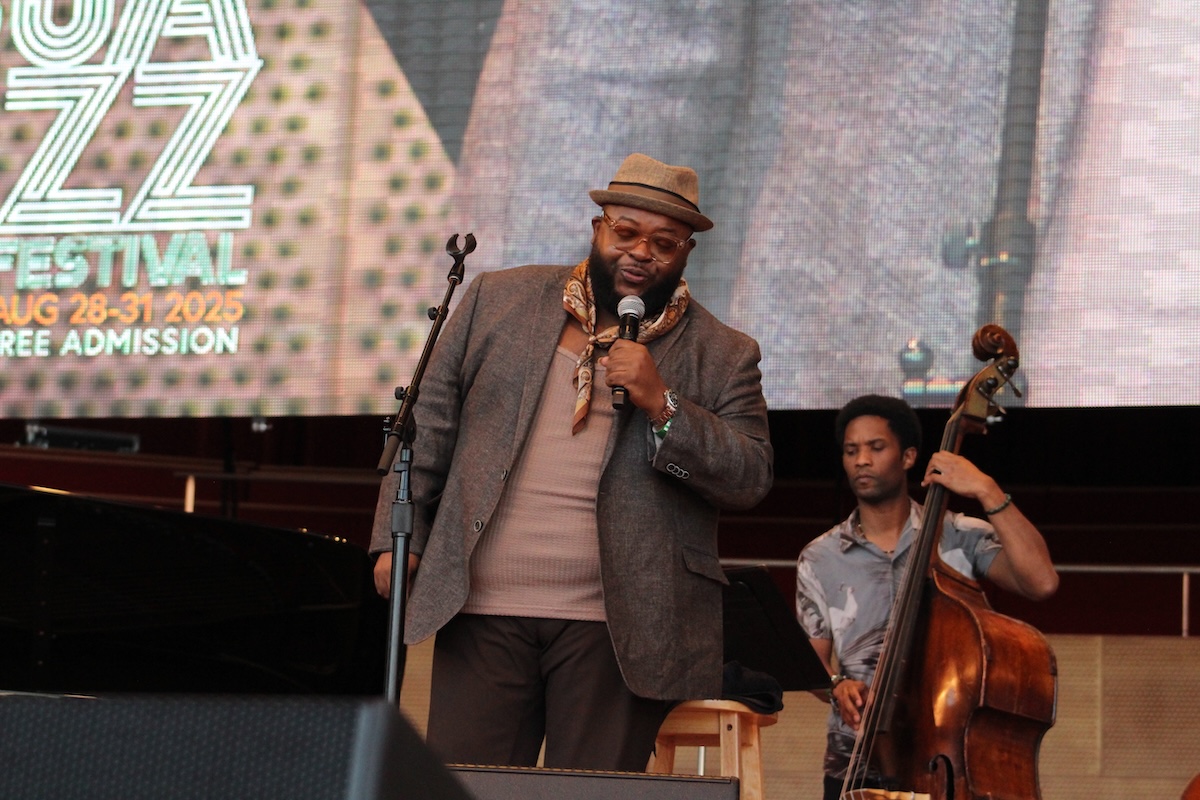
His band was stellar, featuring Dennis Luxion on piano, Brent Griffin, Jr. on saxophone, Jeremiah Hunt on bass, and Neil Hemphill on drums. He did some Sinatra-style swinging with "Starlight" and sang some of his own compositions, which were stunning. "Moonlight Blue" and "Drowning" were two of my favorites. Allen has been compared to Jimmy Scott, and that is true; however, his voice takes a different approach to melancholy, being more romantic and optimistic. Look him up, stream the music, buy the album. It is seductive and mellow perfection.
The penultimate act was the legendary Ari Brown, who emerged from the early days of the AACM. He also played with Elvin Jones for over 20 years. Influenced by Rahsaan Roland Kirk and John Coltrane's hard bop sound, Brown developed a unique style. Brown paid tributes to some AACM members who have passed on, including Ken Chaney and George Freeman. He is recently wed, and he performed his own composition for his wife called "Sure of It." He asked her to stand up, and she called out, "That's my husband!" It was a love song for a love match.
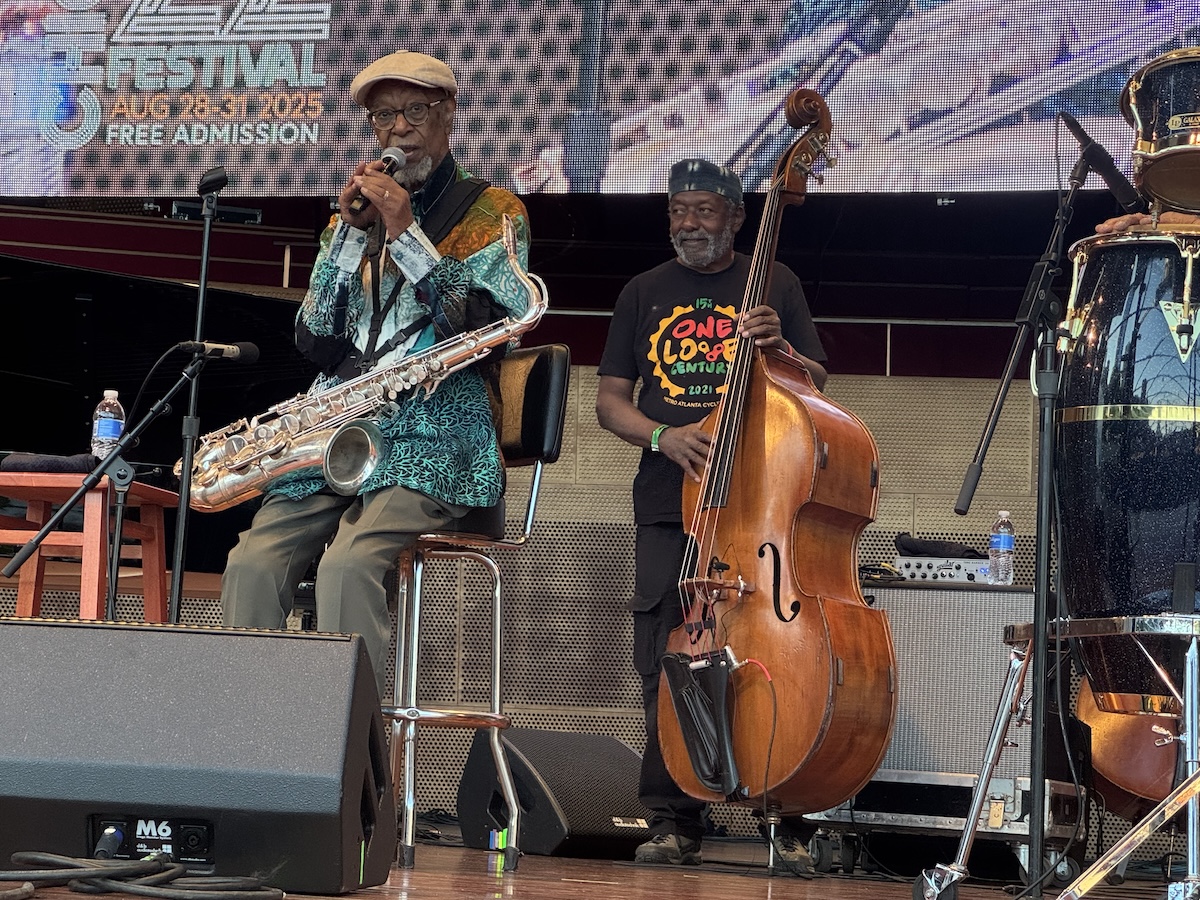
Brown's band consisted of veteran jazz players. Brother Kirk Brown on piano, Yosef Ben-Israel on bass, Dr. Cuz on congas, and Kwame Steve Cobb on drums. Cobb's drum set had a cowbell that had seen some time pass. It looked like a spotted cow and sounded so good, blending in perfectly. Brown is one of the last original members of AACM, and he is 81 years old. He played seated for a while and then was on his feet like no time had passed. There is strength in his music gleaned from playing with greats like McCoy Tyner, Lester Bowie, and Von Freeman. He is a part of the fabric of Chicago's jazz scene, and he and his band entranced me.
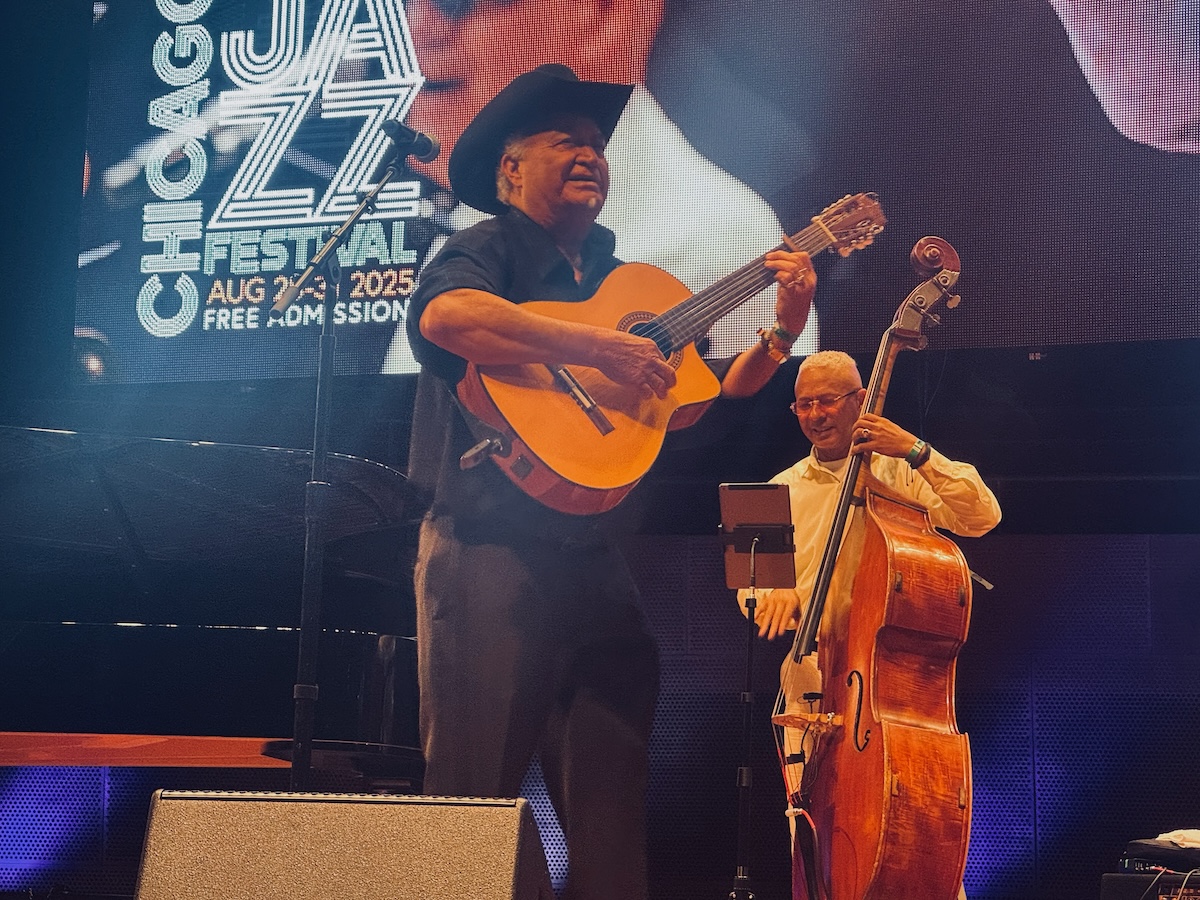
This year's jazz festival ended on a good note. The planning committee can be relied upon to select a Latin music act, even if it pushes the boundaries of jazz. The finale headliner was Buena Vista Social Club legend Eliades Ochoa, accompanied by a fantastic band that delivered the same brass and percussion sound as any larger ensemble. They were Jorge Daniel Perez Cuesta on piano, Luis Ernesto Beltran on saxophone, Orlando De Jesus Fraga Perez on trumpet, Alberto Pantaleon on bass, and Andres Polanco Rivas on percussion.
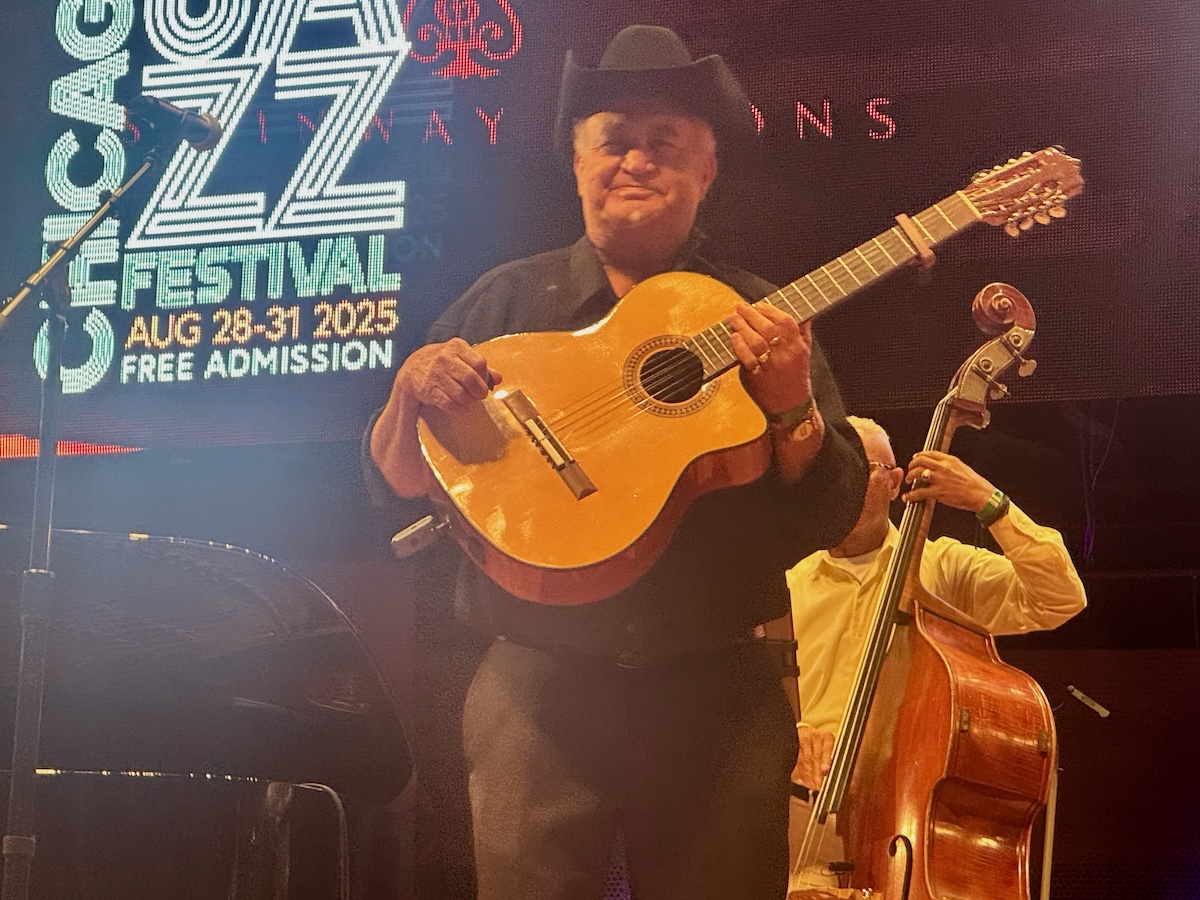
Ochoa is a master of Son music from his native Cuba and has collaborated with musicians from Bob Dylan to Cameroonian Jazz and Funk musician Manu Dibango. He was in fine form in his customary guajiro and cowboy hat. In his songs, he referred to himself as a guajiro or campesino—a peasant. He sang of love with "Buscando Una Novia" (Looking for a bride/girlfriend), and, of course, played "Chan Chan," which is the most widely played song from Buena Vista Social Club. I am better at translating music lyrics than conversation. Ochoa did not speak any English, but he did say thank you to the audience and to Chicago.
His band was lively and kept the energy high. Beltran played the saxophone, as well as some percussion instruments, while the trumpet player Perez kept a steady beat on the claves. People were dancing and applauding, and it didn't matter what Ochoa's spoken language was; the music transcended every boundary. It was a perfect evening with a half moon in the sky, and I felt the beat all the way home.
Did you enjoy this post and our coverage of Chicago’s arts scene and sometimes beyond? Please consider supporting Third Coast Review’s arts and culture coverage by making a donation by PayPal. Choose the amount that works best for you, and know how much we appreciate your support!
