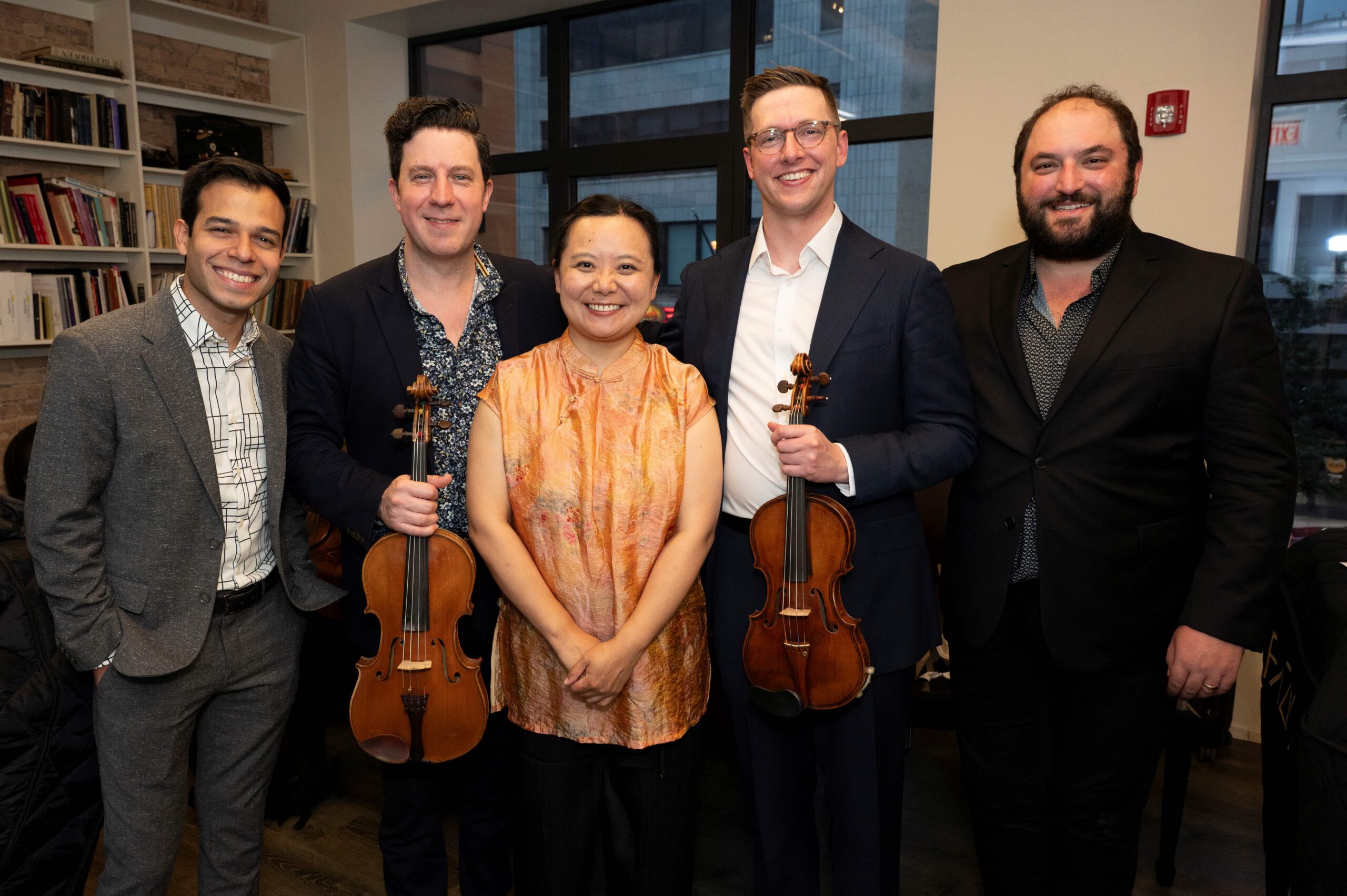

The American Chamber Music Society introduced its second season with a radiant concert at PianoForte Studio in the South Loop on Saturday night. Headed by Chicago-based violinist Eric Gratz, ACMS brings to Chicago performers from around the country to offer a diverse array of chamber music over five concerts in a season.
PianoForte Studio is a charming performance space and was crowded on Saturday. Gratz has said that he wants ACMS to restore chamber music to its roots of friends making music in the parlor after dinner. Creating that vibe is PianoForte Studio’s intimate space, combined with refreshments, snacks, and conversation opportunities during intermission and after the performance. It was a very comfortable and inviting atmosphere on Saturday.
On the program were both of the string quintets by Johannes Brahms, whose two forays into this ensemble with a second viola are very different from one another. The first one, in F-Major, has a very laid-back feel. The second one, in G-Major, sometimes sounds like a mini symphony. The performers referred to these works as “chestnuts,” which they certainly are. I have always preferred the second one to the first one, but It was quite a treat to hear them together.
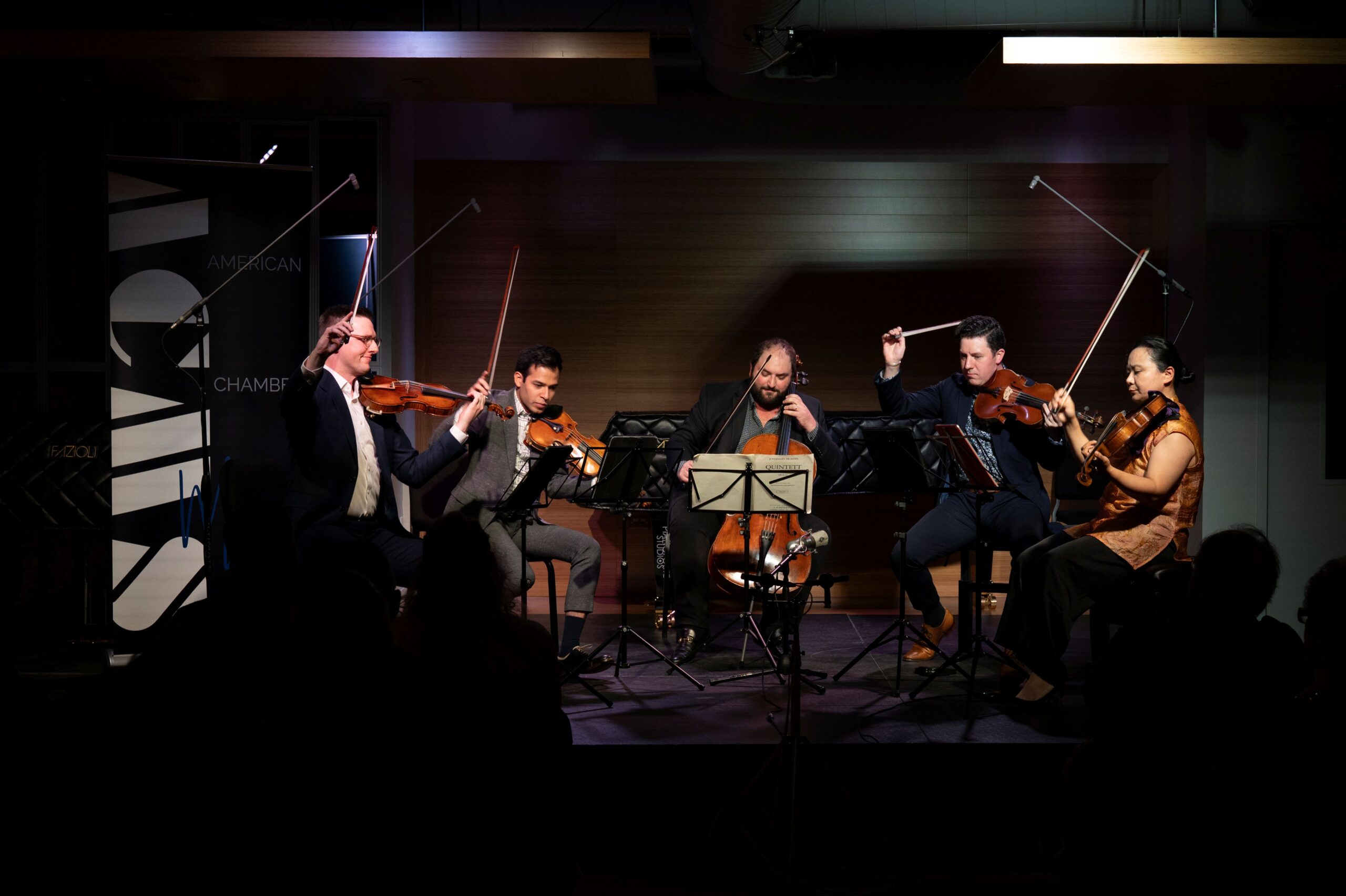
The program was entitled Inner Voices, which called attention to the enormous role Brahms assigned to the violas in both works. To fulfill these demands, ACMS brought in top-tier players, such as Teng Li, the Principal Violist for the Chicago Symphony Orchestra, and Colin Brookes, former member of the Ulysses Quartet. As first violist, Li shone brightly again and again on Saturday, such as when she sounded the secondary theme in the opening movement of the first quintet. In addition to precise playing, her facial expressions revealed intense passion.
The other players rose to the occasion plenty of times. After introducing the second quintet, cellist Julian Schwarz sounded the opening melody over the other four instruments, who Brahms brought in like a freight train.
Completing the line-up were violinists Eric Gratz and Rubén Rengel, both of whom played well when Brahms required their services, which wasn’t as often as one might expect. The chamber music ideal is for each instrument to contribute equally to the final output, and Brahms use of the inner voices created that effect about as well as can be hoped.
Although marked with a faster Allegro non troppo ma con brio, the first quintet should open with a very lugubrious and relaxing feel, but it sounded a bit overcharged and coarse. While the ensemble was too loud for the small performance space, sometimes the violins were hard to hear. Moreover, the players did not always gel together, which is often a problem for newly assembled group of musicians.
Things got better in the middle movement, which starts with a very slow and dreamy Grave et appassionato. It then moves back and forth between faster and lively sections before ending in a meditative state. The ensemble showed off excellent contrast between the sections, and final chords were pure peace. Fabulous.
Brahms saved the most sparkle in the first quintet for the finale, Allegro energico - Presto, and here the performance was solid. It starts with sounds reminiscent of a fugue, and each of the players were very precise as they joined the mix.
Brahms’ String Quintet No, 2 followed intermission. The opening movement has the same tempo marking as the first quintet, but its mood could not be more different. It’s a very rushing sound, with the feel of a transportation hub. The ensemble was a lot more effective here. As before, Brahms gave the first violist a lot to play, and Li pulled it off.
In his remarks, Schwarz paid special attention to the slow Adagio movement, and the performance really gelled here. In the finale, Vivace ma non troppo presto, Brahms really created a fun atmosphere, and ACMS delivered the joy.
Overall, while not the best performance, it was still very enjoyable. ACMS is a welcome addition to the Chicago art music scene. ACMS' next performance is a recital by violinist Eric Gratz, December 6, 2025, PianoForte Studio, 5:00 pm. For more information, click here.
