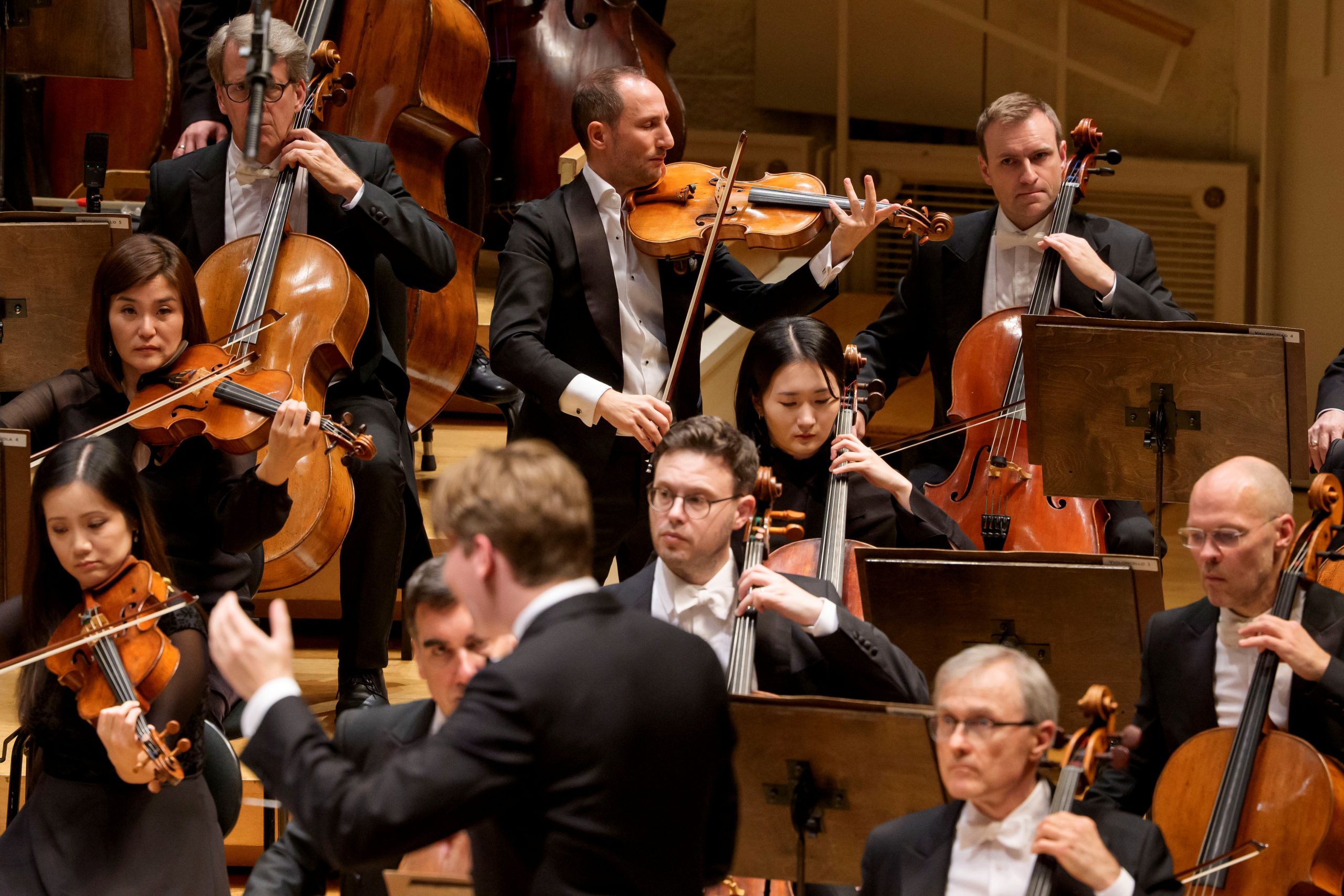

With Music Director Designate Klaus Mäkelä at the podium, an expanded Chicago Symphony Orchestra gave dramatic and exciting performances of two symphonic gems by French composer Hector Berlioz on Thursday night. In the first work, Harold in Italy, they were joined by Antoine Tamestit on viola, who added drama to his performance by playing from all over the stage. After intermission, the orchestra gave an impassioned performance of Berlioz’ most famous work, Symphonie Fantastique.
Harold in Italy is unusual work for a lot of reasons. While it has a solo part for viola, it’s not a three-movement concerto with lots of dazzling histrionics and cadenzas for the soloist. It has more of the feel of a four-movement symphony with an expanded role for one player. It is also programmatic, with scenes taking place in the countryside, with movement titles like the first movement, “In the Mountains: Scenes of Melancholy, Happiness, and Joy (Adagio—Alegro).”
On Thursday night Tamestit was that one player. His playing was fabulous, but, quite simply, he couldn't stand still. From the beginning, it seemed very odd that Mäkelä entered the stage by himself, and a cursory scan did not produce a siting of the soloist.
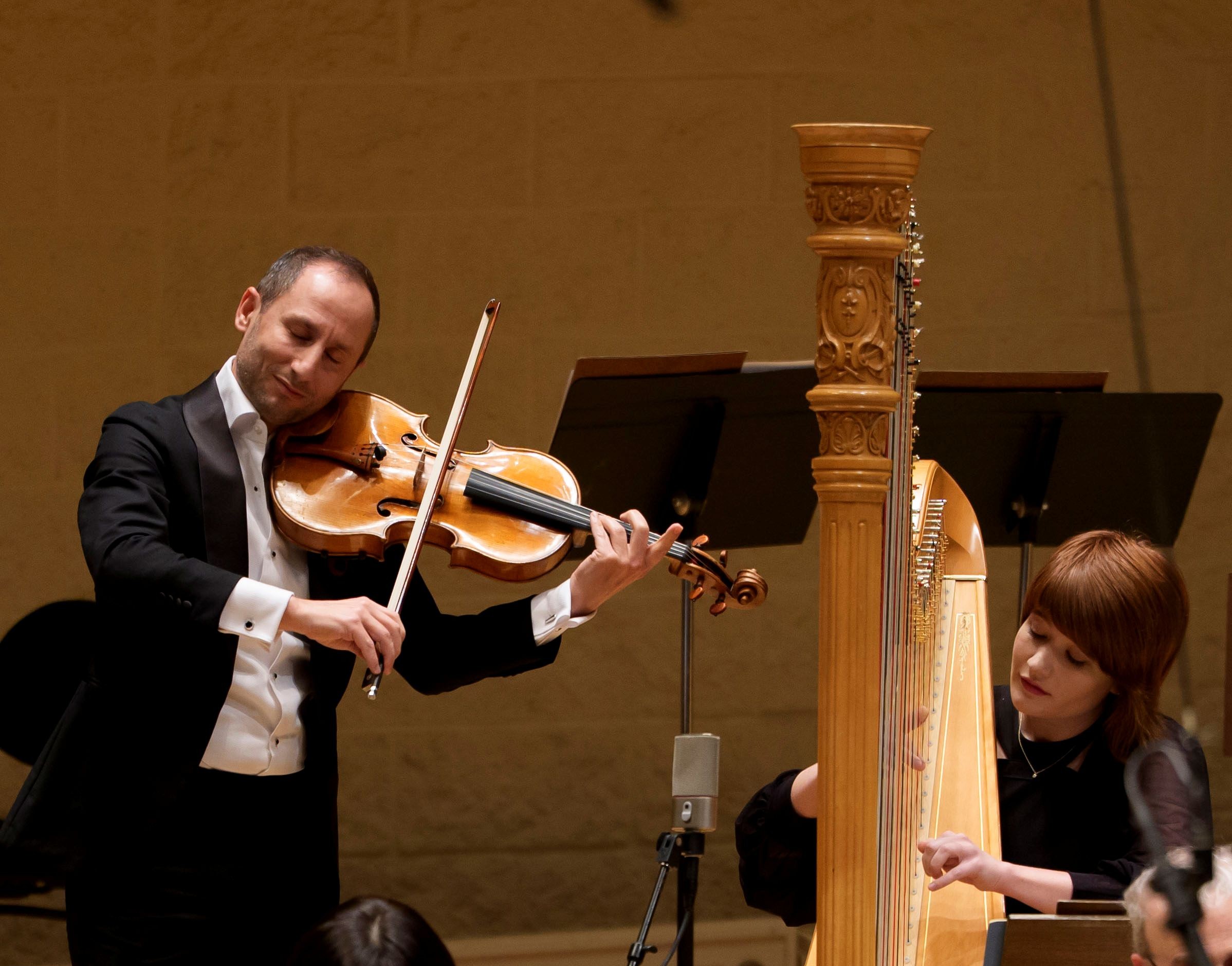
Mäkelä led the basses, cellos, and bassoons through a very lush opening, with other instruments joining in. When it was his turn to play, Tamestit appeared behind the violins next to the harp. He shared a lovely melody with harpist Emily Levin, Principal harpist from the Dallas Symphony Orchestra. Tamestit then repeated it super quietly. Before long, he slowly walked to the traditional position for a soloist, front and center, next Mäkelä.
Holding a baton in his right hand, Mäkelä swayed with the music. While animated, his hands stayed shoulder height and lower during Harold in Italy. The orchestra playing was very crisp, although the trumpets, cornets, and trombones were a bit overpowering at times.
In the second movement, “March of the Pilgrims Singing the Evening Hymn (Allegretto),” Tamestit walked through the orchestra and ended up in front of the timpani but behind the horns, and then positioned himself behind the cellos. Wherever he was, Tamestit’s playing was super animated with lots of swinging, swaying, and dancing in place. He sometimes faced the orchestra, with his back to the audience.
The finale started with a jolt, and Tamestit jolted with it. He then walked behind the basses, and eventually exited the stage from there. He returned to join a string quartet that violinists Simon Michal and Minyoung Baik had formed with cellist Richard Hirschl next to the percussion. Musically and visually, this was an exciting performance.
After many curtain calls, Tamestit gave an encore, the opening movement “Prelude” of Bach’s Cello Suite No. 1, transposed for viola. I love this piece, and it was great to hear it played on a viola.
After intermission, Klaus Mäkelä led the CSO through Symphonie Fantastique, which Berlioz wrote as a story of the unrequited love of an artist. In doing so, he altered the symphonic form by adding a fifth movement. He also created an idée fixe, a melodic line that shows up throughout the piece in reference to his beloved.
The opening movement, “Reveries Passions” has lots of starts and stops, quiet intros and rapid ascents, starting slowly with woodwinds, moving to higher strings, then to strings and brass, lower strings, and back to upper strings for a sped-up episode, before returning to a slower tempo. Mäkelä’s conducting ensured everyone offered tight phrasing during the tempo shifts. Eventually, the violins sounded the idée fixe for the first time.
The second movement “Ball” in a waltz time starts with the harps, strings, and woodwinds passing quick tunes back and forth. During the bucolic “Scene in the Country,” oboist William Welter left the stage to trade passages from backstage with Scott Hostetler on English Horn. The ensemble interactions were amazing.
The drama resumed bigtime with “March to the Scaffold,” which the strings led backed up by percussion. Eventually the brass shone brightly during the march, with a full panoply of horns, trumpets, cornets, trombones, and tubas, which up to now Berlioz had used very sparingly. This movement builds up to one of the greatest orchestral life interpretations in all of music: a scaffold coming down and a head rolling off the platform. Mäkelä and the CSO made it sound great.
The finale, “Dream of a Witches’ Sabbath” had lots of interactions between the brass and percussion, especially the trombones trading notes with the bells. Mäkelä brought it altogether very well.
The CSO, Klaus Mäkelä, and Antoine Tamestit repeat this concert tonight and tomorrow night. Symphony Center, Friday, October 17, Saturday, October 18, 7:30 pm.
This Sunday, pianist Yunchan Lim is performing Hanurij Lee’s …Round and velvety-smooth blend… followed by one of the greatest keyboard pieces in all of music, Johann Sebastian Bach’s Goldberg Variations. Symphony Center, Sunday, October 19, 3:00 pm. For more information, click here.
