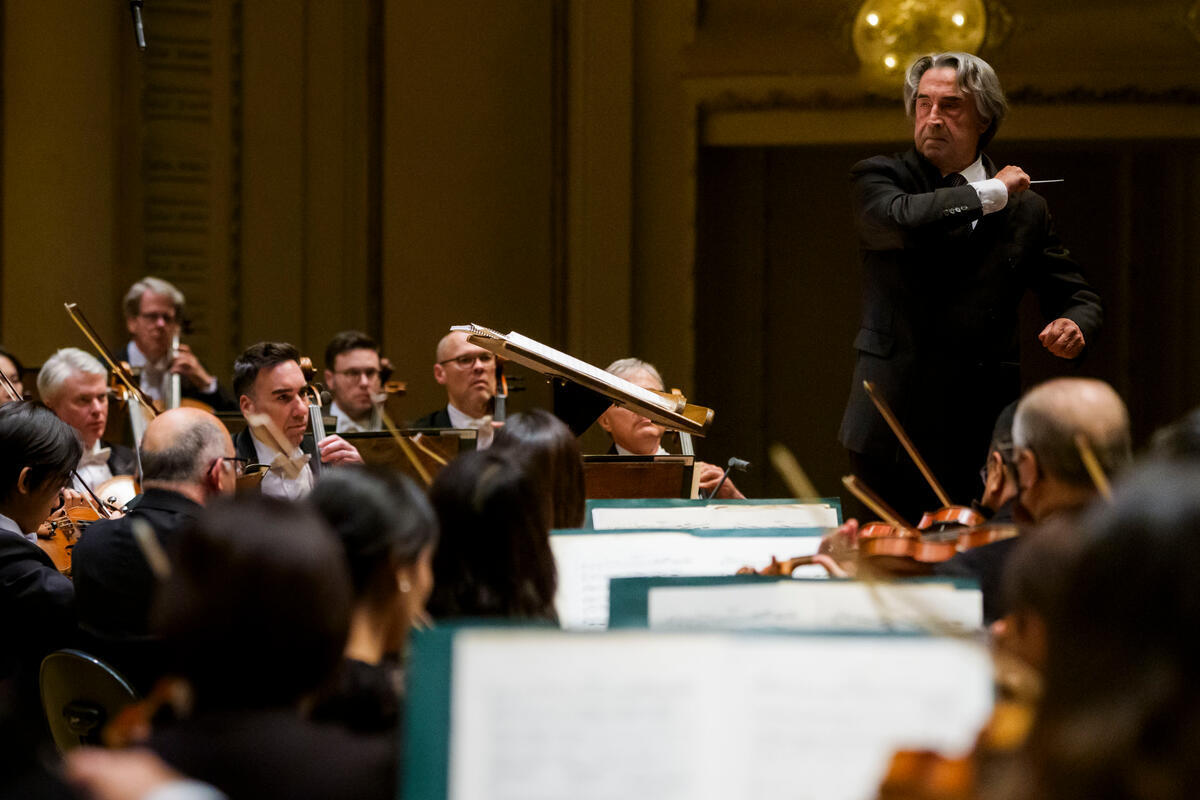

Maestro Riccardo Muti returned to Symphony Center to lead the Chicago Symphony Orchestra through a rousing program of 19th and 20th century music on Thursday evening. Following an overture by Johann Strauss Jr., and a symphony by Paul Hindemith, the CSO performed what can plausibly be considered the greatest symphony ever written, the New World Symphony by Antonín Dvořák.
Having been the CSO’s Music Director from 2010-2023, and Music Director Emeritus for Life ever since, Muti brings distinctive charisma with each return performance. With a baton in his right hand, he often faces a section being called upon and waives his arms in circles. His rapport and familiarity with the various orchestra sections and soloists reflect his long tenure, and he can make everything sound beautiful.
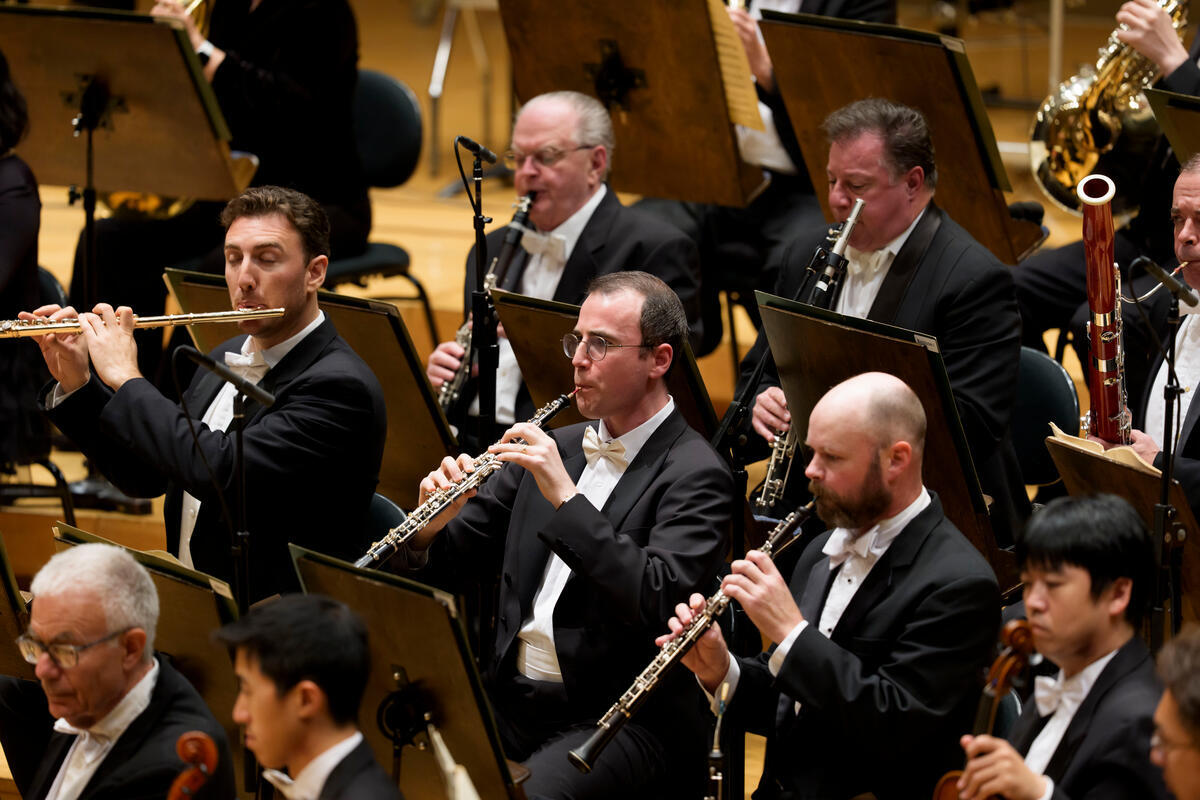
This was apparent with the Overture to The Gypsy Baron by the Viennese waltz king, Johann Strauss Jr. This operetta is a bit weightier than the fun and frolic one often finds in Strauss Jr.’s music, and the overture reflects this. Under Muti’s leadership the orchestra played perfectly, with excellent balance between the sections, precise phrasing, and uniform pizzicatos on the strings. Principals Stephen Williamson and William Welter played excellent solos on the clarinet and oboe, respectively, as did flutist Matthew Roitstein, who is visiting from the Houston Symphony.
Up next was the fascinating Symphony Mathis der Maler by German composer Paul Hindemith, who wrote it just as the Nazi regime was taking hold in the mid-1930s. He based this three-movement work on three panels from the amazing Isenheim Altarpiece painted by Matthias Grünewald around 1515. Unlike most altarpieces, the panels from the Isenheim Altarpiece have ominous and grim imagery, and these moods predominate in this symphony.
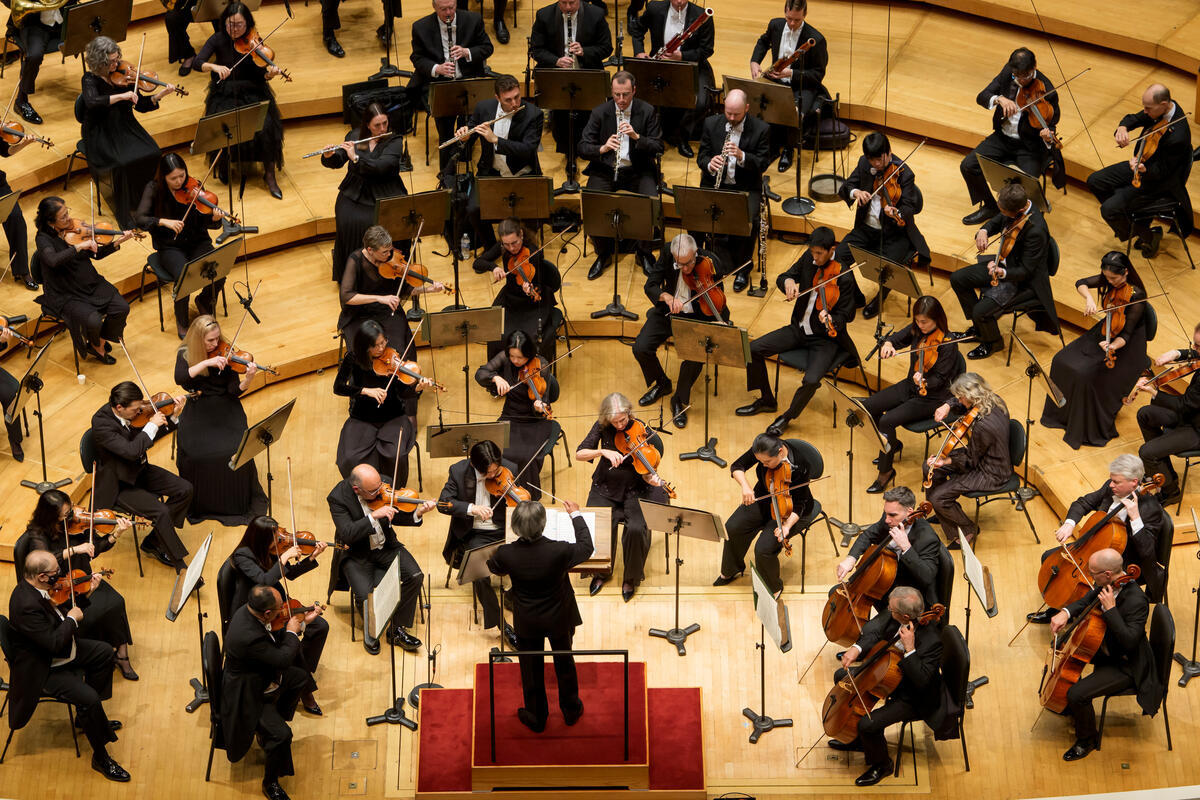
In all three of the movements, Hindemith gave the CSO plenty of opportunities to shine. From a meditative opening in the horns and winds, “The Angelic Concert” has lots of forward momentum. “The Entombment” depicts the burial of Jesus and the movement is quiet and moody. “The Temptation of St. Anthony” has some of the wildest imagery and music. In Muti’s hands, there was precise interplay between the sections throughout. Especially noteworthy were the interactions between percussion and brass and winds.
After intermission, Muti led the CSO through Dvořák’s Symphony no. 9 in e-minor. When he wrote it 1893, this Czech composer was living outside of New York City, and he entitled it “From the New World.” The printed program noted that there is some dispute as to whether Dvořák actually used spiritual and folk music he first heard in America. But there is no dispute that the music from this symphony has been borrowed repeatedly by Hollywood and other creators in the entertainment industry. Its themes are so wonderful and familiar, many consider it to be the greatest symphony ever written.
While a good performance, the CSO was not as precise as it had been at the start of the concert. The balance was still good, but the winds and brass were not always starting phrases simultaneously. Also, as the opening movement progressed, it lacked some of the excitement and sparkle that typically accompanies this music. Part of it was the slower, measured tempo that Muti used, which diminished some of the dramatic effects.
Other than that, things I always listen for in the symphony were present. The second movement is a slow Largo that starts with a brass chorale, which gave off the requisite sighs of wistful loneliness. The muted strings and excellent English horn solos by Scott Hostetler magnified the sad feelings.
The excitement and sparkle came out in full throated way in the finale, where the CSO horn players boldly announced the main theme. My favorite passage is the climax in the finale, when the entire brass section sounds chords while the violins screech the main melody overhead. Total wow on Thursday night.
Maestro Muti and the CSO are repeating this program tonight at the Symphony Center, November 1, 7:30pm. They will also be performing it on Tuesday evening at the Krannert Center for the Performing Arts on the campus of the University of Illinois in Urbana-Champaign. November 4, 7:30pm.
Tomorrow afternoon pianist Behzod Abduraimov performs music by Brahms, Liszt, Czerny, Debussy, and Stravinsky. The program features Stravinsky’s Petrushka and Debussy’s Suite Bergamasque, which includes “Clair de Lune.” Symphony Center, Sunday, November 2, 3pm. For more info click here.
