
It was a cold Saturday night when Patti LuPone returned to Chicago. But LuPone brought a warm message in a revised edition of Matters of the Heart, the concert piece she first introduced more than two decades ago. The Auditorium, Chicago’s largest venue, was nearly full and, despite the outside frigid temperatures, the audience was ready for a little heat: LuPone received a standing ovation the moment she walked onstage.
LuPone is no stranger to Chicago. Early in her career, even before her star-making turn in Evita, she helped David Mamet earn his reputation in the first productions of The Woods and The Water Engine, and LuPone has maintained her connection to our city ever since with regular appearances at Ravinia (performing almost all of Sondheim's canon) and concert appearances like this one.
Saturday's concert opened to the lilting strains of “Love Makes the World Go Round” from Carnival. A leitmotif that would recur in snippets throughout the evening as LuPone displayed her versatility and musical intelligence and taste (rare commodities these days) in a curated program that examined the ups, downs, and ins and outs of that complicated topic of love.
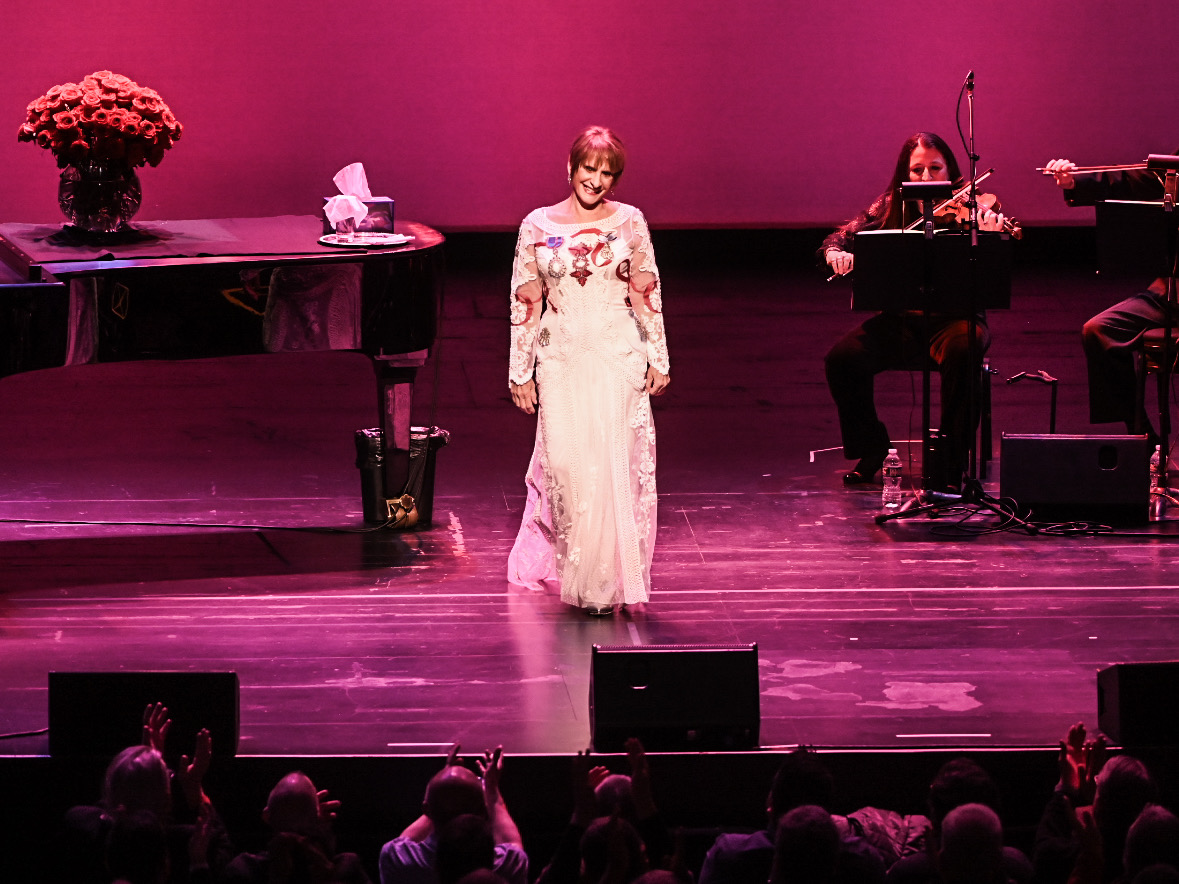
Supported by the Four Play string quartet and musical director Joseph Thalken on the piano, LuPone showed just why she is a three-time Tony winner with her powerful and sensitive delivery of a program drawn from Broadway and other pop selections. In her first set, she traveled from Rodgers and Hammerstein (South Pacific's "A Wonderful Guy) to the Beach Boys (Brian Wilson's “God Only Knows”) ... to the Hollies ("Air that I Breath")... even Three Dog Night ("Easy to Be Hard").
And—of course—to Sondheim. One of his best interpreters, LuPone's mid-set aching delivery of “Not a Day Goes By” held the room in silence until the final note and her set-closing rendition of Company's “Being Alive” drew a roar from the appreciative audience.
But it wasn't all Big Broadway Ballads. Throughout the show, LuPone displayed her wicked sense of humor with songs like "Shattered Illusions" and "I Never Do Anything Twice," which afforded her the opportunity for some playful interaction with the front row of the audience. Have a riding crop and a single long-stemmed rose ever been used to greater comic effect?
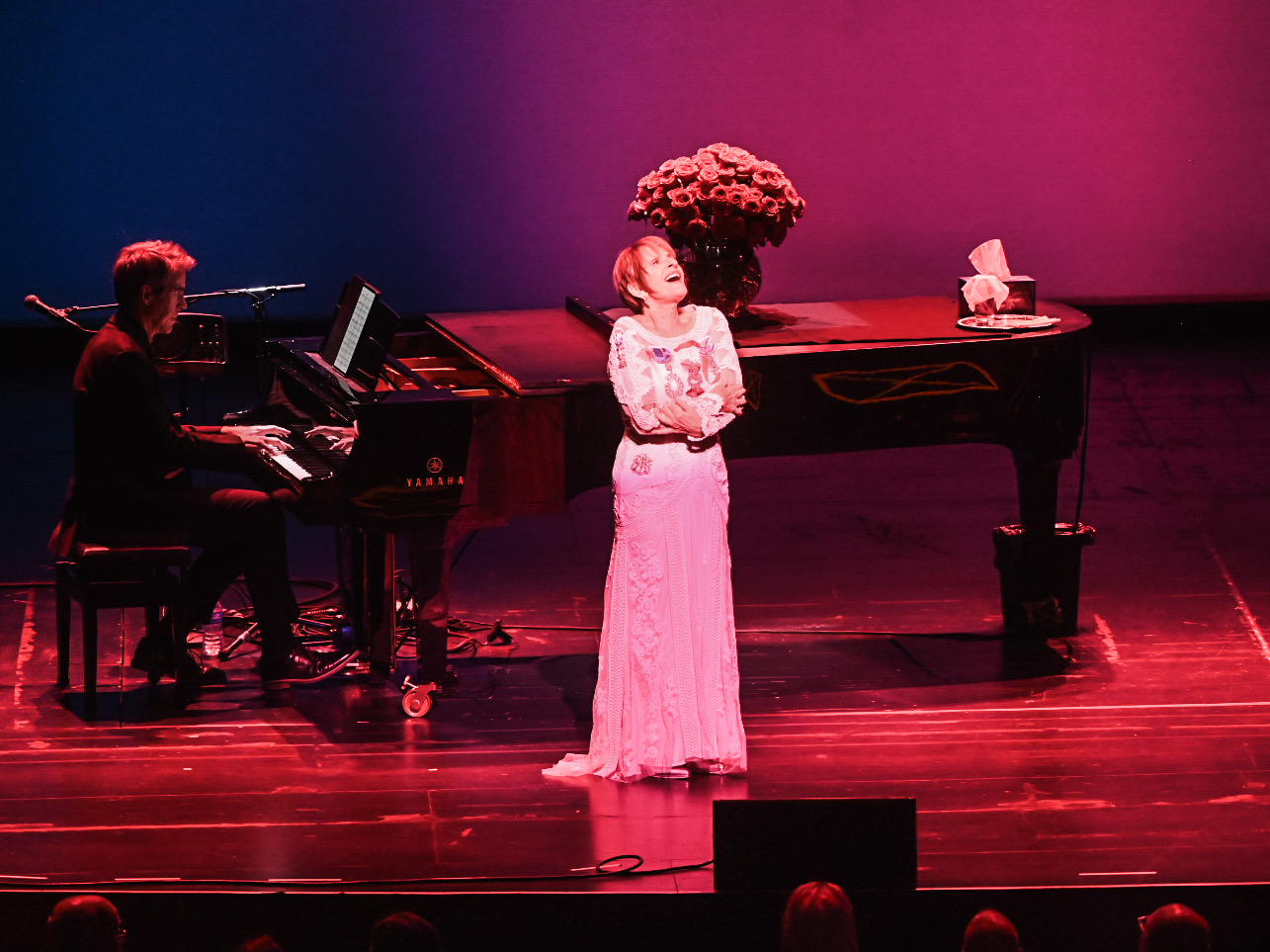
A powerful moment in the first set came with “Sand and Water,” written by Beth Nielsen Chapman after the death of her husband. The song examines grief, memory, and the effort to move through loss with clarity. LuPone approached it with a quiet, steady tone that gave each line full weight. The piece was a new discovery for me and LuPone's reading of the lyric created a point of connection that shaped the emotional center of the entire night.
The second set opened with more songs that examined memory, loss, and the limits of connection. Her performance of “Back to Before” from Ragtime produced the strongest response of the night, literally stopping the show as the audience roared its approval.
The evening closed with a trio of complementary songs: Cindi Lauper's “Time After Time,” Dan Folgelberg's “Another Auld Lang Syne,” and Oscar Hammerstein's “Hello, Young Lovers” forming a sequence that traced love through distinct points in life. “Time After Time” focused on commitment and the steady work of staying connected. “Another Auld Lang Syne” shifted to the pull of memory and the unresolved space between past and present. “Hello, Young Lovers” offered a view shaped by experience and a clear acceptance of what endures. Together, the three songs presented complementary perspectives that aligned with the LuPone's examination of love in its early promise, its later complications, and its final clarity.
Patti LuPone has carried the label of diva for much of her career. She has also carried the expectations that come with it. Her concert at the Auditorium showed the discipline, intelligence, and taste that define her work. She shaped each choice with care and treated each song as a complete piece of theater. On a cold night, she offered a performance built on craft and experience, and the audience responded with warm appreciation.
Did you enjoy this post? Please consider supporting Third Coast Review’s arts and culture coverage by making a donation. Choose the amount that works best for you, and know how much we appreciate your support!
