
Since nobody seems to be talking about climate change any more, classical music in Chicago has taken up the mantle, at least during the first week of February.
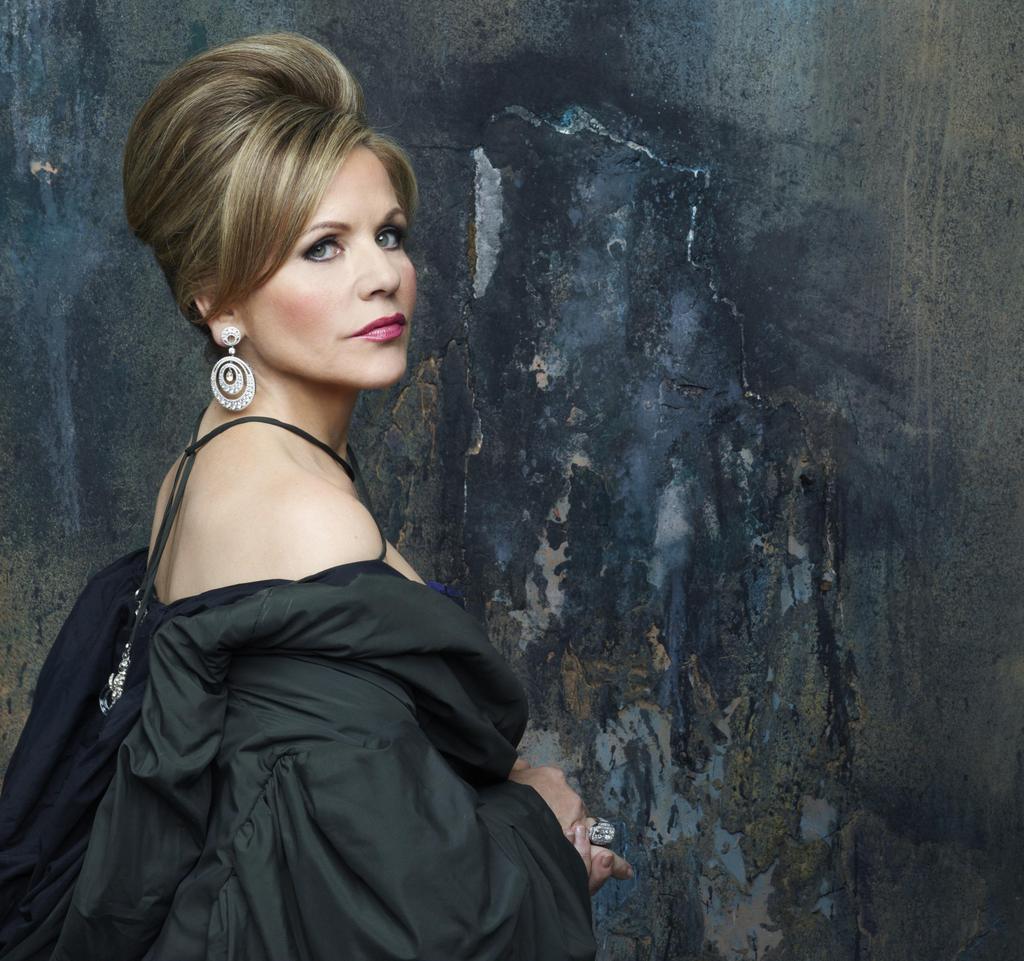
Soprano Renée Fleming brought her 2021 Grammy-winning Voice of Nature: The Anthropocene program to the Lyric Opera last week, featuring nature-themed classical and modern music considering human impact on our world. Accompanied by pianist Inon Barnatan (who looked cool and comfortable in a casual, tie-less tailcoat ensemble), Fleming sang in front of a large screen showing various ecosystems and animals, including many mothers and babies, via a partnership with National Geographic. The result was thoughtful and peaceful, and a boon to visually minded audiences, weaving the soaring vocals among lovely, colorful and contemplative natural images.
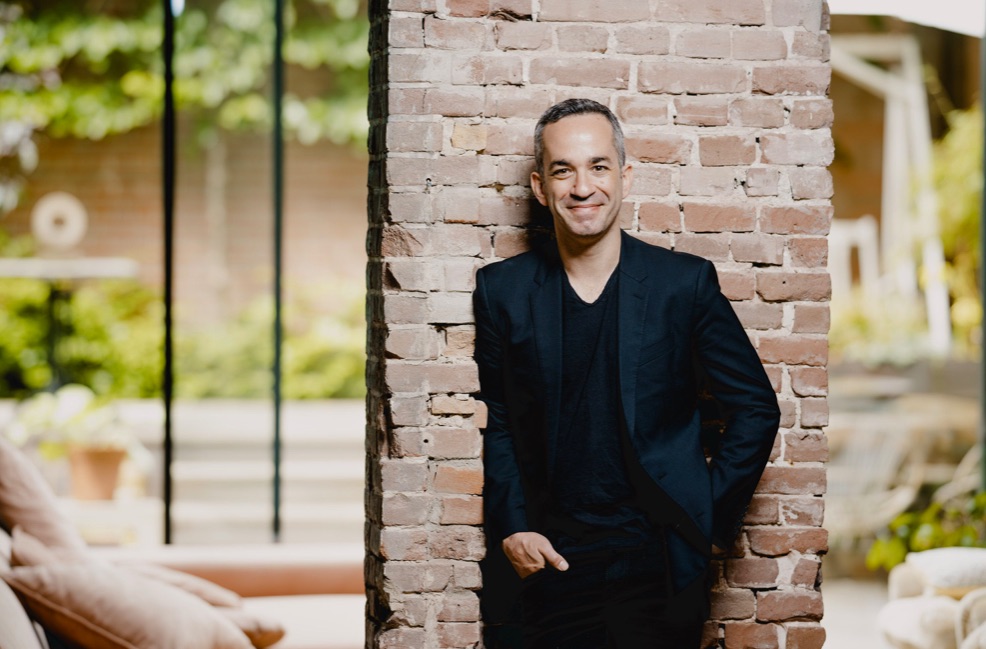
Fleming also stunned in her first look, a liquid purple gown with tippet sleeves and accompanying bling set, for the first half of this evening. After chatting about the origin of this program, she asked the audience to hold applause so that the selections and film could flow together and sync with the visuals.
The eclectic song mix, for some of which she used a microphone tucked in the Steinway grand and sometimes not, moved from Handel to Björk to the Bacharach/David classic What the World Needs Now Is Love. Solo, Barnatan crushed Rachmaninoff’s difficult Moments Musicaux no. 4 in the middle of this set, followed by Fleming’s haunting interpretation of “Twilight and Shadow” from The Lord of the Rings: The Return of the King.
After intermission, Fleming sported a silvery rose gown like a perambulating disco ball, noting that “sparkle makes it all worthwhile.” She gave a shout-out to the young cast of Così fan tutte in the audience (running at the Lyric through February 15) as she launched into the second half of this equally diverse program, which started with Jackson Browne’s Before the Deluge. She talked about America, and how obnoxious Ben Franklin could be during this country’s early years, before singing Handel’s Oh Sleep, why dost thou leave me? She called her third selection, Puccini’s O mio babbino caro, a “perfect piece of music.”
Praising Ken Burns’ current The American Revolution series, Fleming then harkened back to the documentarian’s seminal The Civil War series, with Kander’s song interpretation of A Letter from Sullivan Ballou, a heartbreaking missive from a soldier to his wife, knowing that his battlefield death was imminent.
Barnatan nimbly executed selections of Earl Wild’s 7 Virtuoso Etudes after Gershwin, fast and furious reinterpretations of “The Man I Love” and “I Got Rhythm.” Fleming invited the audience to sing along with the closing number from My Fair Lady, Lerner and Loewe’s “I Could Have Danced All Night,” and encouraged fellow sopranos to hit those high notes.
Two encores followed the primary program, including another sing-along to Leonard Cohen’s gorgeous, bittersweet Hallelujah and Richard Strauss’ Morgen (“Tomorrow”), where we can “feel the vibration in your vagus nerve,” she said. Fleming also waxed nostalgic about the word “diva,” now overused, but said that sopranos like her “owned it for the 20th century. ” Then, in the “closest to hip-hop you will ever see me,” she rapped, “My name is Renée / I am a diva / I’m a diva with a budget and a bra.” Fleming’s charming humor and accessibility are just as visceral and dynamic as her seasoned and passionate voice.
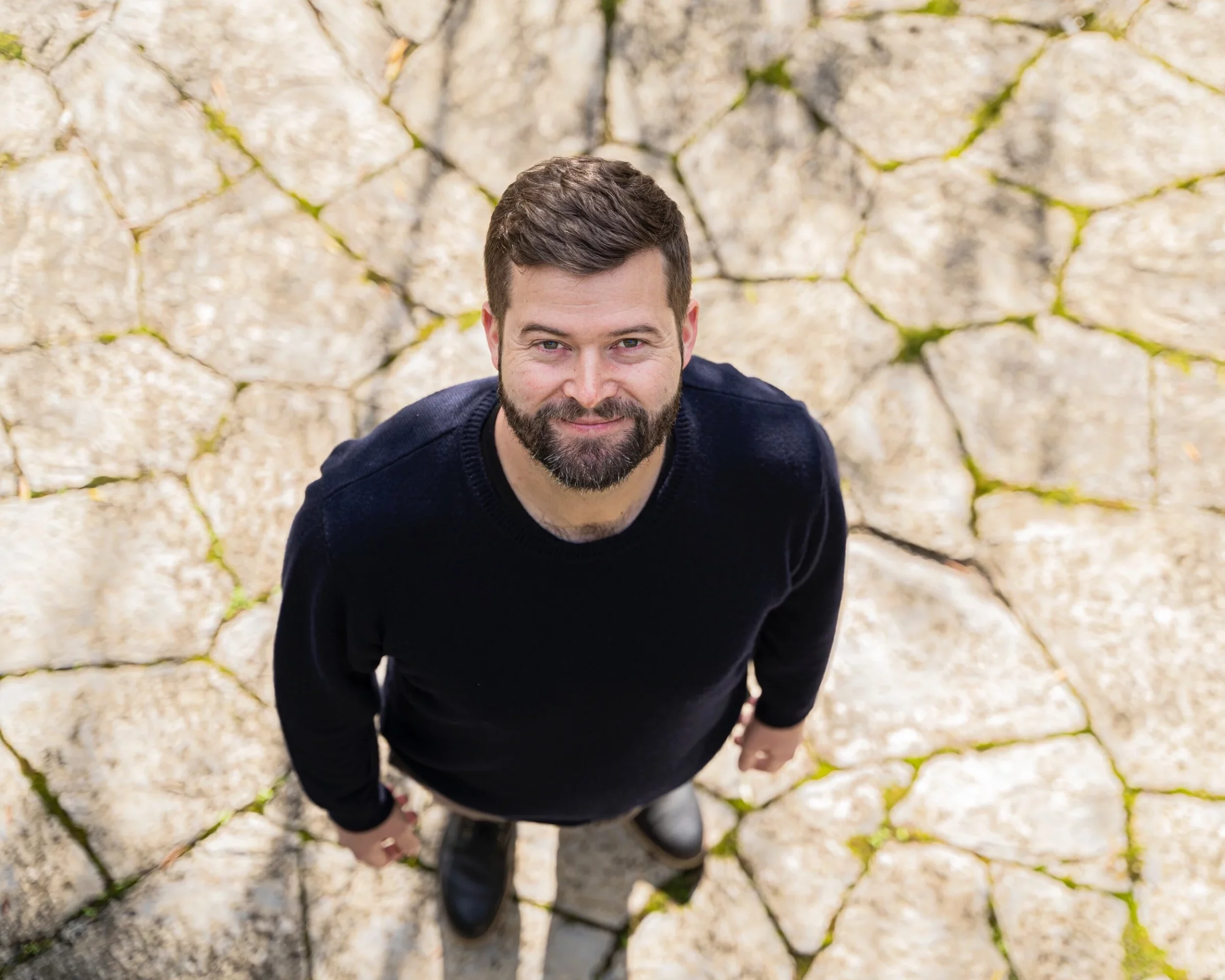
Further south, at the University of Chicago’s Mandel Hall at the Reynolds Club, musicians from the Chicago Symphony Orchestra played a short concert on February 6 as part of their chamber music series, an affordable (starting at $15), mostly monthly initiative at various venues around the city. The first half of this program promoted environmentalism too, with the decade-old Winter Music by American Christopher Stark and Homunculus by Finnish Esa-Pekka Salonen, penned 20 years ago, both of whom were in the audience for the performance, as well as on-stage for a post-show talk-back. This program continued the climate awareness of previous CSO offerings like Gabriella Smith’s Lost Coast.
Violinists Yuan-Qing Yu and Simon Michal, violist Weijing Michal, and cellist Kenneth Olsen (in a fun, sparkly black shirt, like diamond dandruff)—some of whom are creators in the Civitas Ensemble as well as CSO players—attacked the winter piece (just a quarter of the full work), alternating aggressively plucking minor notes with their bow work, while emulating windshield wipers deflecting storms, sleet and graupel. The crescendos in this piece echoed the cacophony of the cold season and spinning vortexes of snow, eventually resolving in a denouement of slow bowing, reminiscent of the sweet fairy lights seen punctuating the snowfall around campus near the venue. Stark considers this work as “needle drops and remixes” of other inspirational composers.
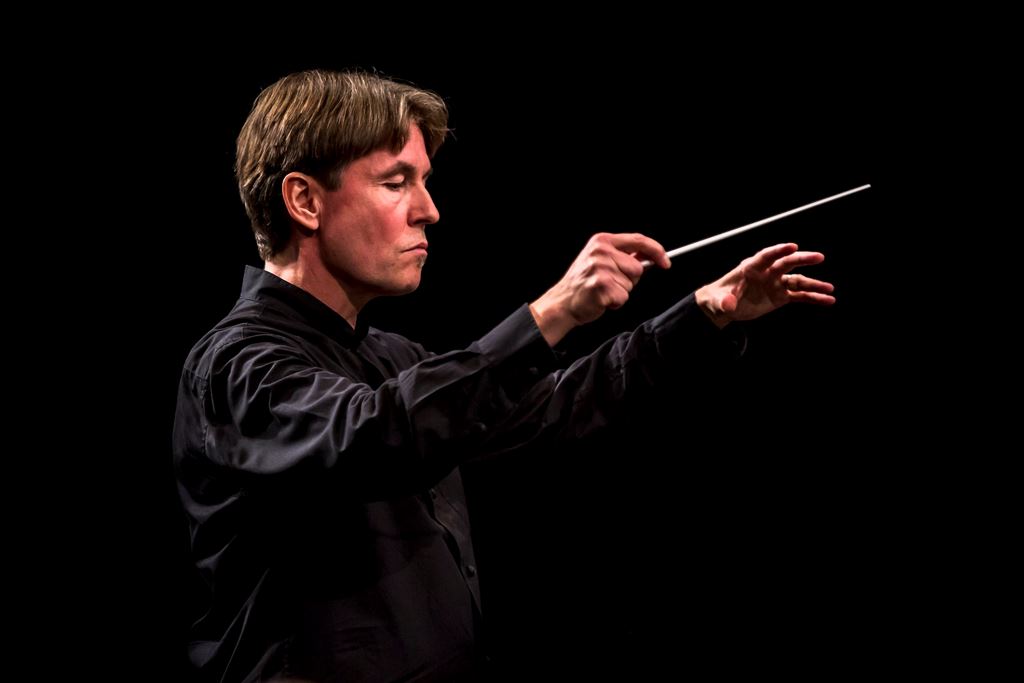
Composer/conductor Salonen’s 15-minute piece is named after the 17th century theory that sperm was a “homunculus” (little man), which was placed in a woman to grow a child, saying “my goal was to write a small-scale piece that would nevertheless contain all the elements of a ‘fully grown’ string quartet.” After a rapid-fire start, the music sometimes decayed into sawing motions and dramatic slides, whirling dissonance and swirling eddies. Some sections were quiet and conspiratorial, then soaring, often with a locomotive’s cadence.
After intermission, the quartet added pianist Winston Choi to perform Erich Wolfgang Korngold’s Quintet for Piano and Strings in E Major, Op. 15. Korngold was a child prodigy who became one of the most admired composers in Europe by the 1920s. He was invited to compose music for Hollywood films like Errol Flynn’s Captain Blood, Robin Hood and The Sea Hawk, and then moved to California during the rise of Hitler. Later, he tried to return to “serious music,” but his work still evokes sweeping and melodramatic cinematic soundtracks.
This 35-minute piece responds to the tumult in the early 20th century, from dadaism to jazz, as well as with a “creamy Viennese voluptuousness” and an “energetically blossoming expression.” The work is complex and lush, like Brahms or Strauss, but pushes the envelope, said the introduction, with modernist traits. Olsen explained that the Korngold piece is like a “micro-managed German class,” and sometimes “like cruise ship lounge music.” This earlier piece in Korngold’s oeuvre also foreshadows the composer’s foray into film with soaring and dramatic leitmotifs.
During the post-show discussion with Stark, Salonen, and several players, Olsen was asked how it felt when his cello string broke in the first few minutes of the concert. “My D string committed suicide, as they say,” he said. “That never happens, and it was a new string.” But luckily, he had a spare backstage and quickly rejoined to restart the pizzicato-heavy pieces. Civitas creator Yu talked about using Google to curate this current line-up and to get in touch with the composers, who were able to work with the musicians before this show.
When asked how and why repertories are created, Salonen said that some music just stays around, and some doesn’t. “Classical music shouldn’t go out of fashion, but it does,” he said. “It’s our duty to bring things back.” He recalled that a friend said, “dying is a bad move for a composer,” and that it’s less of a modern issue: nobody says, “that’s so 1990s.” The work should be weighty, he continued, but still a playground. He also cleverly remarked that his “day job” is a “night job” as a conductor, and aptly described musicians as time travelers who become part of the tapestry of history. Salonen added that authenticity in music is problematic, because “we are not in the truth business…and while music is beautiful, it is not the truth,” and “music is the only lingua franca on the planet.”
“Luckily, there is no mainstream music style any more,” said Salonen. “In Europe, we used to have to write a certain way to get into festivals. Not any more.” Stark added that “music is hard to talk about because it has a life of its own.” Living through the pandemic “skewed him,” he added, but it led to an exploration of a more eclectic style.
Stark is grateful when composers can see their work staged by various ensembles, saying “it’s important to hear work performed by different people in order to get better.” He said, “I feel like a different person, especially after ten years.” Working with the St. Louis Symphony Orchestra himself, he admitted it is hard to curate cohesive programs. Choi added that he thinks composers are grateful to revisit their work after a premiere as a way to reevaluate their relationship to music.
The final consensus was that it’s stressful but welcome to have composers in the house, with mutual respect around because we all are just fallible human beings.
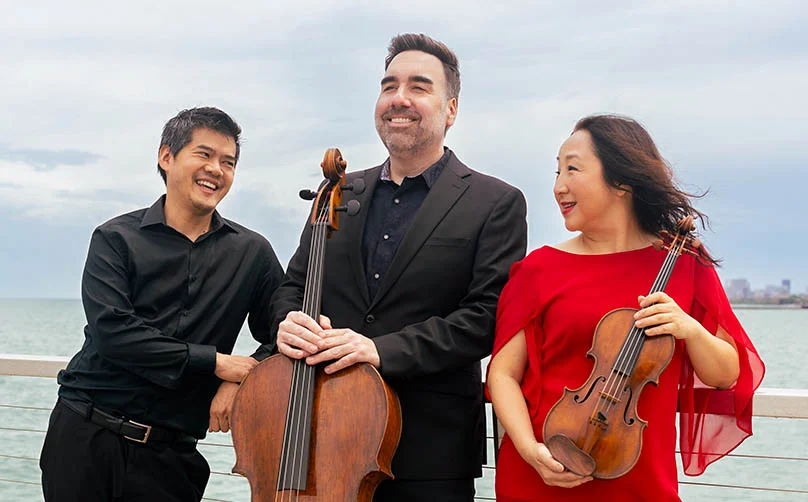
The Civitas Ensemble, named after community and citizenship with a focus on creative excellence, healing and teaching, and promoting cultural diversity, will perform more concerts at North Park University on February 22, on April 21 in Evanston and April 26 in Woodlawn, and will conclude the season on May 17 at DePaul University.
Support arts and culture journalism today. This work doesn't happen without your support. Contribute today and ensure we can continue to share the latest reviews, essays, and previews of the most anticipated arts and culture events across the city.
