Review by Zach Carstensen.

George Frideric Handel's career was interwoven tightly with the British monarchy, a relationship that spanned the exuberant heights of national peace and the somber depths of royal loss. In an afternoon of starkly contrasting emotional colors, the final performance of the 2026 Handel Week Festival Orchestra and Chorus gathered musicians from across the Chicago area to bring this dual legacy to life.
On Sunday, they offered a fitting finale to three weeks of programming that has animated Pilgrim Congregational Church in Oak Park. The event paired the brassy, triumphal optimism of the Utrecht Te Deum and Jubilate with the heartbroken beauty of the Funeral Anthem for Queen Caroline known informally asThe Ways of Zion Do Mourn.
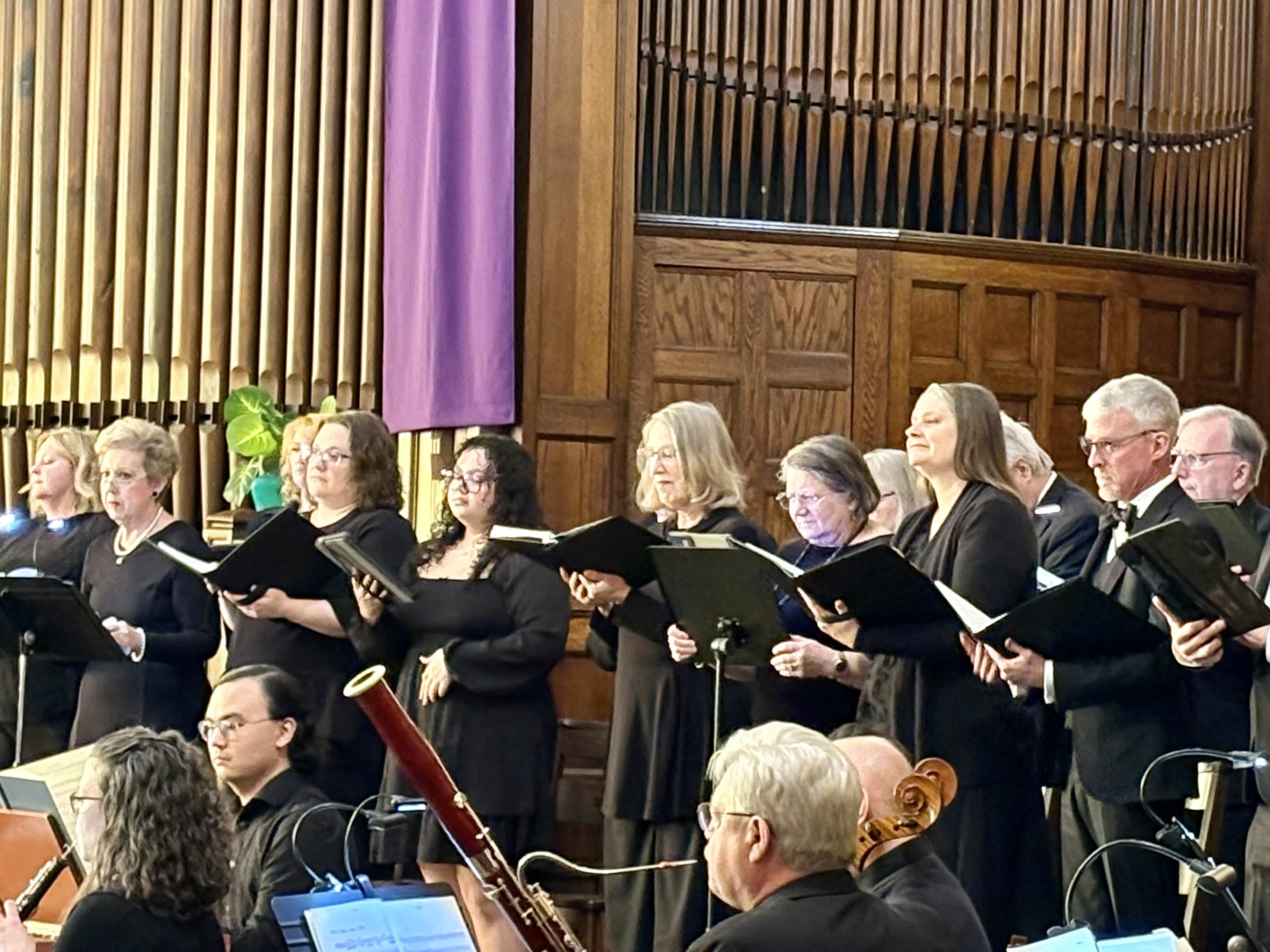
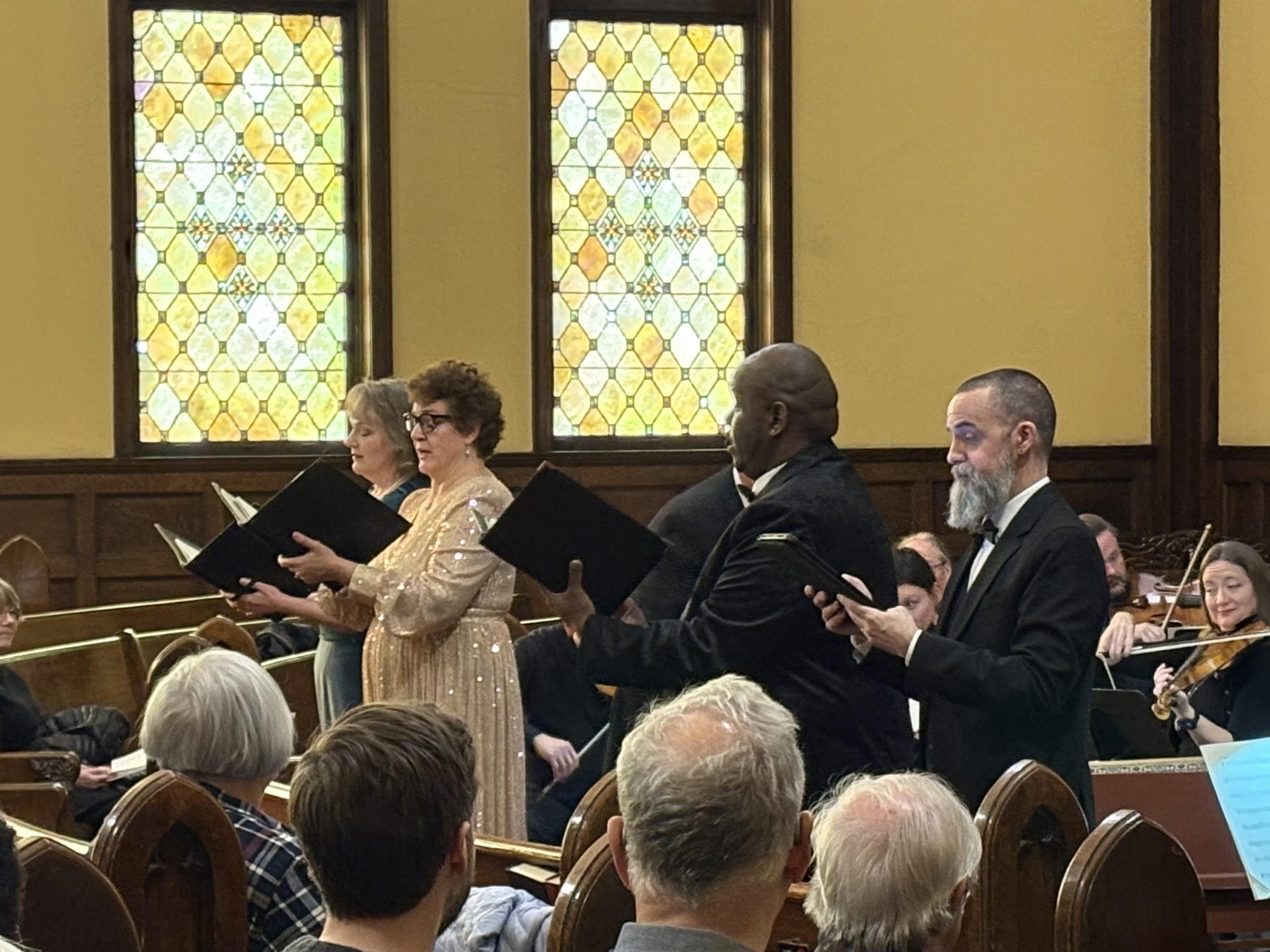
This is how festivals should end—with large, multifaceted works that allow for genuine artistic synthesis. For the most part, festival organizer Dennis Northway, his orchestra, and four soloists—Kimberly McCord (soprano), Michelle Wrighte (mezzo-soprano), Cameo Humes (tenor), and Noah Gartner (baritone)—delivered where it most mattered. The afternoon oscillated between triumphant and solemn registers; throughout, the chorus and quartet remained the focal point of Northway's conception.
The Jubilate, Handel's 1713 setting of Psalm 100, forms the second part of the larger Utrecht Te Deum, which was composed to celebrate the Treaty of Utrecht that ended the War of the Spanish Succession. As one of Handel's earliest major sacred works in English, it premiered at St. Paul's Cathedral and helped establish him as a leading figure in British musical life. Here was Handel synthesizing English music traditions—especially the legacy of Henry Purcell—with his own dramatic instinct and Italianate virtuosity.
Northway's well-prepared chorus made an immediate impression. Most striking was the seamless blend of individual voices filling the church and casting a genuinely celebratory mood. The soloists then began to reveal their distinct characters. Michelle Wrighte brought a powerfully stubborn quality to her phrases, offering solidity and weight. Cameo Humes displayed remarkable fluidity, his lines shaped with elastic phrasing and genuine feeling. When Wrighte and Humes were joined by Noah Gartner in “For the Lord is gracious,” a trio movement, their individual colors blended warmly, offering a meditation on Handel's text.
Throughout the Jubilate, Handel's mastery was evident in the deft balance of orchestra, soloists, and chorus illuminating the text. Northway proved an astute guide, maintaining attentive pacing and careful equilibrium among these forces. Each element benefited from his essentially non-interventionist approach.
That restraint also served the longer work that followed. Running at nearly 40 minutes, The Ways of Zion Do Mourn is one of Handel's more personal creations, written to commemorate the death of his patron and friend, Queen Caroline. He drew on Old Testament texts to construct a narrative emphasizing the Queen's virtues and the public's mourning. The piece unfolds like a funeral procession, the orchestra conveying heartbroken beauty through solemnity and restraint. The dragging lines of the opening title, which mimic weeping, give way to fragmented phrases and downward leaps in the first occurrence of “How are the mighty fall'n.” Handel treats subsequent recurrences with increasing uplift, a gesture Northway honored with careful attention.
Yet the work's trajectory ultimately moves toward peace and consolation. Nowhere is this clearer than in “Their bodies are buried in peace,” which shifts from darkness into light—and in the process capturing both the stateliness of Queen Caroline and the promise of heavenly eternity. This is some of Handel's most human music, emphasizing raw emotion over technical display. The soloists didn't rely on simple technical display; instead, they delivered a performance where their voices resonated with genuine depth and emotional substance.
Ending with the Utrecht Te Deum was a masterstroke of programming. Like the Jubilate, it is loud, brassy, and public in character, and placing these two triumphal works around the darker, more intimate center of the Queen Caroline anthem proved remarkably effective. It granted proper space to the funeral music without allowing its somber tone to overwhelm the afternoon's arc.
The trumpets of Greg Fudala and Jhoan Garcia added necessary brilliance to the final work, and the chorus once again proved the performance's truest asset. The quartet excelled especially in “The glorious company of the Apostles,” a movement of brilliant construction requiring exceptional coordination. Here, the soloists traded roles representing Apostles, prophets, martyrs, and the church. Each part flowed naturally into the next, each voice offering a distinct color: the massed sound of the chorus for the church, the profundity of Gartner's baritone for the prophets, Humes's tender lyricism for the apostles, and McCord's brighter innocence for the martyrs.
It was precisely the kind of program with which to conclude both a concert and a festival. Northway and his musicians seemed to have understood that perfectly.
The Handel Week Festival returns in 2027 for performances on February 21, 28 and March 7. Details and information here.
Zach Carstensen, a Chicago-area freelance music critic, specializes in classical music and opera. He contributes regularly to Seen and Heard International and founded the Gathering Note in 2007. For two decades, he lived in Seattle, where his writing was featured in publications such as the Seattle Times, City Arts, Sound Magazine, and River Cities Reader.
If you enjoyed this post, please consider supporting Third Coast Review’s arts and culture coverage by making a donation. Choose the amount that works best for you, and know it goes directly to support our writers and contributors.
