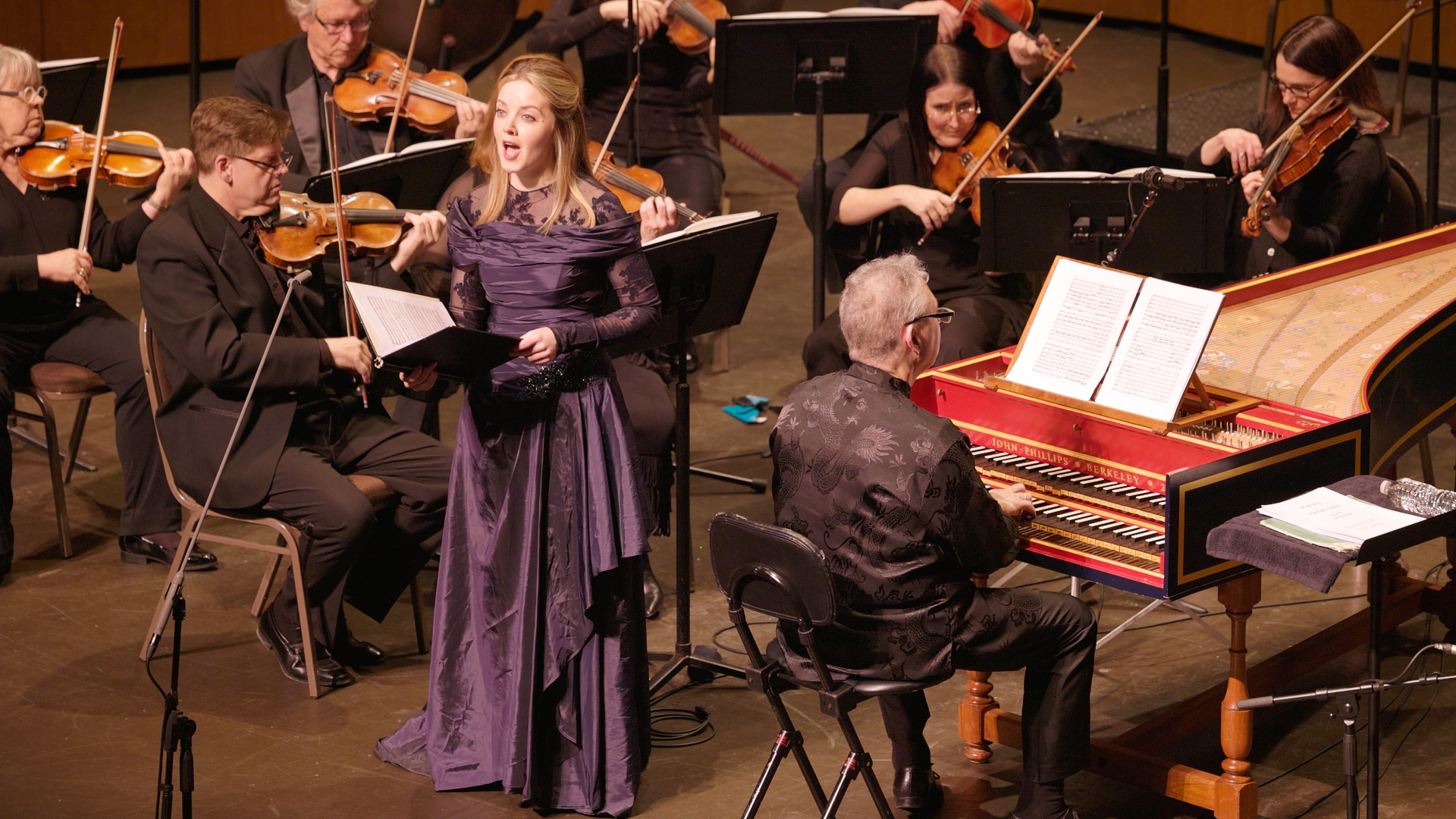

When I consider the notion of “Baroque Blockbusters!”, I think of Bach’s Brandenburg Concertos, or Handel’s Messiah, or Vivaldi’s Four Seasons, or Pachelbel’s Canon, or several other things. With Richard Egarr at the helm and soprano Rowan Pierce providing excellent vocals, Music of the Baroque Orchestra put on a concert of that name at Harris Theater on Monday night.
The program did, indeed, start with a Brandenburg concerto by Johann Sebastian Bach, followed by a lovely, but non-blockbuster Motet by Georg Frideric Handel. Then, for the second half, they played a suite by English composer Henry Purcell. Even though Egarr provided enjoyable explanations of the history and makeup of the music, and the performance seemed fine, the concert got more and more dull as the evening progressed.
The problem was the Purcell. Several of the 17 pieces Egarr selected for this suite repeated the most basic harmonic progression of I-IV-V7-I over and over and over again. Although there were interesting moments, especially with Pierce’s contributions interspersed, it is not often that I can’t wait for a concert to end, but that’s how I felt on Monday night.
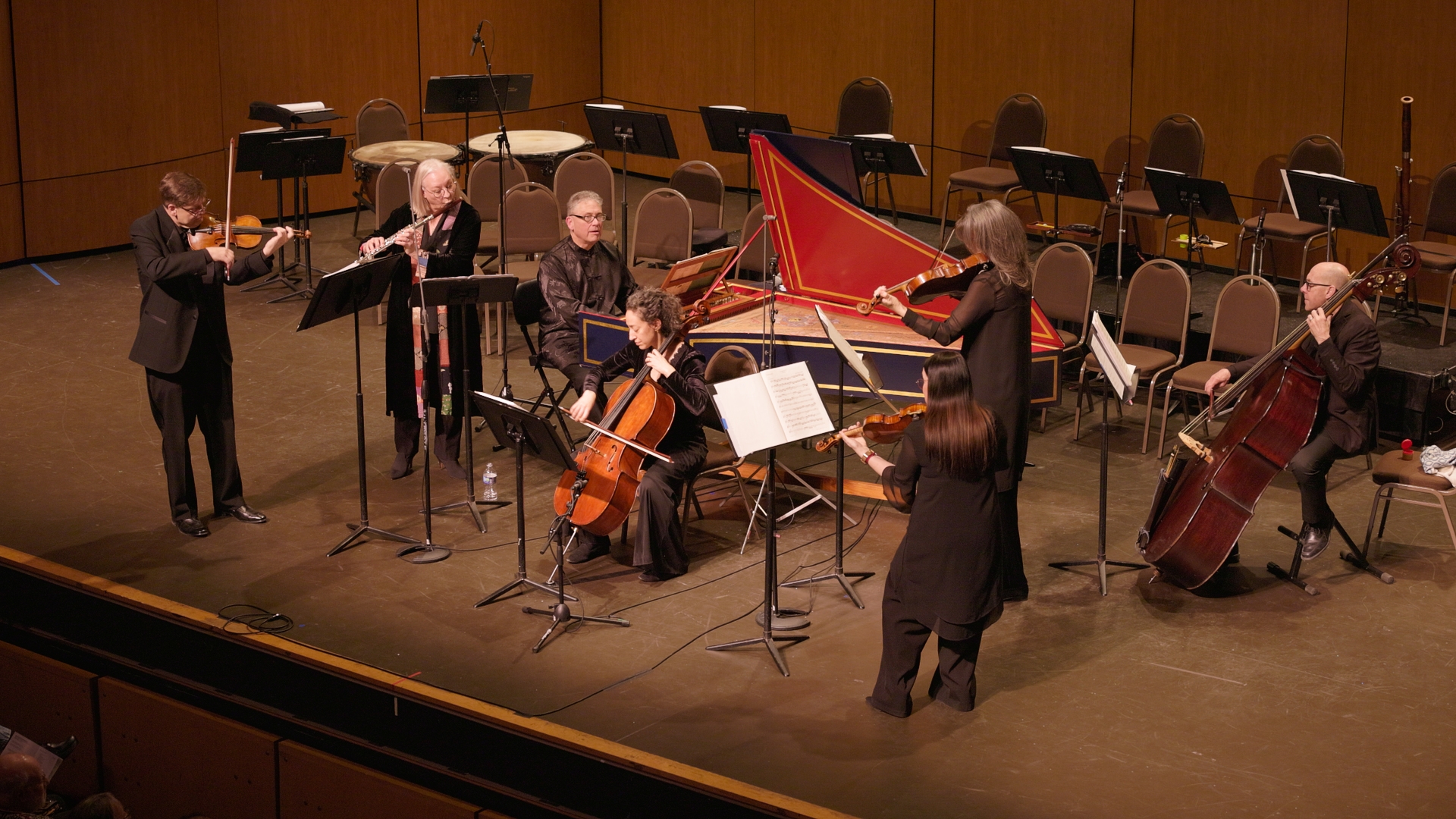
The evening opened with one of my favorite pieces by Bach, Brandenburg Concerto No. 5 in G-Major. This fulfilled a promise from last fall, when MOB’s performance of the Brandenburg Concertos did not include this one. As I wrote at the time, this is an integral part of the concertos. While good, that concert seemed incomplete, and I was very unhappy with the reasons given for the exclusion, one being that it had already been scheduled for this concert.
In describing the concerto, Egarr noted how the three soloists—Kevin Case on violin, May Stolper on flute and himself on harpsichord—contrasted and competed with the four string players that made up what is normally considered the orchestra: Renée-Paule Gauthier on violin, Elizabeth Hagen on viola, Anna Sgeinhoff on cello, and Collins Trier on bass.
Monday’s performance started very lushly. Case played off of the backing quartet to give a warm version of the opening melody, which I love. Then, he and Stolper blended superbly with Egarr in the slow middle movement, which, like all of the concertos consists only of the soloists playing a very wistful tune. In the finale, Case, Stolper, and Egarr interacted very well with the quartet.
One very interesting feature about this concerto is that the solo violin and flute parts are not particularly flashy. Bach reserved the flash for the harpsichord, which, as Egarr noted, had never previously been used as a solo instrument in a concerto. A harpsichord’s plucked strings typically produce a very tinny sound, but the harpsichord in this performance had a fuller sound, almost like a piano.
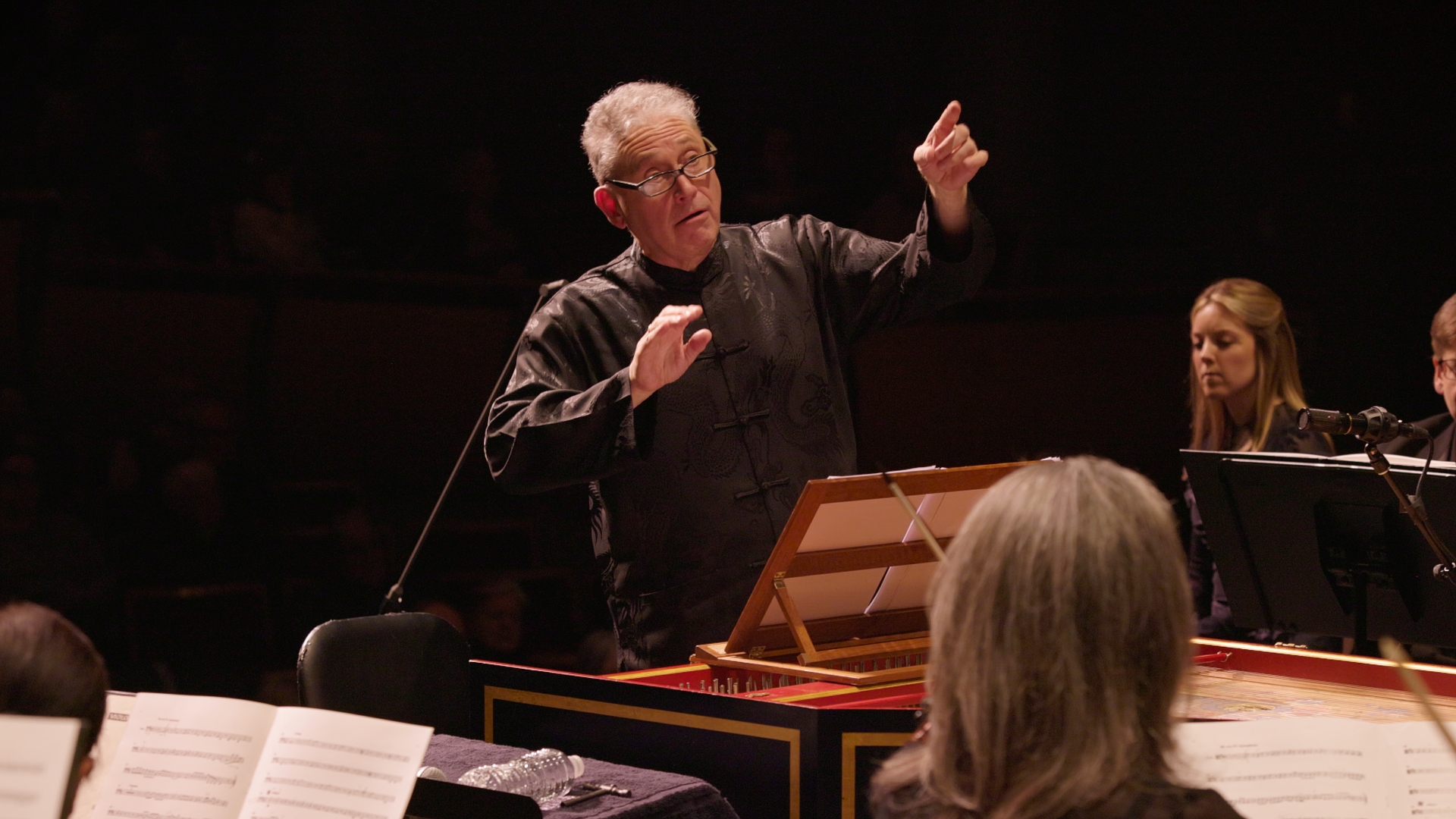
Especially amazing is a five-minute solo cadenza on the harpsichord that ends the opening movement. Few other five-minute slices in all of music are more riveting than this one. As the harpsichord reaches the climax, I often picture Sisyphus struggling to push that giant boulder up the hill. Because as a harpsichord’s strings are plucked, it is impossible to alter their volume. Performers add drama by decelerating and accelerating as they progress. Egarr seemed a bit excessive in this regard, which produced drama everywhere but diminished the dramatic impact where it was most needed. The visions of Sisyphus and his boulder did not materialize in my head, and they were missed.
Bach was followed by a very lovely Motet by Handel, Silete venti (Be silent, winds), with Egarr energetically conducting from the harpsichord. This was the evening’s high point. Rowan Pierce, known for her vocals in the Netflix series Bridgerton, gave a masterful performance. While singing in Latin, her diction was very clear and her voice opulently sailed over the orchestra. She had perfect vibrato as her voice fluttered with the rising and falling melodies. The ensemble was also precise and clear. At various times the oboe would converse with the violins and, toward the end, it was paired with Pierce.
After intermission, Egarr offered another enjoyable explanation of the 17 selections he assembled from Purcell’s Fairy Queen, a semi-opera with music and spoken text. Egarr said that a full performance of Fairy Queen could last three to five hours. With titles such as “Dance of the Fairies,” “Dance for the green men,” and “Monkeys’ Dance,” I was expecting something imaginative.
It started almost like Handel’s Halleluiah Chorus, which was written a few decades later. Shortly thereafter, two well-blended trumpets joined the orchestra without overtaking the sound. The first of Pierce’s songs was “Ye gentle Spirits of the Air.” Singing in English made her excellent diction very recognizable. She was backed up by Egarr on harpsichord, and the duo sounded great together. In her remaining four songs, she was backed up by different groupings of instruments, and the impacts were equally effective.
Unfortunately, shortly into the piece it was clear that many of the movements, while melodically different, were harmonically the same—and it wasn’t a harmony worth hearing even once, much less repeatedly. I am not all that familiar with Purcell’s music, but what I have heard seemed a lot better. I applaud MOB’s practice of bringing lesser-known music to the stage. Tons of excellent music have resided in undeserved obscurity. But this isn’t one of them. It was not a blockbuster, and I was very disappointed.
This performance offered MOB the opportunity to unveil their 2026-27 season. Starting with performances of Mozart’s last two symphonies and final piano concerto in September, it is going to be great. Click here for more information.
The current season continues with Vivaldi and Friends on Sunday, April 12, at North Shore Center and Monday, April 13, at Harris Theater. Both shows are at 7:30pm. For more information, click here.
Support arts and culture journalism today. This work doesn't happen without your support. Contribute today and ensure we can continue to share the latest reviews, essays, and previews of the most anticipated arts and culture events across the city.
