
I was first blown away by Stacy Garrop’s oratorio Terra Nostra when Cedille Records released it in 2024. In three parts, Garrop tells the story of our planet, starting with “In the Beginning” from the King James Bible and creation myths from India, North America, and Egypt. She then describes the making of the world and the rise of plants, animals, and humanity.
In Part II, Garrop describes the many achievements of humankind, but halfway through, she reflects on adverse impacts and the environmental challenges of our activities. This continues into Part III, which ends with hope for the future. In addition to scripture, she turns to some heavyweight poets, including Walt Whitman, William Ernest Henley, Edna St. Vincent Millay, Percy Bysshe Shelley, Lord Byron, and many others.
As I noted at the time, performing this piece requires a huge number of players, too many to list on the CD’s cover. I wondered whether I would ever have the opportunity to hear it live, in-person.
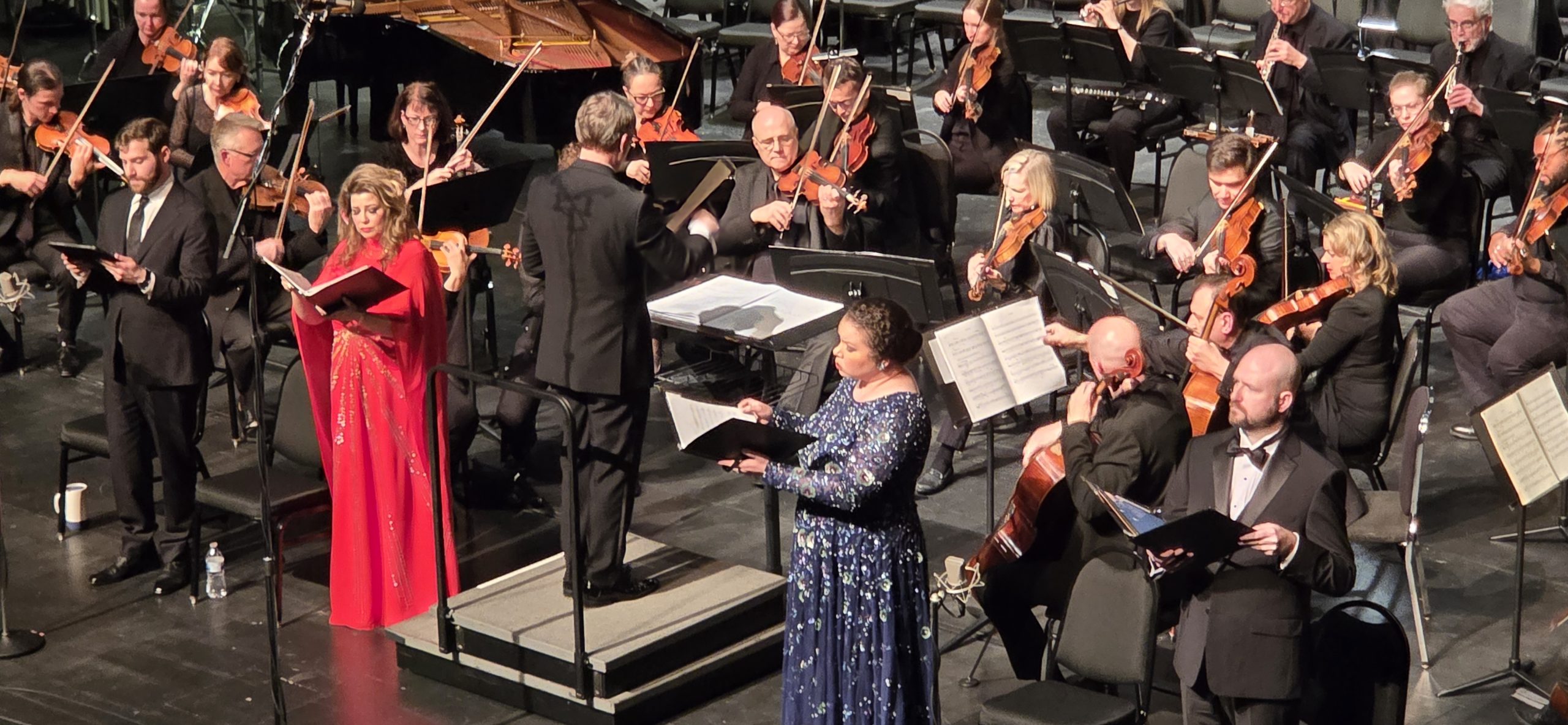
Well, that opportunity happened at the Blizzard Theater on the campus of Elgin Community College on Sunday. There, the Elgin Master Chorale and its director and conductor Andrew Lewis brought in the Elgin Symphony Orchestra and two of the soloists from the Cedille recording, soprano Michelle Areyzaga and mezzo-soprano Leah Dexter. They were joined by tenor Samuel Rosner, baritone Peter Wesoloski, the Elgin Youth Choir, and the Hampshire Middle School Choirs. I’m happy to report that it could not have been any more satisfying.
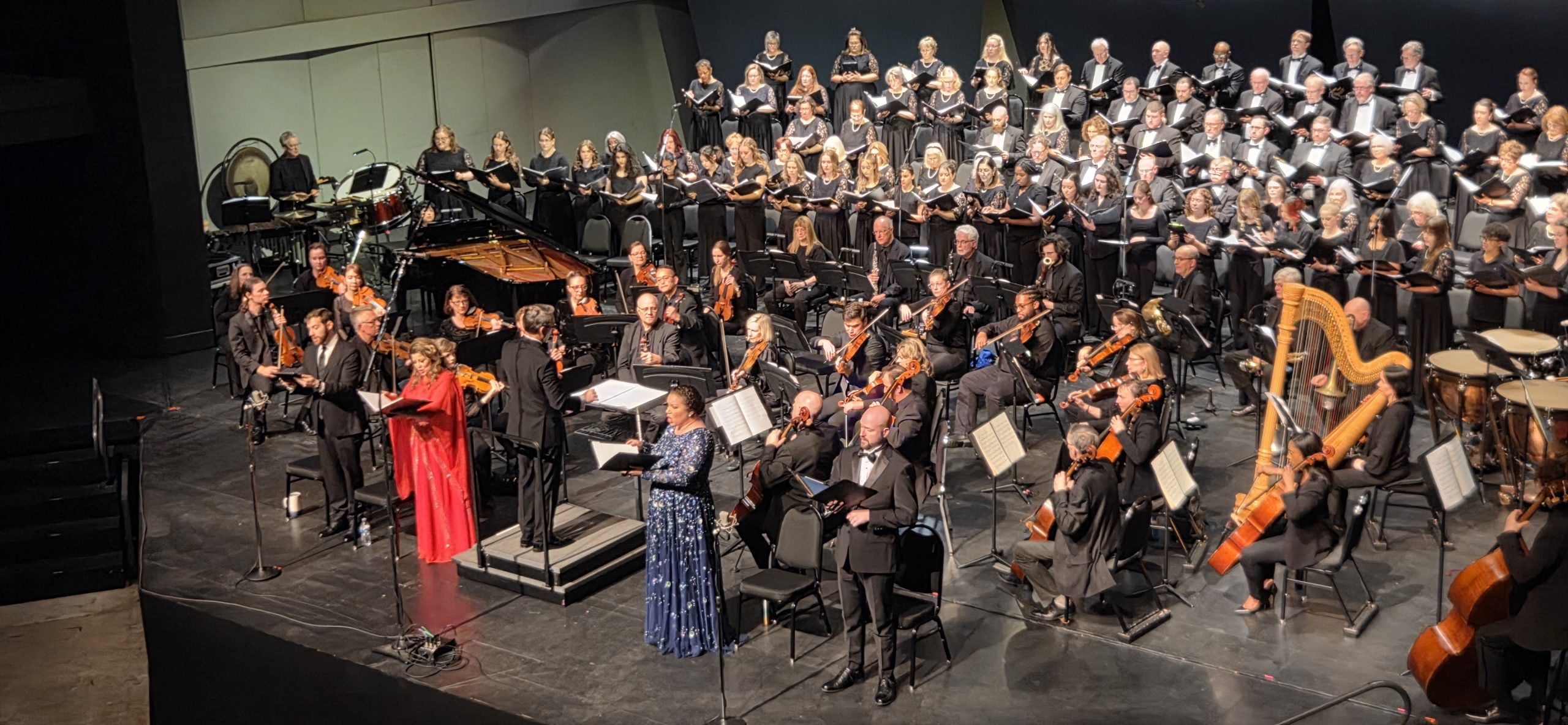
That this performance would be awesome became apparent from the opening maelstrom of “In the beginning,” complete with pounding bass drum, timpani, and woozy brass. Areyzaga, Dexter, Rosner, and the chorus sang through the various creation stories.
Backed up by harp and solo strings, baritone Wesoloski had his first chance to sound his clear tone in “Smile O voluptuous cool-breathed earth!” by Whitman. He also sang with the chorus in my favorite number, “A Song of Speed,” where, right before he died in 1903, Henley wrote about a wonderful ride he had in a Mercedes.
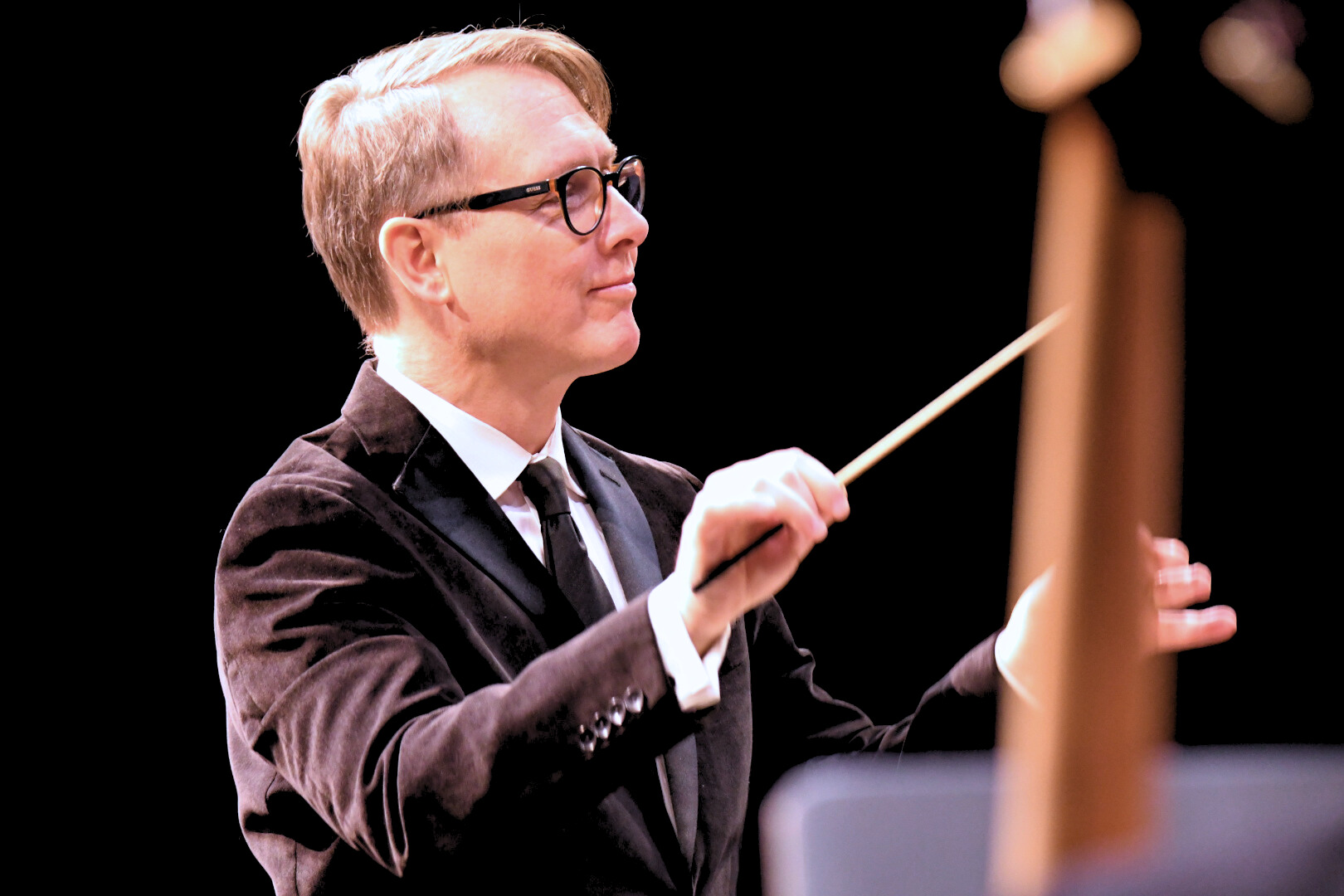
There were many opportunities for the Elgin Master Chorale to demonstrate its musical senses with clear diction and dynamics, such as in the ending of “God’s world” by St. Vincent Millay. The orchestra was precise throughout the afternoon, whether backing up the singers with pizzicato on the strings or long tones in the winds and brass. With a very upright posture and a baton keeping the time in his right hand, Lewis made sure everything clicked.
Terra Nostra is very jolly, until half-way through the second part, when the adverse effects of humanity’s activities are felt. The Elgin Master Chorale captured this shift in mood very well. It was manifest in “A Dirge” by Shelley, which ended with the soloists and chorus singing “Wail, for the World is Wrong.” Dexter then had a very moving and passionate plea in Lord Byron’s “Darkness.” She was backed up by the chorus, woodwinds, and brass.
The children’s choirs entered the stage for Shelley’s “On thine own Child,” Whitman’s “There was Child,” and Whitman’s “A Blade of Grass,” which appears twice, at the end of Parts I and III.
The chorus joined in the second instance of “A Blade of Grass.” Interspersed was the quartet singing Whitman’s “I bequeath myself,” which, very quietly, is how the performance ended.
It was so great to hear a favorite piece of music done so well. Thank you Elgin Master Chorale and Andrew Lewis for pulling this off.
Support arts and culture journalism today. This work doesn't happen without your support. Contribute today and ensure we can continue to share the latest reviews, essays, and previews of the most anticipated arts and culture events across the city.
